Cull
SAMPLING — *a fair handful mirrors the whole* (a sample must be drawn from every part, not the easy corner; who you scoop from decides what you find). The habit of drawing a subset that stands in honestly for the whole.
Loading audio…
Press play to listen along. The line being read lights up as you go.
Show full transcript
Loading transcript…
The afternoon the club decided what the whole town thought, Cull was the only one who noticed they had asked the wrong corner of it.
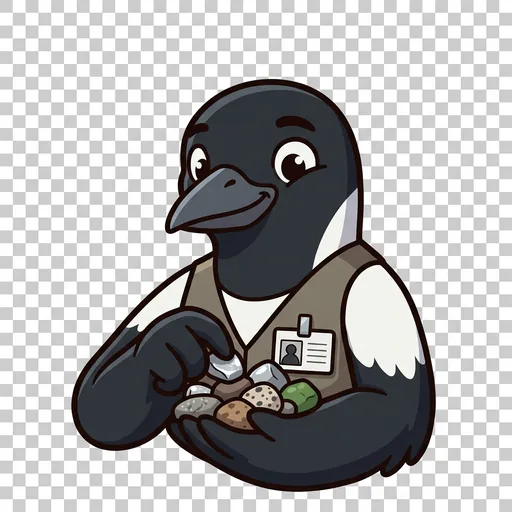
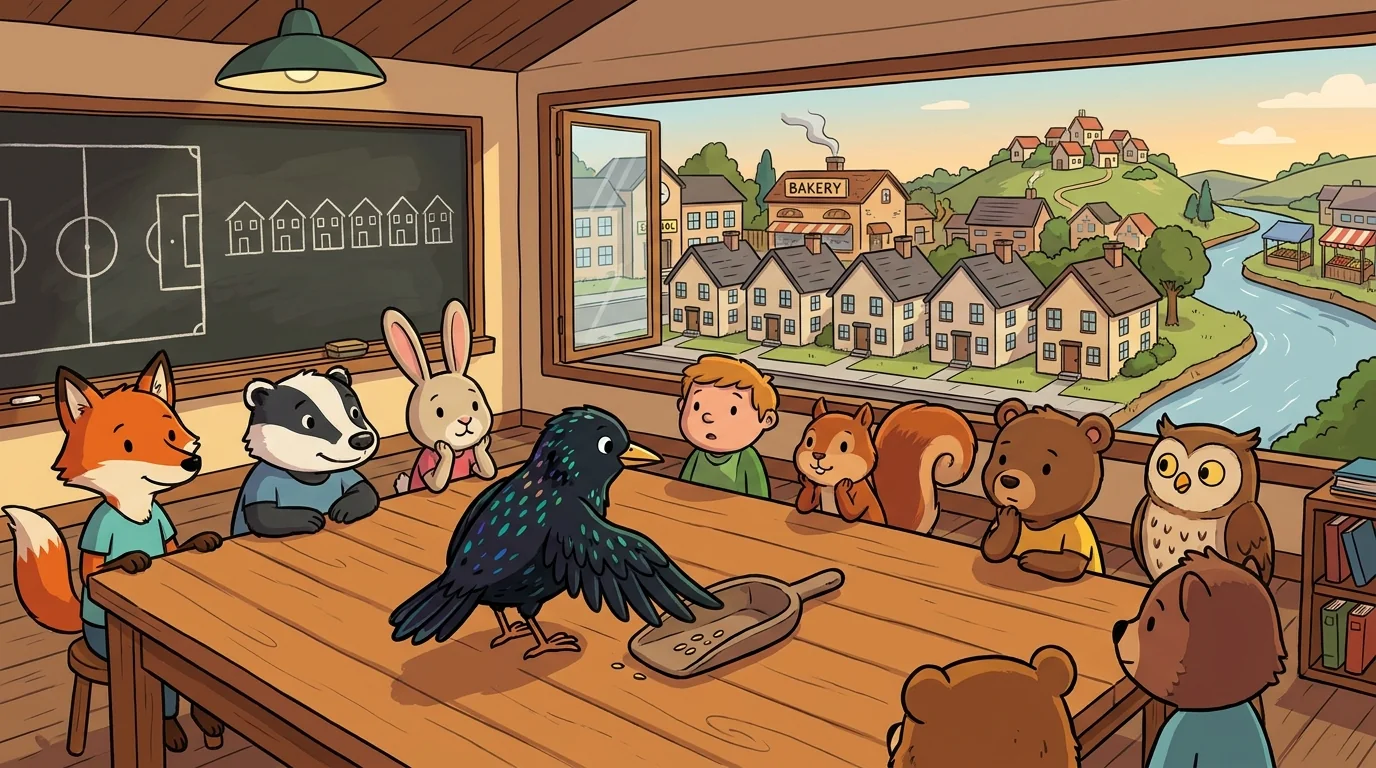
She was a starling, small and glossy, her feathers flecked with a hundred tiny points of light. Over her wing she carried a little cloth scoop, the kind you might use for grain. The club had knocked on the six houses nearest the schoolhouse and come back sure of themselves: the town wants a new football pitch. Six houses. All in favor. Done.
Cull didn't cheer. She set her scoop on the table and looked at it. "Six houses," she said, "all in a row, all beside the school. Whose houses are those?"
"Families with school-age kids," someone said.
"Families with school-age kids who live close enough to walk," Cull said. "That's who we scooped from. Of course they want a pitch." She turned her scoop over. "But a football pitch is a whole-town question. The bakers, the old folk up the hill, the market families across the river — we never knocked on a single one of their doors." She smoothed the cloth. "We didn't ask the town. We asked the town's football corner, and then we called it the town."
The room went thoughtful. Cull felt the small steadiness she always felt when the handful was fair — like the answer could hold its own weight.
Cull learned about fair handfuls long before she learned about surveys.
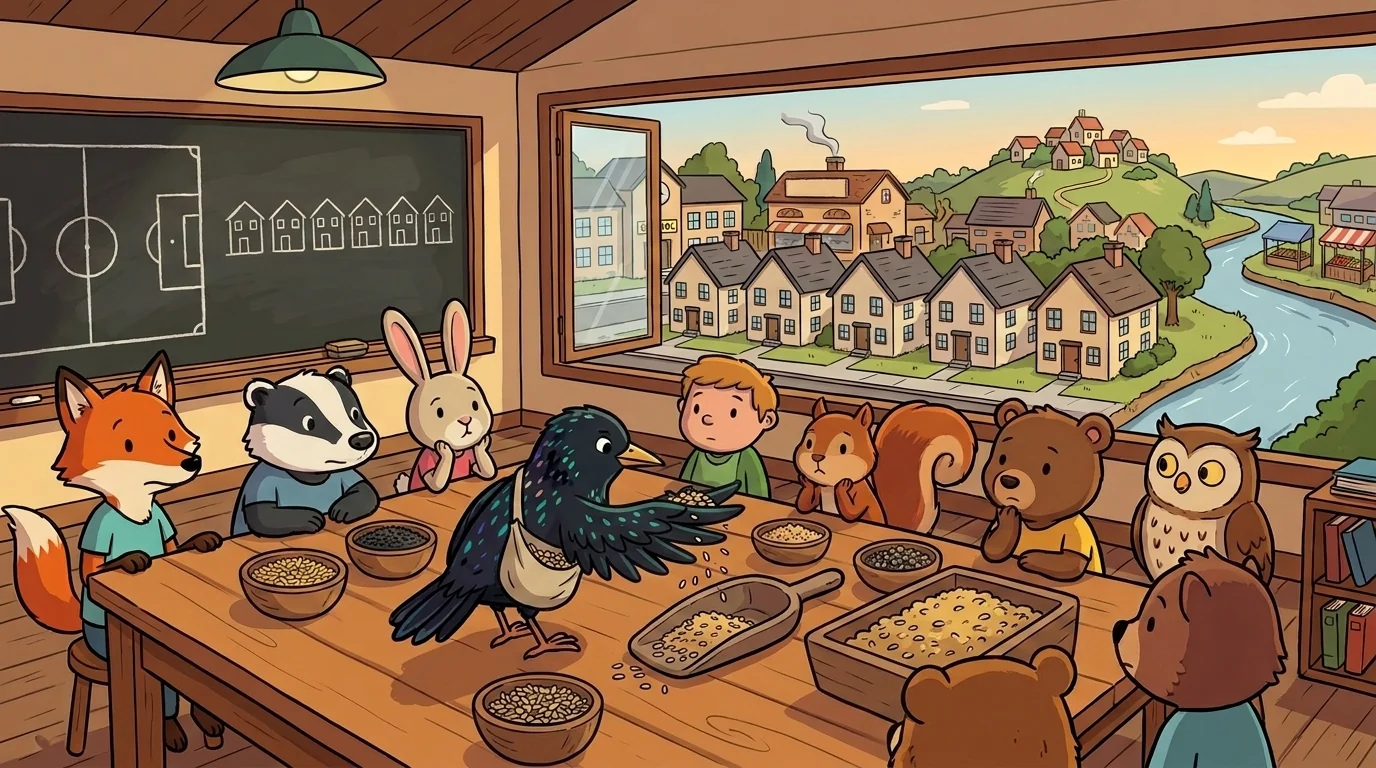
Her flock roosted in the great reedbeds, tens of thousands of starlings turning together at dusk in shapes that rolled across the whole sky. When she was young, her grandmother took her to the granary where the flock's foragers pooled the seed they'd gathered.
"Taste the store and tell me if it's good," her grandmother said, and pushed the little scoop toward her.
Cull dipped it into the near edge of the pile and tasted. "Sweet," she reported. "It's all good."
Her grandmother laughed, not unkindly. "You scooped the top of the near edge, where the barley settles. Now scoop the middle. Now the far corner, where the foragers dump what they gathered last." Cull did. The far corner was full of bitter darnel seed.
"One scoop from one place tells you about that place," her grandmother said. "If you want the store, you take a little from everywhere — top, middle, near, far — and mix it in your hand. That's the taste of the whole." She closed Cull's wing over the mixed handful. "A honest forager never judges the granary by the corner she stands in."
Cull never forgot it. Years later, over a page of survey answers instead of a bin of seed, she would think: ask only the near corner, and you'll only ever know the corner.
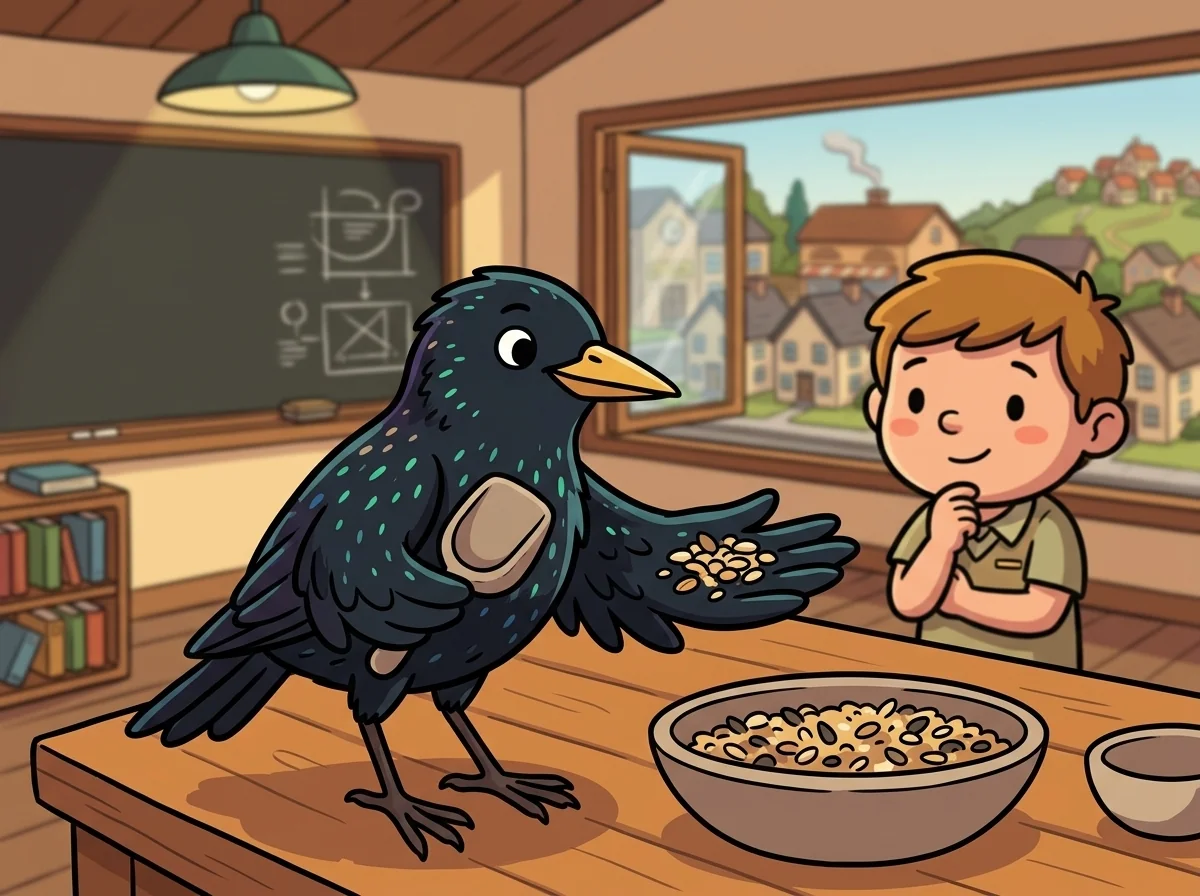
When she was grown, Cull walked to the DataForge academy, her cloth scoop tucked under her wing.
At the door stood Datum, who ran the academy. "Show me how you gather a few to stand for the many," Datum said.
Cull didn't recite. She set out a wide bowl of mixed seed — light and dark, whole and broken — and then, instead of scooping from one spot, she drew a pinch from the near side, a pinch from the far side, a pinch from the middle, turning the bowl between each. She tipped the pinches into her palm and held it up.
"If I want to know the bowl without counting every seed," Cull said, "I take a little from all through it, chosen so no part is left out. Then my small handful looks like the big bowl." She let a few seeds fall. "The trick isn't the size of the handful. It's that every seed in the bowl had a fair chance to end up in it. Scoop only where it's easy, and your handful lies about the bowl — quietly, and with a straight face."
Datum looked at the palmful of mixed seed. "Then draw them fair," Datum said, and stepped aside to let her in.
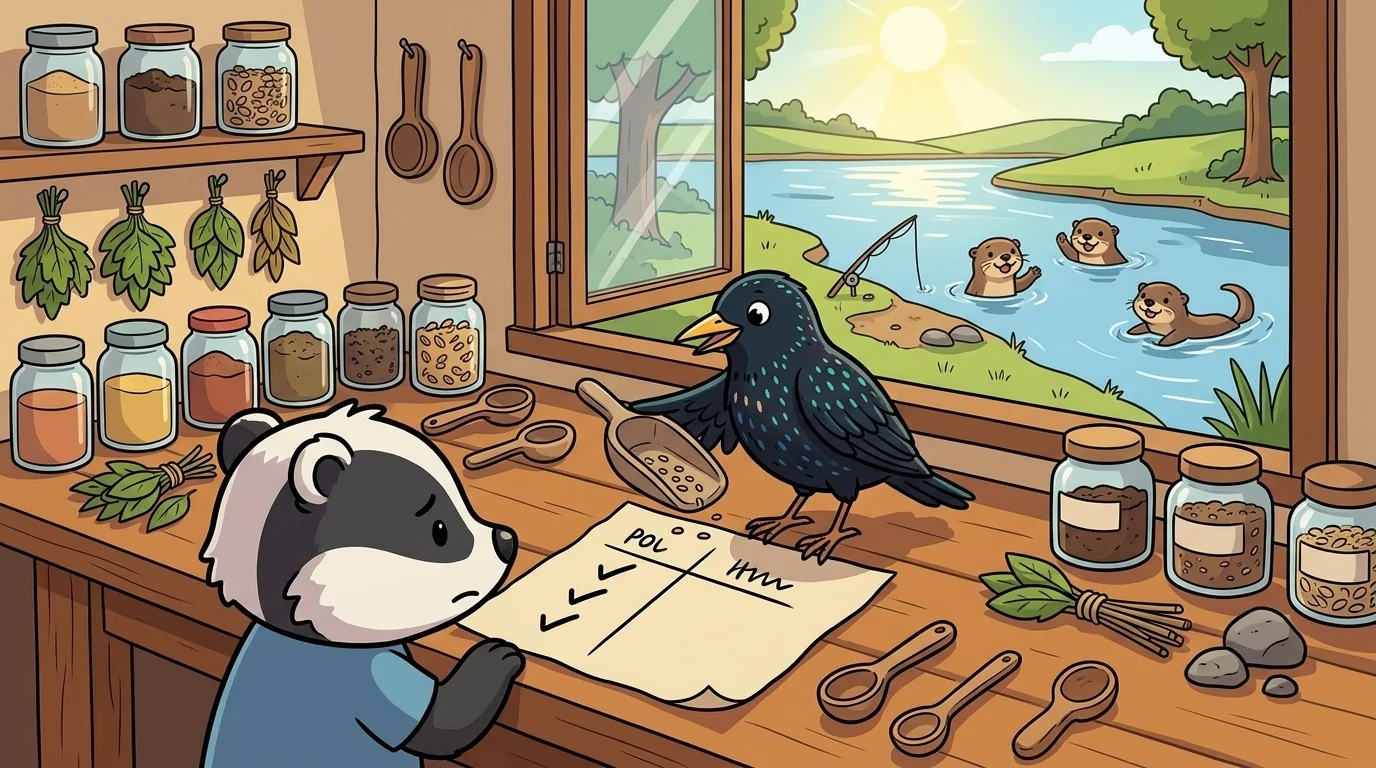
In Cull's workshop, a badger cub named Ferrow brought her a poll. "The river's too cold for swimming," he announced. "Everyone agrees."
"Let's see the handful," said Cull kindly. "Who'd you ask?"
"The kids on the bank at noon. All of them said too cold."
Cull tilted her head. "The kids who were on the bank instead of in the water. At noon." She spread her scoop over his page. "Think about who you missed. The kids already swimming didn't stop to answer — they were too busy having a fine time. The ones who feel the cold most were the only ones standing about to be asked." She drew a soft line. "Your handful came all from the bank. So of course the bank said cold."
Ferrow's ears drooped. "So the answer's ruined?"
"Not ruined," Cull said firmly. "Just narrow — and now you know it. Next time, take your handful from everywhere the question lives: ask some in the water, some on the bank, some at different hours." She nudged the scoop toward him. "A fair handful isn't more work for its own sake. It's the difference between knowing the river and knowing the one cold spot you were standing in."
Ferrow looked at his poll, then at the water, where three otters were plainly enjoying themselves. He picked up the scoop. "I'll go ask the ones who are swimming," he said.
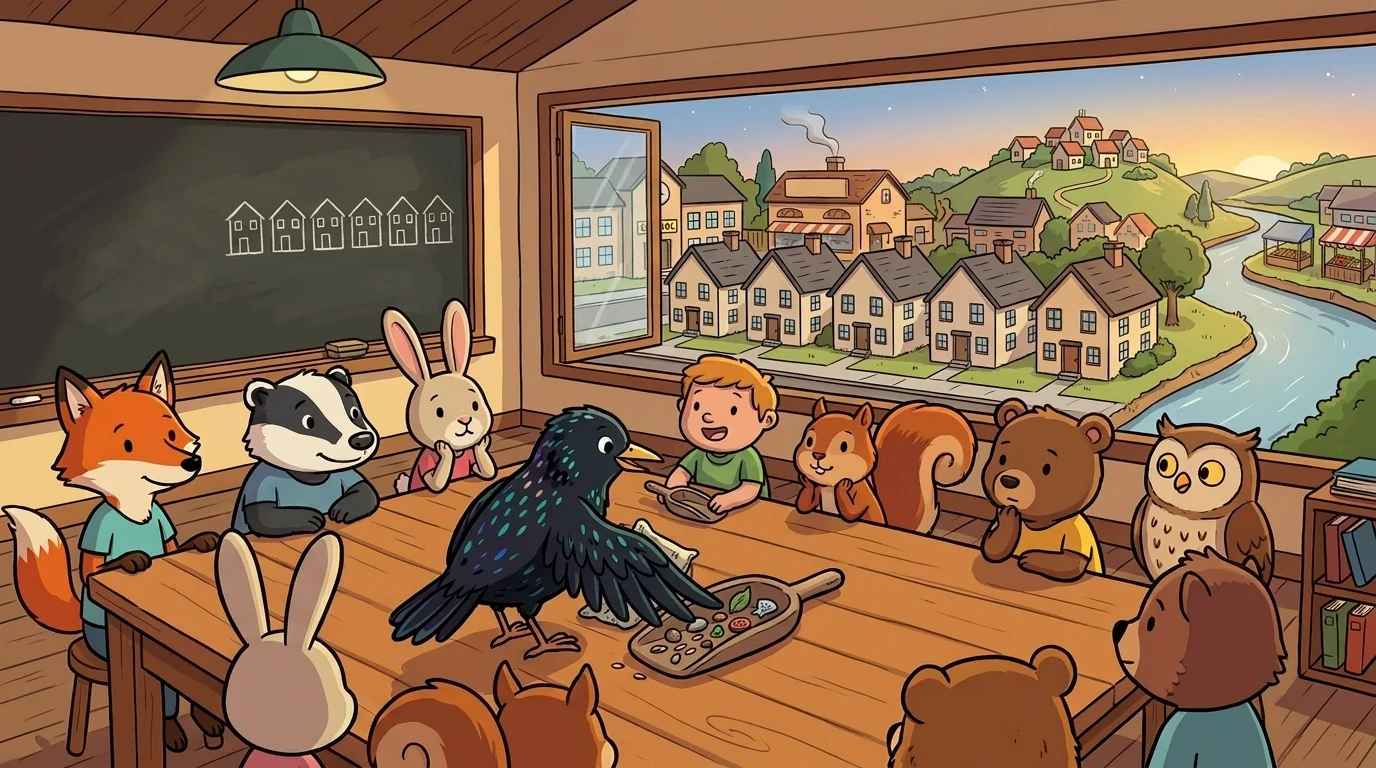
When Ferrow came back, his poll was mixed now — some cold, some just right, some who never came out — and truer for it. "It was more walking around," he admitted. "But it feels solid."
"That's the feeling," Cull said. "You didn't take the loudest corner and call it the whole." She tapped his fairer handful. "Now nobody who reads this will think the town said something the town never said."
She tucked her scoop back under her wing, and something in her chest settled, glossy and calm — the quiet of a handful that could stand for the whole and not flinch. The great flock would turn overhead again at dusk, tens of thousands of small lights folding through the sky, and Cull felt loose and unhurried, glad she had learned young to taste the far corner too.
The DataForge ensemble
Cull is part of DataForge's distributed-narrative cast. Each character embodies a different curricular primitive; together they teach the full subject.
-

Catch
Data collection — who-what-why-when posture (every dataset has a collector + purpose + omissions)
-

Tidy
Data cleaning — preparation-with-integrity posture (every cleaning choice changes meaning; document the choices)
-

Graph
Data visualization — shape-of-the-story posture (which chart tells the truth, not the loudest one)
-

Tell
Interpretation — correlation-not-causation posture (data shows patterns; humans interpret; confidence not certainty)
-

Guard
Data ethics — bias-privacy-harm-consent posture (who benefits, who's harmed, who decided; structurally present in every kit from kit 6)
-
Crux
Summary — honest-middle posture (which middle tells the truth: mean, median, or mode; one giant value drags the average away from where most of the crowd actually sits)
-

Ladle
Rates & fair comparison — like-for-like posture (compare rates and fair portions, not raw totals; a bigger pot isn't a bigger share)
-
Stray
Reading the outlier — the-one-that-doesn't-fit posture (an outlier is a question to ask, not noise to delete; find out why before you drop it)
-

Waver
Uncertainty & margin — confidence-not-certainty posture (every estimate carries a margin of error; show the wobble honestly instead of hiding it)