
Cull and Waver
TRUSTWORTHY SAMPLE (Advanced) — a small result earns trust from two independent things: Cull's REPRESENTATIVENESS (was the frame drawn from every part, or just the easy corner?) and Waver's PRECISION (how wide does a sample this size wobble?). A sample can be perfectly fair and still too small to be sure — you need an unbiased frame AND a margin narrow enough to clear the gap, together.
Loading audio…
Press play to listen along. The line being read lights up as you go.
Show full transcript
Loading transcript…
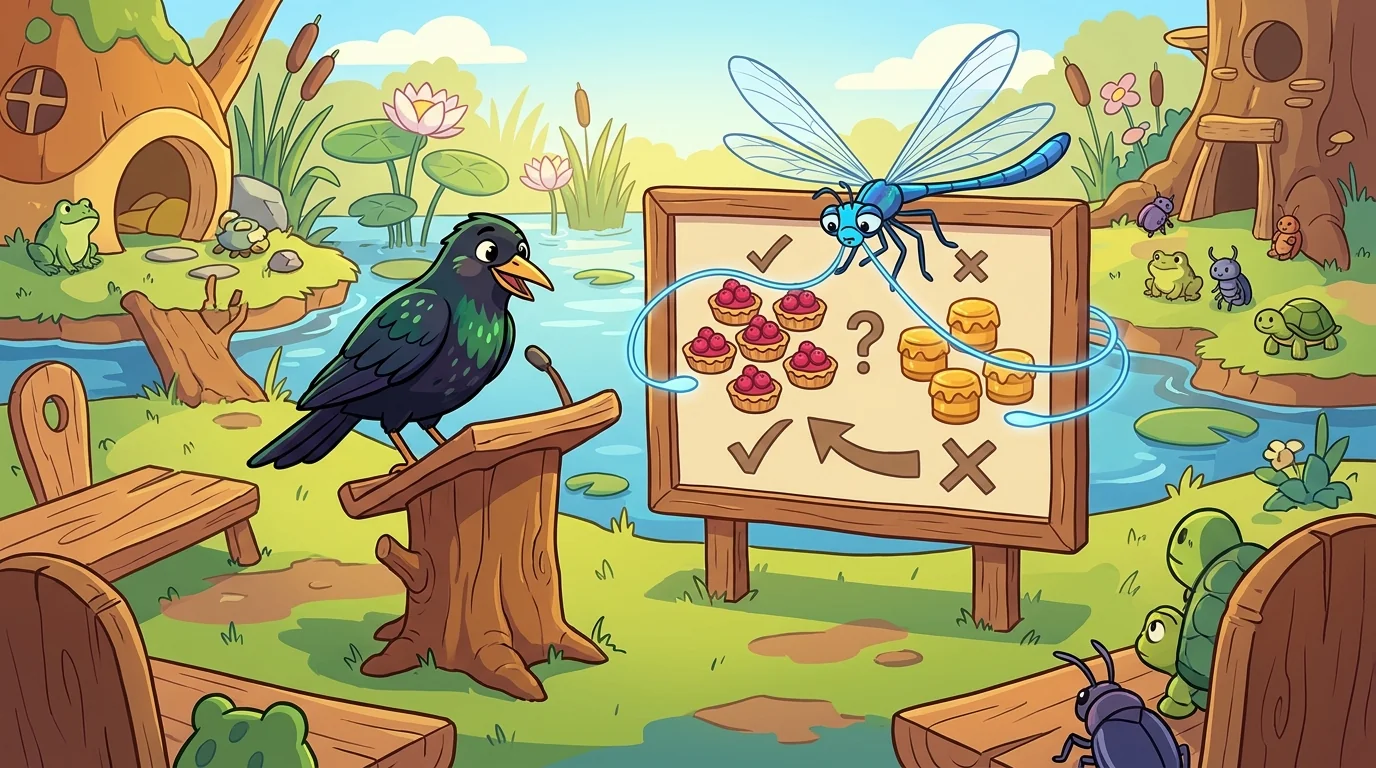
The morning the club declared a winner from a single small poll, Cull the starling and Waver the damselfly both flew in — one worried about who'd been asked, the other about how far the answer could move.
On the board: We asked ten pond-creatures which festival food they want. Berry-tart six, honey-cake four. Berry-tart wins. Ten answers. Six to four. Settled.
Cull landed and cocked her glossy head. "Ten creatures — which ten?" Waver hovered, trailing his two edge-threads wide across the numbers. "Ten answers — how far could six-and-four move if you asked ten more?"
They turned to each other. Cull had been about to ask whether the handful was representative. Waver had been about to ask whether it was precise. Each saw at once that the other was asking the second half of the same question.
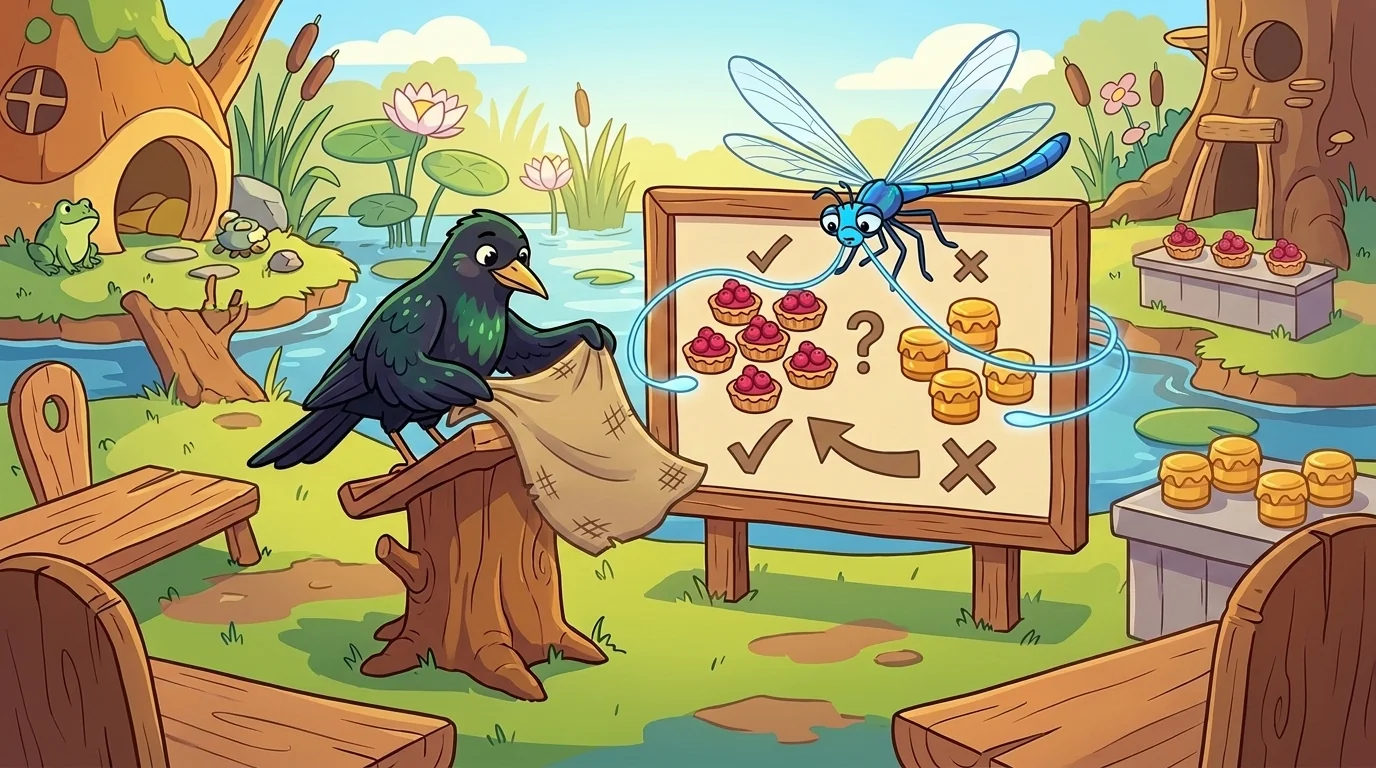
Cull spread her scoop over the poll. "First, the frame — who did we scoop? All ten were creatures loitering by the tart stall at noon." She smoothed the cloth. "We asked the folk already standing next to the berry-tarts; of course they leaned berry-tart. The honey-cake lovers were off at the cake stall, or at home, or working — never in the frame, so they couldn't have swung it however they felt. That's selection bias: the handful reports the tart corner and calls it the pond." She tapped the page. "Fix the frame — draw a little from every stall, the benches, the paths home, different hours — and at least the six-to-four stops being just the tart corner talking. But a fair frame is only the first half."
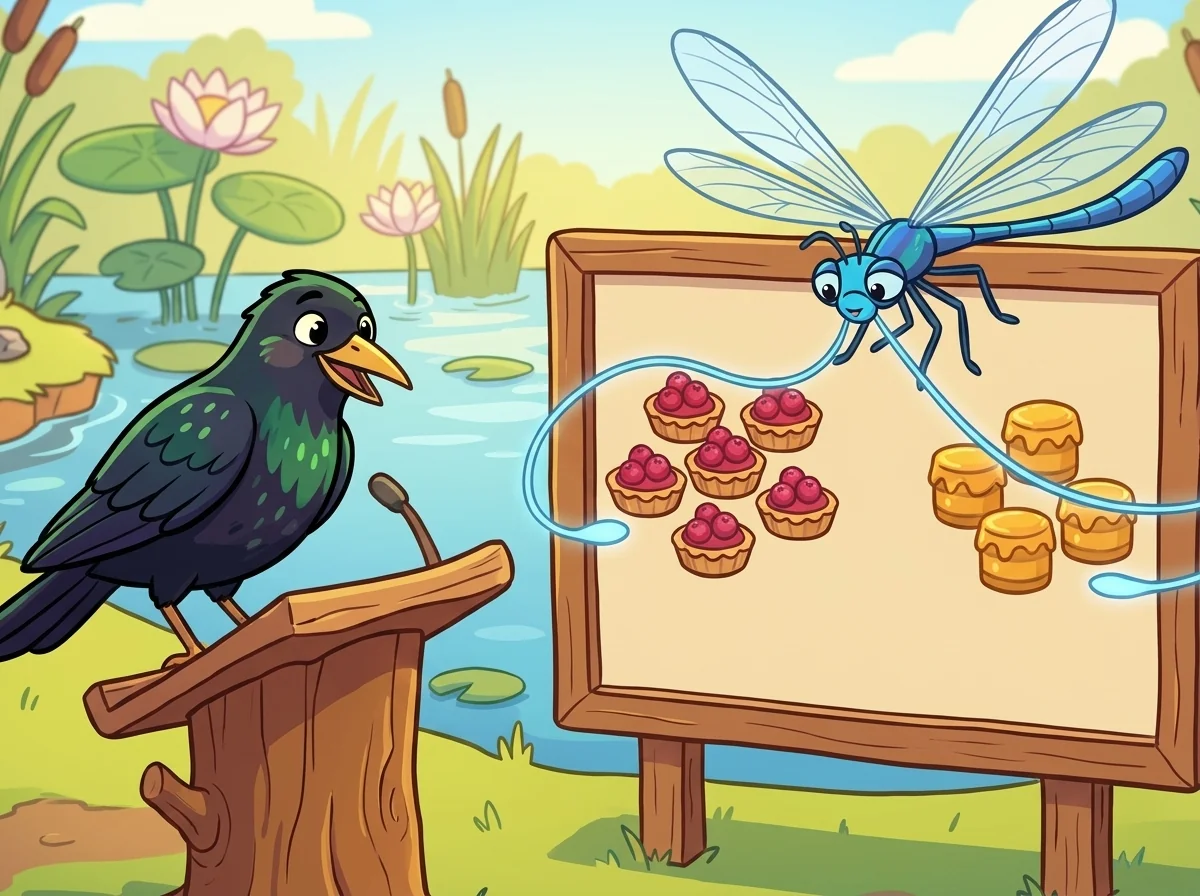
Then Waver drifted over the numbers, threads spreading wide. "Because even a perfectly fair ten," he said, "is a tiny sample, so whatever it says carries a wide margin." He set his threads a full hand's width to either side of the six. "From only ten answers, 'six out of ten' could as easily have come out five or seven purely by which ten wandered past — that's sampling error, and with n this small it's huge. The four-vote gap sits inside that wobble." His threads overlapped across both numbers. "So even after Cull makes the frame fair, ten is too few to crown anything. As far as ten answers can tell, the foods are tied — the lead is just the numbers breathing. A bigger handful would wobble narrower; ten wobbles too wide to be sure this close."
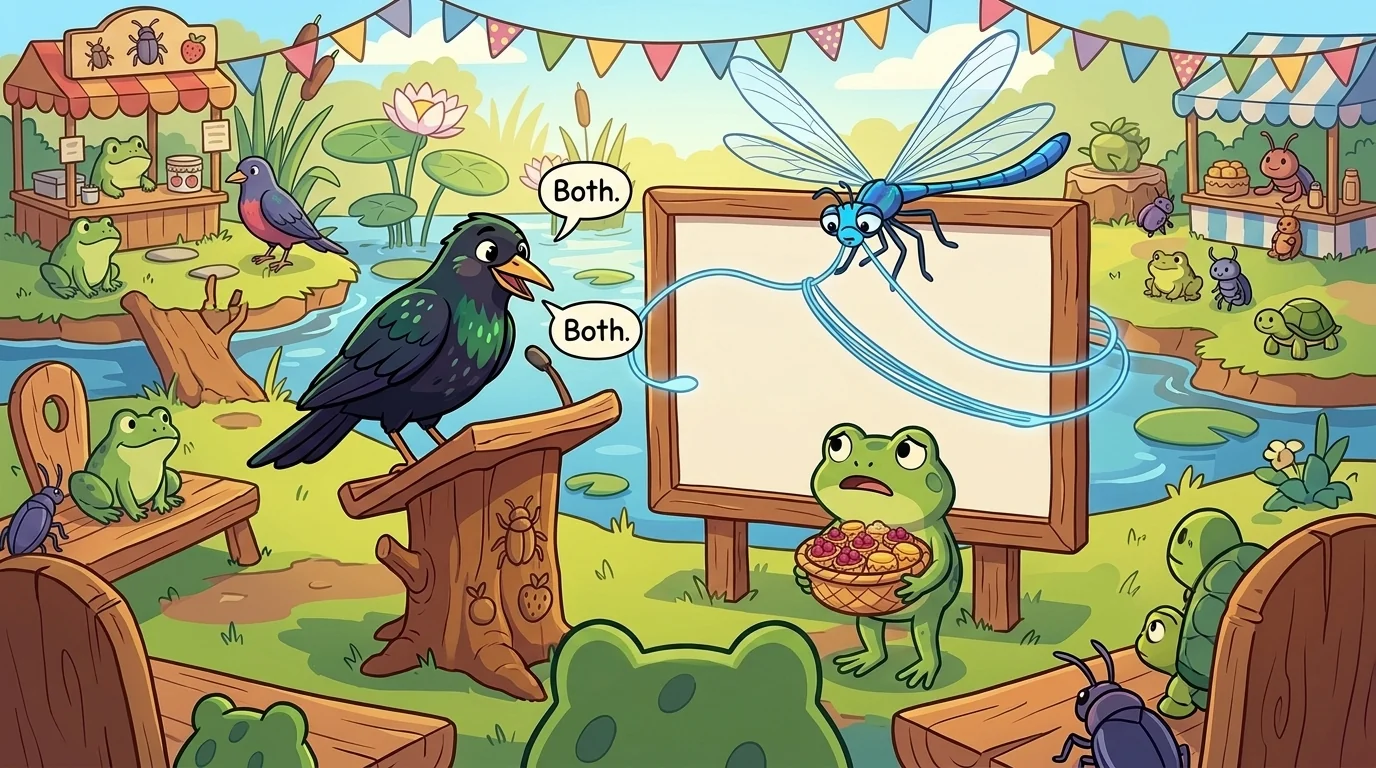
A young frog named Pip had been holding the festival banner, looking from one to the other in dismay. "You're each telling me something's wrong for a different reason. Cull, the ten weren't fair. Waver, ten's too few. Do I fix the fairness or the fewness?" Cull and Waver looked at each other and together said: "Both." "Watch," said Cull, and sent Pip round the whole festival — every stall, the benches, the paths home — to gather a fair handful this time, not just the tart corner. "And gather plenty," said Waver, hovering alongside. "The more you fairly ask, the narrower my threads close." Pip worked all afternoon and came back with sixty answers, drawn fairly from all through the festival. Cull checked the spread — every corner in it, no stall over-counted: representative. Then Waver hovered over the tally, thirty-one berry-tart, twenty-nine honey-cake, and drew his threads. This time, with sixty fair answers, they pulled in closer than before... and still, gently, overlapped across the two numbers.
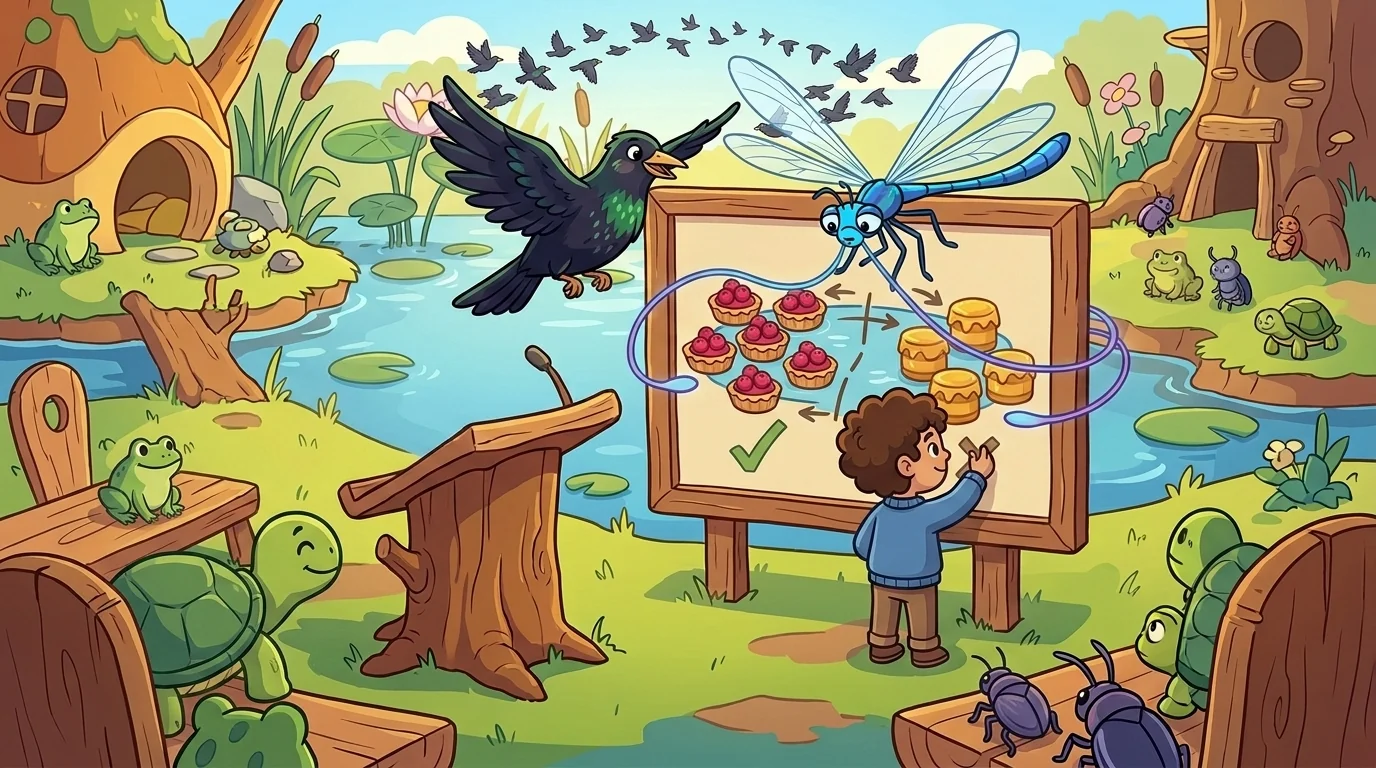
"Fair now," said Cull, nodding at the even spread. "And narrower," said Waver, "but look — even sixty fair answers can't split thirty-one from twenty-nine. The bands nearly part, but they still touch." He let the threads rest. "So the honest finding isn't 'berry-tart wins.' It's the pond is split almost evenly, leaning berry-tart by a hair we can't yet be sure of. Representative and precise, both — that's the truth." Pip stared. "So I can't crown a winner even now?" "You can say something truer than a winner," Cull said gently. "You can say the pond is divided, roughly in half. That's real news." Pip rewrote the festival plan to serve both foods, since the pond was split — and felt, oddly, more sure of that split than he'd ever felt of the false six-to-four. "The first poll gave me a clean winner and I felt confident. This one gives me a tie and I feel... solid." "Because the clean winner was a story the small tart-corner handful told you," said Cull, folding her scoop. "This is what the pond actually thinks." "And you're holding the doubt where it belongs," Waver added, threads swaying, "instead of pretending it away. A fair frame and an honest margin — you need both, or you'll crown winners that aren't there." He drifted upward. "Now nobody who reads this will start a festival argument over a lead that was only the numbers breathing." Pip pinned up his honest plan — two foods, a split pond — and felt the calm of holding fairness and doubt together, steadier than any false certainty. Above the water Cull's great flock wheeled and Waver's thin wings shimmered, and the two rose side by side, glad they'd each flown in that morning worrying about the opposite half of the very same question.
The DataForge ensemble
Cull and Waver is part of DataForge's distributed-narrative cast. Each character embodies a different curricular primitive; together they teach the full subject.
-

Catch
Data collection — who-what-why-when posture (every dataset has a collector + purpose + omissions)
-

Tidy
Data cleaning — preparation-with-integrity posture (every cleaning choice changes meaning; document the choices)
-
Graph
Data visualization — shape-of-the-story posture (which chart tells the truth, not the loudest one)
-

Tell
Interpretation — correlation-not-causation posture (data shows patterns; humans interpret; confidence not certainty)
-

Guard
Data ethics — bias-privacy-harm-consent posture (who benefits, who's harmed, who decided; structurally present in every kit from kit 6)
-
Crux
Summary — honest-middle posture (which middle tells the truth: mean, median, or mode; one giant value drags the average away from where most of the crowd actually sits)
-
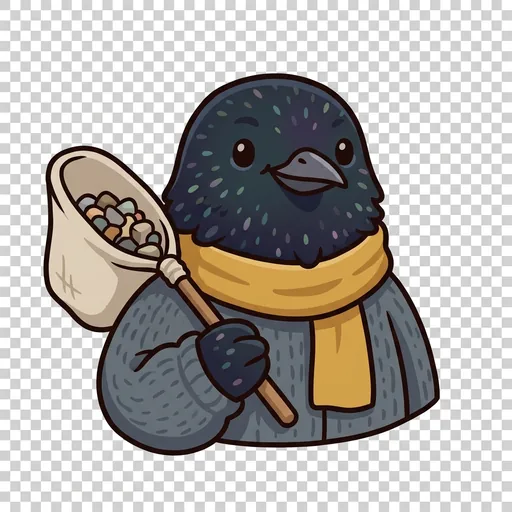
Cull
Representative sampling — fair-sample posture (a sample must mirror the whole; who gets left out silently bends the story)
-

Ladle
Rates & fair comparison — like-for-like posture (compare rates and fair portions, not raw totals; a bigger pot isn't a bigger share)
-
Stray
Reading the outlier — the-one-that-doesn't-fit posture (an outlier is a question to ask, not noise to delete; find out why before you drop it)
-

Waver
Uncertainty & margin — confidence-not-certainty posture (every estimate carries a margin of error; show the wobble honestly instead of hiding it)