
Waver
UNCERTAINTY (Advanced) — *a measured number is a band, not a point, and the band's width is set by how big and how noisy the sample was.* A small handful wobbles wide, a big careful one wobbles narrow; a gap that sits inside the wobble is not yet a real difference. Reporting a bare, over-precise number hides the margin the number actually carries.
Loading audio…
Press play to listen along. The line being read lights up as you go.
Show full transcript
Loading transcript…
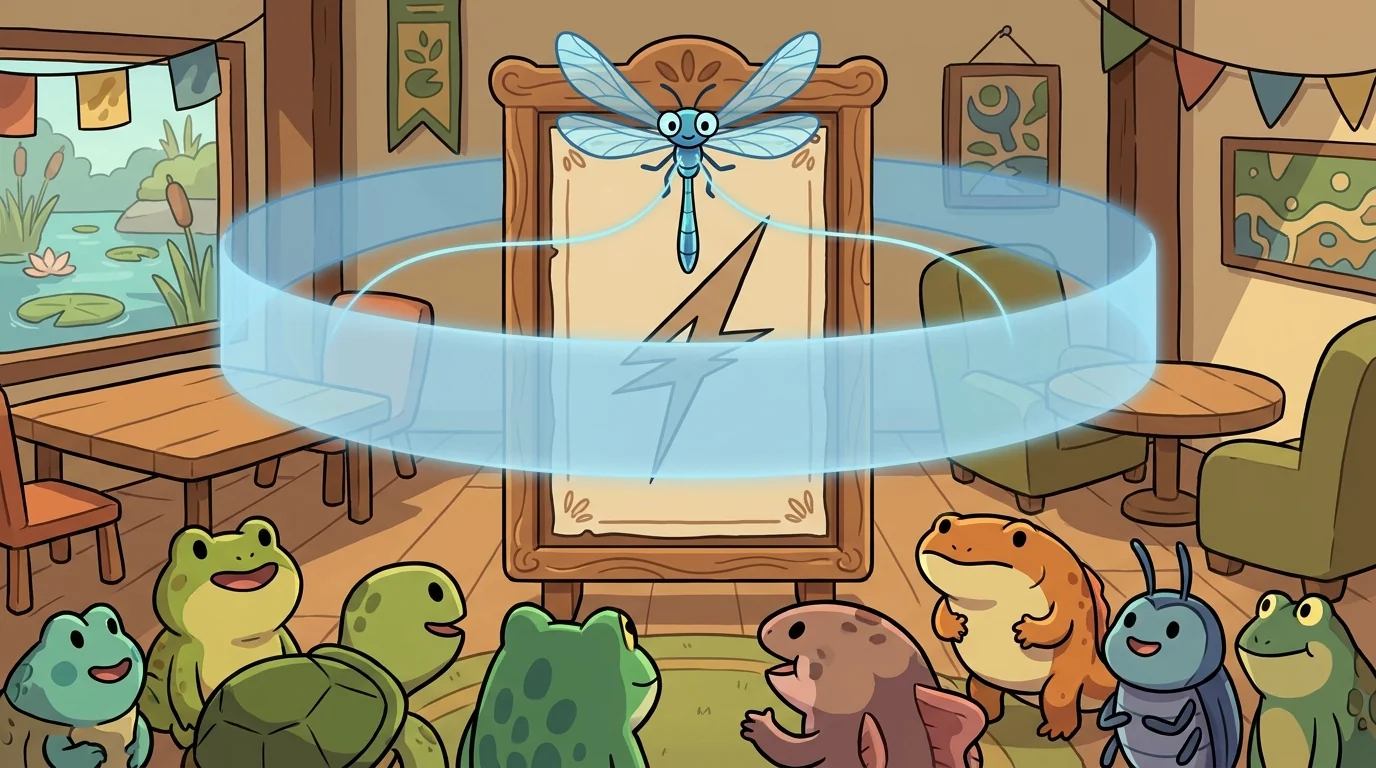
The day the club posted a number down to the last decimal, Waver was the only one who noticed how far that number could quietly slide.
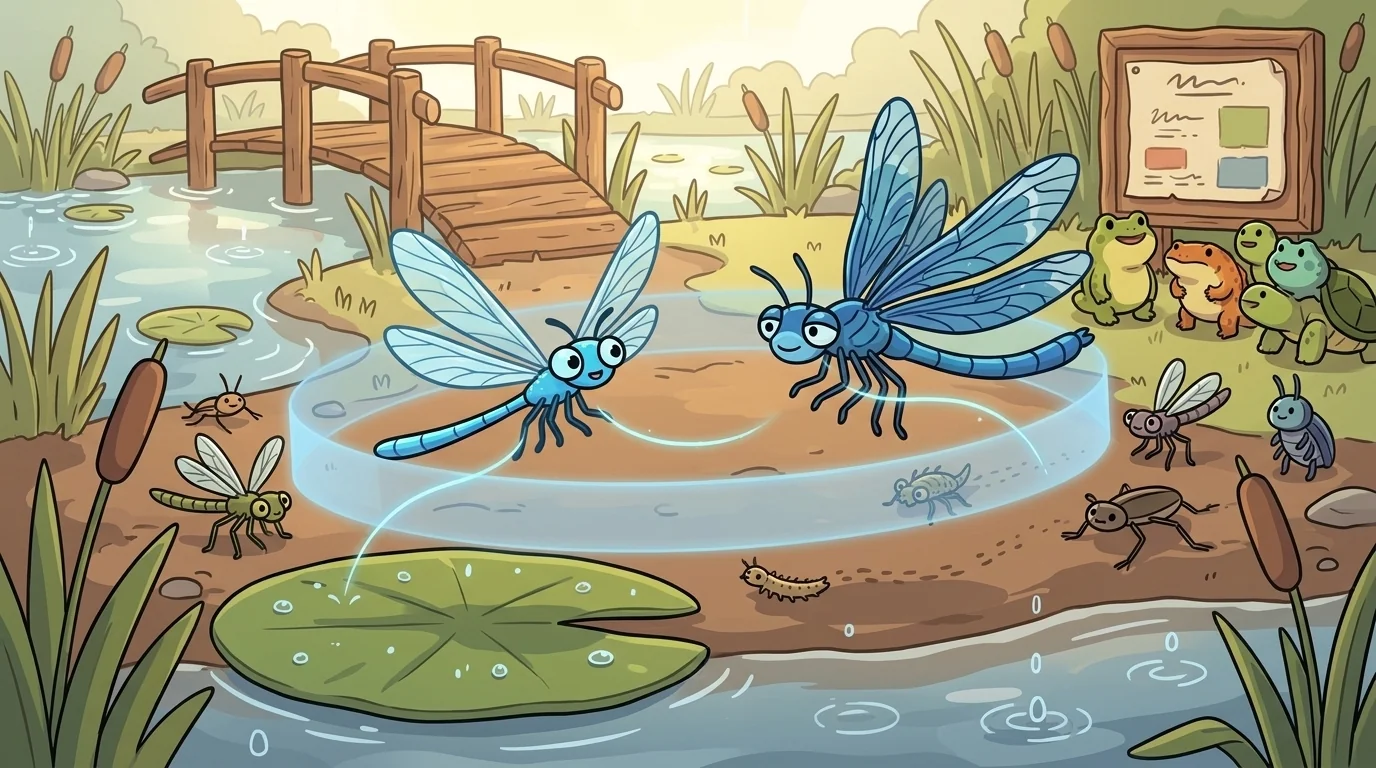
He was a damselfly, thin and shimmering, wings like slivers of blue glass, and he never quite landed — he hovered, drifting a little each way inside a small band of air, trailing two faint threads that marked the band's edges. The club had asked forty pond-creatures about the new footbridge and posted: 63.4 percent approve. "Sixty-three point four," Waver said, hovering over it, "from forty answers. That point-four is a costume. It dresses a fuzzy number up as a sharp one." He spread his threads a hand's width to either side. "Ask forty different creatures — same pond, same day — and you might get fifty-eight, or sixty-eight. So the honest answer isn't a point. It's a band: around sixty, give or take several. The width of that band is the margin of error, and it comes not from carelessness but from the plain fact that you asked a sample, not everyone."
He named it the academy's way. "This wobble is sampling error — the amount an answer can move purely because you happened to draw these creatures and not those. It shrinks as the sample grows: a handful of ten wobbles wide, a careful crowd of a thousand wobbles narrow. That's the one honest thing more data reliably buys you — not certainty, but a tighter band." He let the threads drift. "So I never post a bare dot. I post the dot and its band, and I make the point-four vanish, because claiming a tenth of a percent from forty souls is a false sharpness that fools the reader into over-trusting."
Waver had learned it among the pondskaters, where his uncle read the weather for the working-creatures. As a nymph he'd heard his uncle tell a mayfly, "Rain by evening — but I'd say seven chances in ten, not a certainty." "Why not just say it'll rain?" Waver asked. "It sounds surer." "Because it might not," his uncle said. "Say 'it will rain' and it stays dry, I've lied. Say 'about seven in ten' and it stays dry, I told the truth — the truth was always a chance, not a promise. Folk trust a reader who admits the wobble more than one who's always sure and sometimes wrong." Years later, over survey results instead of a sky, Waver would think: the sharpest-sounding number is often the least honest; give the band it truly lives in.
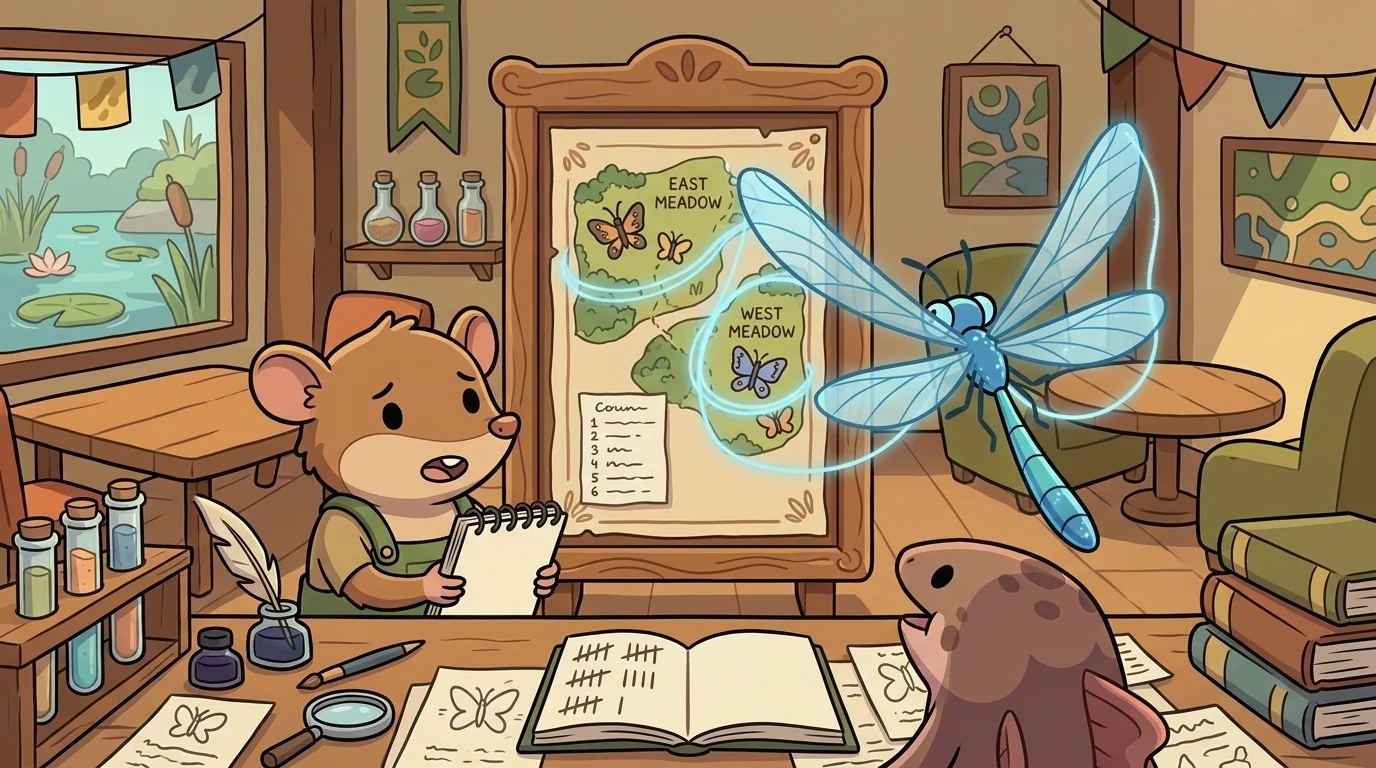
In his workshop a shrew named Tansy burst in triumphant. "I've proved the east meadow has more butterflies than the west — east fourteen, west eleven!" "How many times did you count?" "Once each. One morning." Waver spread his threads wide over both. "Fourteen and eleven, from a single count. But butterflies drift — a cloud passes, a flower opens. Count again tomorrow and east might be eleven, west fourteen." His two threads overlapped across the numbers. "Your bands sit right on top of each other. The three-butterfly gap is smaller than the wobble in either count — so it isn't yet a difference at all. It's the numbers breathing." Tansy's face fell. "So I proved nothing?" "You proved the meadows are close, which is a real finding. To claim one truly leads, count many mornings and see whether the bands ever pull fully apart. A gap only counts when it clears the wobble on both sides."
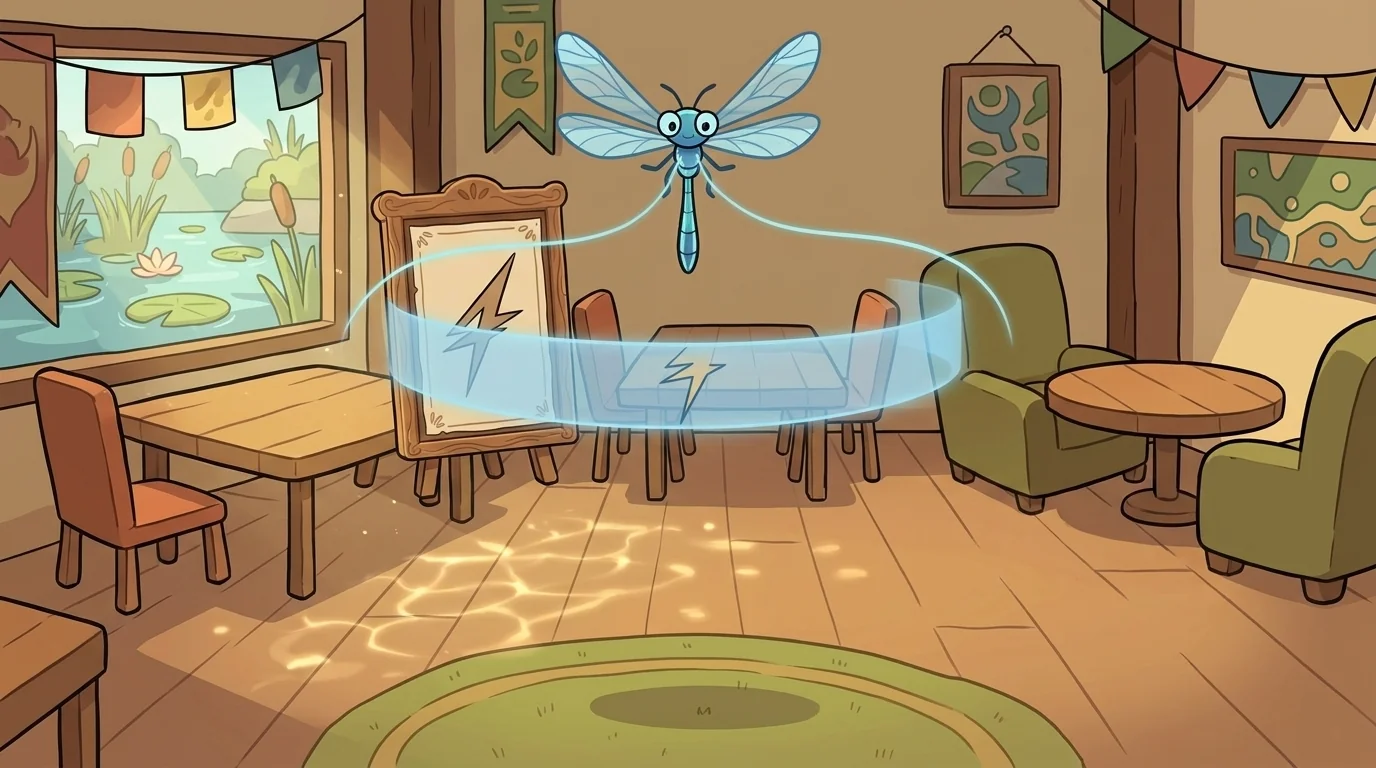
Tansy counted all week; the bands narrowed as the counts piled up, but still, gently, overlapped. She looked almost relieved. "It felt like losing — not being able to declare a winner. But now I won't be wrong." "That's the trade," Waver said. "You gave up a sharp answer you couldn't keep for an honest one you can." He rested his threads around her overlapping bands. "Now nobody who reads this will march off certain of a difference that was only the numbers breathing."
He drifted upward, threads swaying at his sides, and something in his thin chest went calm and clear — the ease of a number wearing its true width, sure of nothing it couldn't keep. Over the pond the light would shimmer and shift, never quite still, and Waver felt loose and unworried, glad he'd learned young that an honest about outlasts a false exactly every time — and that the width of an answer is part of the answer, never a weakness to hide.
The DataForge ensemble
Waver is part of DataForge's distributed-narrative cast. Each character embodies a different curricular primitive; together they teach the full subject.
-

Catch
Data collection — who-what-why-when posture (every dataset has a collector + purpose + omissions)
-

Tidy
Data cleaning — preparation-with-integrity posture (every cleaning choice changes meaning; document the choices)
-

Graph
Data visualization — shape-of-the-story posture (which chart tells the truth, not the loudest one)
-

Tell
Interpretation — correlation-not-causation posture (data shows patterns; humans interpret; confidence not certainty)
-

Guard
Data ethics — bias-privacy-harm-consent posture (who benefits, who's harmed, who decided; structurally present in every kit from kit 6)
-
Crux
Summary — honest-middle posture (which middle tells the truth: mean, median, or mode; one giant value drags the average away from where most of the crowd actually sits)
-
Cull
Representative sampling — fair-sample posture (a sample must mirror the whole; who gets left out silently bends the story)
-

Ladle
Rates & fair comparison — like-for-like posture (compare rates and fair portions, not raw totals; a bigger pot isn't a bigger share)
-
Stray
Reading the outlier — the-one-that-doesn't-fit posture (an outlier is a question to ask, not noise to delete; find out why before you drop it)