
Berth and Nod
SO A QUIET PART CAN LAND — a soft or non-speaking contributor's part reaches the group through two moves at once: Berth leaves real room in the sound, and Nod gives a wordless cue for stepping into it — room with no signal leaves everyone guessing, and a signal with no room has nowhere to go; together, a part that would have vanished fits and is seen without anyone having to shout or find words.
Loading audio…
Press play to listen along. The line being read lights up as you go.
Show full transcript
Loading transcript…
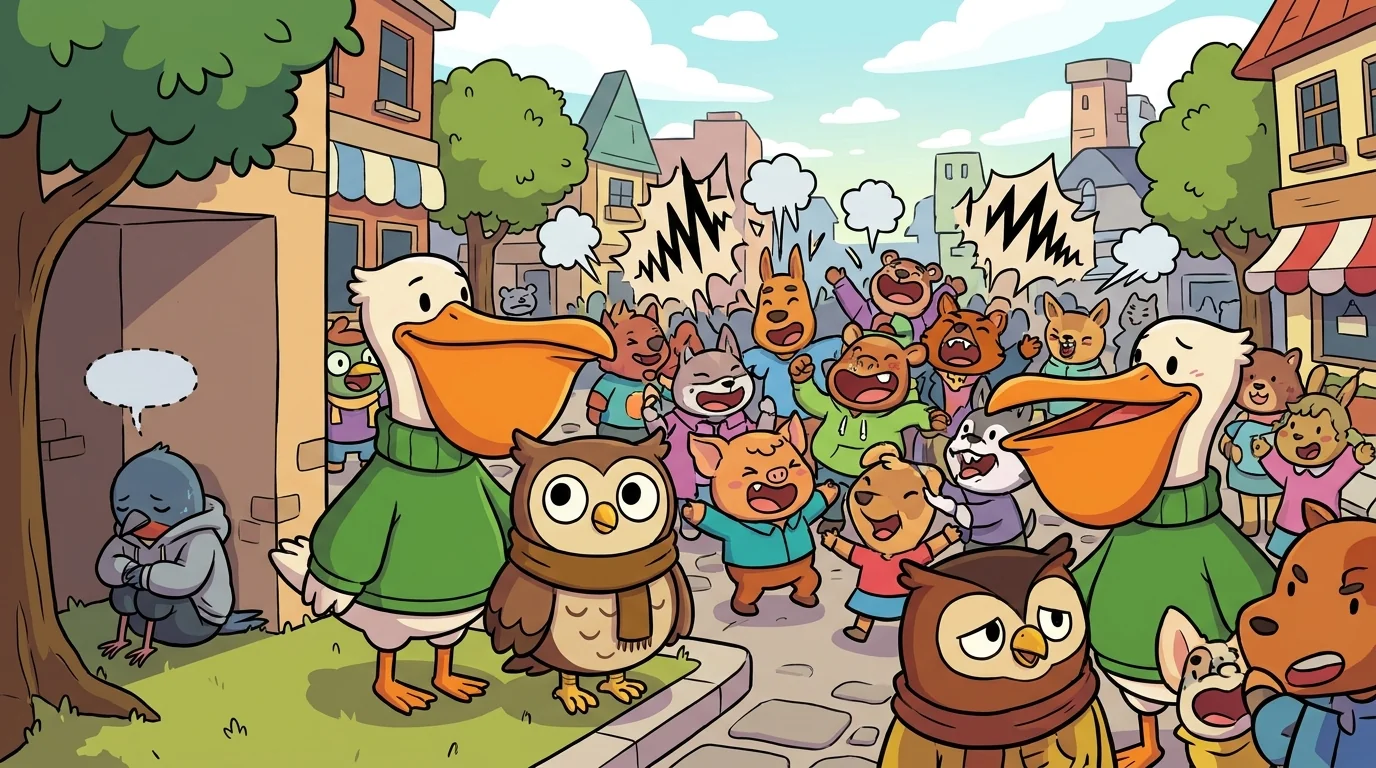
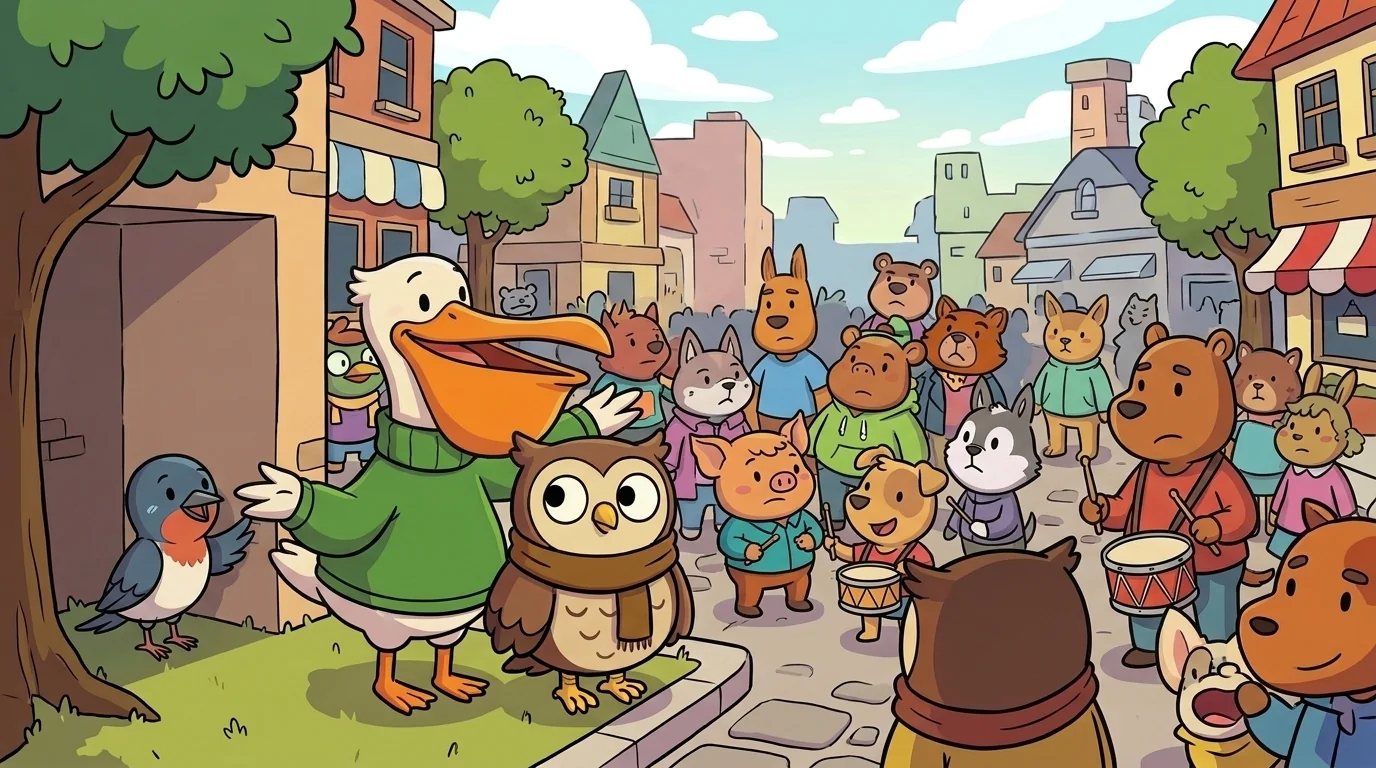
Berth the pelican and Nod the owl stood at the edge of a big loud group with one small martin folded silent in the corner — a bird with a part to add and no way in: the sound too full to fit into, and no words coming to ask for a turn. There was a wall of noise and a bird disappearing behind it. And there was what the two of them had learned to make together: a group where a quiet, wordless part fits and is seen, with nobody having to shout or find words. Each of them, at first, was sure their own move was the whole answer.
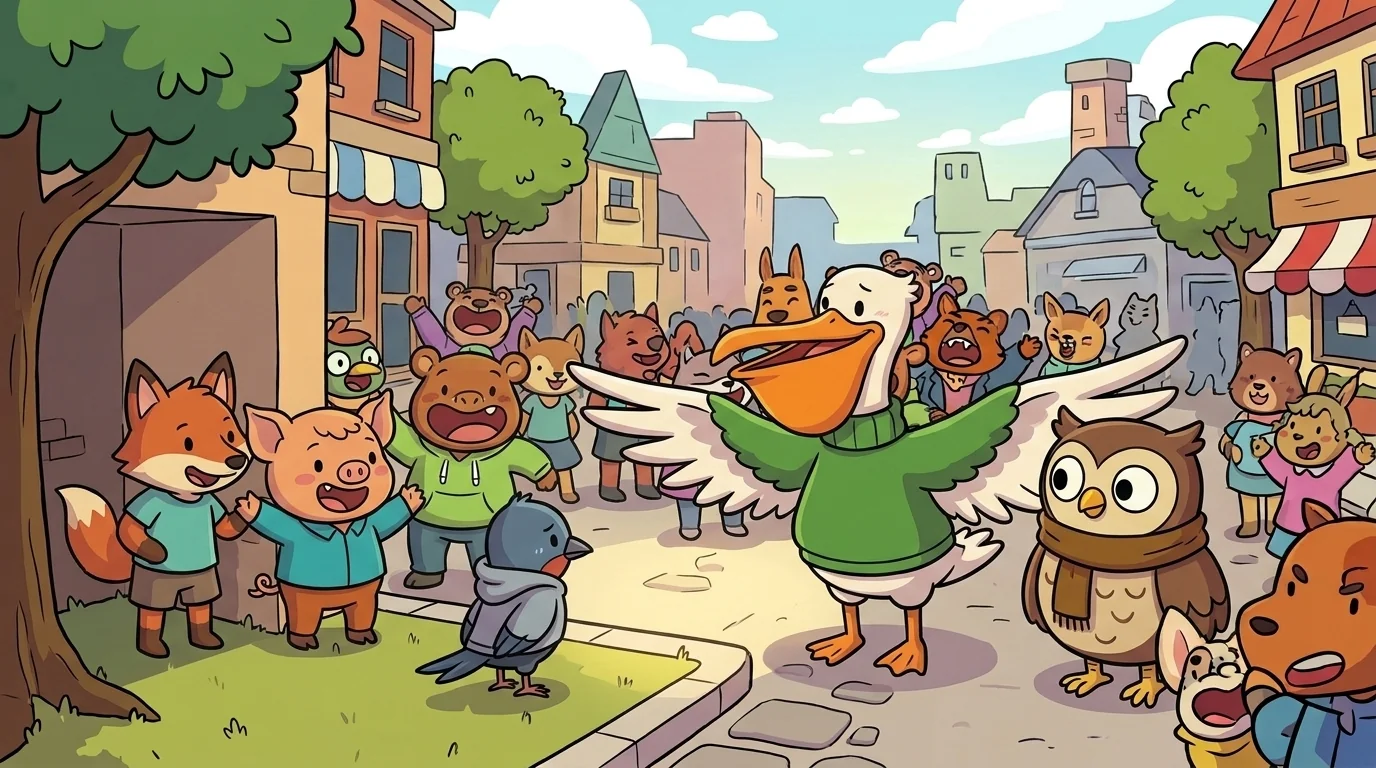
Berth did her half — the room. "The problem's obvious," she said. "There's no space. The sound's a solid wall — the martin couldn't fit a part in with a crowbar." She folded her great wings and made a gap: quieted the loud drummers, thinned the singers, held a clear open bar right in the middle of the song, exactly the size of a small soft part. "There," she said, satisfied. "Room. Now the martin's part can fit." But the group didn't quiet on their own the second time around, and the martin — even with the gap sitting open — didn't move into it. The space was there. But the martin couldn't tell when it was her moment, and had no way to say now, and no way to ask the loud birds to hush again. The gap opened and closed, unclaimed, and the martin stayed folded in the corner. Room, it turned out, wasn't enough.
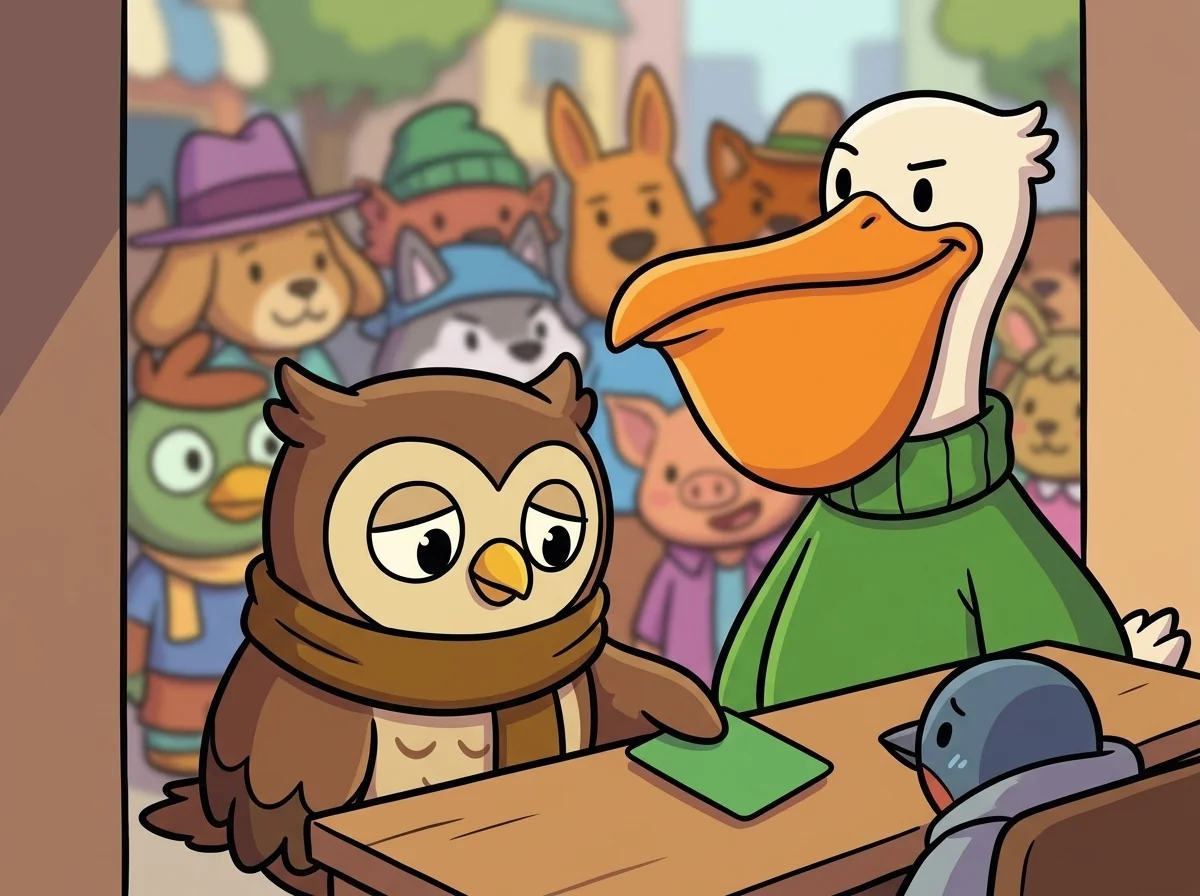
Then Nod did her half — the cue. "The martin needs a signal," she said. "A wordless way to say I'm coming in now — and a wordless way to tell the group make the gap." She gave the martin a small card and taught the group one cue: when the martin lifts the card, everyone softens and leaves her a bar. Nod demonstrated the entrance-cue with a single clear dip of her head. "There," Nod said, satisfied. "Now she has a way in that needs no words." But when the martin lifted her card... the loud group, mid-song, didn't actually quiet. There was a cue — clear, seen, honored — but the sound was still a wall, and a signal with nowhere to land is just a bird waving at a closed door. The cue was there. But the room wasn't. Signal, it turned out, wasn't enough either.
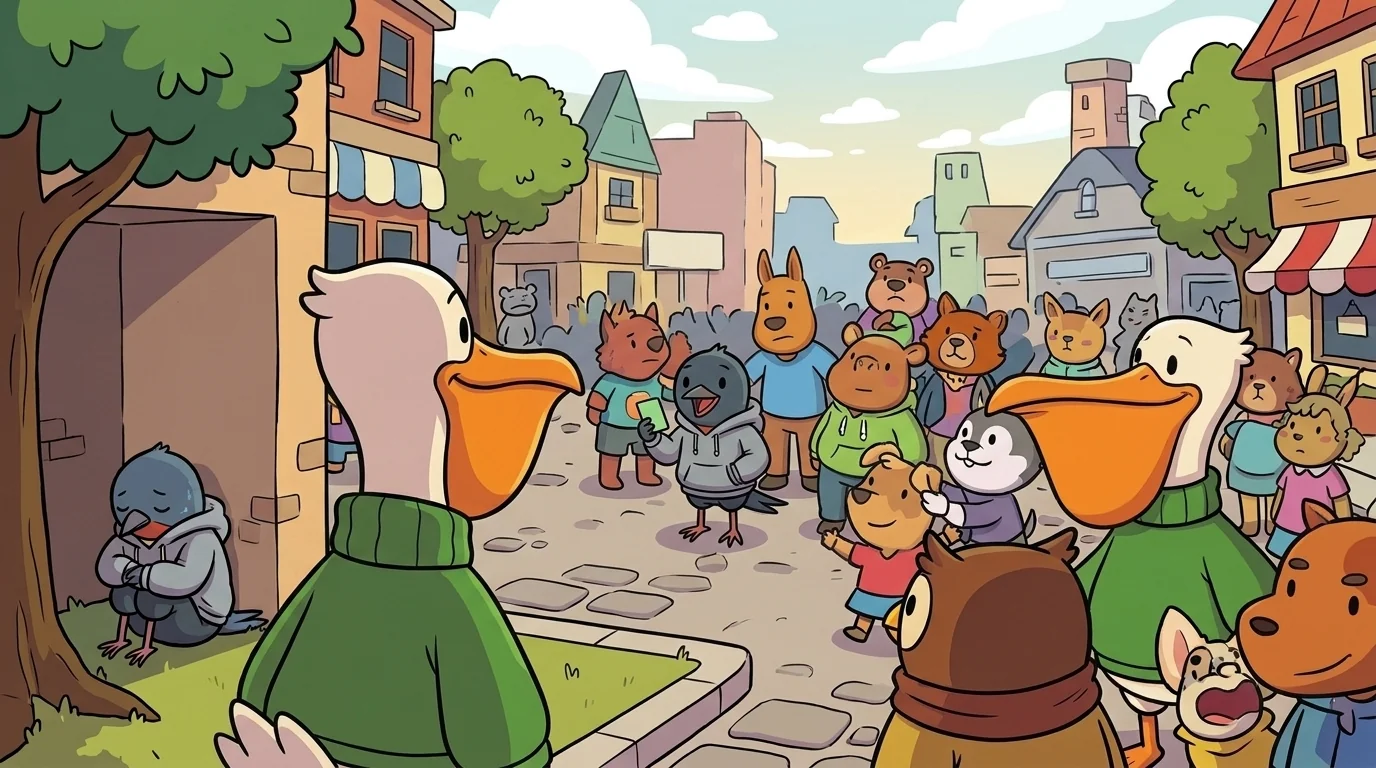
And that was the moment the two of them saw it — that neither move alone had ever let the martin in. "Oh," said Berth. "My room opened and closed and she couldn't tell when to use it — because there was no signal." "And my cue told her when," said Nod, "but there was nowhere to go — because there was no room." They looked at the martin, still folded in the corner, and did it together, in one motion: Berth held a real gap open in the sound and Nod's cue told the martin this is your bar, now — the card lifted, the group (by their honored promise) softened into the space Berth had made, and into that held-open, clearly-signaled bar the martin finally placed her small, soft, lovely part. And it landed — heard, and seen, without her shouting or finding a single word. "Room with no signal leaves everyone guessing," Berth said. "And a signal with no room has nowhere to go," said Nod. "It was never one of us. It's both — the space and the way to claim it — that lets a quiet part come home."
"So a soft part being heard isn't one fix," the martin said softly, once her part had landed. "It's two — real room, and a wordless way to step into it — together?"
"That's the secret of it," Berth said, and Nod dipped her head in a small, glad cue. They ran the song once more — Berth's held-open bar, Nod's honored signal — and the martin's quiet part arrived, on time and heard, every time. Under the quiet, the three of them felt the same settled gladness: not the vanishing-behind-a-wall feeling of a part with no room, not the waving-at-a-closed-door feeling of a signal with nowhere to go, but a fitted, seen, came-home-without-shouting ease — the ease of a pelican who made the space and an owl who made the way in, discovering that a quiet part lands only when the room and the cue arrive together. That room-and-signal, fits-and-is-seen feeling, steadier than either half alone, was to Berth and Nod exactly why they worked the edge of the loud group side by side.
The EnsembleQuest ensemble
Berth and Nod is part of EnsembleQuest's distributed-narrative cast. Each character embodies a different curricular primitive; together they teach the full subject.
-

Part
Role-holding — knowing what MY part is, separate from but supporting the whole
-

Turn
Turn-taking — the rhythm of give-and-receive across an ensemble
-
Ear
Active listening — receiving the other person's contribution before adding your own
-

Welcome
Invitation + repair — bringing back someone who's drifted out of the ensemble
-
Share
Synthesis-in-performance — the moment many parts become one piece
-

Berth
Making space — leave room in the sound and the plan so every part fits; quiet the loud, invite the quiet, nobody drowned out
-
Bravo
Specific appreciation — notice one exact thing a partner did well and name it out loud, so they know their part landed
-
Dovetail
Dovetailing ideas — when two ideas differ, find the shape where both fit and interlock; neither cut away, neither swallowed
-
Nod
Non-verbal signals — a clear wordless cue (a nod, a raised wing, a card) for ready, done, my-turn, or pause
-
Outline
Co-planning — before anyone makes anything, sketch the shared shape together, so nobody has to guess where it's going