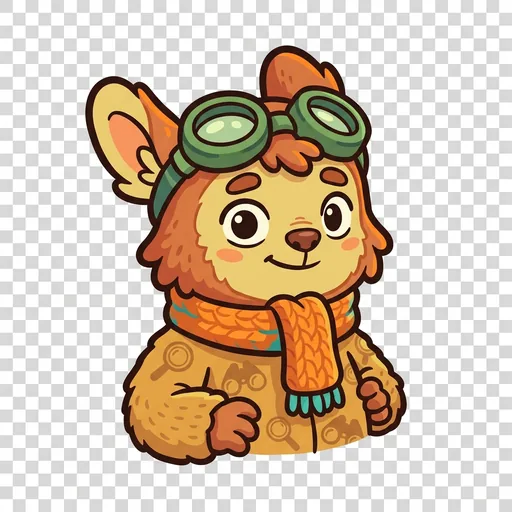
Nod
NON-VERBAL SIGNAL — *a clear wordless cue — a nod, a raised wing, a card — for ready, done, my-turn, or pause, so you never have to find words to be understood.*
Loading audio…
Press play to listen along. The line being read lights up as you go.
Show full transcript
Loading transcript…
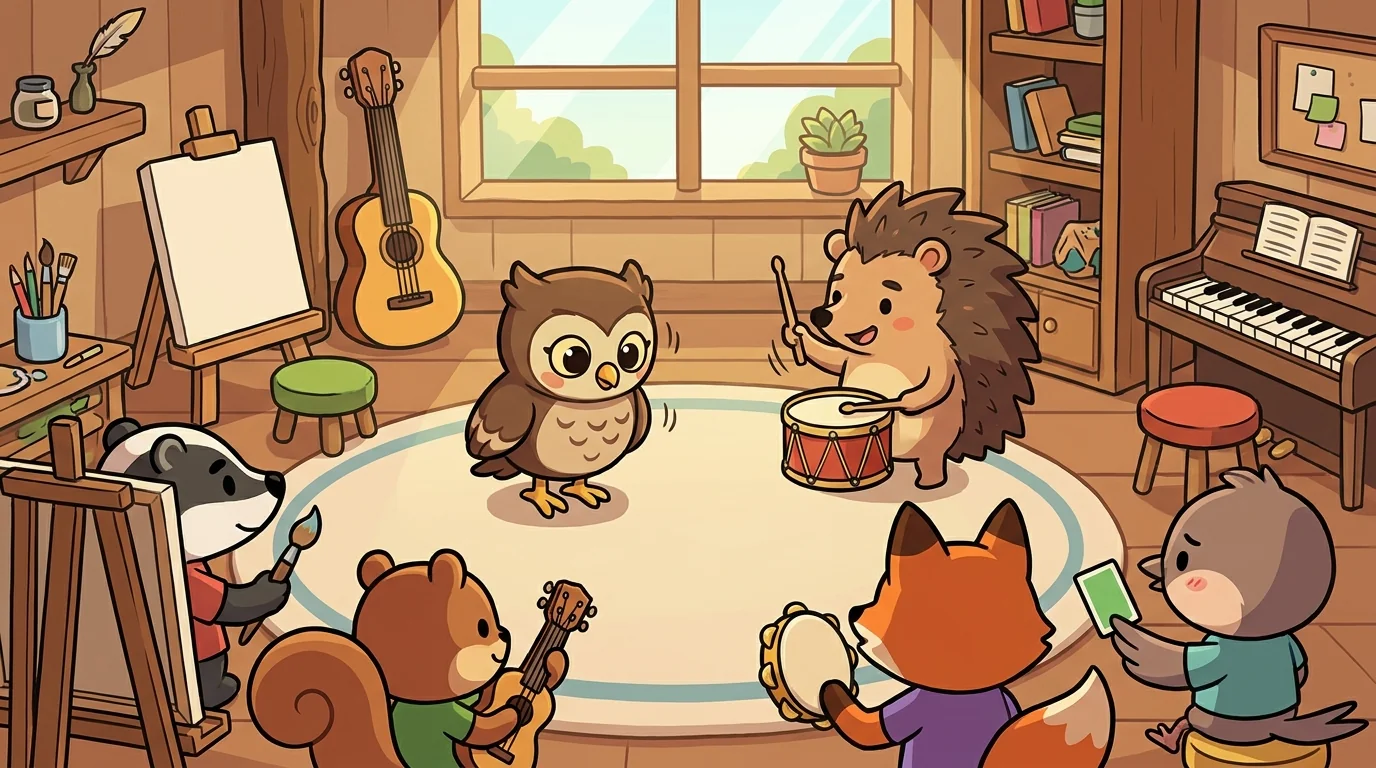
The little owl blinked once, slow and deliberate, then dipped her head in a single clear nod — and across the circle, the drummer began, right on cue, no word spoken between them.
"That was 'go,'" Nod said. "One nod. Everyone saw it. Nobody needed to say a thing."
A young swift had been sitting rigid at the edge, wanting to signal that he was ready but unable to make the words come. He knew exactly what he meant — I'm ready, start me — but his mouth wouldn't cooperate with everyone watching, and the words jammed, and the pressure of it built into a tight, stuck feeling behind his ribs, everyone waiting, his voice locked. Then Nod slid a small green card across to him. "Ready?" she said. "Lift the card. That's all. It means the same as saying it." He lifted the green card. The group started. And nobody had needed him to speak.
"Words are one way to say something," Nod said. "They're a great way, if they come easily. But a nod, a card, a raised wing — those say it just as clearly. In here, a wordless cue counts exactly as much as a spoken one."
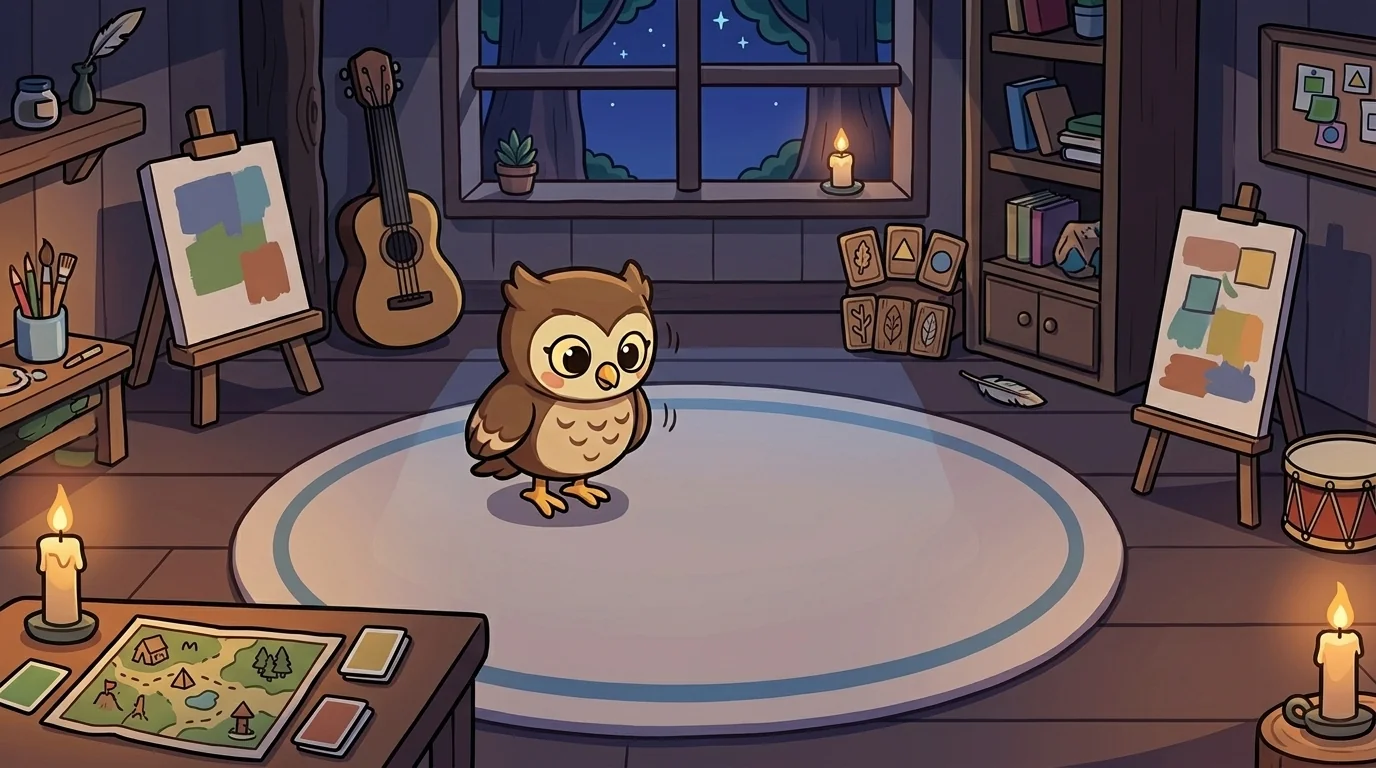
Nod grew up among owls in a deep, dark wood where sound could give you away.
At night, the owl families hunted and moved together in near silence — a whole language of tips and blinks and wing-lifts, because a spoken word in that wood meant danger. Her mother taught her the signals before she could fly: head-dip for go, wing-up for wait, a slow blink for I'm here, I'm okay. "The wood taught us the truth young," her mother said, blinking slow. "You never needed a voice to be understood. You needed a sign the others agreed to read."
Nod learned that being understood was never really about talking. It was about a signal, shared and agreed, that everyone knew how to read.
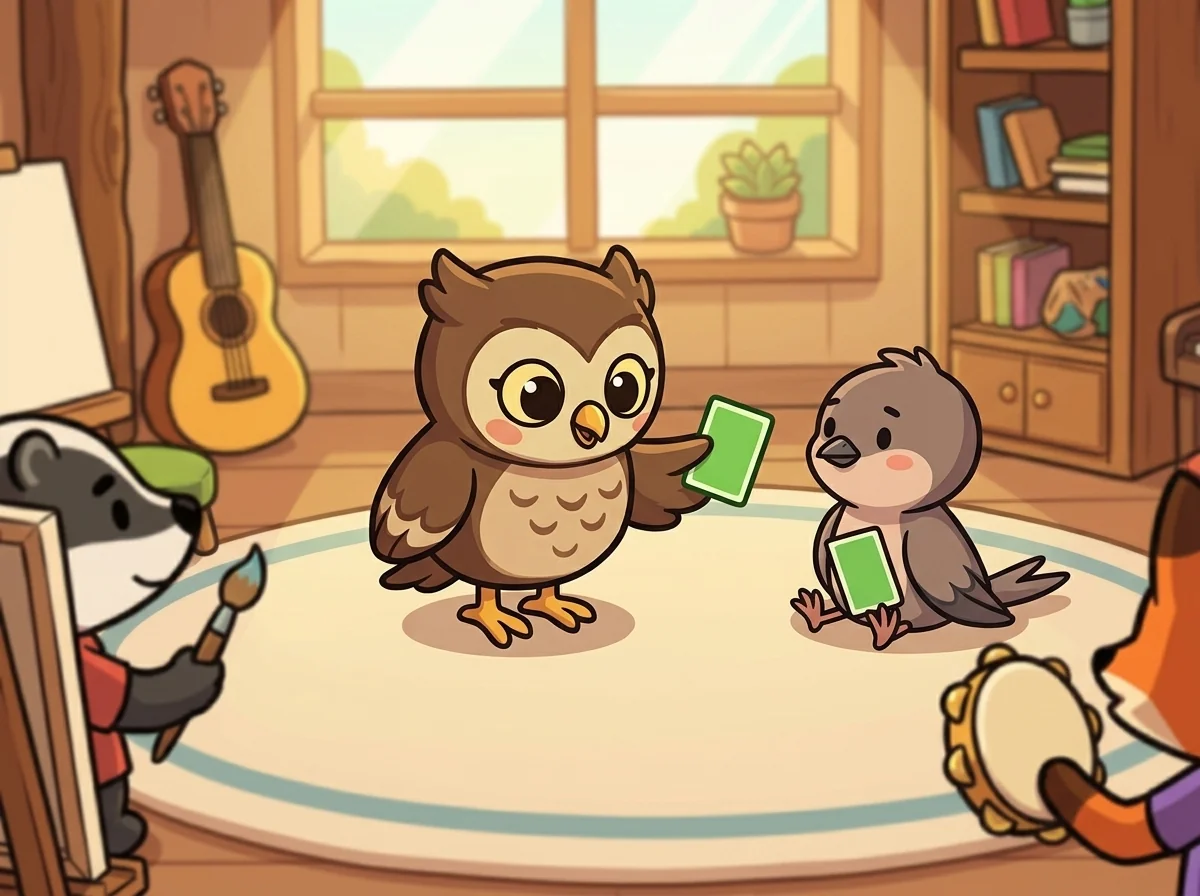
She came to EnsembleQuest when she was twelve, on a day when a group kept stalling out.
They were a good group, but they'd tangled themselves in words — "are you ready?" "wait, are you?" "who starts?" — a constant anxious chatter of checking, and one bird in the middle, who didn't speak much at all, kept getting left behind because he couldn't get his "ready" out fast enough. Choir, the teacher, spotted Nod in the doorway.
"They're drowning in check-in words," Choir said, "and the one who doesn't use many is stuck. Can you help?"
Nod didn't tell anyone to talk more. She handed out small cards and taught three cues: green card up for ready, flat wing for pause, head-dip for go. Suddenly the anxious chatter fell away — a glance around the circle showed every green card up, a single nod launched them, and the quiet bird in the middle was right there with everyone, his card raised, fully part of it. Choir smiled. "Stay," she said.
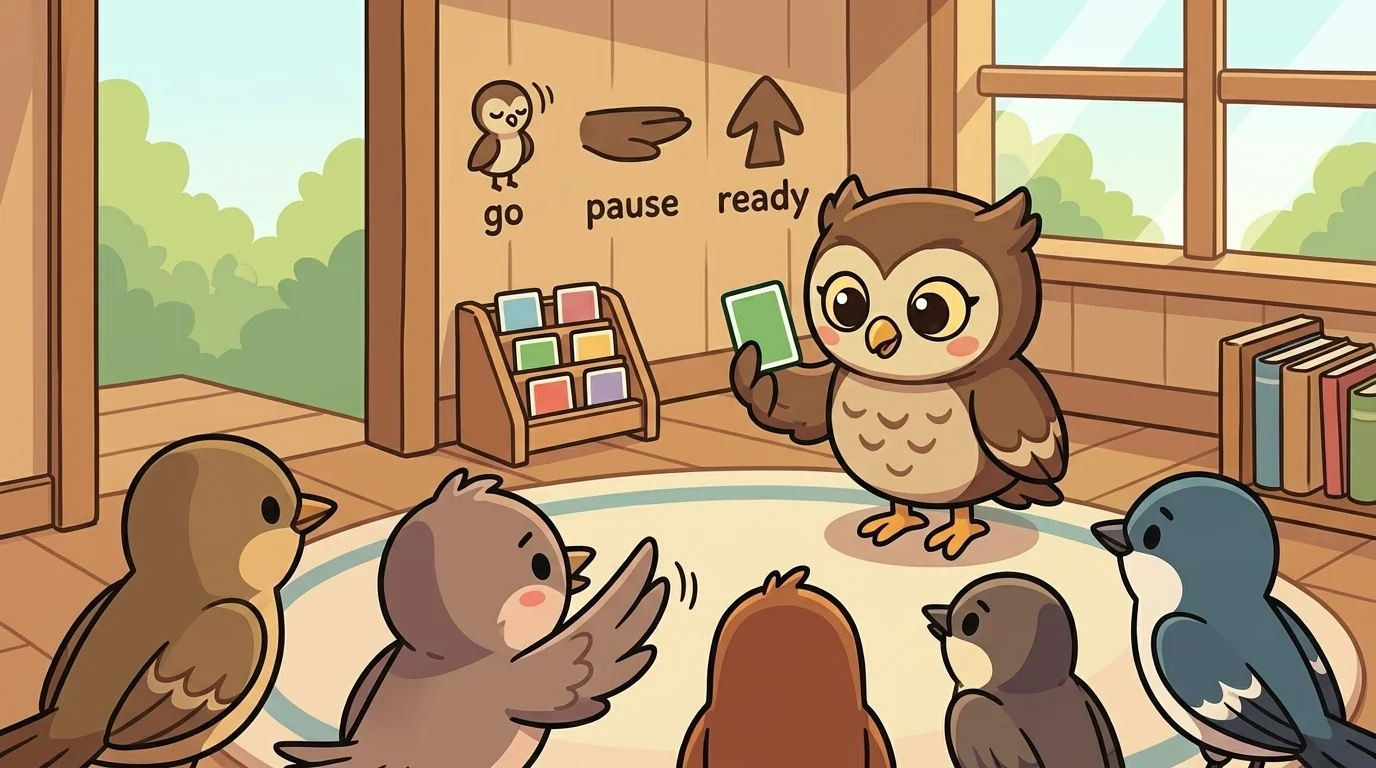
Nod's workshop had a little rack of signal cards by the door and three cues painted on the wall: ready, pause, go.
"Not everyone finds words fast, especially when people are watching," she told a cluster of new birds. "So we agree on signals anyone can use. A raised card. A nod. A flat wing for 'I need a minute.' You pick the sign that's easy for you — and we all learn to read it."
A young thrush raised a wing. "But isn't talking better? Shouldn't I practice using words?"
"Use words whenever they come easily — that's wonderful," Nod said. "But a signal isn't a lesser version of talking. It's its own good way. Some of the clearest things I've ever been told, nobody ever said out loud."
"And if I go non-speaking sometimes?" a small martin asked, barely audible. "Some days no words come at all."
"Then the cards and the nods are your voice those days," Nod said gently, "and they count completely. You never have to earn your place by talking. A raised green card means 'I'm ready,' full stop — and we'll read it every time. Some of us talk easily. Some of us don't, some days or any day. So we make signs everyone can read — and then it works for all of us."
The martin looked at the little green card in its claw, and the pressure behind its ribs eased.
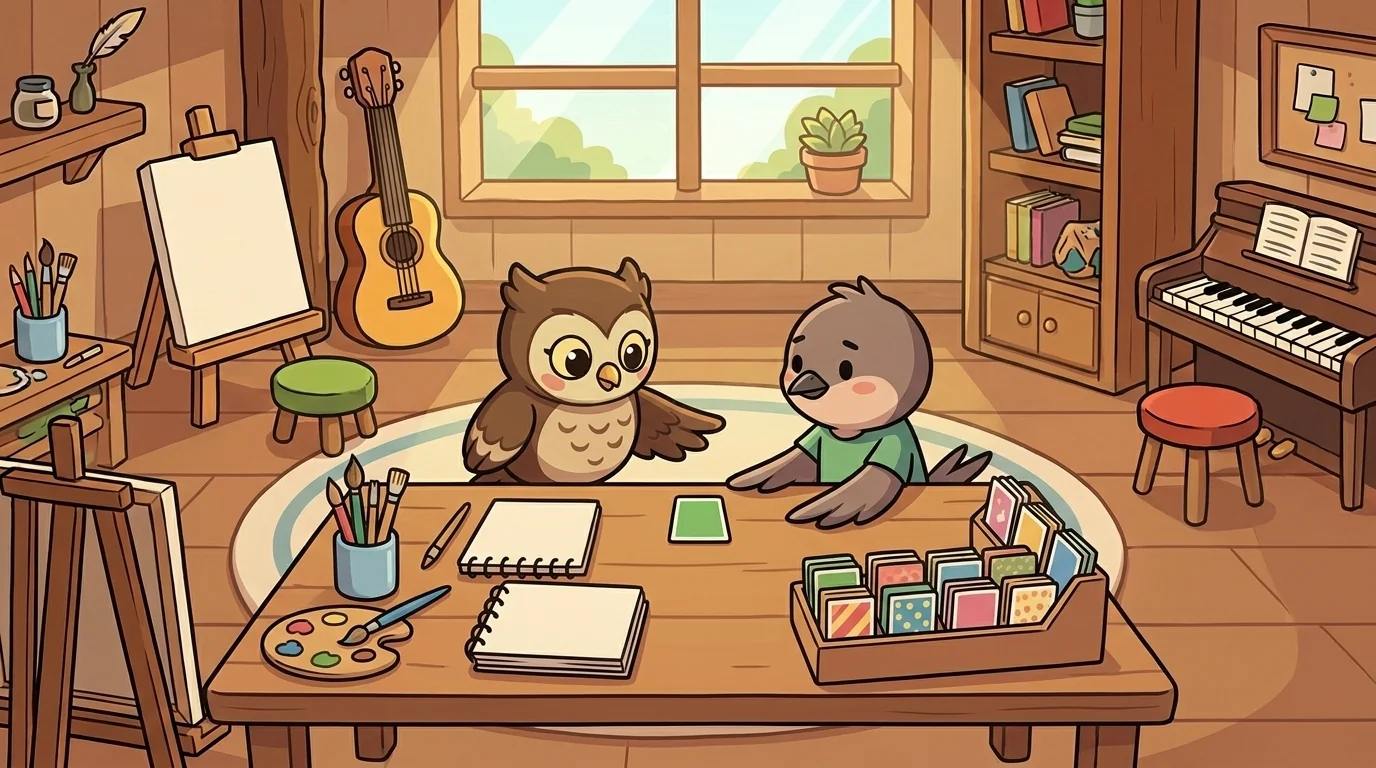
Later, when the others had flown off, the young swift from that morning lingered by the card rack.
"For a long time," he said, not quite looking up, "groups made me panic. That stuck, pressured feeling — like a hand around my throat — because everyone waited for me to say I was ready, and the word just wouldn't come, and then I looked like I didn't care when really I cared so much."
Nod didn't rush to fix him. She just set a small green card down on the table between them.
"I know that stuck-throat feeling," she said. "I come from a wood where a word could cost you everything, so we learned to say it all without one." She nudged the card closer. "But watch what happens when a raised card means exactly as much as a spoken word. The waiting stops. The pressure lets go. That looked-like-I-didn't-care feeling —" she tapped the green card, "— it just dissolves. Because now they can see you cared all along. You were saying it the whole time. They just needed a sign to read."
The swift lifted the green card, and it was heard — and the tight, stuck feeling behind his ribs, the one that had gripped like a hand around his throat, finally loosened its hold and let go, his breath easing out slow and steady, a quiet gladness settling warm where the stuck feeling had been.
The EnsembleQuest ensemble
Nod is part of EnsembleQuest's distributed-narrative cast. Each character embodies a different curricular primitive; together they teach the full subject.
-
Part
Role-holding — knowing what MY part is, separate from but supporting the whole
-
Turn
Turn-taking — the rhythm of give-and-receive across an ensemble
-
Ear
Active listening — receiving the other person's contribution before adding your own
-
Welcome
Invitation + repair — bringing back someone who's drifted out of the ensemble
-
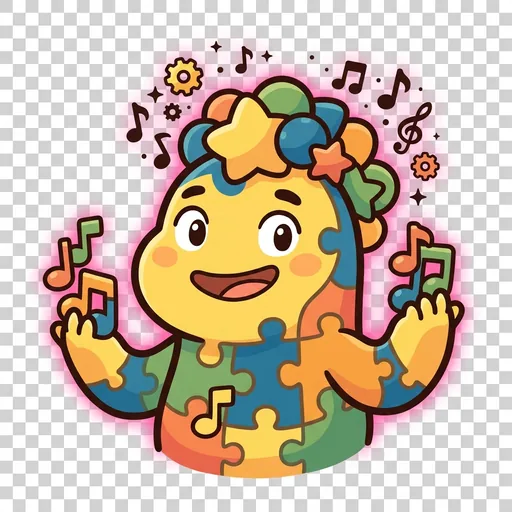
Share
Synthesis-in-performance — the moment many parts become one piece
-
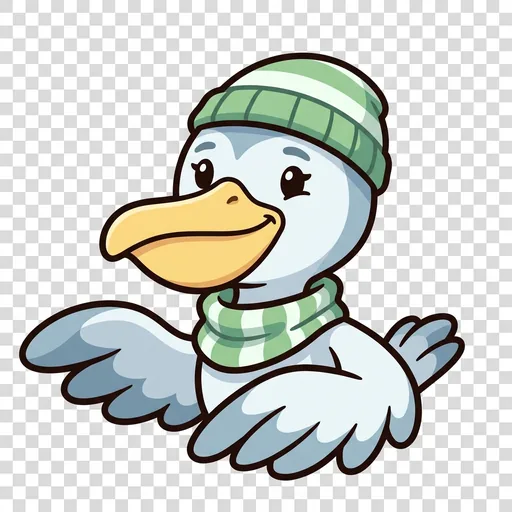
Berth
Making space — leave room in the sound and the plan so every part fits; quiet the loud, invite the quiet, nobody drowned out
-
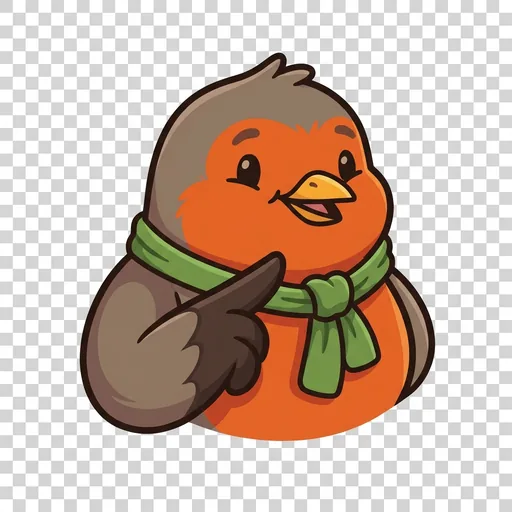
Bravo
Specific appreciation — notice one exact thing a partner did well and name it out loud, so they know their part landed
-
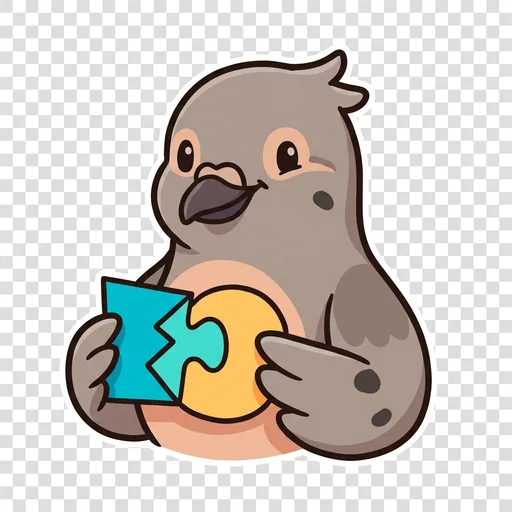
Dovetail
Dovetailing ideas — when two ideas differ, find the shape where both fit and interlock; neither cut away, neither swallowed
-
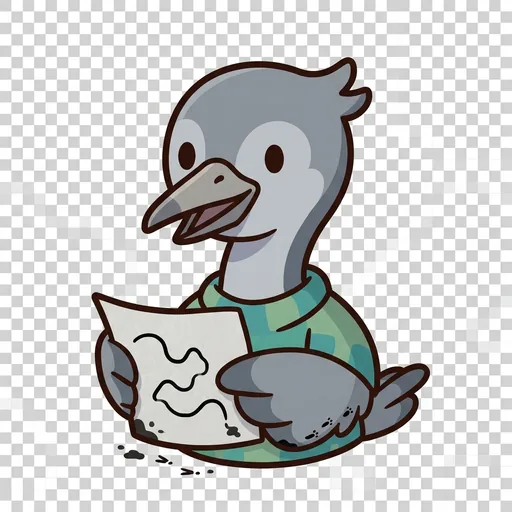
Outline
Co-planning — before anyone makes anything, sketch the shared shape together, so nobody has to guess where it's going