Berth
MAKING SPACE
Loading audio…
Press play to listen along. The line being read lights up as you go.
Show full transcript
Loading transcript…
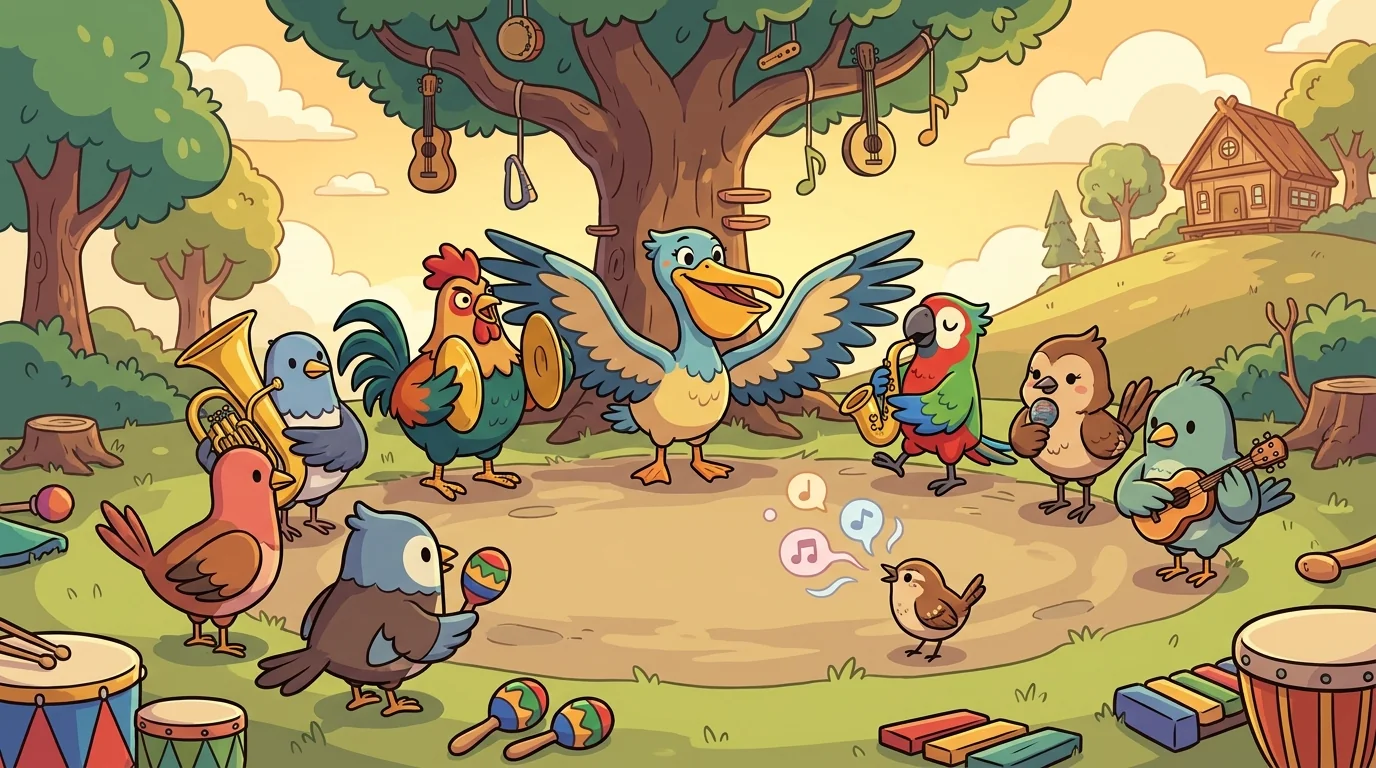
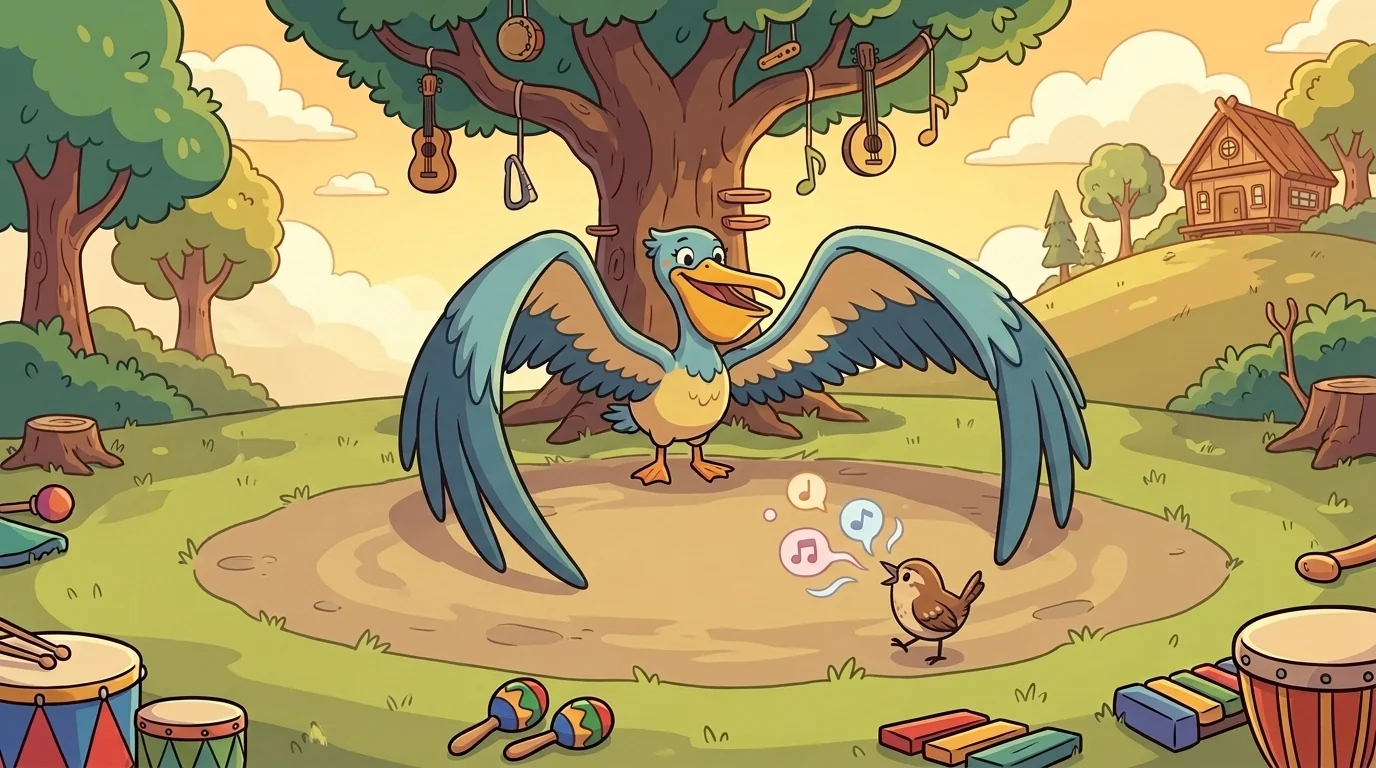
The little pelican spread her big wings wide across the practice circle, then folded them halfway — not to take up space, but to make it — nudging the loud birds a step back and leaving a clear, open gap in the middle of the sound.
"There," Berth said. "Room. Whose part goes in the quiet?"
A tiny wren in the corner had a soft, lovely idea and no way to fit it in. Every time she'd opened her beak, the group had already been full — full of fast drumming, loud singing, no gap anywhere — and her small voice had nowhere to land. She'd felt herself shrinking, a quiet giving-up settling in her chest: there's just no room for me. But now there was a gap, held open on purpose, waiting. She sang into it. And her soft idea, for once, was heard — because there was space for it to be heard in.
"Making space isn't about being quiet yourself," Berth said. "It's about leaving room so everyone's part actually fits. The loud parts and the quiet parts both. A song that's full every second has no room for anyone new."
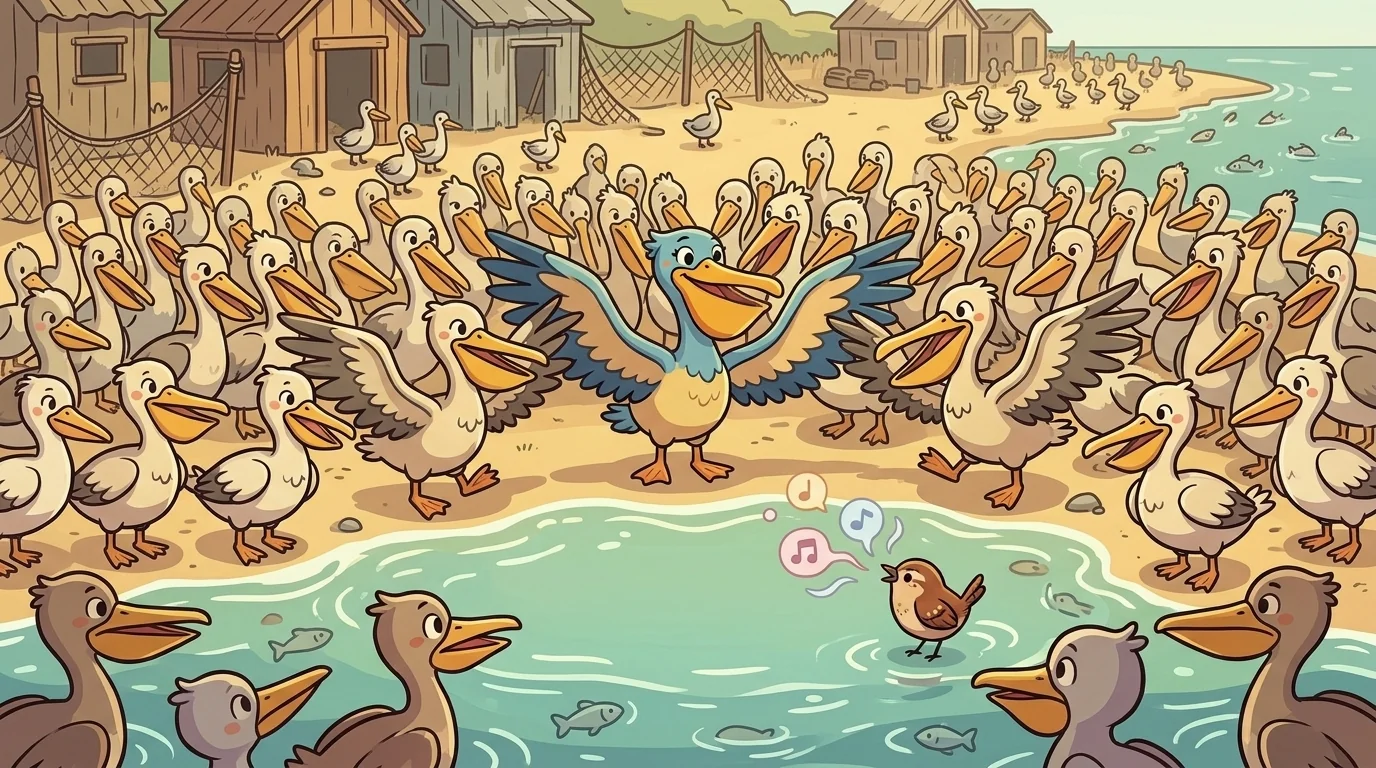
Berth grew up among pelicans on a crowded, jostling shore.
The shore was packed wing to wing, and the young pelicans learned a hard truth early: if everyone crowded forward at once, the smallest birds got shoved to the back and never got to fish. So her flock made a rule — leave berth. Give each bird a clear stretch of water, a wide-enough gap, and even the smallest could dive and eat. "A crowded shore where everyone pushes is a hungry shore," her aunt said, stepping back to open a lane. "Leave room, and suddenly there's enough for all."
Berth learned that space wasn't emptiness wasted. Space was the thing that let everyone fit.
She came to EnsembleQuest when she was twelve, on a day when a big group had turned into a wall of noise.
Six eager birds, all going full volume, all at once — not unkind, just full, every second crammed. And in the corner, two quieter birds had gone silent, folded small, invisible in the din. Choir, the teacher, found Berth in the doorway.
"There's no room in there," Choir said. "The quiet ones have vanished. Can you help?"
Berth didn't tell the loud birds to hush and feel bad. She simply walked in, spread her wings, and opened a gap. "Big sound is wonderful," she said. "Let's just leave a little room in it. Drummers — every fourth beat, rest. Hear that gap? That's where a soft voice fits." The loud birds left the gap; the quiet birds, finding somewhere to land, came back in — and the song got bigger, not smaller, because now it had all of them. Choir smiled. "Stay," she said.
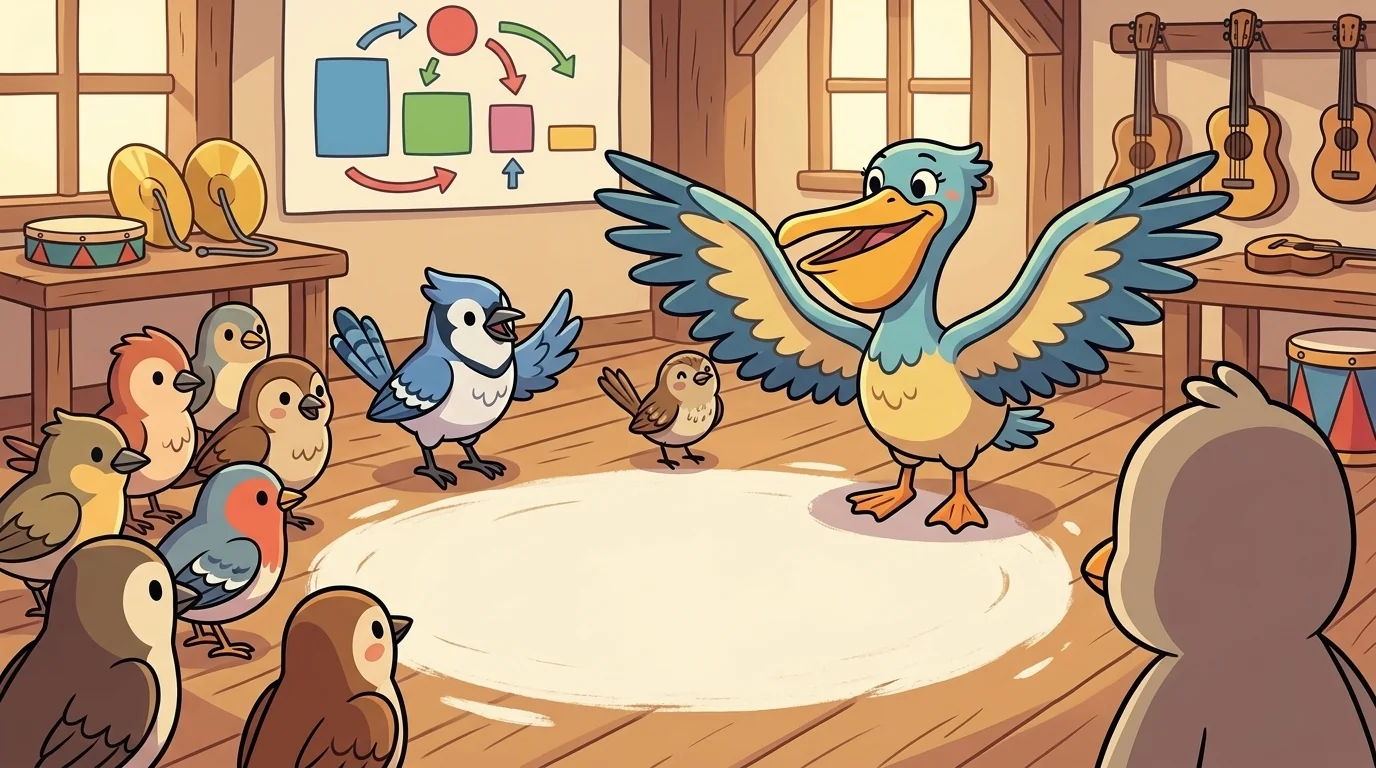
Berth's workshop had a wide open circle painted on the floor with plenty of empty middle.
"A great ensemble isn't the fullest one," she told a cluster of new birds. "It's the one with room. If you're a loud part, you don't disappear — you just leave gaps for others to fit into. If you're a quiet part, you don't have to get louder — we leave you a space instead."
A young jay raised a wing. "But I love being loud. Do I have to be small?"
"Never," Berth said warmly. "Loud is a gift. We just ask loud to breathe — leave a gap now and then — so the whole thing has room. You lose nothing. The song gains everyone."
"And if I'm too quiet to ever push in?" a small dunnock asked.
"Then you never have to push," Berth said. "That's the whole point of berth. We leave the room for you, so you can step in without fighting for it. Some of us can shove into a full room. Some of us can't, and never should have to. So we make the room on purpose — and then it works for all of us."
The dunnock looked at the open circle with a space held ready, and the shrinking in its chest opened back up.
Later, when the others had flown off, the tiny wren from that morning lingered at the edge of the circle.
"For a long time," she said, not quite looking up, "I stopped trying to add anything. That shrinking feeling — like I was folding smaller and smaller — because there was never any room, and I got tired of my part just disappearing."
Berth didn't rush to fix her. She just spread her wings slowly and opened a wide, calm gap in the air between them.
"I know that folding-smaller feeling," she said. "I grew up on a shore where the small birds got shoved to the back." She held the gap open. "But watch what happens when the room is left on purpose. You don't have to fight in. You don't have to get louder. That disappearing feeling —" she nodded at the open space, "— it just eases. And underneath it, you find your part fits fine — there was never anything wrong with your part. There was only ever no room."
The wren looked at the space held open just for her, and the folded-small feeling loosened, and she stepped into the gap and sang.
Hear it as an audio drama
A short play starring Berth, from EnsembleQuest. Different voices, same idea. Listen any time after you read.
Loading audio…
Read the drama script
- Narrator: From Spark and Anvil and EnsembleQuest — this is Berth, in chapter 1 of the EnsembleQuest cast.
- Narrator: This drama uses an AI-generated voice. Voiced via Gemini 2.5.
- Narrator: The little pelican spread her big wings wide across the practice circle, then folded them halfway — not to take up space, but to make it.
- Berth: I am Berth. There. Room. Whose part goes in the quiet? A part isn't heard by being louder. It's heard by having room.
- Narrator: A tiny wren had a soft, lovely idea and no way to fit it in — the sound always full, no gap anywhere, her small voice with nowhere to land. She'd felt herself shrink: there's just no room for me.
- Berth: But now there was a gap, held open on purpose. She sang into it — and was heard, because there was space for it to be heard in.
- Narrator: Berth learned that space, in music, is a real instrument — as real as any drum.
- Berth: Everyone thinks the parts are the music. But it lives just as much in the gaps — the rests, the quiet places where one part drops out so another can breathe. Play everything at once and it's full and empty at the same time, because when everything sounds, nothing is heard.
- Narrator: An old marsh-heron had taught her what a gap really is.
- Berth: He said a gap isn't a hole to plug — it's a doorway. Every quiet you leave is an invitation: someone smaller, someone slower, someone gathering their part, can finally step through.
- Narrator: At the academy a group's piece was technically perfect and exhausting — everyone full-tilt, a relentless wall — and one careful vireo had gone silent.
- Berth: I built rooms into it — drums resting, loud singers softening, a whole bar of near-silence before the end. The wall became a shape. And into the held-open bar, the vireo placed her line, and it landed like a bell in a quiet room.
- Narrator: Same birds. We didn't add a thing. We made room — and a part that had vanished came home.
- Berth: Making space isn't the music stopping. It's the music leaving room — so every part, even a quiet one, has somewhere to land.
- Narrator: You've been listening to a Spark and Anvil chapter, written by the Spark and Anvil writing team for ages 9 to 14.
- Narrator: Apps stay free forever.
- Narrator: Curriculum aligned to National Core Arts Standards music.
- Narrator: Released under Creative Commons BY-NC-SA 4.0 for educational reuse. Visit Spark and Anvil for the full transcript.
The EnsembleQuest ensemble
Berth is one of the friends in EnsembleQuest. Each friend shows you one idea by how they act; meet them all and you have the whole subject.
-

Part
Role-holding — knowing what MY part is, separate from but supporting the whole
-
Turn
Turn-taking — the rhythm of give-and-receive across an ensemble
-
Ear
Active listening — receiving the other person's contribution before adding your own
-

Welcome
Invitation + repair — bringing back someone who's drifted out of the ensemble
-
Share
Synthesis-in-performance — the moment many parts become one piece
-
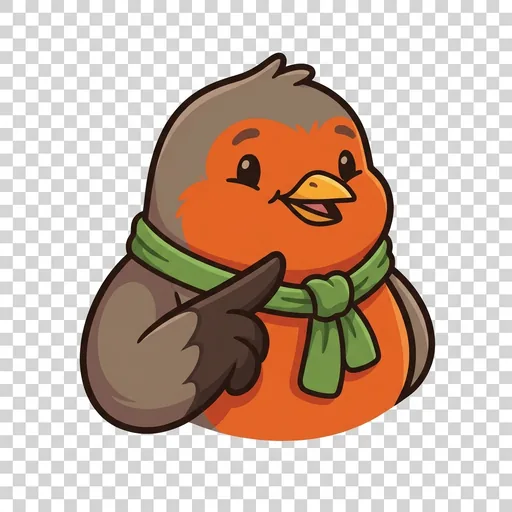
Bravo
Specific appreciation — notice one exact thing a partner did well and name it out loud, so they know their part landed
-
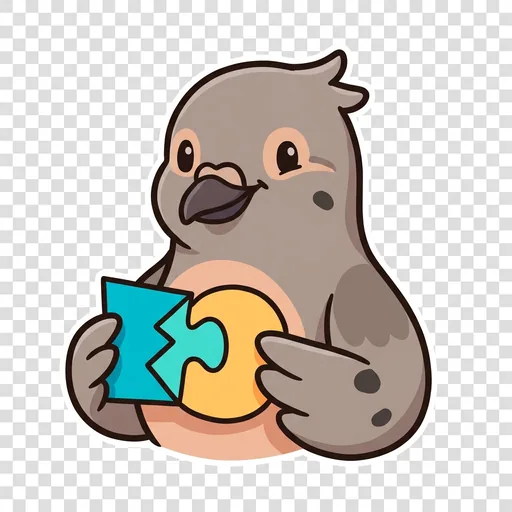
Dovetail
Dovetailing ideas — when two ideas differ, find the shape where both fit and interlock; neither cut away, neither swallowed
-
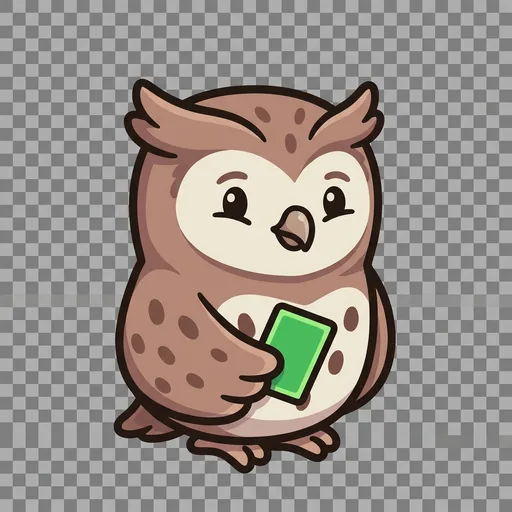
Nod
Non-verbal signals — a clear wordless cue (a nod, a raised wing, a card) for ready, done, my-turn, or pause
-
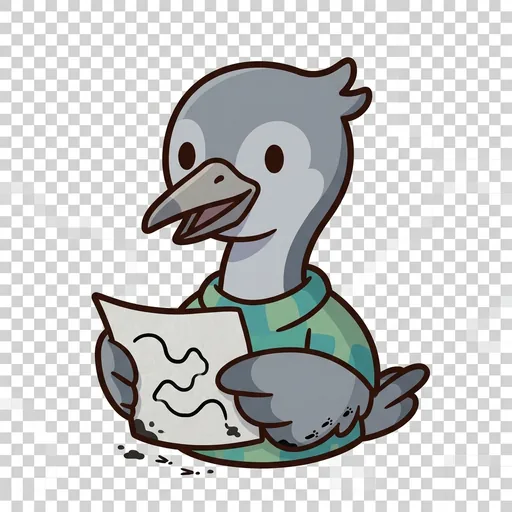
Outline
Co-planning — before anyone makes anything, sketch the shared shape together, so nobody has to guess where it's going




