
Attitude the Nose-Aimer
ATTITUDE — pitch: the nose points where the elevator tells it, but climbing is not power alone; it is where you aim the nose AND how much lift the wing can still make there. Aim too steep and the wing runs out of lift. The Advanced idea is that attitude and airspeed trade against each other.
A story read by Attitude the Nose-Aimer
Loading audio…
Press play to listen along. The line being read lights up as you go.
Show full transcript
Loading transcript…
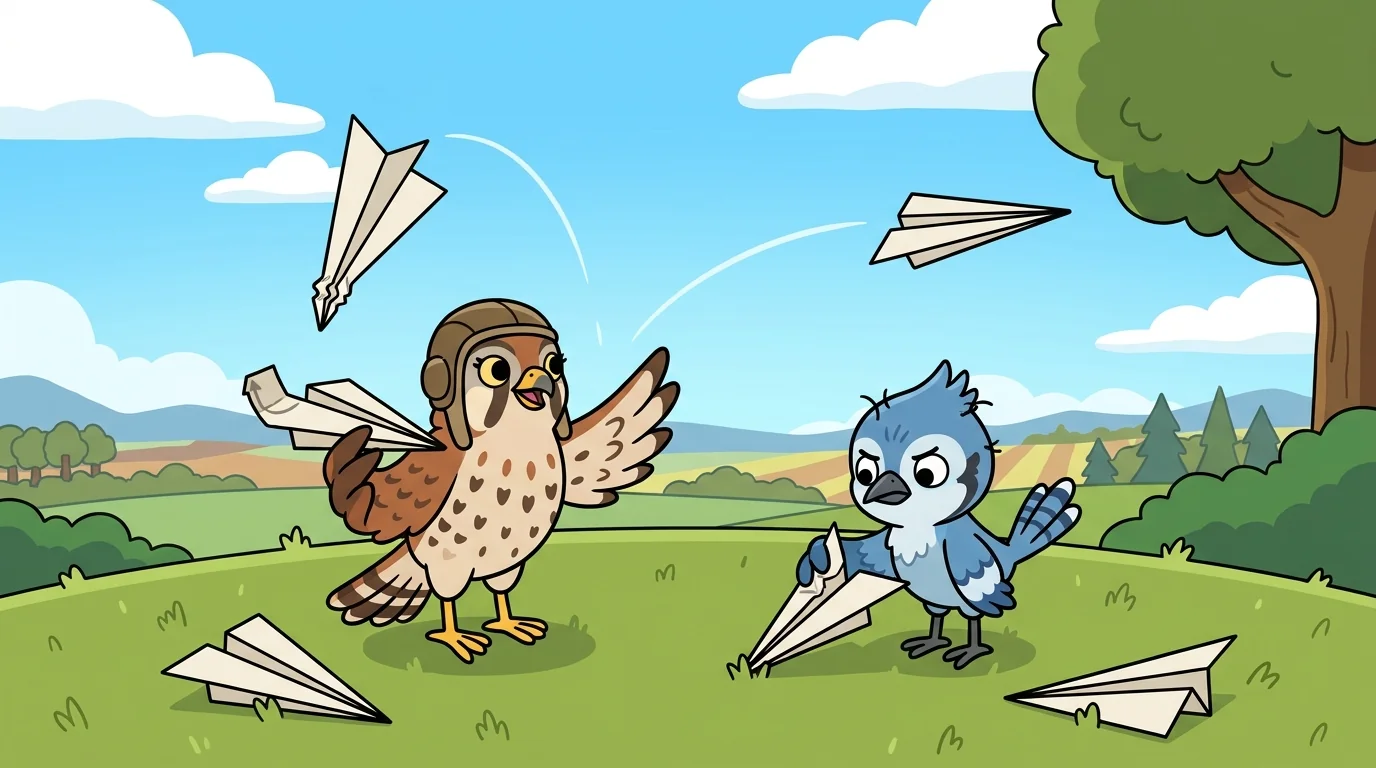
A small kestrel named Attitude launched a paper plane with its tail-flap bent up a touch, and its nose lifted into a smooth, steady climb. She threw another with the flap bent up hard, and this one reared, pointed almost straight up — then shuddered, ran out of lift, and dropped backward out of the sky.
"That," she told the young flyers gathered at the workshop table, "is the whole secret of climbing, and almost everyone gets it wrong. They think a plane goes up because you throw it harder. It doesn't. It goes up because you aim the nose up — and the flap at the tail is what aims it."
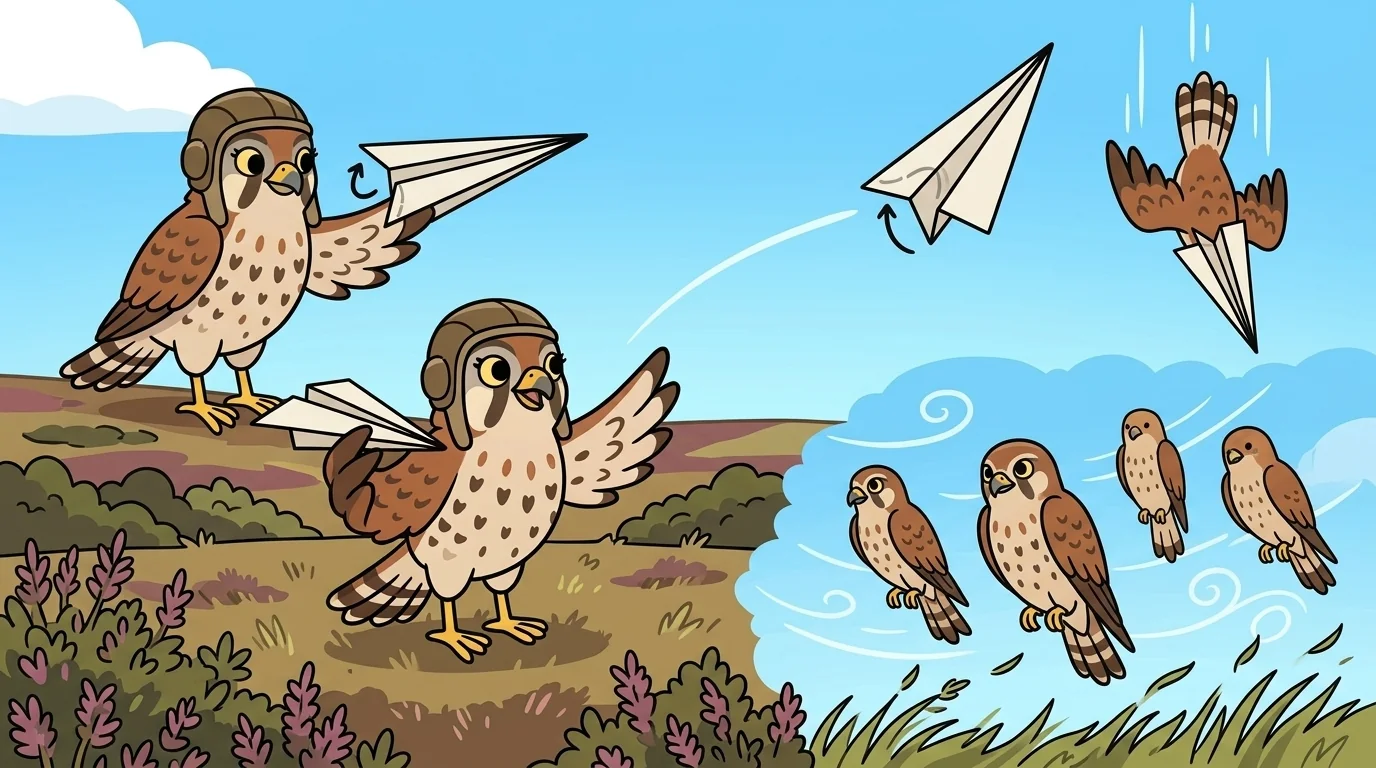
The flap at the tail, she explained, is called the elevator, and pitch — the up-and-down angle of the nose — is called the plane's attitude. "Attitude is just a fancy word for which way the nose is pointing. Bend the elevator up, and the tail gets pushed down, and the nose swings up. Bend it down, the nose drops. The elevator does not lift the plane. It aims it."
But aiming, she was careful to say, is only half of it. "Here is the Advanced part, the part that dropped my second plane out of the sky. A wing can only make so much lift. Aim the nose gently up, and the wing has plenty of speed flowing over it, so it makes the lift to hold that climb. Aim it steeply up, and the plane slows down as it fights gravity — and a slow wing makes less lift, not more. Past a certain angle, the wing simply cannot hold the nose where you aimed it, and the whole plane stops flying."
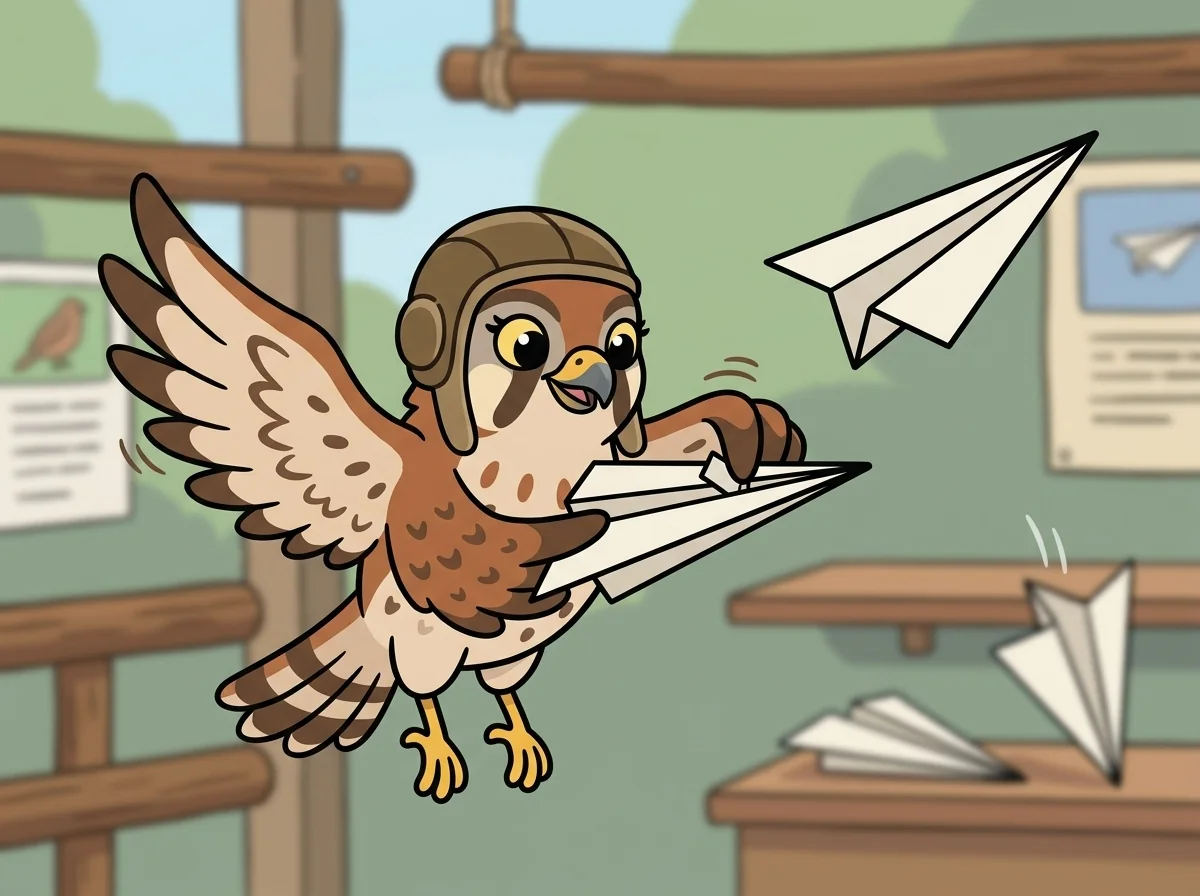
She drew the trade on the workshop slate. "Attitude and airspeed trade against each other. Point the nose higher and you climb, but you pay in speed. Point it down and you speed up, but you pay in height. A good flyer is always spending one to buy the other, on purpose. The crash happens when you demand a climb so steep that you spend all your speed — and then you have nothing left to fly with."
A young flyer asked why not just throw it faster to make up for it. Attitude smiled. "Because the wing doesn't care how you started. It cares how fast the air is moving over it right now. A hard throw buys you a few seconds of extra speed — and if you spend them on too steep a climb, you are right back to a slow wing and a falling plane. Speed is a bank account. A steep climb is an expensive purchase."
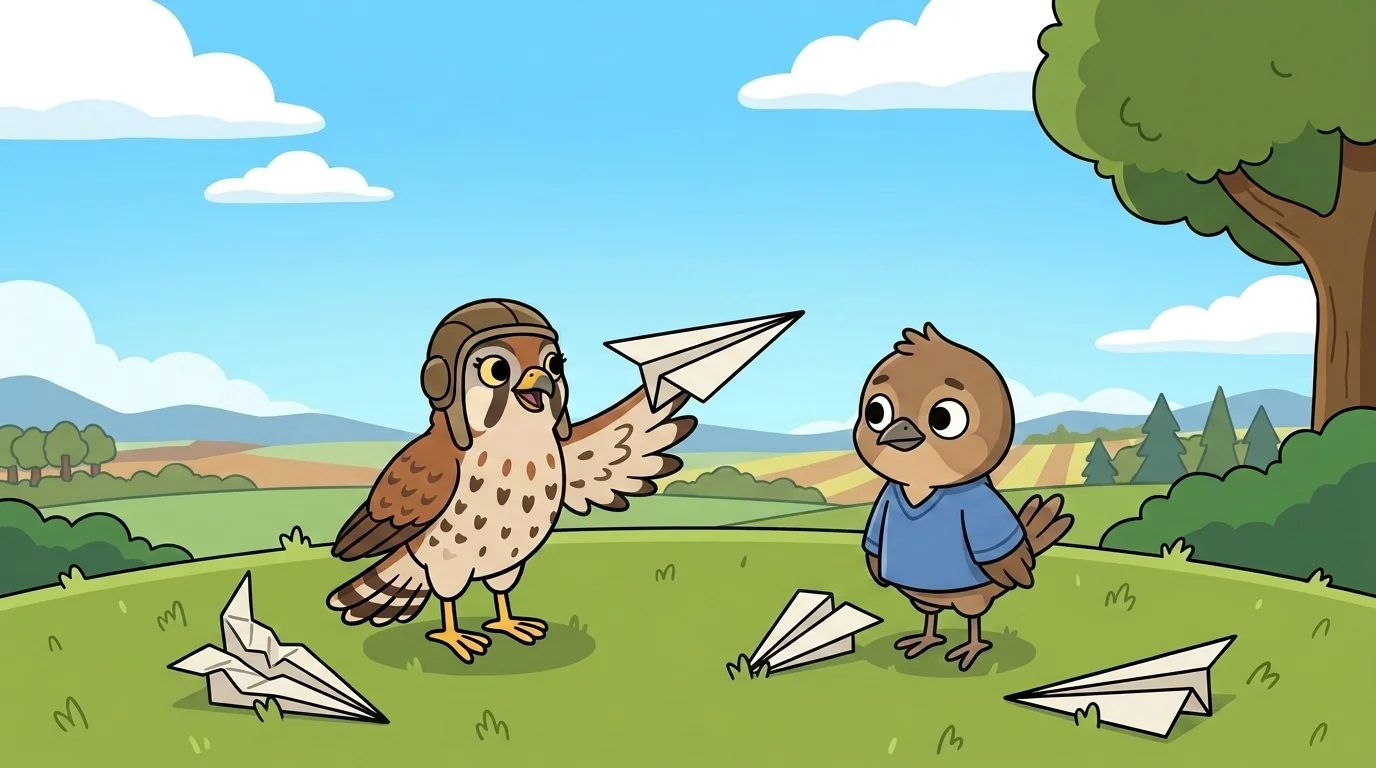
A serious young flyer named Wren kept bending the elevator harder and harder, frustrated that steeper never meant higher-for-longer. Attitude took the plane from her gently. "You are aiming for the steepest climb," she said. "Aim instead for the climb the wing can hold. A shallower angle that keeps the air flowing will carry you higher in the end than a steep one that stalls in two seconds." She bent the flap back to a gentle angle and threw, and the plane climbed long and smooth to the top of the room.
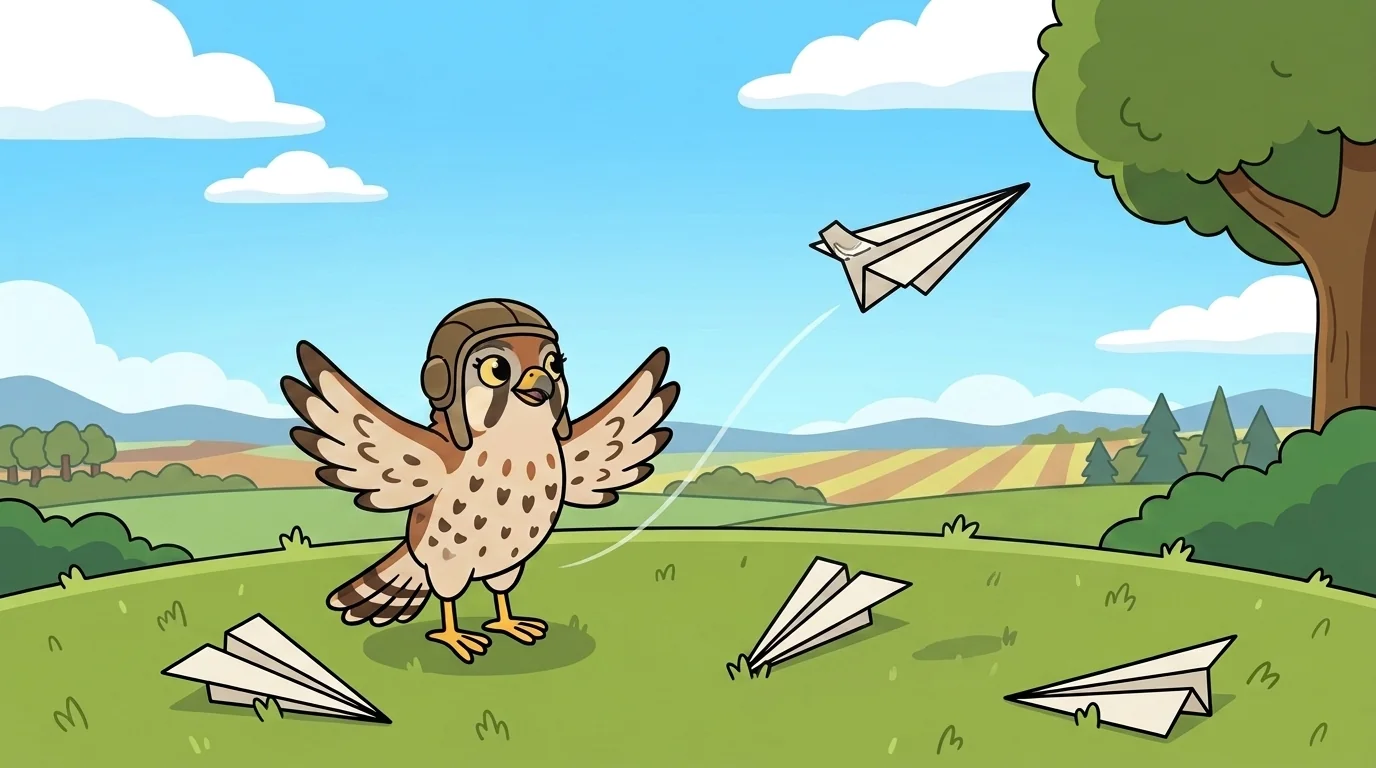
What stayed with Wren was that the gentler aim won — that restraint, not force, bought the height. Attitude nodded. "The nose points where the elevator tells it. But the sky only lets you climb as steep as the wing can still breathe. Aim for the angle you can hold, not the angle you wish for." She bent one more elevator to its gentle, holdable angle, and launched a plane that climbed like it had all day.
The FlightForge ensemble
Attitude the Nose-Aimer is part of FlightForge's distributed-narrative cast. Each character embodies a different curricular primitive; together they teach the full subject.
-

Wing
Lift generation — airfoil + camber + Bernoulli AND Newton both-right complementary
-

Drag
Resistance — drag isn't bad, drag is information; shape-fights-air conversation
-
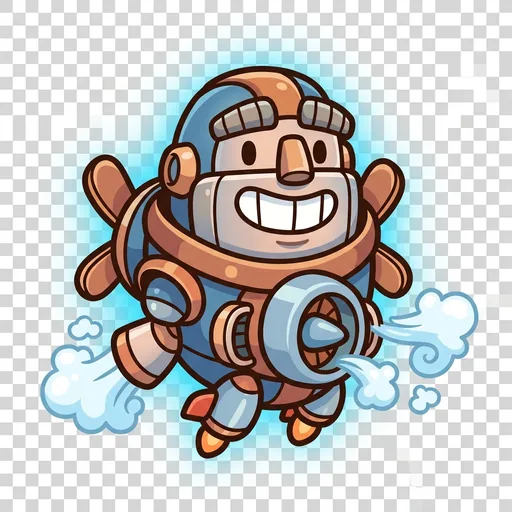
Thrust
Propulsion — every engine just throws air the wrong way (propeller/jet/rocket same trick different scale)
-

Yaw
Vertical-axis control — the rudder is the POLISH on the turn not the steering
-

Tail
Horizontal + vertical stabilizer family — quiet-control-from-the-back; the tail is why your paper plane goes straight
-
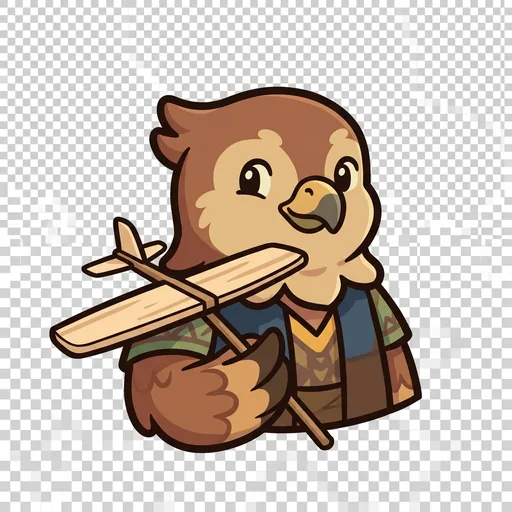
Bite
Angle of attack and the stall — a wing grips the air at an angle; steeper grips harder until, past the critical angle, the grip lets go all at once
-

Heel
Banking to turn — a plane turns by leaning, not pushing sideways; tilt the wings and lift itself pulls you around the corner
-
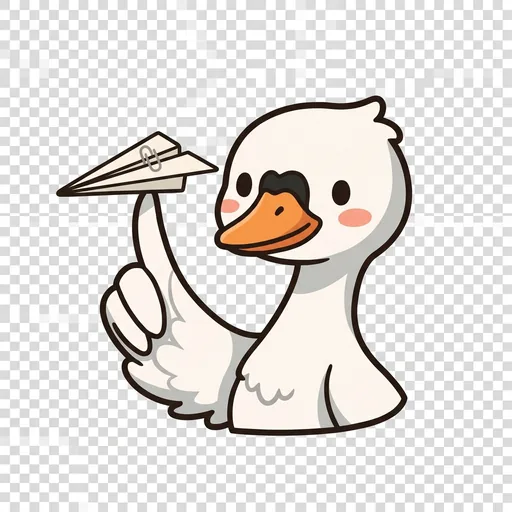
Keel
Center of gravity and balance — weight pulls down, but WHERE the weight sits decides level flight versus a tumble
-
Sail
Gliding — no engine, so you trade height for distance; a smoother shape buys more distance per bit of altitude