Bite
BITE — a wing grips the air at an angle; tilt it a little steeper and the grip gets stronger — until, past one exact angle, the grip lets go all at once. that letting-go is the stall.
Loading audio…
Press play to listen along. The line being read lights up as you go.
Show full transcript
Loading transcript…
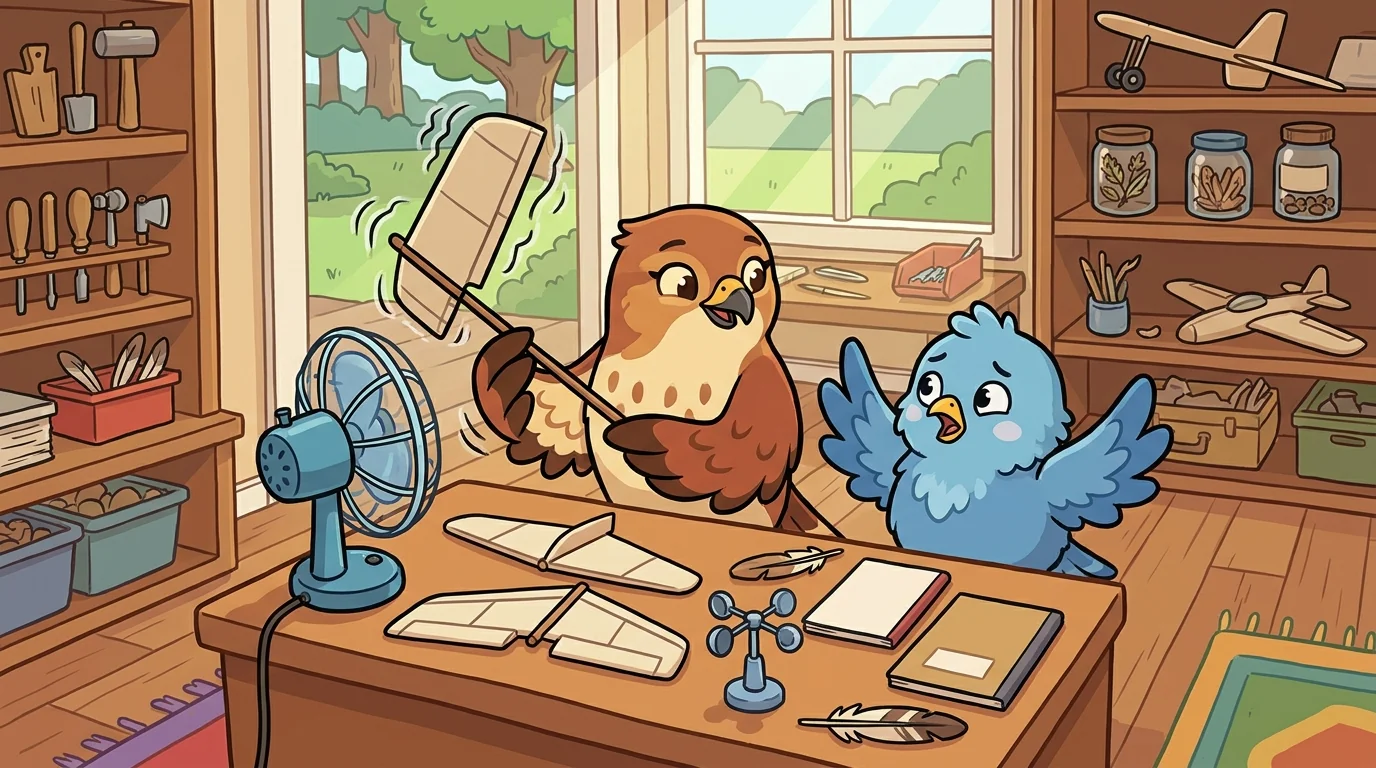
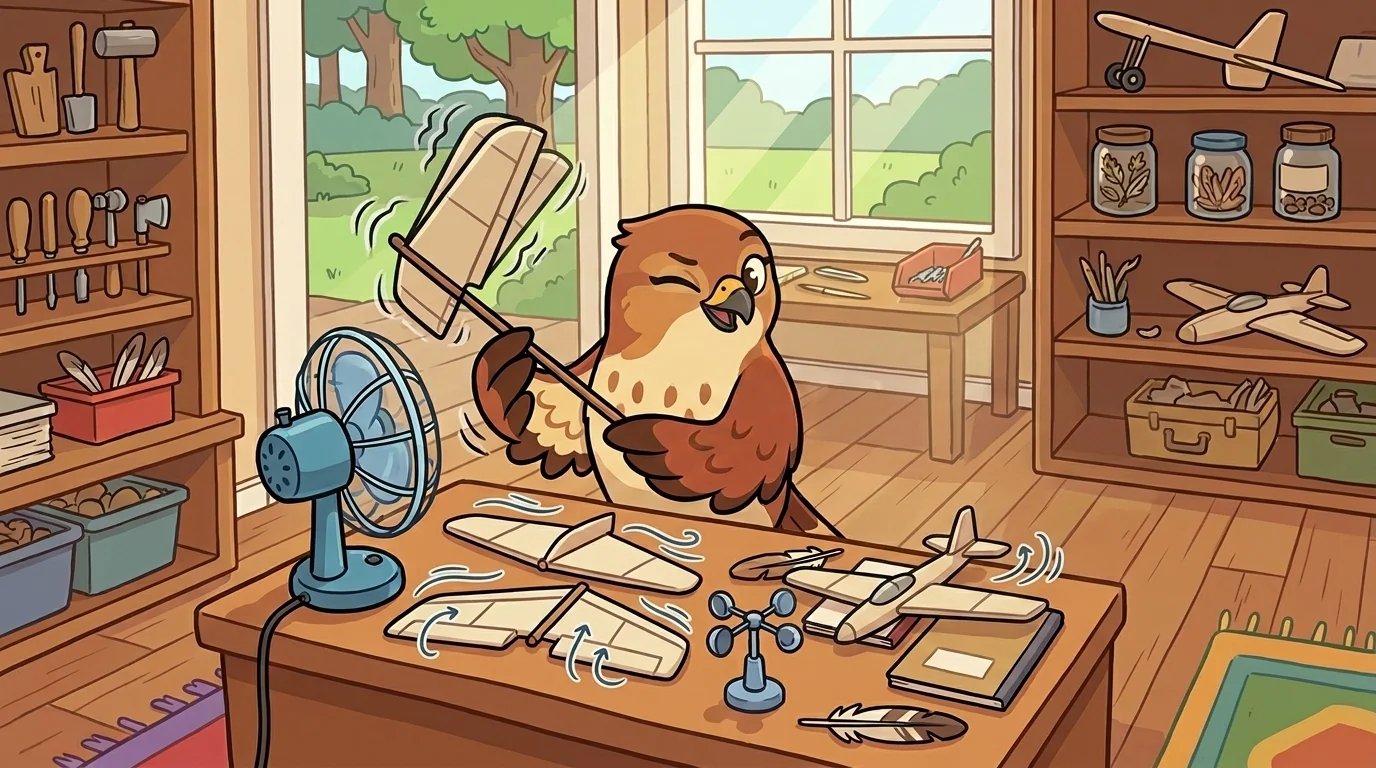
A small hawk named Bite held a model wing on a stick into the breeze of a little fan and slowly tilted it. At a shallow angle, the wing pulled gently upward. She tilted it steeper — the pull grew stronger. Steeper still — stronger yet. Then, at one more tiny tilt, the pull vanished completely, and the wing flopped, shuddering, useless.
"There," Bite said. "Feel how the grip got stronger and stronger — and then, past one exact angle, let go all at once? That's a stall."
A young bird had been tilting his wing steeper and steeper, chasing more lift, and was baffled when it suddenly quit. "It was working! I tilted it more to get more — and it just... stopped."
"Because a wing grips the air by meeting it at an angle," Bite said, "and the steeper the angle, the harder it grips — up to a point. But past one exact angle, the air can't wrap around the top of the wing anymore. It breaks away, tumbles, and the grip lets go entirely. More angle stops meaning more lift and starts meaning no lift." She tilted the wing back down a hair, and the pull snapped right back. "The good news? A stall isn't a crash. Lower the nose a little, let the air flow smooth over the wing again, and the grip comes straight back. You don't fight a stall. You unstall it."
Bite had grown up on a high ridge, in a family of hawks who dove and flared and caught the air at the last instant, all of them fluent in the exact angle where a wing bites and where it slips.
The little ones feared the stall like a monster. Bite's uncle taught her not to. "It's not a monster, chick — it's a door," he'd say, flaring his wings to a steep angle to land softly, right at the edge. "Lean on the door just enough and it holds you. Lean too far and it opens and you drop. But the door swings both ways — ease back and it shuts, and you're flying again." One festival, young Bite had bent her plane's wings to a huge angle, sure that a steeper wing meant a stronger climb. It reared, stalled, and dropped like a rock, again and again, and the hot left-out feeling crept up. Her uncle didn't scold. He eased the angle back. "You leaned past the door, little one. Ease off, and the grip returns." That was the day the stall stopped being a monster and became a thing she understood.
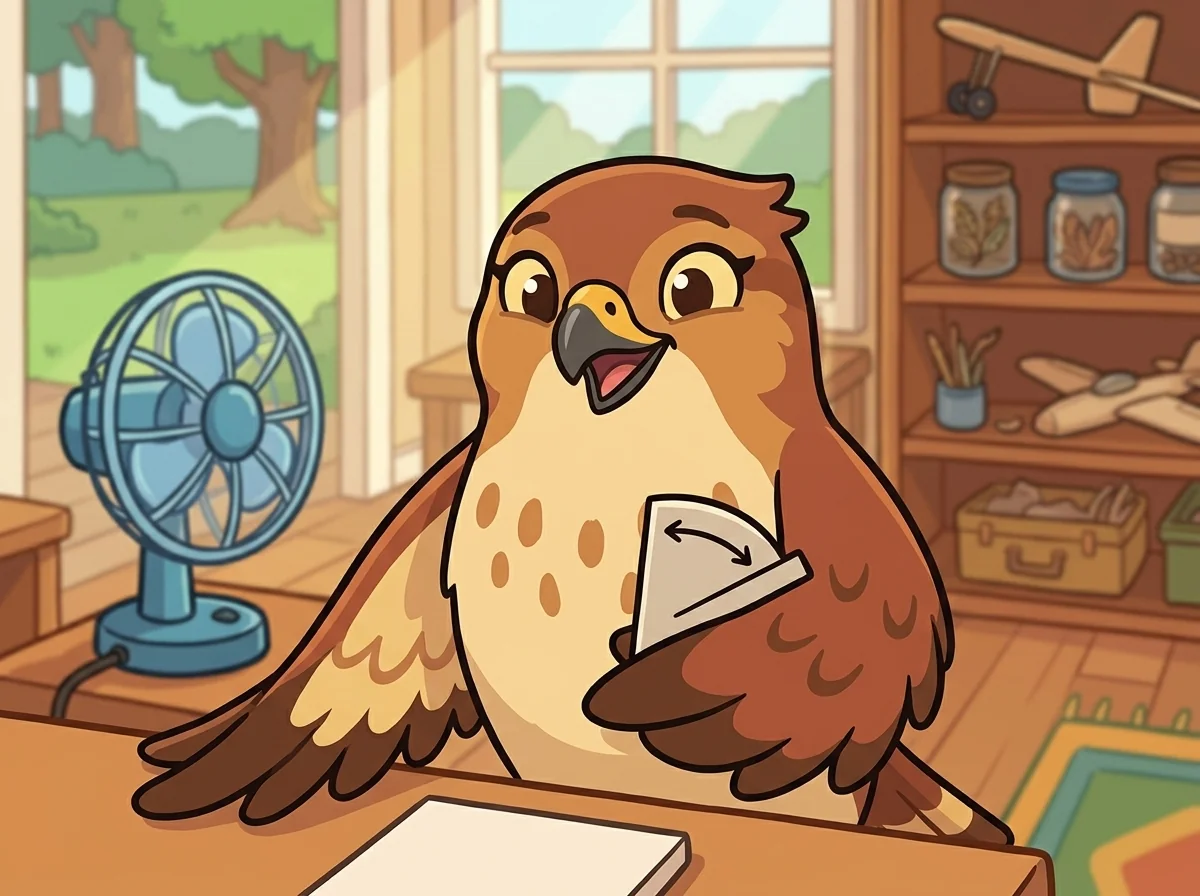
She flew to FlightForge the summer she turned twelve, a little angle-gauge tucked under one wing. Skye, the instructor, met her with a plane that kept stalling out of its climbs.
"It grips, then suddenly drops," Skye said. "Why?"
Bite checked the angle, found the wings meeting the air too steeply at the top of each climb, and eased them back. She launched it into a clean, held glide. "It was biting too hard," she said. "A wing grips harder the steeper its angle — but only up to one exact point. Past that, the air breaks away and the grip lets go all at once. That's the stall. Ease the angle back below that point and the grip returns instantly." She smiled. "The stall isn't a failure to fear. It's just the wing telling you you tilted past my limit — come back a little."
Skye watched the recovered glide, and her face eased. "You belong here," she said.
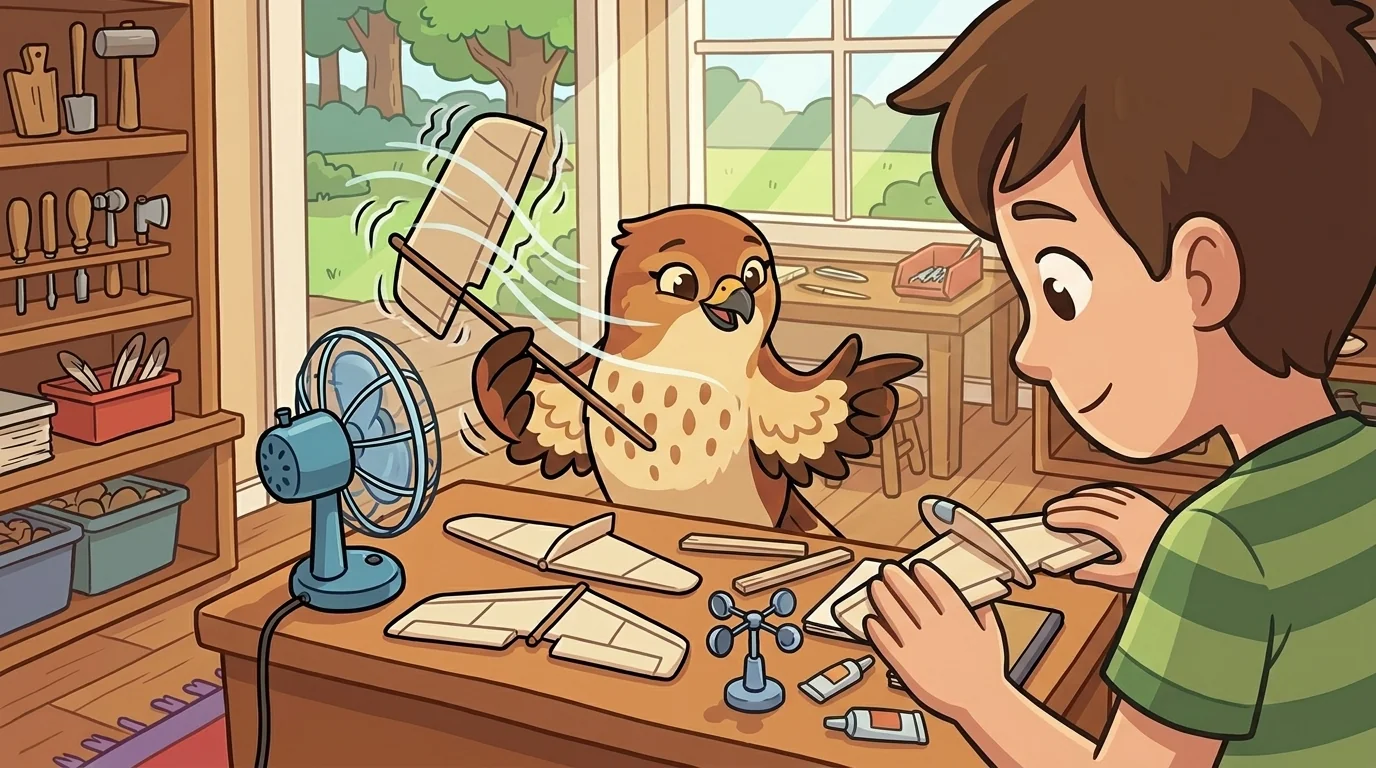
On her first teaching morning a boy named Cob kept steepening his wing angle for more lift and panicking when it stalled and dropped. Bite had him ride it out instead.
"When it stalls, don't freeze — just lower the nose," she said. She showed him the whole thing: a wing grips harder as you tilt it steeper, until one exact angle where the air breaks away and the grip vanishes; and the cure is never more force, it's easing the angle back so the air flows smooth and grips again. Cob's steep climbs kept stalling; each time Bite calmly had him drop the nose, and each time the grip returned and the plane flew on. "A stall feels like everything failing at once," she said, "but it's just the wing at its limit. Ease back, and it flies again. It's not you being bad at this. It's the wing showing you exactly where its edge is."
Cob stalled, lowered the nose without panicking, and felt the plane surge smoothly back into flight. "It came back," he said. "I just eased off."
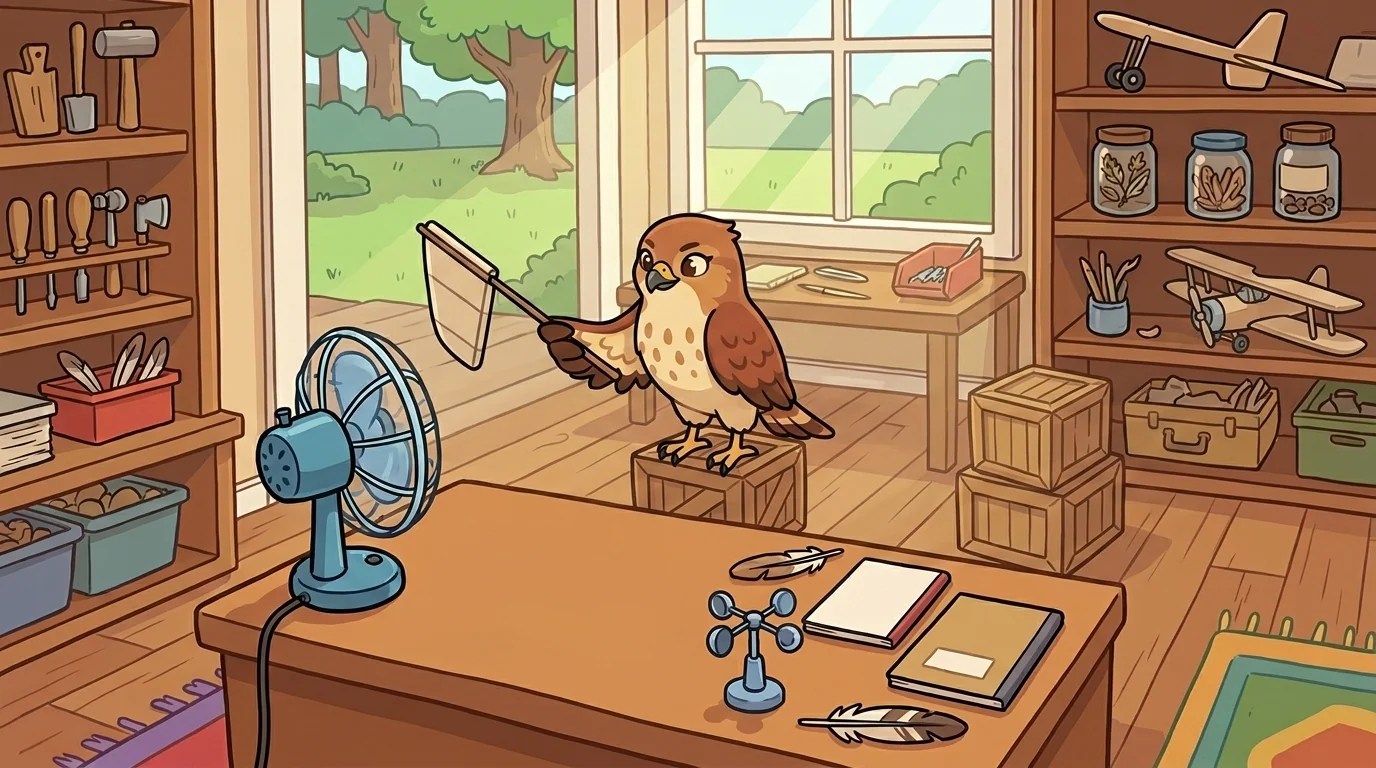
Later, after Cob had gone off to practice easing out of stalls, Bite tilted her little wing to the very edge of its grip and held it there, right at the door, feeling exactly where bite became slip.
She thought about the rock-dropping festival plane of her childhood, and about the fleet she'd flown today — climbing to the edge and easing back, the grip always returning the moment they lowered the nose. There was a steady, unafraid gladness in it, a calm like a startle settling into understanding: the quiet joy of knowing the edge, of a stall that stopped being a monster and became a door that swings both ways, of the grip returning under her wing. That unafraid steadiness of knowing-where-the-grip-lets-go-and-how-to-get-it-back was, to Bite, the whole quiet joy of the wing's edge.
The FlightForge ensemble
Bite is part of FlightForge's distributed-narrative cast. Each character embodies a different curricular primitive; together they teach the full subject.
-

Wing
Lift generation — airfoil + camber + Bernoulli AND Newton both-right complementary
-

Drag
Resistance — drag isn't bad, drag is information; shape-fights-air conversation
-

Thrust
Propulsion — every engine just throws air the wrong way (propeller/jet/rocket same trick different scale)
-

Yaw
Vertical-axis control — the rudder is the POLISH on the turn not the steering
-

Tail
Horizontal + vertical stabilizer family — quiet-control-from-the-back; the tail is why your paper plane goes straight
-
Attitude
Aircraft pitch attitude — the nose points where the elevator aims it; climbing is aim plus enough wing to hold it
-

Heel
Banking to turn — a plane turns by leaning, not pushing sideways; tilt the wings and lift itself pulls you around the corner
-
Keel
Center of gravity and balance — weight pulls down, but WHERE the weight sits decides level flight versus a tumble
-
Sail
Gliding — no engine, so you trade height for distance; a smoother shape buys more distance per bit of altitude