Heel
HEEL — a plane doesn't turn by pushing sideways; it turns by leaning. tilt the wings, and the lift itself pulls you around the corner.
Loading audio…
Press play to listen along. The line being read lights up as you go.
Show full transcript
Loading transcript…
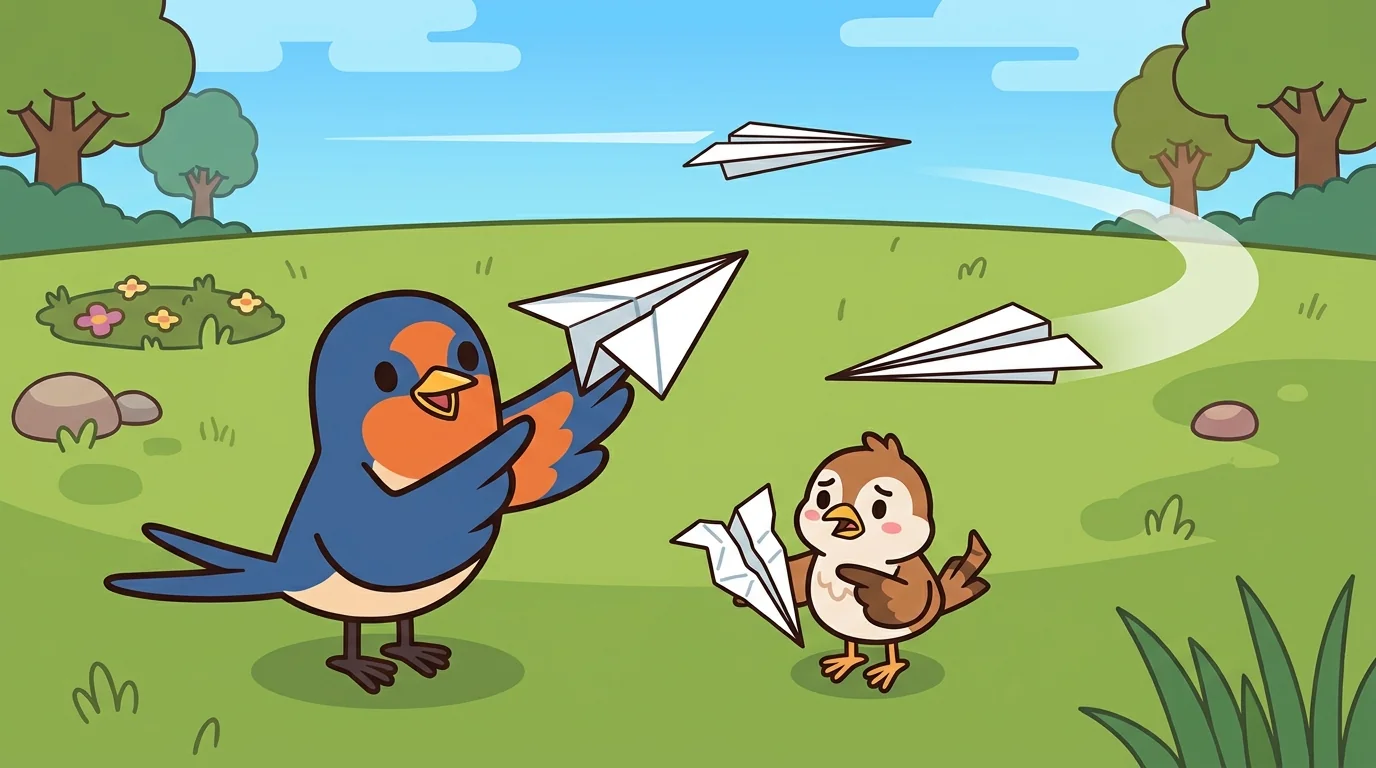
A small swallow named Heel threw a paper plane flat and straight, then threw a second one with its wings bent just slightly — one tip up, one tip down. The flat one flew on and on in a dead straight line. The tilted one carved a smooth, wide curve through the air and came sailing back around.
"See that?" Heel said. "It didn't push sideways. It leaned — and the lean did the turning."
A young bird had been jamming the tail of his plane hard to one side and getting nothing but an ugly skid. "I keep shoving it left and it just... slides. It won't turn."
"Because shoving the back sideways only makes it slip, not turn," Heel said. She held up her tilted plane. "A plane turns by banking — by tilting its wings, one up, one down. The wings are already holding you up with lift; tilt them, and that same lift now points a little sideways, and that's what pulls you around the corner. You don't force the turn. You lean, and the lift you already have does the work." She rocked the plane gently. "Flat wings, straight flight. Tilt the wings, and you curve."
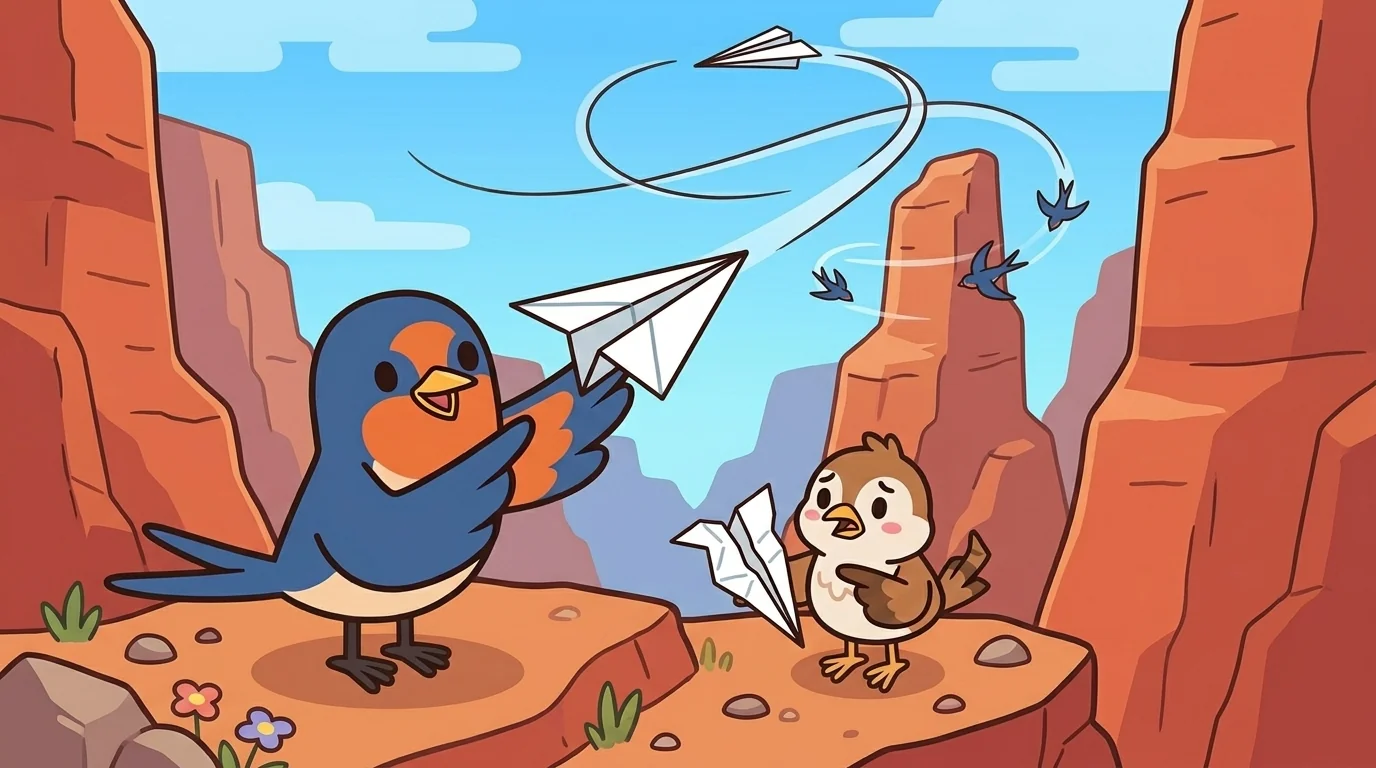
Heel had grown up in a cliffside colony of swallows who turned and swooped through narrow canyon gaps at full speed, all day, without ever seeming to try.
The little ones envied how the grown swallows carved the air, and assumed it took enormous strength. Heel's father laughed at that. "Strength? No, chick. Watch my wings." He'd tip one wingtip down and slide effortlessly around a rock. "I'm not fighting the air sideways. I'm just leaning, and letting my lift do the pulling. A turn should feel easy." One festival, young Heel had tried to turn her plane by cranking its whole tail hard over, sure that muscle was the answer. It skidded sideways and dropped, again and again, and the hot left-behind feeling crept up her neck. Her father didn't scold. He bent her plane's wingtips — one up, one down — the smallest tilt. "You were shoving," he said gently. "Try leaning." It curved away like a proper swallow. That was the day Heel learned a turn is a lean, not a fight.
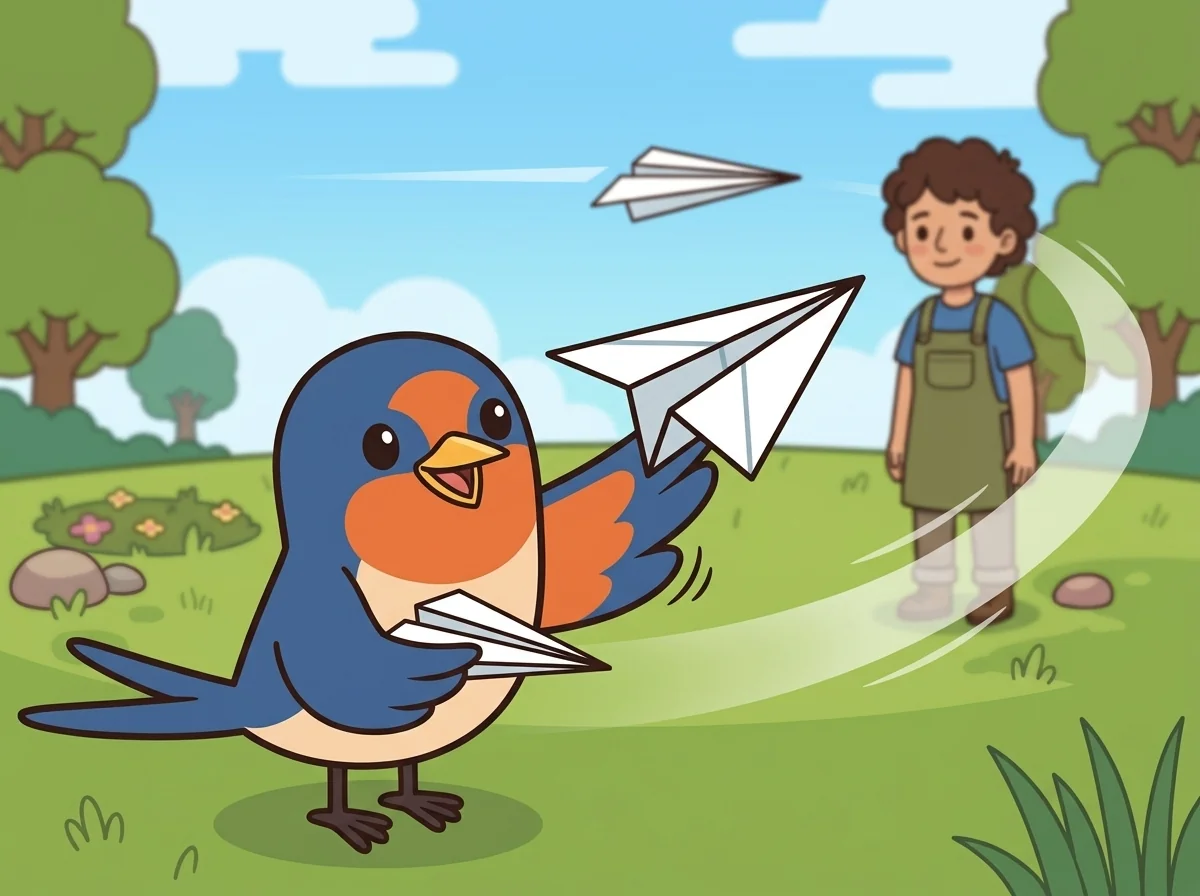
She flew to FlightForge the summer she turned twelve, wingtips still twitching with the memory of canyon turns. Skye, the instructor, met her with a plane that would only skid.
"It won't turn — it just slides sideways," Skye said. "Why?"
Heel looked, saw the tail cranked over and the wings dead flat, and bent the wingtips into a gentle bank instead. She launched it, and it carved a clean curve. "It was being shoved, not banked," she said. "A plane turns by tilting its wings so the lift points a little sideways and pulls it around. Force the tail over with flat wings and all you get is an ugly slip. Lean the wings, and the turn comes smooth and free." She grinned. "You don't push a plane around a corner. You lean it around."
Skye watched the smooth curve, and something eased in her face. "You belong here," she said.
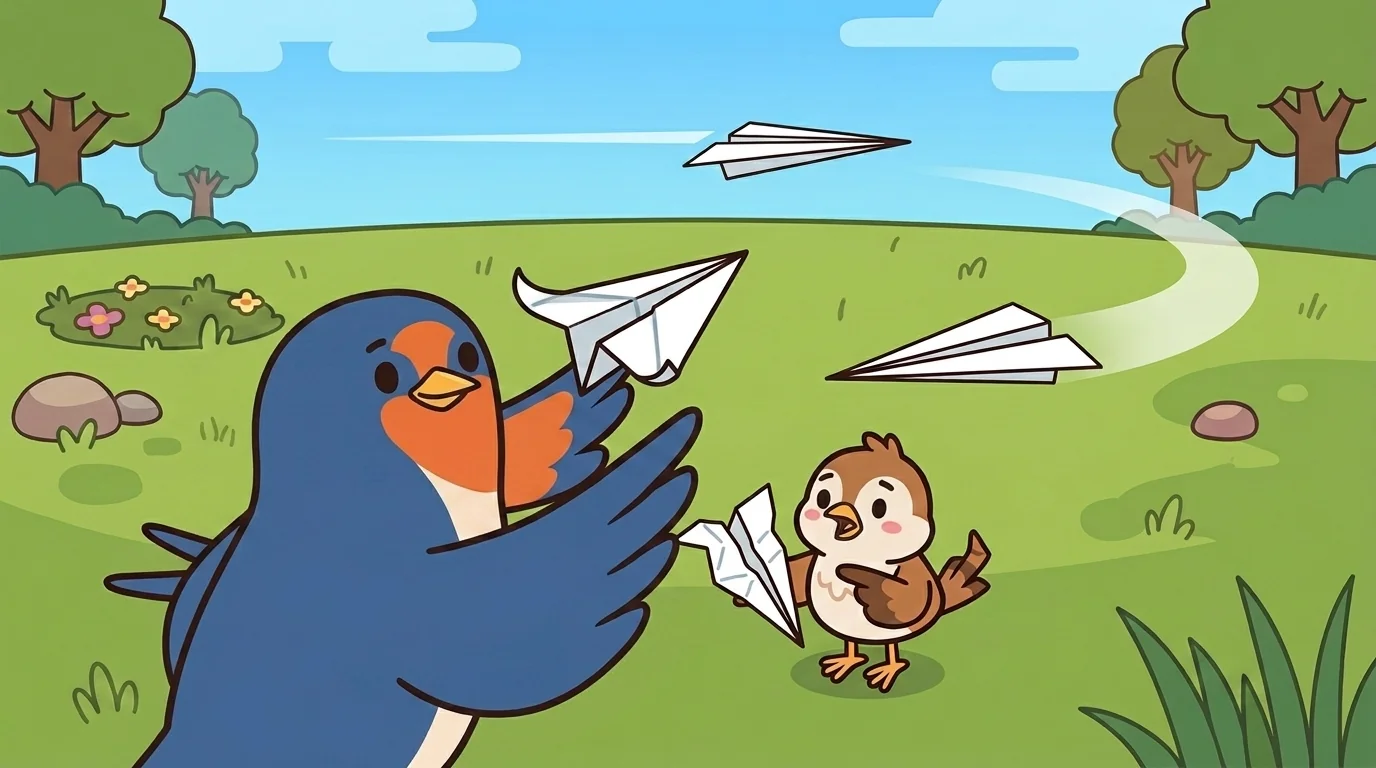
On her first teaching morning a boy named Rill was yanking his plane's tail sideways with all his might, getting only skids and stalls. Heel had him stop pushing entirely.
"Hands off the shoving," she said. "Now — bend this wingtip up, this one down. Just a little." She showed him the whole idea as one easy motion: tilt the wings to bank, and the lift that was holding him up now leans into the turn and carries him around; the more the tilt, the tighter the curve; level the wings again to fly straight out of it. Rill's first banks were too steep and spiraled down; Heel just eased them back with him. "Too much lean spirals, too little won't turn — you feel for the middle," she said. "Every skid and spiral is telling you more tilt or less. It's not you failing. It's the plane teaching you the lean."
Rill bent a gentle bank, threw, and watched his plane sweep around in a graceful arc. "It turned," he said, "and I stopped fighting it."
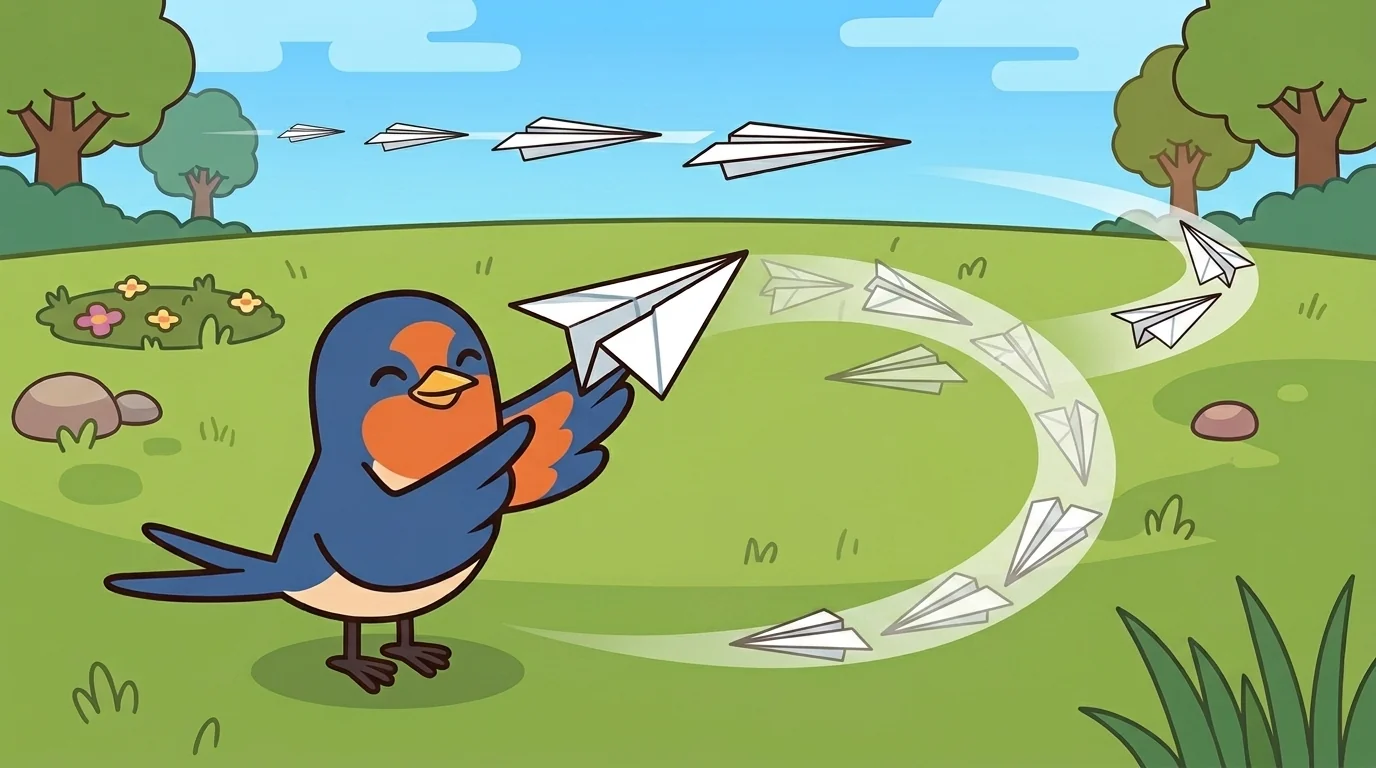
Later, after Rill had gone off to practice his banks, Heel sent her own tilted plane carving lazy loops around the workshop, easy as breathing.
She thought about the skidding, dropping festival plane of her childhood, and about the fleet she'd banked today — all of them curving smooth and free the moment their builders stopped shoving and started leaning. There was a loose, flowing gladness in it, a release like a clenched shoulder dropping: the easy joy of the lean, of a turn that pulls itself around when you stop forcing it, of strain melting into flow. That flowing ease of leaning-into-the-turn instead of fighting it was, to Heel, the whole quiet joy of the bank.
The FlightForge ensemble
Heel is part of FlightForge's distributed-narrative cast. Each character embodies a different curricular primitive; together they teach the full subject.
-

Wing
Lift generation — airfoil + camber + Bernoulli AND Newton both-right complementary
-

Drag
Resistance — drag isn't bad, drag is information; shape-fights-air conversation
-

Thrust
Propulsion — every engine just throws air the wrong way (propeller/jet/rocket same trick different scale)
-

Yaw
Vertical-axis control — the rudder is the POLISH on the turn not the steering
-

Tail
Horizontal + vertical stabilizer family — quiet-control-from-the-back; the tail is why your paper plane goes straight
-
Attitude
Aircraft pitch attitude — the nose points where the elevator aims it; climbing is aim plus enough wing to hold it
-
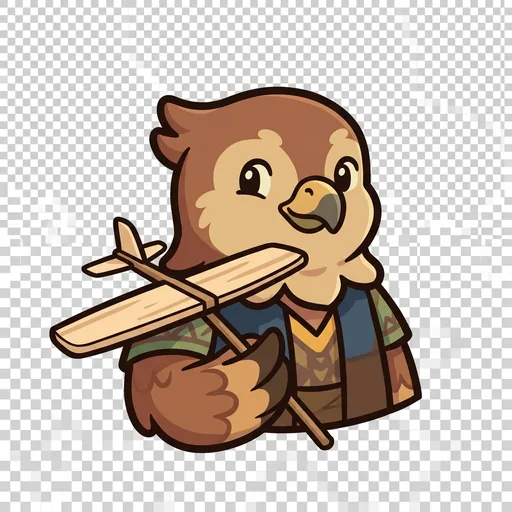
Bite
Angle of attack and the stall — a wing grips the air at an angle; steeper grips harder until, past the critical angle, the grip lets go all at once
-
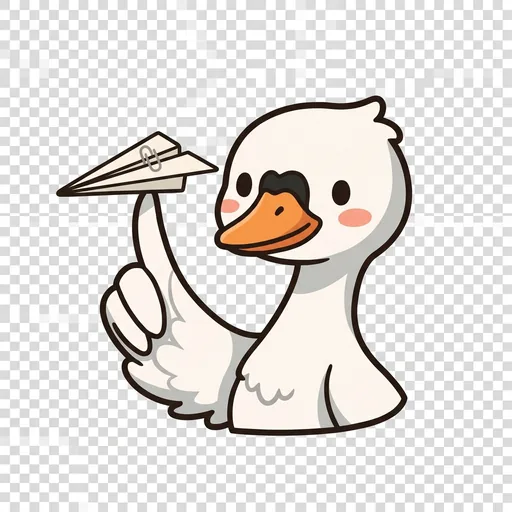
Keel
Center of gravity and balance — weight pulls down, but WHERE the weight sits decides level flight versus a tumble
-
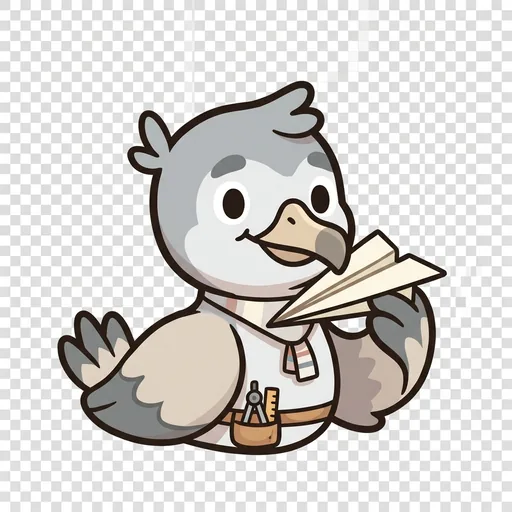
Sail
Gliding — no engine, so you trade height for distance; a smoother shape buys more distance per bit of altitude