Keel
KEEL — weight always pulls down; but WHERE the weight sits is what decides whether a plane flies level or tumbles. balance the center, and gravity works with you.
Loading audio…
Press play to listen along. The line being read lights up as you go.
Show full transcript
Loading transcript…
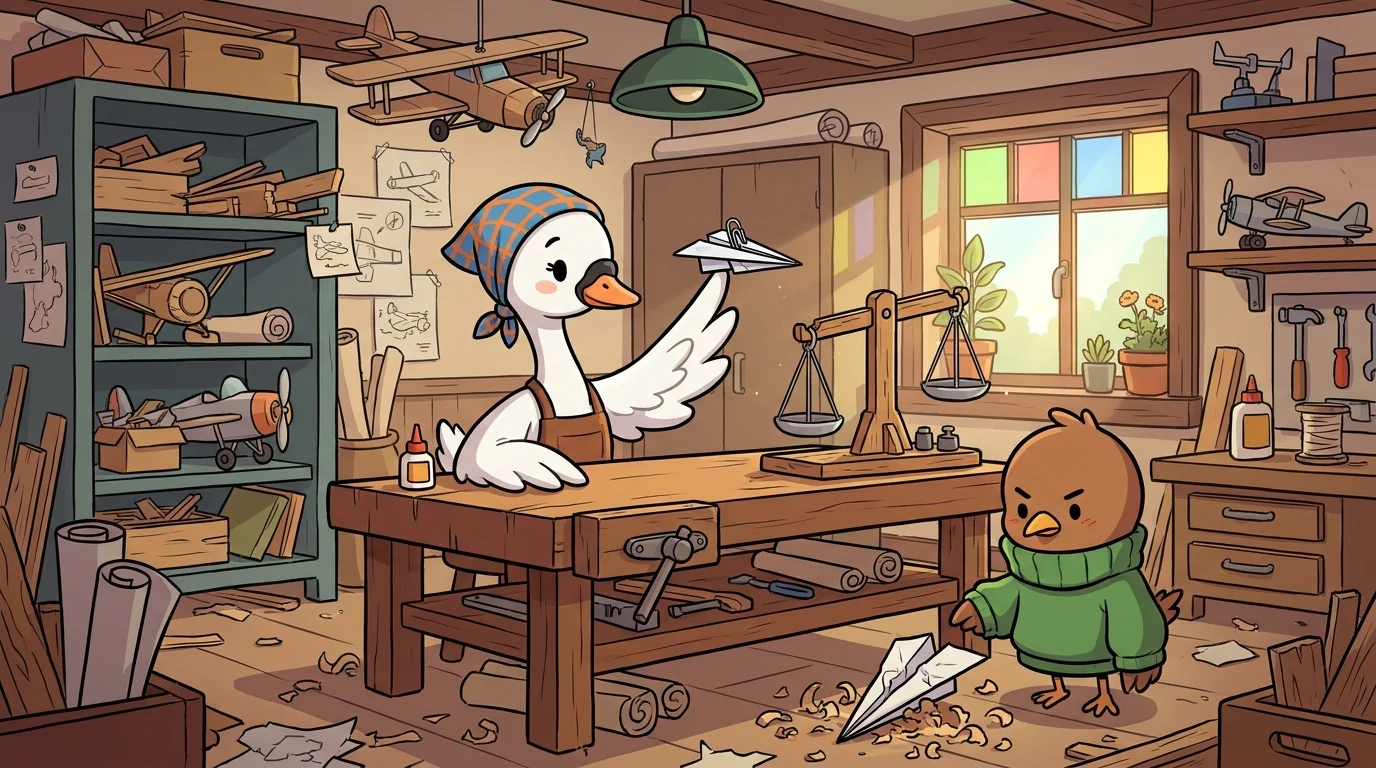
A small swan named Keel set a folded plane on the tip of one feather and watched where it tipped. Nose-heavy — it dived at once. She slid a tiny paperclip back a hair's width and balanced it again. This time it sat level on her feather, perfectly poised, and when she launched it, it flew straight and calm across the whole workshop.
"There," Keel said. "Not lighter. Not heavier. Just balanced."
A young bird had been frowning at his own plane, which kept nosing into the floor. "I made mine as light as I could. Why does it still crash?"
"Because it isn't about how heavy it is," Keel said. "Weight always pulls down — that never changes, on any plane in the world. The question is where the weight sits. Too much up front and it dives. Too much at the back and it stalls and tumbles. But find the one spot where it balances — the center — and gravity stops fighting you and starts holding you steady." She tapped the little paperclip. "That spot has a name. It's the center of gravity. Move a scrap of weight a finger's width, and a plane that tumbled will suddenly sail."
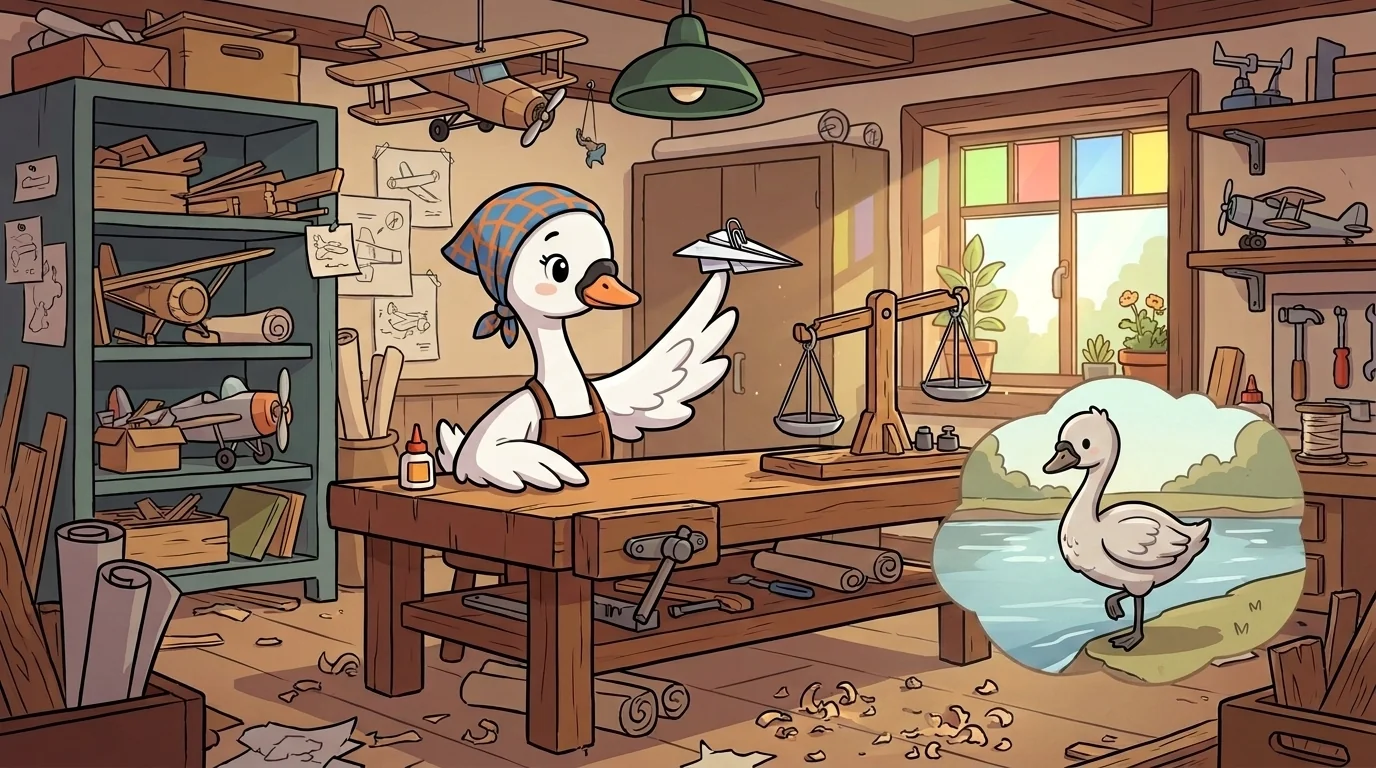
Keel had grown up on a broad slow river, in a family of swans who taught the cygnets to balance before they taught them to fly.
A swan is heavy — everyone knew that — and the little ones fretted about it, sure their weight was the enemy. But Keel's mother showed her the truth on the water. "Feel where your weight rests," she'd say. "Not how much — where. Sit balanced and the heaviest bird glides. Sit lopsided and even a feather tips you over." One autumn Keel had loaded her festival plane with what she thought was a clever heavy nose, certain that more weight up front meant more power. It stabbed straight into the mud, over and over, and her face went hot with the everyone-else-is-flying feeling. Her mother didn't say she'd done it wrong. She just slid the weight backward a little. "You didn't use too much," she said. "You put it in the wrong place. The weight isn't your enemy. Being off-balance is." That was the day Keel stopped fearing weight and started listening to where it sat.

She walked to FlightForge the summer she turned twelve, a pocket of little balancing-weights at her hip. Skye, the instructor, met her at the workshop door with a plane that wouldn't stop tumbling.
"This one's the right weight and still won't fly," Skye said. "Why?"
Keel balanced it on a feather, found the tumble was tail-heavy, and slid a scrap of weight forward until it sat level. She launched it, and it flew clean. "It wasn't too heavy," she said. "It was out of balance — all its weight sat too far back. Weight always pulls down; you can't change that. But you can choose where it sits, and that spot — the center of gravity — decides whether it dives, tumbles, or sails." She smiled. "Same weight. Different place. Whole different flight."
Skye watched the plane glide to a soft stop, and something in her face eased. "You belong here," she said.

On her first teaching morning a girl named Fen was stripping her plane of every bit of weight, sure that lighter was the only answer. Keel stopped her.
"Watch — I'll add weight and make it fly better," Keel said, and Fen looked at her like she was mad. Keel slid a paperclip to exactly the balance point, and the wobbling plane went smooth and level. "It's not lighter that flies," she said. "It's balanced that flies. Too far forward, it dives — nudge the weight back. Too far back, it stalls — nudge the weight forward. You test, you slide it a hair, you test again." Fen's early tries dived and stalled and dived; Keel just kept nudging with her. "Every crash is telling you which way to move the weight," she said. "It's not you being bad at this. It's the plane telling you forward a little or back a little. You listen, and you slide."
Fen slid her weight forward a whisker, threw, and watched it sail the length of the bench. "It flew," she breathed. "And I added weight."

Later, after Fen had gone off to balance the rest of her fleet, Keel set a perfectly-poised plane on her feather and just held it there, level and still.
She thought about the mud-stabbing festival plane of her childhood, and about the fleet she'd balanced today — heavy planes, all of them, all flying straight and easy because their weight sat in exactly the right place. There was a deep, settled steadiness in it, a calm like a held breath evening out: the quiet gladness of balanced, of weight that had stopped fighting and started holding, of the wobble finally clicking into level. That steadiness of the-weight-in-the-right-place, of gravity turned from an enemy into a partner, was, to Keel, the whole quiet joy of finding the center.
The FlightForge ensemble
Keel is part of FlightForge's distributed-narrative cast. Each character embodies a different curricular primitive; together they teach the full subject.
-

Wing
Lift generation — airfoil + camber + Bernoulli AND Newton both-right complementary
-

Drag
Resistance — drag isn't bad, drag is information; shape-fights-air conversation
-

Thrust
Propulsion — every engine just throws air the wrong way (propeller/jet/rocket same trick different scale)
-

Yaw
Vertical-axis control — the rudder is the POLISH on the turn not the steering
-

Tail
Horizontal + vertical stabilizer family — quiet-control-from-the-back; the tail is why your paper plane goes straight
-
Attitude
Aircraft pitch attitude — the nose points where the elevator aims it; climbing is aim plus enough wing to hold it
-
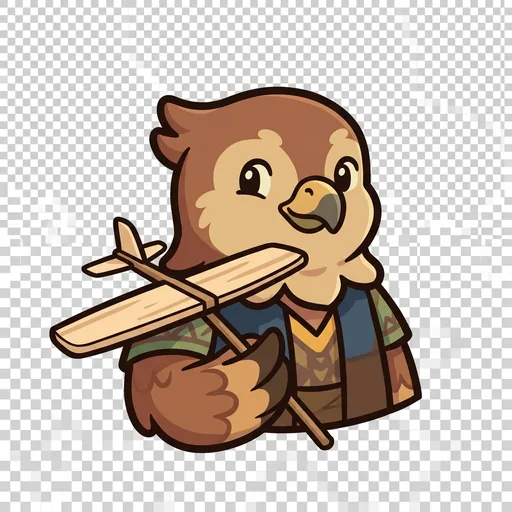
Bite
Angle of attack and the stall — a wing grips the air at an angle; steeper grips harder until, past the critical angle, the grip lets go all at once
-

Heel
Banking to turn — a plane turns by leaning, not pushing sideways; tilt the wings and lift itself pulls you around the corner
-
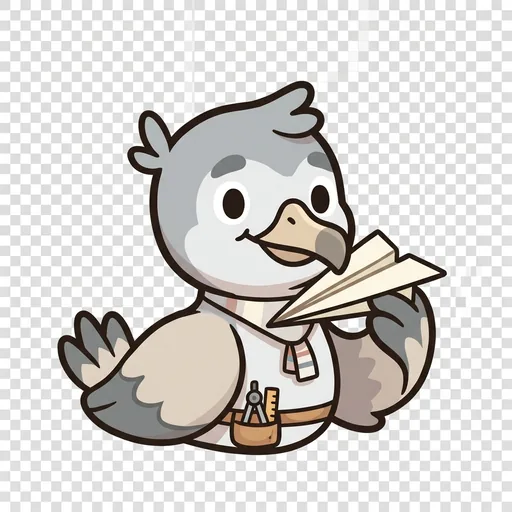
Sail
Gliding — no engine, so you trade height for distance; a smoother shape buys more distance per bit of altitude