Sail
SAIL — a glider has no engine; it trades height for distance. the smoother the shape, the more distance each bit of height buys — so gliding is the art of spending altitude slowly.
Loading audio…
Press play to listen along. The line being read lights up as you go.
Show full transcript
Loading transcript…
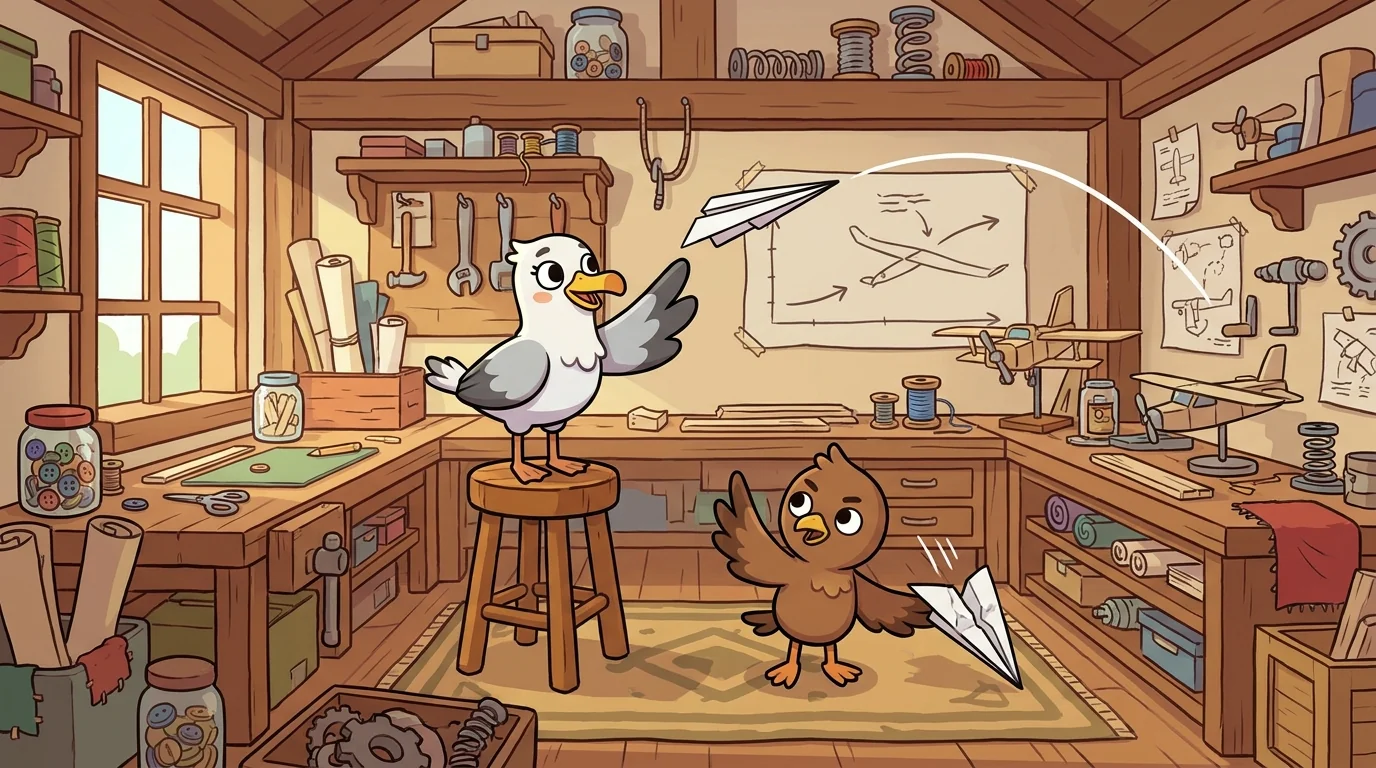
A small albatross named Sail let go of a paper glider from up on a stool. It had no engine, no throw — just gravity — and yet it didn't drop. It tipped its nose down the tiniest bit and sailed, long and smooth, all the way across the workshop before touching down at the far wall.
"No power at all," Sail said, "and it still crossed the whole room. That's the trick of a glider — it doesn't fight gravity. It spends it, slowly, and buys distance with it."
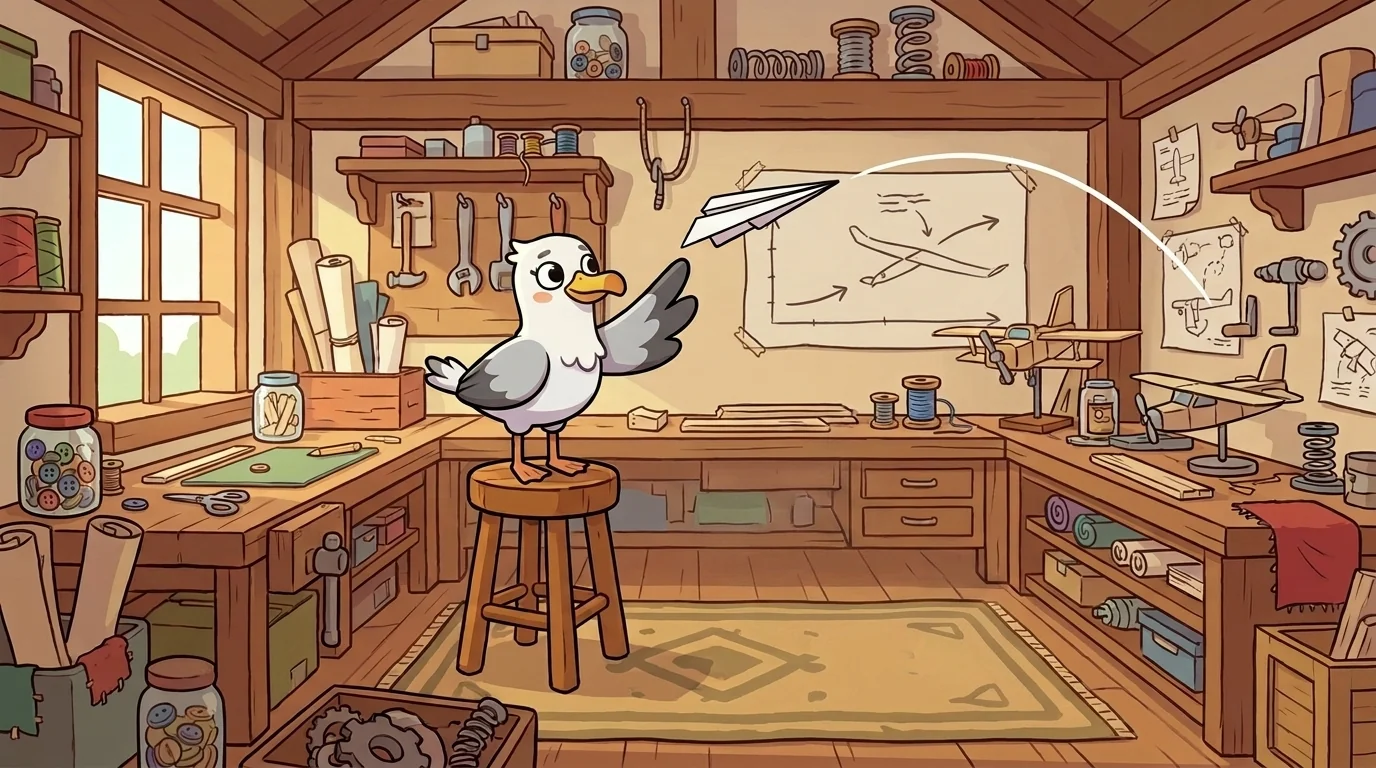
A young bird had a glider that just plummeted, and was flapping it desperately trying to keep it up. "It's got no engine, so it just falls! How do I keep it up without a motor?"
"You don't keep it up," Sail said gently. "You let it come down — slowly. A glider is always sinking; there's no engine to stop that. But if the shape is smooth and the nose is aimed just right, it sinks only a little for every long way it goes forward. It trades height for distance." She tipped the glider's nose down a hair. "Too flat and it stalls and drops. Too steep and it dives and lands short. But find the sweet spot, keep it smooth, and a little height buys a lot of distance. Gliding is the art of falling so slowly you seem to fly."
Sail had grown up over the open ocean, in a family of albatrosses who could travel a thousand miles barely flapping, riding the wind and their own weight for days.
The little ones marveled at how the elders flew so far without tiring. "Because we don't fight, chick," her mother would say, holding her wings dead still and sailing on. "Flapping is spending your strength fast. Gliding is spending your height slow. The calm bird goes farther than the frantic one, every time." One festival, young Sail had flapped her paper glider frantically, sure that more motion meant more flight. It jerked, stalled, and dropped short, over and over, and the hot everyone-else-is-flying feeling rose. Her mother didn't scold. She stilled Sail's hands and let the glider go smooth from a height. "You were struggling, little one," she said, as it sailed far and calm. "Stop struggling. Let it glide." That was the day Sail learned that far comes from calm, not frenzy.
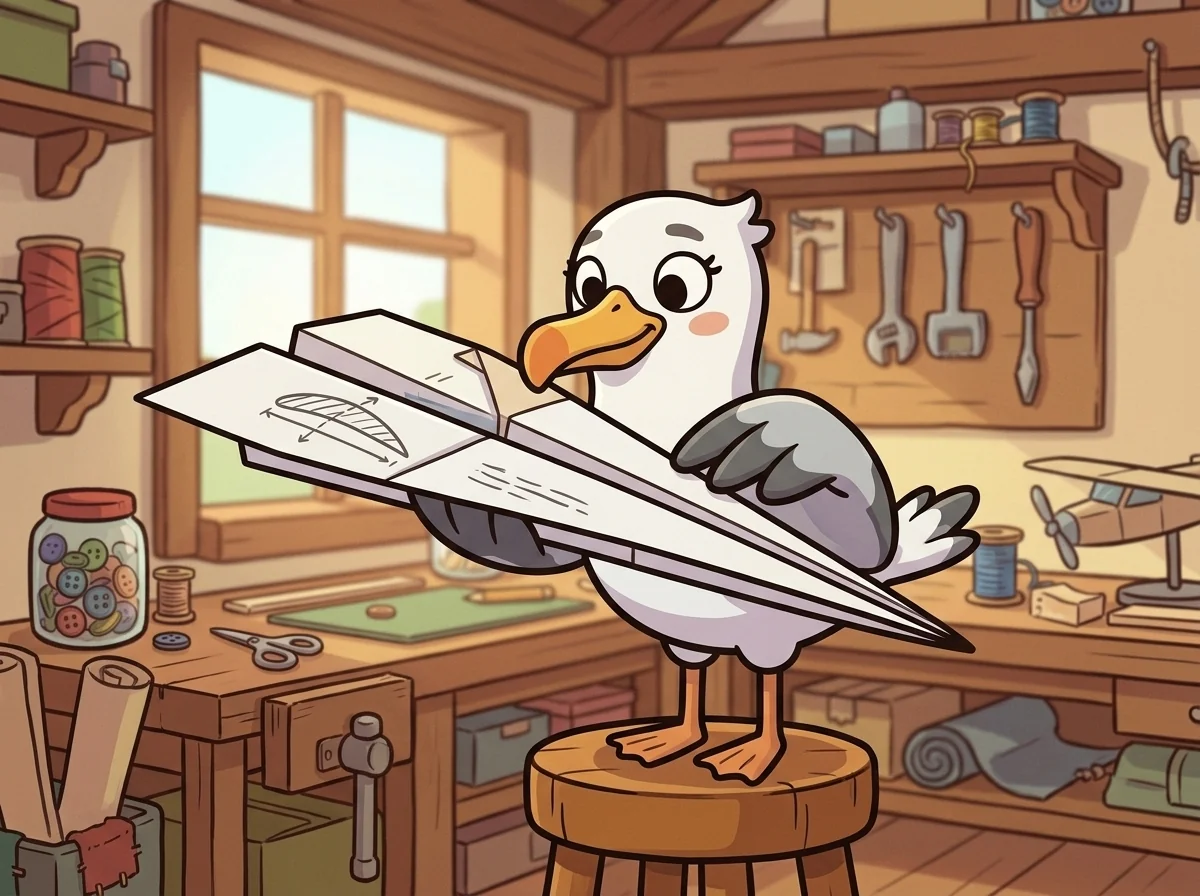
She soared to FlightForge the summer she turned twelve, a long smooth glider tucked under one great wing. Skye, the instructor, met her with a plane that kept plummeting.
"No engine, and it just drops," Skye said. "How do you make it fly?"
Sail didn't try to make it stop sinking. She smoothed its shape, aimed the nose the tiniest bit down, and let it go from a height — and it sailed long and level to the far wall. "You can't stop a glider sinking — there's no engine," she said. "But you can make it sink slowly. Smooth shape, nose aimed just right, and it trades a little height for a lot of distance. The smoother and calmer it flies, the farther each bit of height carries it." She smiled. "You don't keep a glider up. You spend its height slowly, and let it carry you a long, long way."
Skye watched the long, calm glide, and her face eased. "You belong here," she said.
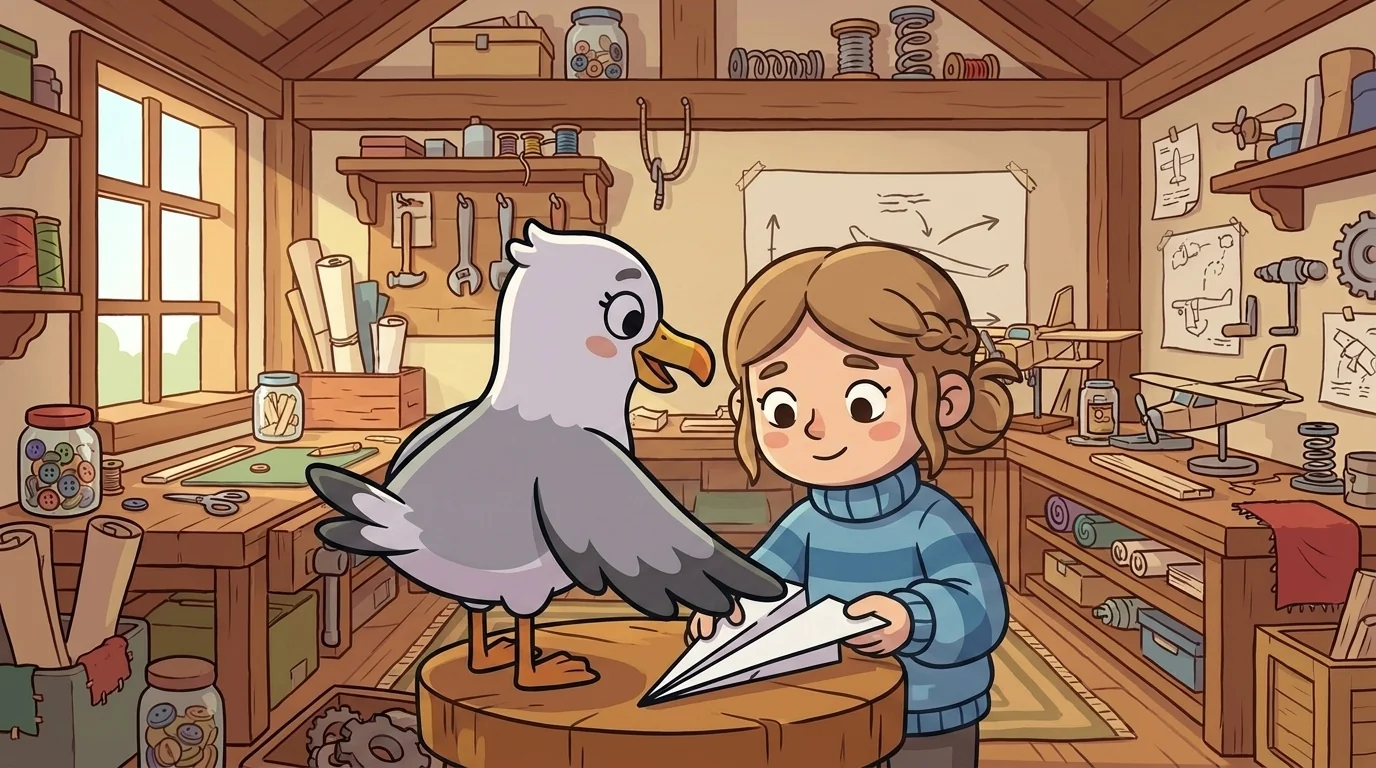
On her first teaching morning a girl named Dove kept flapping and jerking her glider, panicking as it dropped. Sail had her go still.
"Hands calm," she said. "Let it be smooth. A glider that thrashes drops fast; a glider that glides smooth goes far." She showed Dove the whole idea: a glider is always sinking, but a smooth shape and a gently-down nose make it sink only a little for every long stretch forward — that trade of height for distance is the whole art. Dove's frantic, flappy tries kept stalling and dropping short; Sail just calmed her hands with her. "The struggling is what drops it," she said. "Every short, jerky flight is telling you go smooth, go calm. It's not you being too weak to fly it. It's the glider asking you to stop fighting and let it sail."
Dove let her glider go smooth and calm from the stool, and watched it sail the whole length of the room. "It went so far," she said, "and I didn't do anything but let it be smooth."
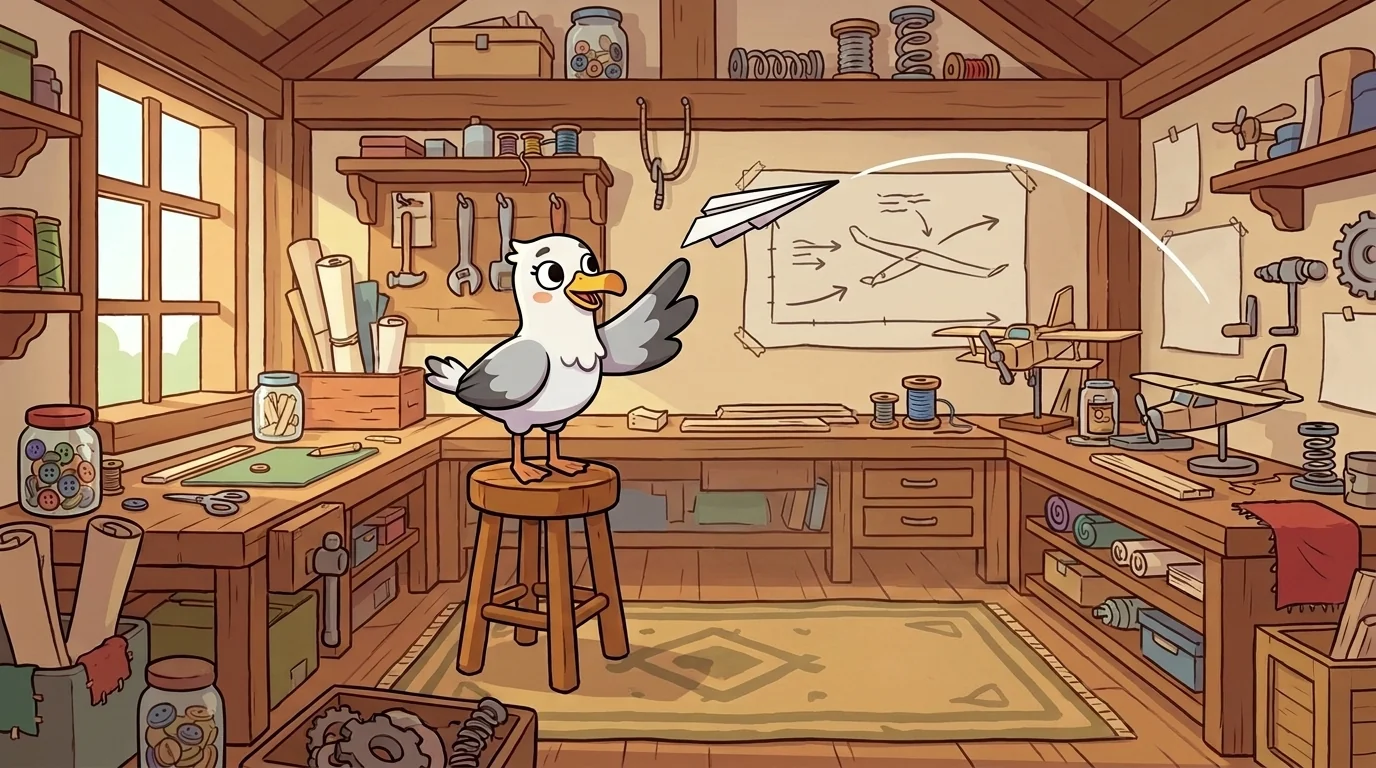
Later, after Dove had gone off to practice long calm glides, Sail released her own glider from the high stool and watched it cross the entire workshop in one long, unhurried sweep, spending its little height so slowly it seemed to hang.
She thought about the frantic, short-dropping festival glider of her childhood, and about the fleet she'd flown today — all of them carried far by nothing but a smooth shape, a gentle nose, and calm. There was a wide, peaceful gladness in it, a stillness like a long slow breath: the quiet joy of the long glide, of height spent slowly, of going far by staying calm instead of fighting. That peaceful reach of spending-height-slowly, of falling so gently it looks like flying, was, to Sail, the whole quiet joy of the glide.
The FlightForge ensemble
Sail is part of FlightForge's distributed-narrative cast. Each character embodies a different curricular primitive; together they teach the full subject.
-

Wing
Lift generation — airfoil + camber + Bernoulli AND Newton both-right complementary
-

Drag
Resistance — drag isn't bad, drag is information; shape-fights-air conversation
-

Thrust
Propulsion — every engine just throws air the wrong way (propeller/jet/rocket same trick different scale)
-

Yaw
Vertical-axis control — the rudder is the POLISH on the turn not the steering
-

Tail
Horizontal + vertical stabilizer family — quiet-control-from-the-back; the tail is why your paper plane goes straight
-
Attitude
Aircraft pitch attitude — the nose points where the elevator aims it; climbing is aim plus enough wing to hold it
-
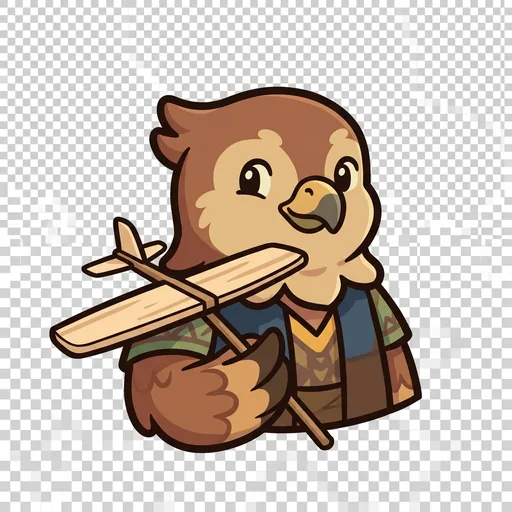
Bite
Angle of attack and the stall — a wing grips the air at an angle; steeper grips harder until, past the critical angle, the grip lets go all at once
-

Heel
Banking to turn — a plane turns by leaning, not pushing sideways; tilt the wings and lift itself pulls you around the corner
-
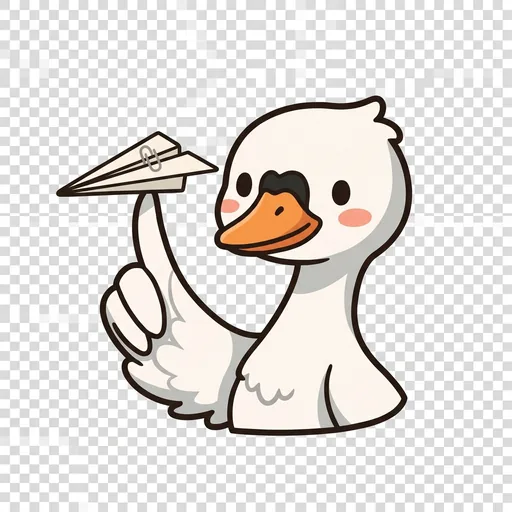
Keel
Center of gravity and balance — weight pulls down, but WHERE the weight sits decides level flight versus a tumble