
Heel the Turn-Leaner
HEEL — roll: a plane doesn't turn by pushing sideways, it turns by leaning; tilt the wings (bank) and the lift itself, now pointed partly sideways, pulls the plane around the corner. The Advanced idea is that lift always points straight out of the wings, so banking AIMS the lift into the turn.
A story read by Heel the Turn-Leaner
Loading audio…
Press play to listen along. The line being read lights up as you go.
Show full transcript
Loading transcript…
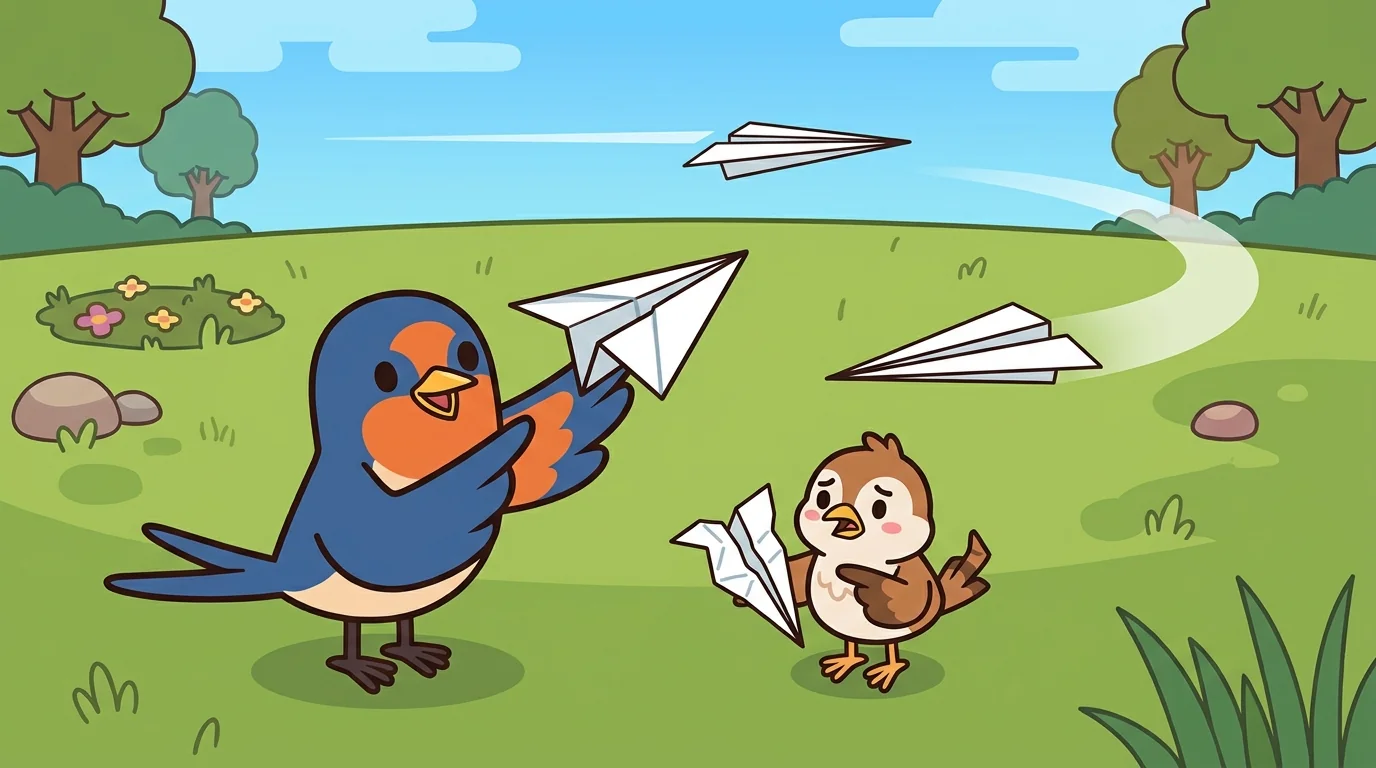
A small swallow named Heel threw a paper plane flat and straight, then threw a second one with its wings bent just slightly — one tip up, one tip down. The flat one flew on and on in a dead straight line. The tilted one carved a smooth, wide curve through the air and came sailing back around.
"A plane does not turn the way a boat turns," Heel told the flyers. "It does not shove its nose sideways. It leans — and the lean is what pulls it around. Watch the wings, not the nose."
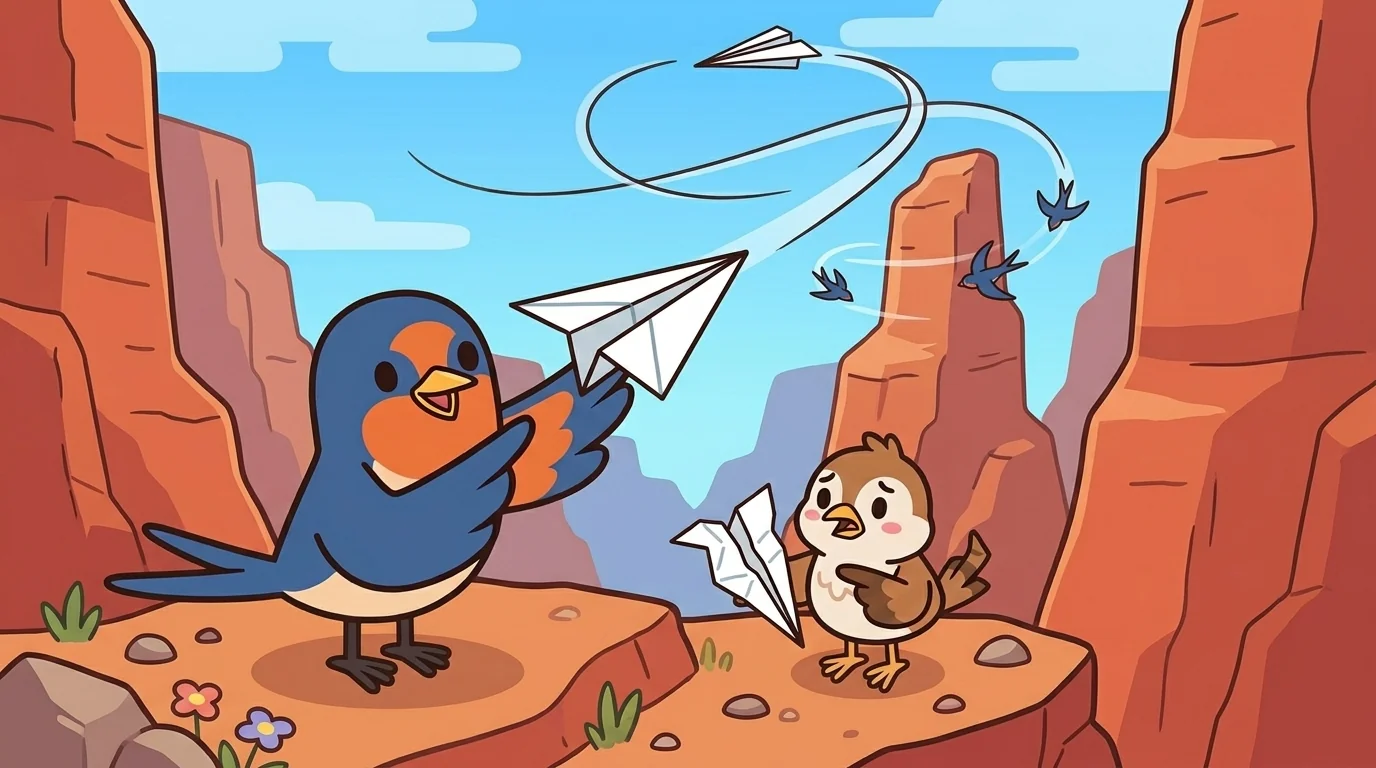
The leaning has a name — bank — and the little flaps that do it, out near the wingtips, are the ailerons. "One aileron goes up, the other goes down, so one wing rises and the other drops. Now the whole plane is tilted — banked — and here is the part that took me the longest to see." She held a model wing flat. "Lift always points straight out of the top of the wings. When the wings are level, the lift points straight up, holding the plane against gravity. But when you bank the wings—" she tilted it "—the lift tilts with them. Now it points partly up and partly sideways. And that sideways part is a force pulling the plane into a curve. The plane turns because its own lift is now aimed into the turn."
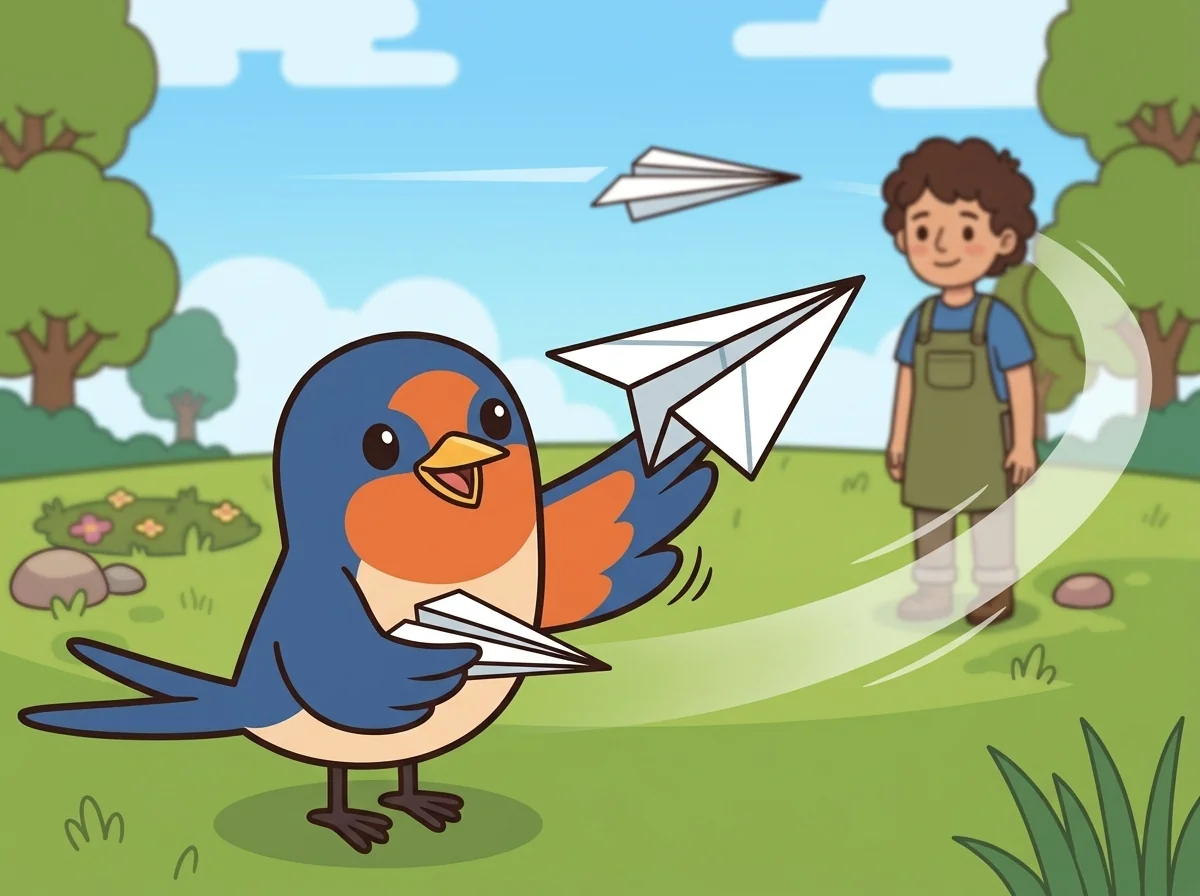
The Advanced idea, she stressed, is that you did not add a sideways force. "You already had all that lift, pointing up. Banking does not make new force — it re-aims the force you already had. Tilt the wings, and some of your up-force becomes turn-force. Which is also why a hard bank makes you sink a little: you borrowed some of the up-force to make the turn, so there's less holding you against gravity. That is why, in a real turn—" she nodded toward where two other flyers worked "—you also lift the nose a touch to make up the borrowed lift. But the turning itself is pure lean."
A flyer objected that surely you steer with the tail, like a rudder on a boat. "The rudder helps — it keeps the nose pointed neatly along the curve, no skidding," Heel said. "But the rudder alone just skids you sideways, flat and ugly. The turn — the clean carving curve — comes from the bank. Lean first. The tail only tidies it."
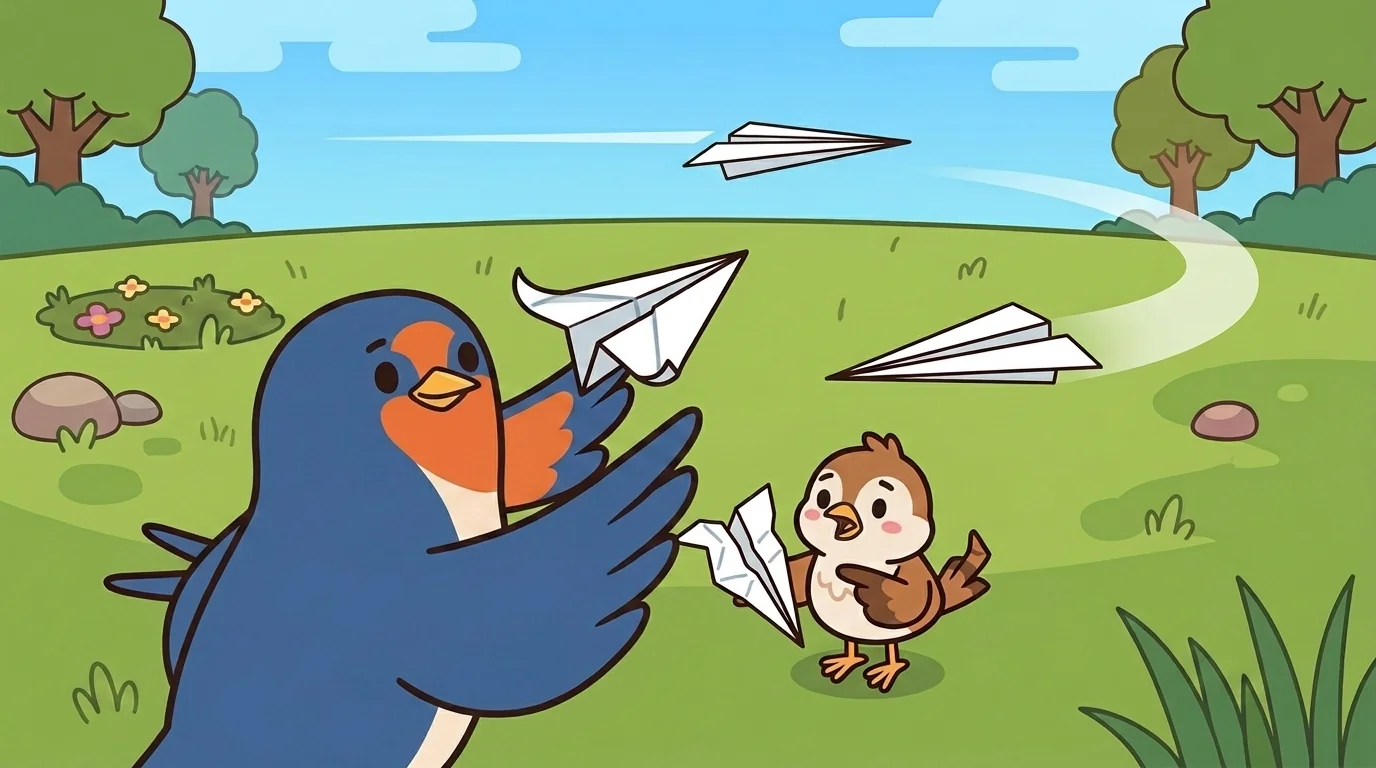
A careful young flyer named Fen kept trying to turn her plane by bending the tail-rudder and got only a flat, skidding wobble. Heel bent the wingtips instead — one up, one down. "Stop pushing the nose around," she said. "Tilt the wings and let the lift do the pulling." Fen threw it, and the plane leaned into a long, smooth arc and came home.
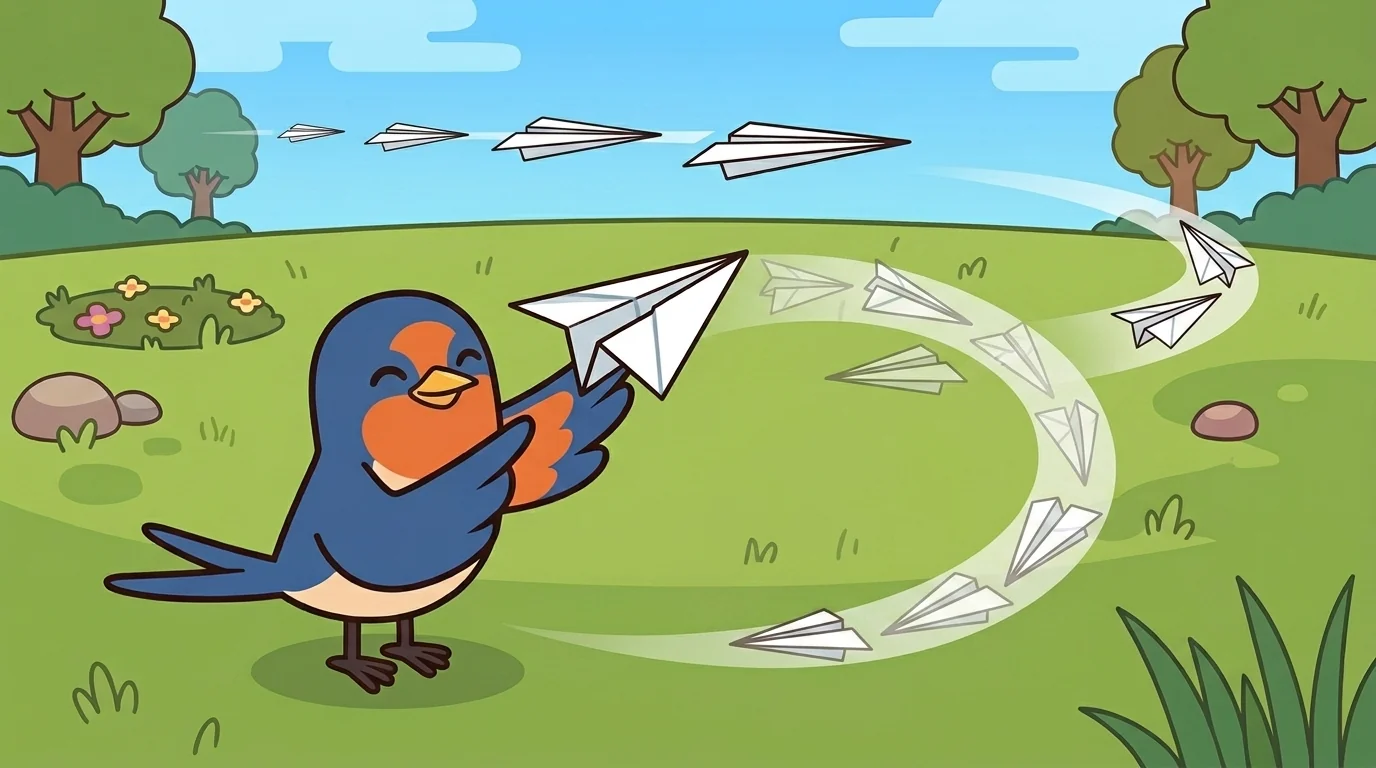
What struck Fen was that the turn came from leaning, not shoving — from aiming a force she already had, not fighting for a new one. Heel smiled. "Lift always points out of the wings. Tilt the wings, and you tilt the pull. That is the whole of turning: you lean, and your own lift carries you around the corner." She bent one more pair of wingtips, one up and one down, and threw a plane that curved home like it was on a string.
The FlightForge ensemble
Heel the Turn-Leaner is part of FlightForge's distributed-narrative cast. Each character embodies a different curricular primitive; together they teach the full subject.
-

Wing
Lift generation — airfoil + camber + Bernoulli AND Newton both-right complementary
-
Drag
Resistance — drag isn't bad, drag is information; shape-fights-air conversation
-
Thrust
Propulsion — every engine just throws air the wrong way (propeller/jet/rocket same trick different scale)
-

Yaw
Vertical-axis control — the rudder is the POLISH on the turn not the steering
-
Tail
Horizontal + vertical stabilizer family — quiet-control-from-the-back; the tail is why your paper plane goes straight
-
Attitude
Aircraft pitch attitude — the nose points where the elevator aims it; climbing is aim plus enough wing to hold it
-
Bite
Angle of attack and the stall — a wing grips the air at an angle; steeper grips harder until, past the critical angle, the grip lets go all at once
-
Keel
Center of gravity and balance — weight pulls down, but WHERE the weight sits decides level flight versus a tumble
-
Sail
Gliding — no engine, so you trade height for distance; a smoother shape buys more distance per bit of altitude