
Keel and Sail
GRAVITY IS THE GLIDER'S ENGINE — an engineless glider flies on its own weight through two moves at once: Keel balances the center so the plane is steady instead of tumbling, and Sail smooths the shape and aims the nose so that steady weight is spent slowly as distance. An off-balance glider tumbles no matter how smooth; a balanced glider aimed wrong drops short; together, weight becomes a long calm glide.
Loading audio…
Press play to listen along. The line being read lights up as you go.
Show full transcript
Loading transcript…
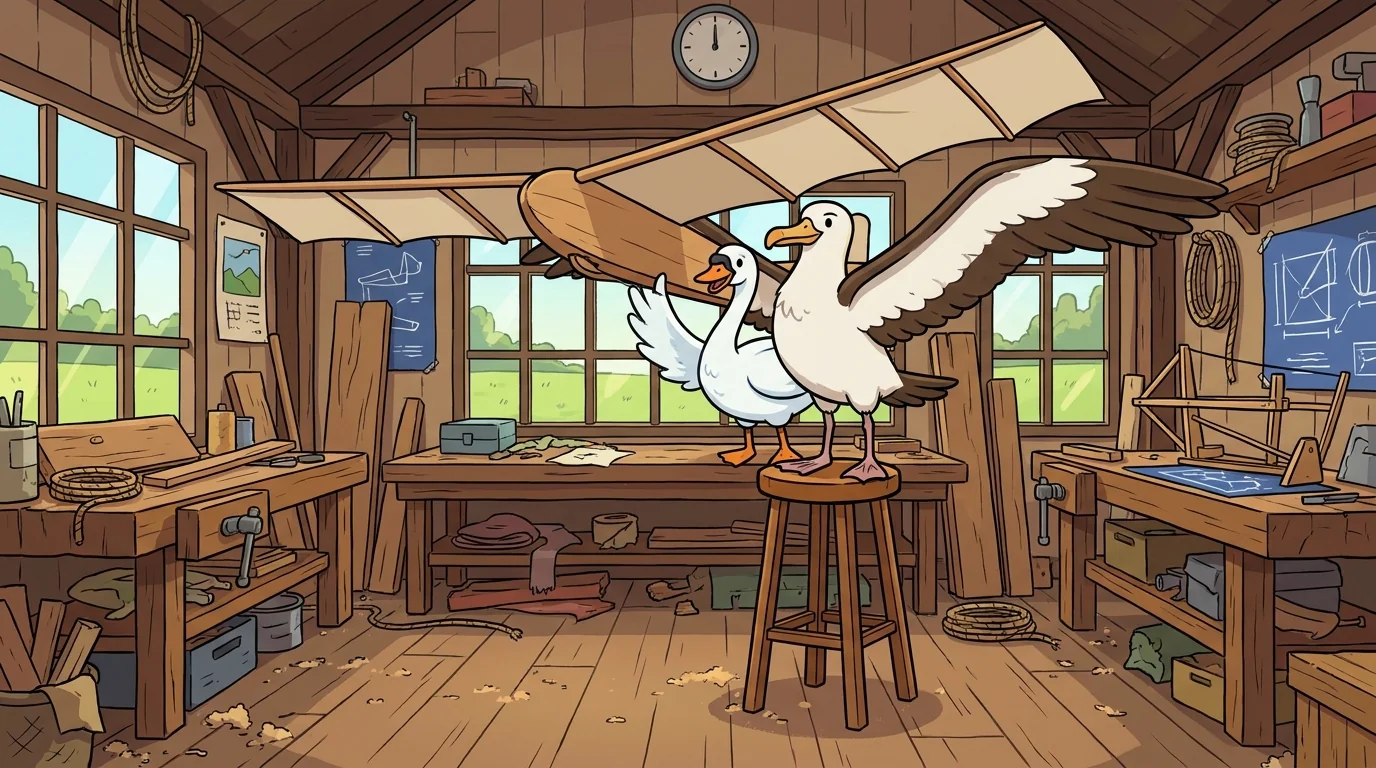
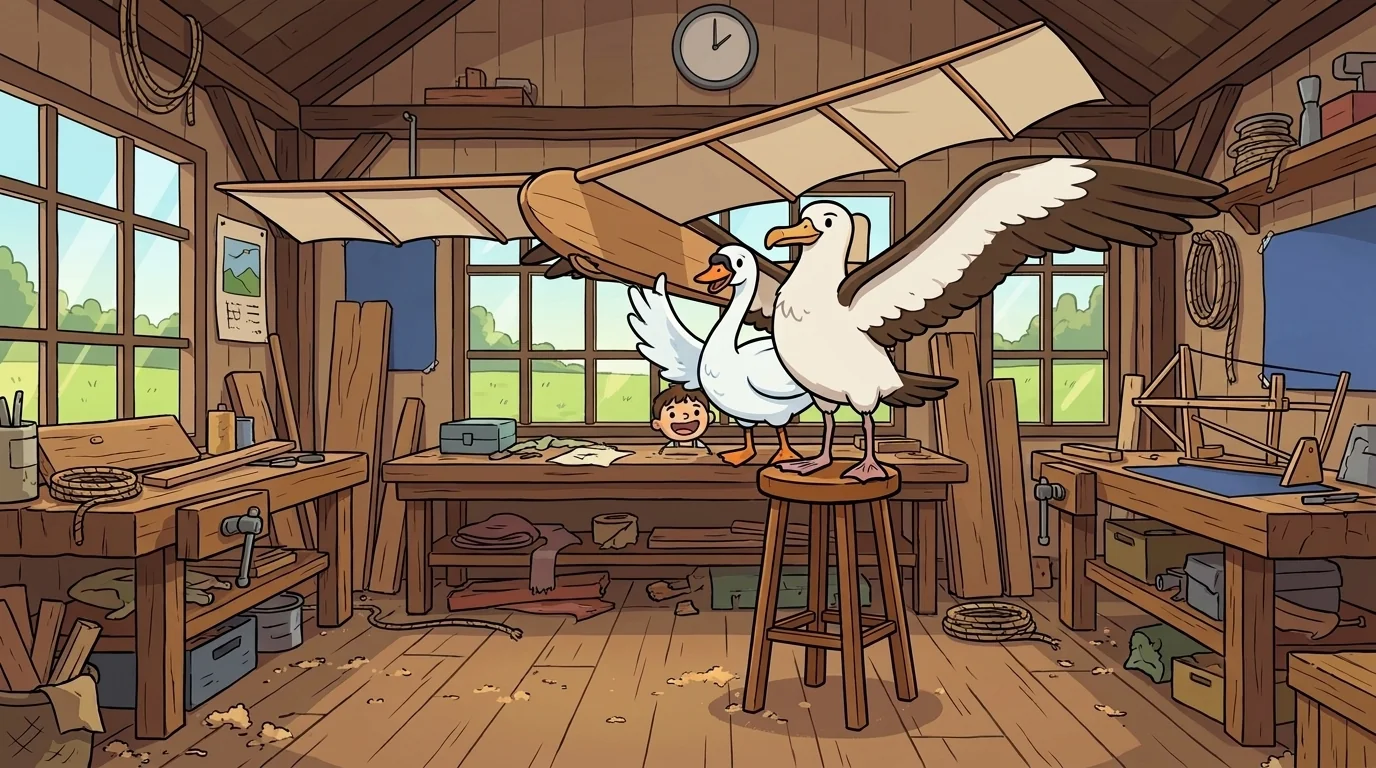
Keel the swan and Sail the albatross stood at the top of a stool with a glider that had no engine at all — nothing to push it, only its own weight and gravity pulling down. It seemed like weight should just make it fall.
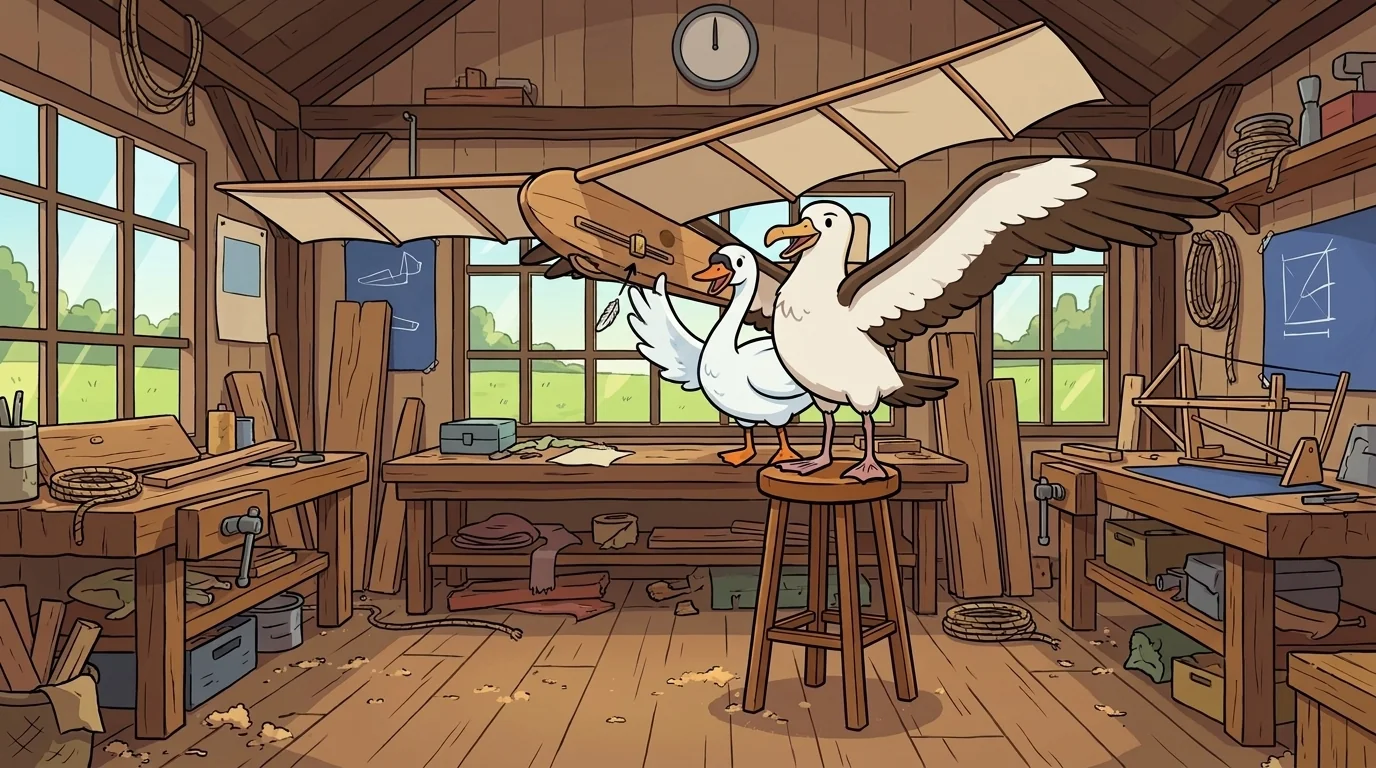
Keel spoke first, about the balance.
[KEEL, calm]: Before this weight can become a glide, the plane has to be steady. My part is the balance point — the center of gravity. Set it in the safe window, a little ahead of the wing's lift, and the plane holds itself level, settling back when it's nudged.
She showed a badly balanced glider — weight too far back — and it tumbled off the stool end over end.
[KEEL, firm]: But if the balance is wrong, none of the rest matters. An off-balance glider tumbles, no matter how beautifully smooth its shape. Steadiness comes first. Without it, there is no glide to speak of — only a fall.
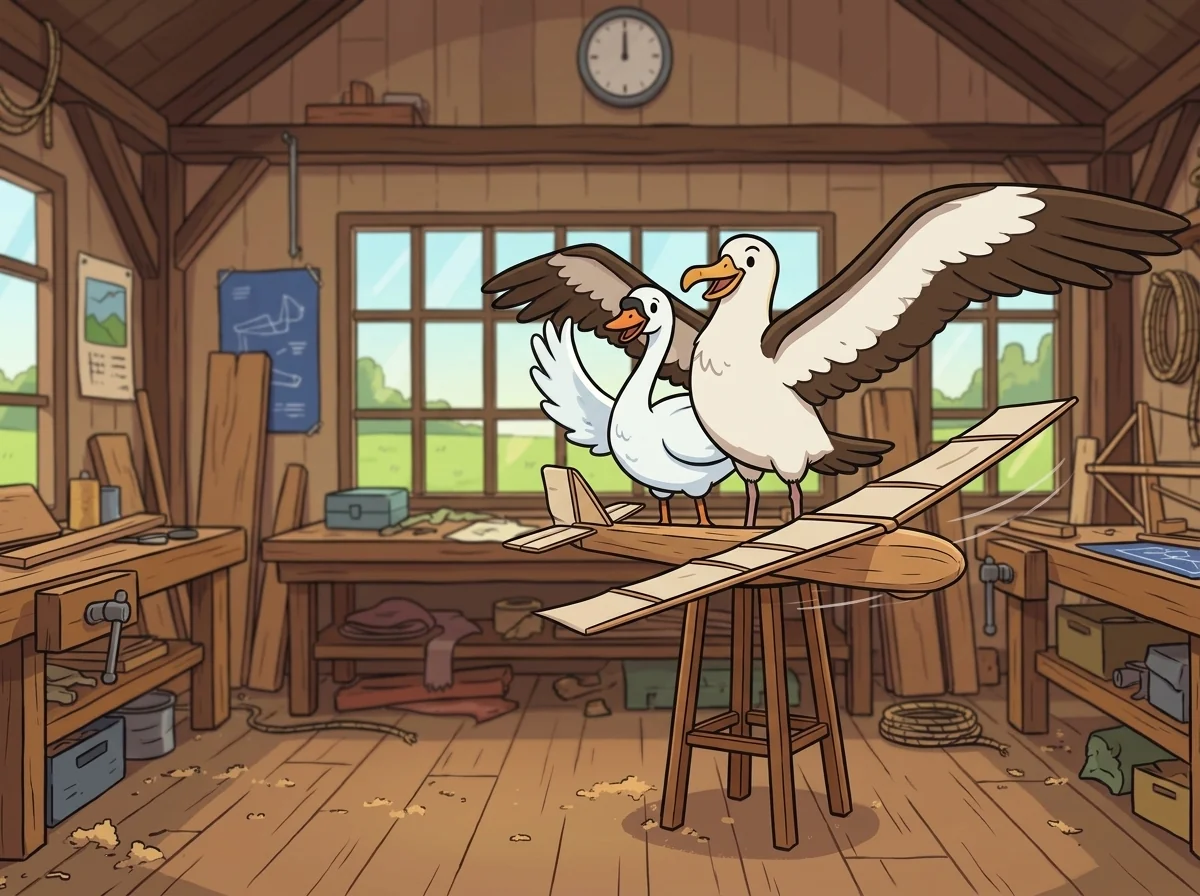
Then Sail spoke, about the spending.
[SAIL, serene]: And once it's steady, my part begins: the shape and the aim. I smooth every surface so the air slips past clean, and I tip the nose down just a hair — so the steady weight is spent slowly, traded for a long reach of distance.
She showed a smooth glider aimed badly — nose too high — and it stalled and dropped short.
[SAIL, rueful]: But smoothness alone isn't enough either. A balanced, smooth glider aimed wrong — nose too high, or diving too steep — drops short. The aim has to spend the height gently. Steady and smooth and well-aimed, or the glide falls apart.
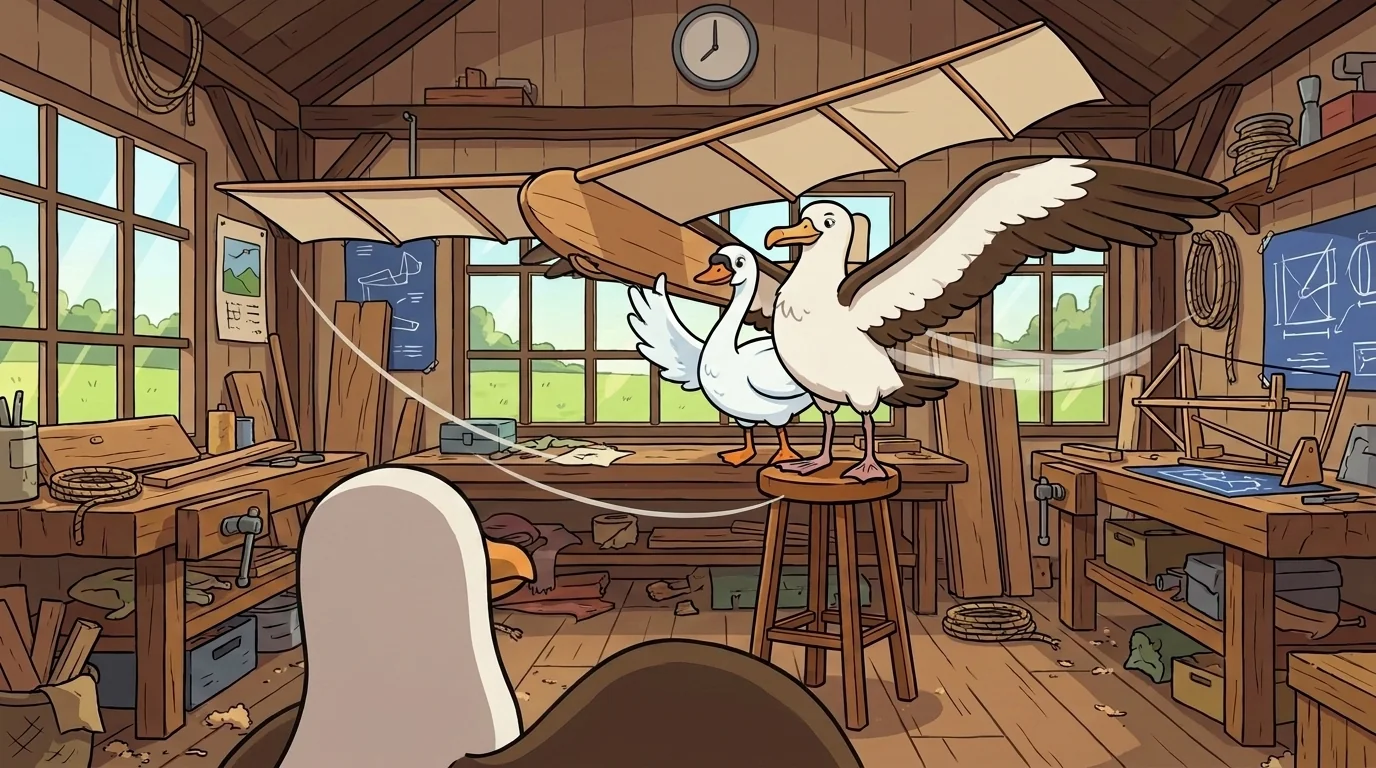
Then they launched one together — Keel's balance, Sail's smooth shape and gentle aim.
[NARRATOR, warm]: And between the two of them, that pulling weight became a long, smooth flight across the whole workshop — an engineless plane carried by nothing but gravity, spent slowly.
The young flyers asked how weight — the thing that should make it fall — could be what carried it.
[KEEL, teaching]: Because a glider has no other engine. Gravity is its engine. The weight pulling down is the only power it has.
[SAIL, warm]: And our two jobs turn that pull into flight. Keel makes it steady so it doesn't waste the weight tumbling. I make it smooth and aim it gently so the weight is spent as distance, not as a crash.
[KEEL, clear]: Balance without smoothness is a steady plane that drops short. Smoothness without balance is a lovely shape that tumbles. Neither is a glide.
[SAIL, serene]: Together, weight becomes a long calm flight. The thing that should make it fall is the very thing that carries it — because it's balanced enough to stay steady, and smooth enough to spend that weight slowly.
[NARRATOR, with quiet warmth]: Balance the center, smooth the shape, spend the weight slowly — gravity becomes the glider's engine. That is Keel and Sail.
The FlightForge ensemble
Keel and Sail is part of FlightForge's distributed-narrative cast. Each character embodies a different curricular primitive; together they teach the full subject.
-

Wing
Lift generation — airfoil + camber + Bernoulli AND Newton both-right complementary
-

Drag
Resistance — drag isn't bad, drag is information; shape-fights-air conversation
-
Thrust
Propulsion — every engine just throws air the wrong way (propeller/jet/rocket same trick different scale)
-

Yaw
Vertical-axis control — the rudder is the POLISH on the turn not the steering
-

Tail
Horizontal + vertical stabilizer family — quiet-control-from-the-back; the tail is why your paper plane goes straight
-
Attitude
Aircraft pitch attitude — the nose points where the elevator aims it; climbing is aim plus enough wing to hold it
-
Bite
Angle of attack and the stall — a wing grips the air at an angle; steeper grips harder until, past the critical angle, the grip lets go all at once
-

Heel
Banking to turn — a plane turns by leaning, not pushing sideways; tilt the wings and lift itself pulls you around the corner
-
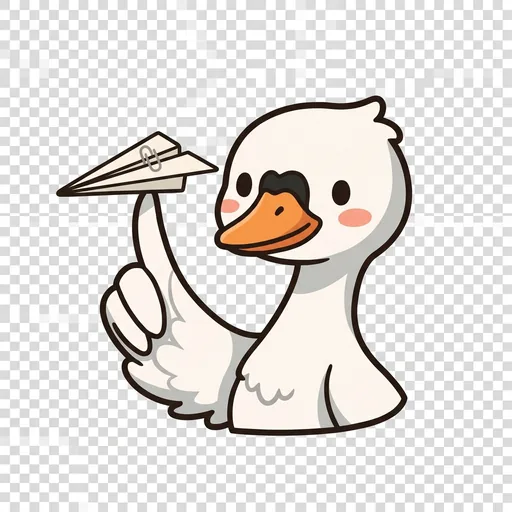
Keel
Center of gravity and balance — weight pulls down, but WHERE the weight sits decides level flight versus a tumble
-
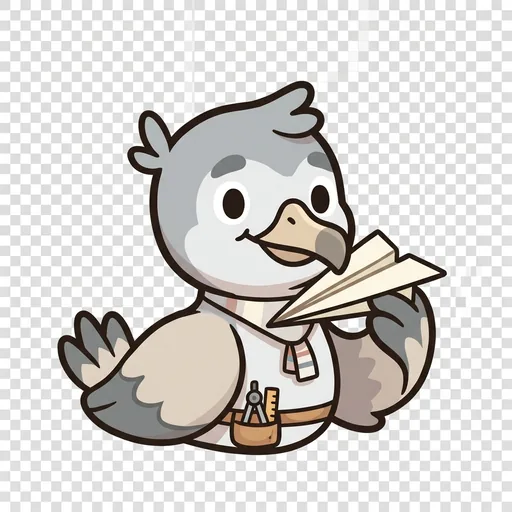
Sail
Gliding — no engine, so you trade height for distance; a smoother shape buys more distance per bit of altitude