
Keel the Balance-Finder
KEEL — weight always pulls down, but WHERE the weight sits (the center of gravity) decides whether a plane flies level or tumbles; balance the center and gravity works with you. The Advanced idea is that the center of gravity must sit in a narrow safe range relative to the wing's lift — too far forward or back and the plane won't fly.
A story read by Keel the Balance-Finder
Loading audio…
Press play to listen along. The line being read lights up as you go.
Show full transcript
Loading transcript…
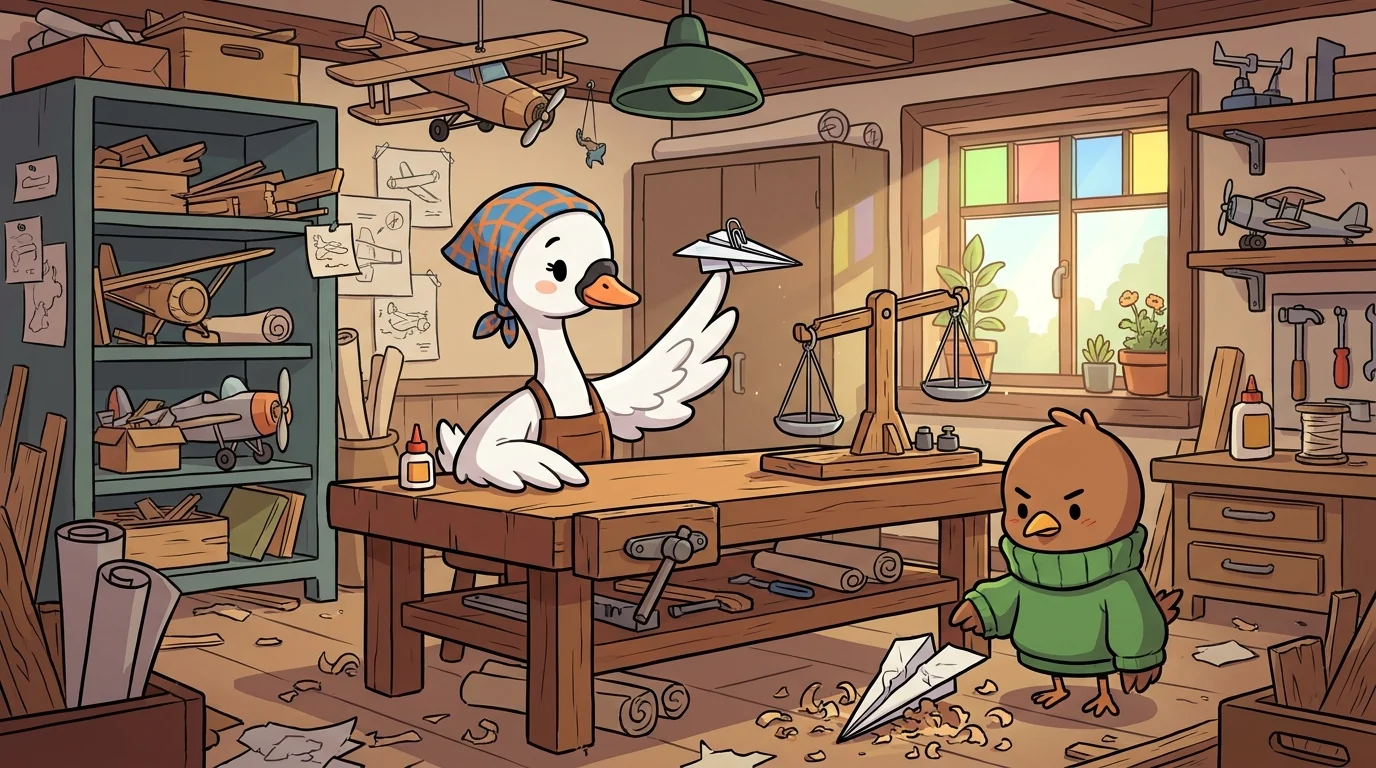
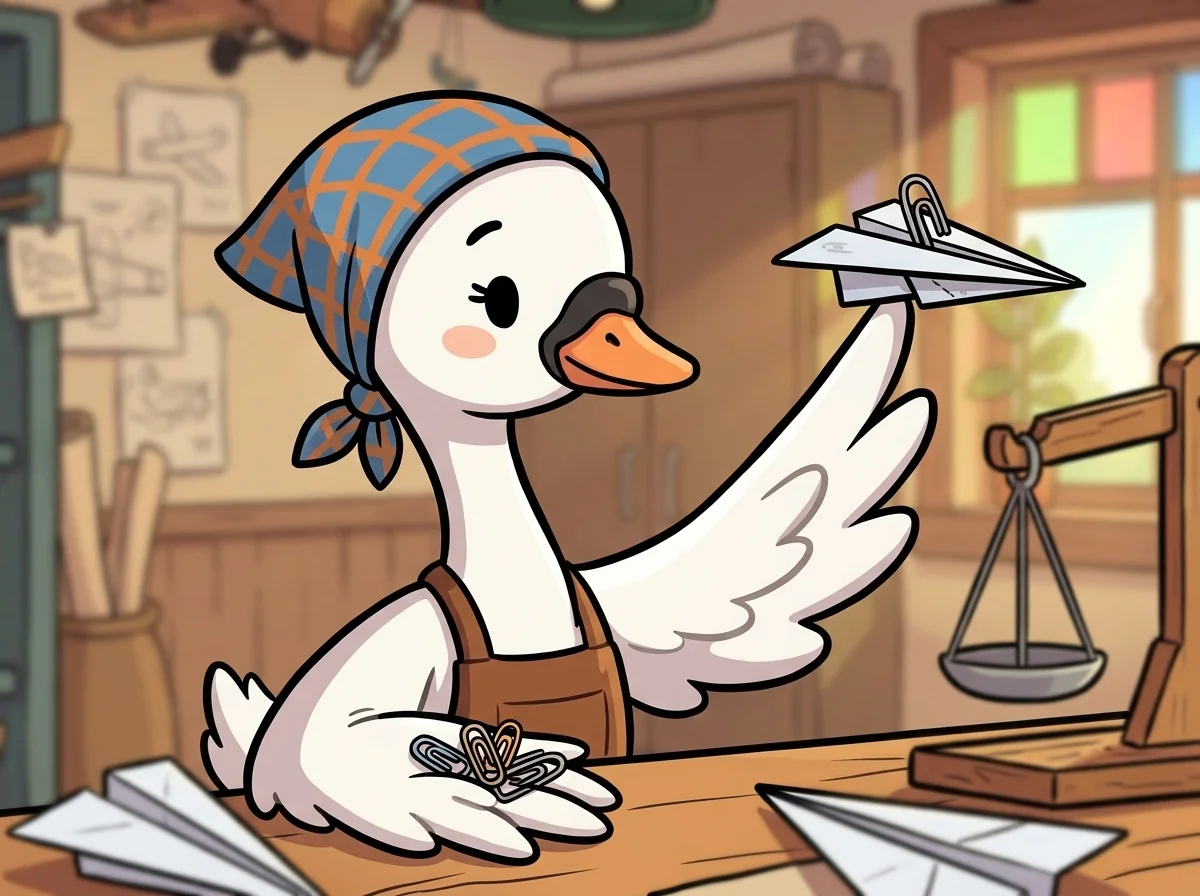
A small swan named Keel set a folded plane on the tip of one feather and watched where it tipped. Nose-heavy — it dived at once. She slid a tiny paperclip back a hair's width and balanced it again. This time it sat level on her feather, perfectly poised, and when she launched it, it flew straight and calm across the whole workshop.
"Same plane," she told the flyers. "Same weight. The only thing I changed was where the weight sat. That is the thing everyone forgets: weight doesn't just pull a plane down. Where the weight sits decides whether it flies level — or tumbles."
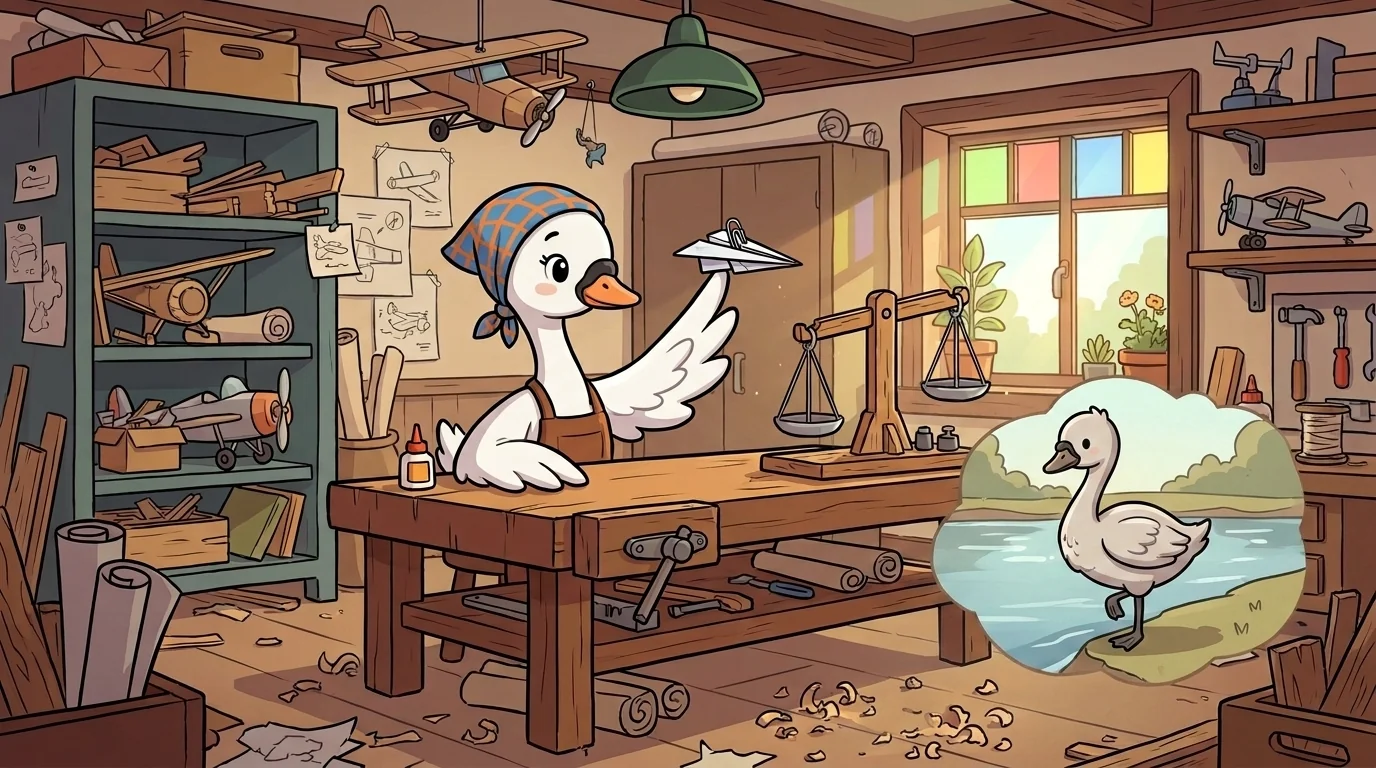
The balance point has a name: the center of gravity. "It is the single spot where all the plane's weight seems to act — the point you could balance the whole thing on, like my plane on my feather. Gravity pulls straight down through that point, always. And the plane flies well only when that point sits in the right place relative to the wing — where the lift pushes up."
Then the Advanced part. "Think of the wing's lift as pushing up at one spot, and gravity pulling down at the center of gravity. For the plane to fly steady, those two have to be arranged just so. If the center of gravity is a little ahead of the lift, the nose wants to gently drop — and the tail, set at its angle, gently holds it up. That gentle tug-of-war is what makes a plane stable: nudge it, and it settles back to level on its own."
But the safe range, she warned, is narrow. "Slide the weight too far forward, and the nose is so heavy the tail can't hold it — it dives, like my first throw. Slide it too far back, behind the lift, and now there is nothing steadying the nose at all — the plane rears, wobbles, and tumbles. Between those two disasters is a small, safe window where the center of gravity belongs. Real aircraft builders mark that window exactly and never load a plane outside it, because a plane balanced wrong will not fly no matter how strong its engine or how smooth its wings."
A flyer asked how you find the window. "You test, like I did — balance it, launch it, watch. Nose-dives? Move weight back. Wobbles and rears? Move weight forward. Creep toward the spot where a gentle launch gives a straight, calm glide. That spot is the center of gravity sitting right where it belongs."
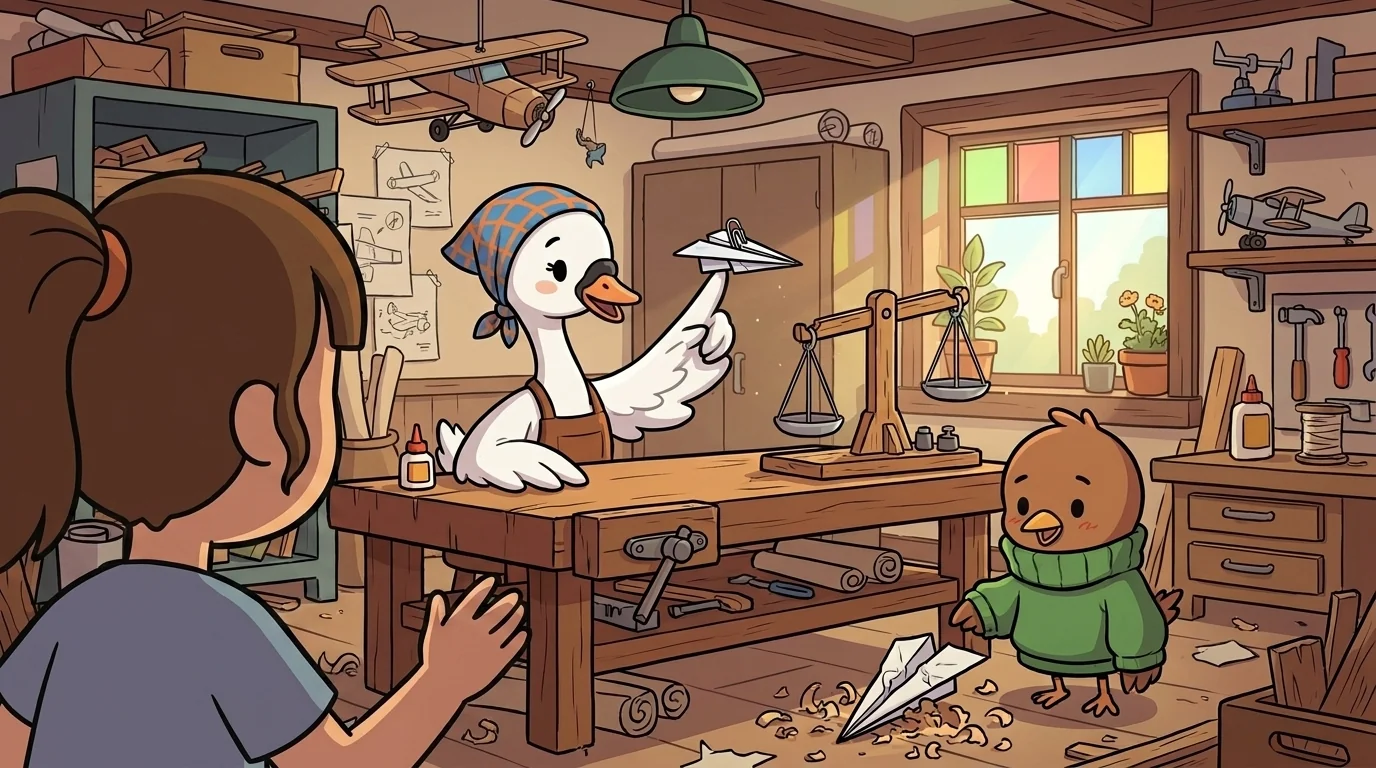
A determined young flyer named Bram kept adding weight to the nose to 'make it fly straighter,' and kept making it dive harder. Keel took the plane and slid the clip backward instead. "You don't need more weight," she said. "You need it in the right place. You pushed the center of gravity too far forward — now the nose is winning the tug-of-war." She balanced it on her feather, level, and launched a calm straight glide.
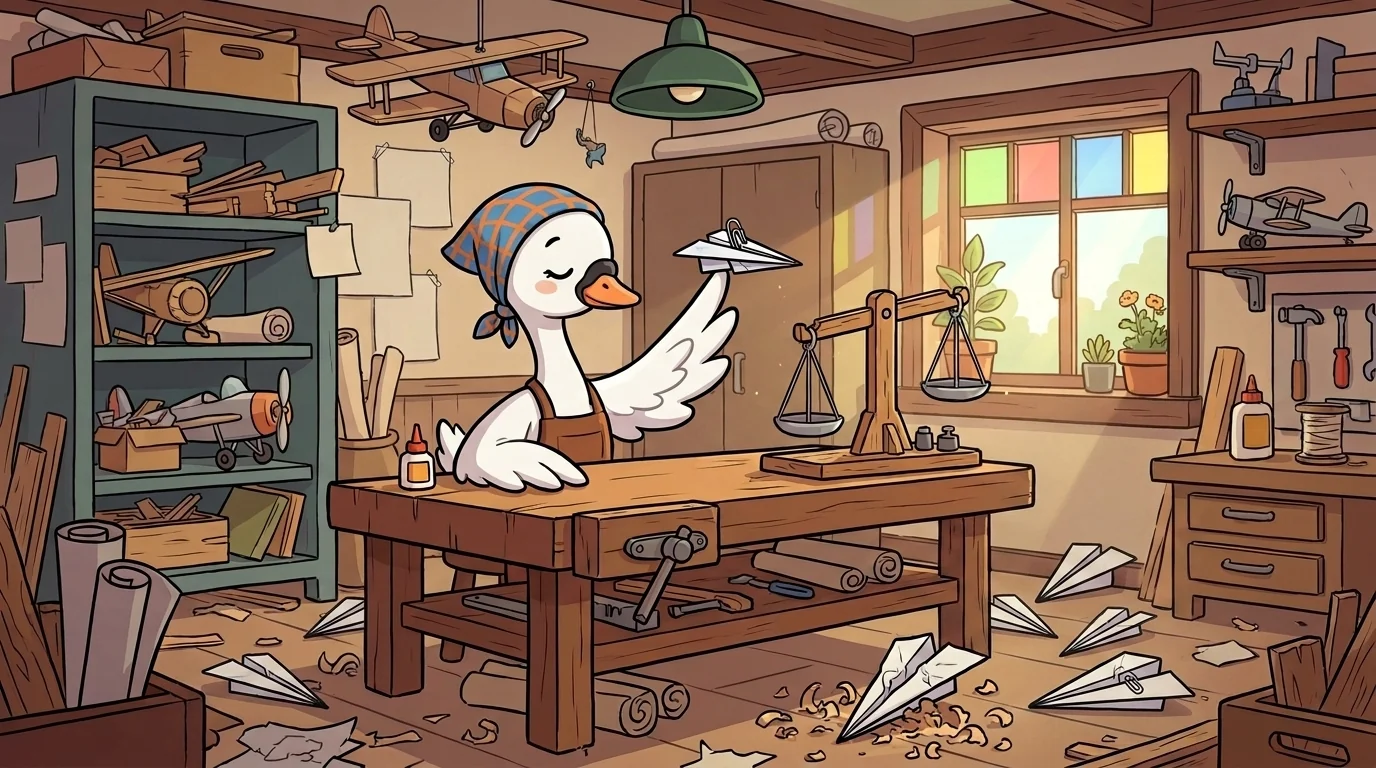
What surprised Bram was that the fix was moving weight back, not adding more — that placement beat quantity. Keel nodded. "Weight always pulls down. But where it sits decides everything. Find the balance point, keep it in the safe window, and gravity stops fighting you and starts holding you steady." She set one more plane on her feather-tip and slid the little clip until it sat perfectly poised.
The FlightForge ensemble
Keel the Balance-Finder is part of FlightForge's distributed-narrative cast. Each character embodies a different curricular primitive; together they teach the full subject.
-

Wing
Lift generation — airfoil + camber + Bernoulli AND Newton both-right complementary
-

Drag
Resistance — drag isn't bad, drag is information; shape-fights-air conversation
-

Thrust
Propulsion — every engine just throws air the wrong way (propeller/jet/rocket same trick different scale)
-

Yaw
Vertical-axis control — the rudder is the POLISH on the turn not the steering
-

Tail
Horizontal + vertical stabilizer family — quiet-control-from-the-back; the tail is why your paper plane goes straight
-
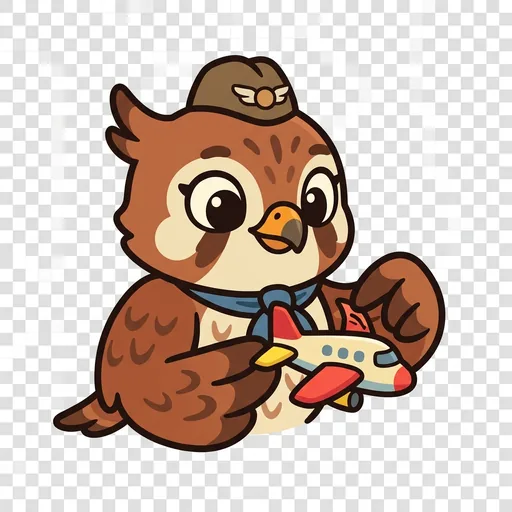
Attitude
Aircraft pitch attitude — the nose points where the elevator aims it; climbing is aim plus enough wing to hold it
-
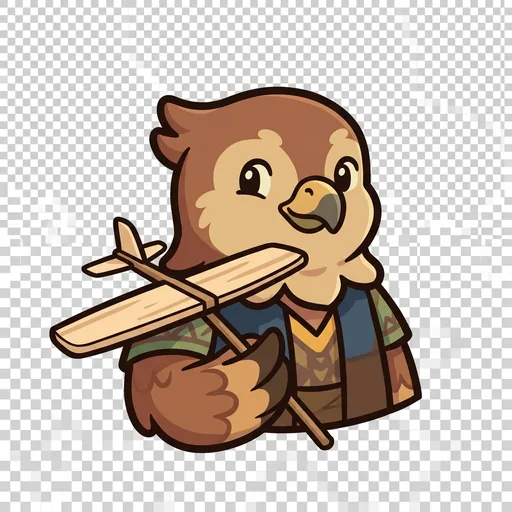
Bite
Angle of attack and the stall — a wing grips the air at an angle; steeper grips harder until, past the critical angle, the grip lets go all at once
-

Heel
Banking to turn — a plane turns by leaning, not pushing sideways; tilt the wings and lift itself pulls you around the corner
-
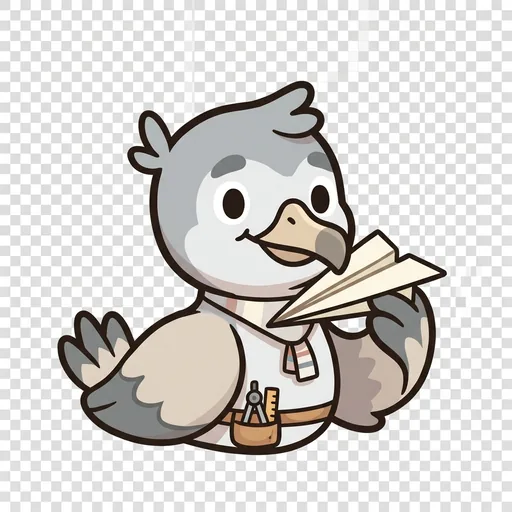
Sail
Gliding — no engine, so you trade height for distance; a smoother shape buys more distance per bit of altitude