
Sail the Height-Spender
SAIL — a glider has no engine; it trades height for distance, and the smoother the shape, the more distance each bit of height buys. The Advanced idea is the lift-to-drag ratio: how many units forward you travel per unit you sink, set by the shape, is exactly the glide's efficiency.
A story read by Sail the Height-Spender
Loading audio…
Press play to listen along. The line being read lights up as you go.
Show full transcript
Loading transcript…
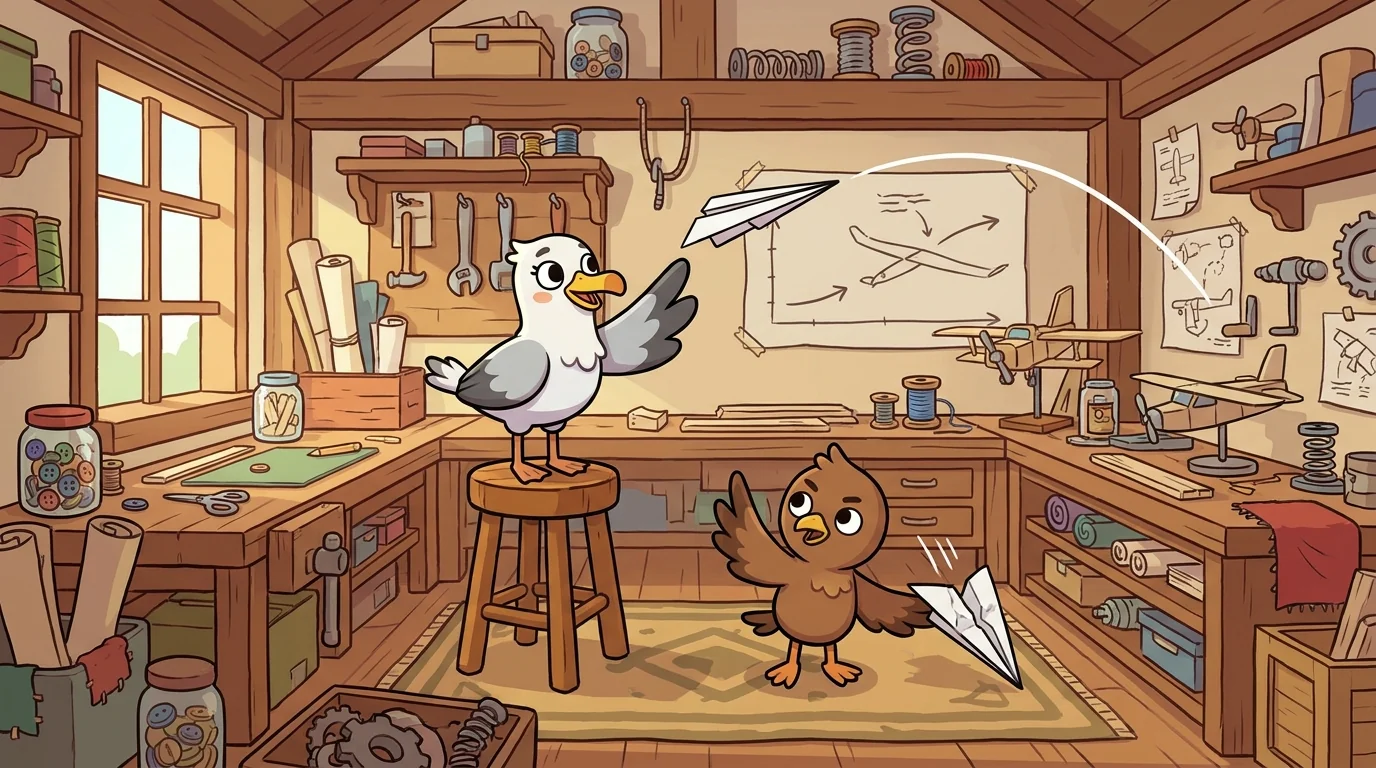
A small albatross named Sail let go of a paper glider from up on a stool. It had no engine, no throw — just gravity — and yet it didn't drop. It tipped its nose down the tiniest bit and sailed, long and smooth, all the way across the workshop before touching down at the far wall.
"No engine," Sail told the flyers. "Nothing pushing it. Only its own weight, and gravity pulling down. And still it flew clear across the room. How? Because a glider does not fall. It spends. It trades its height for distance, a little at a time."
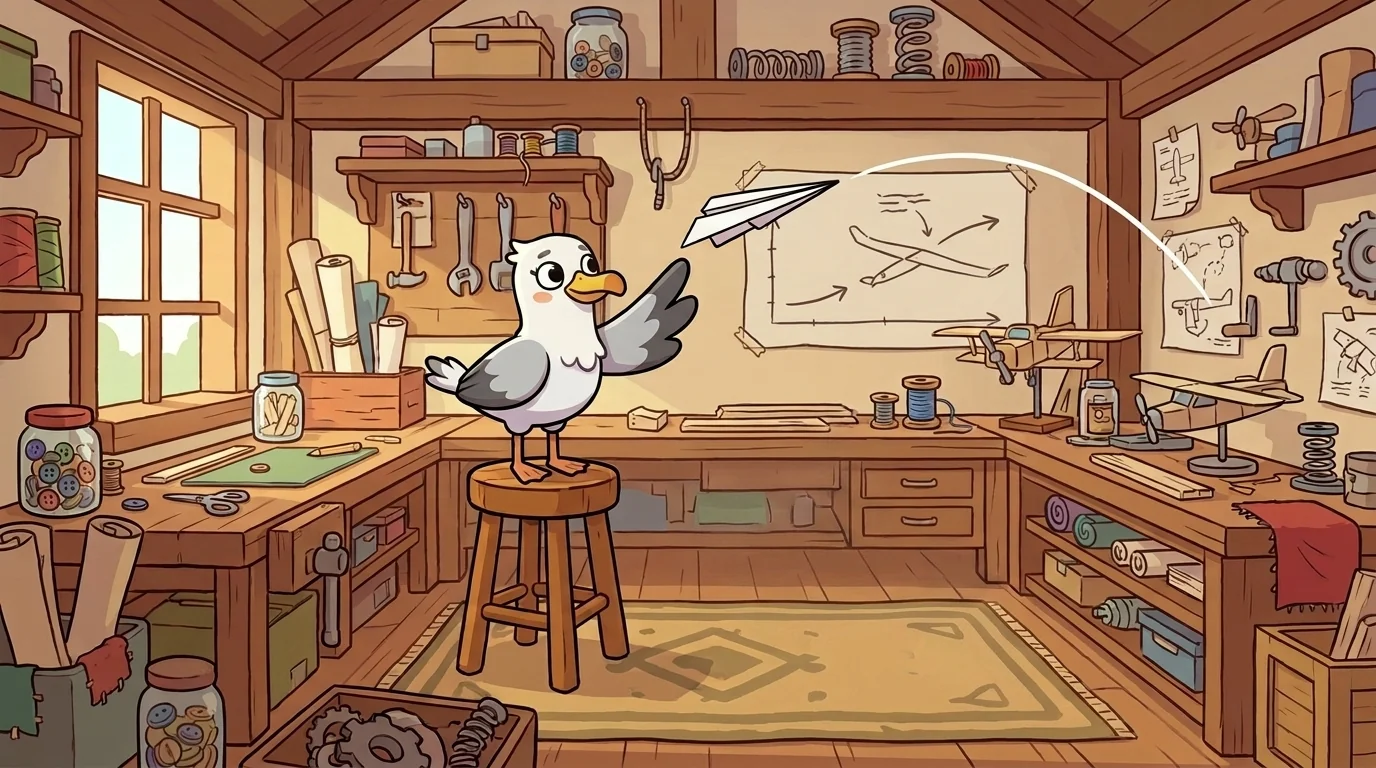
The trade, she explained, is the whole art of gliding. "A glider is always sinking — it has to, with no engine to hold it up. But if it sinks slowly while moving forward fast, then for every tiny bit of height it gives up, it buys a long stretch of distance. Tip the nose down a little, and you keep just enough speed for the wings to make lift — and that lift carries you forward far more than you drop down."
Then the Advanced idea, and its exact name. "How good a glider is comes down to one number: the lift-to-drag ratio. It says how many steps forward you travel for every one step you sink. A crude, draggy shape might go five forward for every one down — a ratio of five. A beautifully smooth shape might go twenty forward for every one down. Same starting height. The smooth one lands four times farther. The ratio is set almost entirely by the shape — how cleanly the air slips past."
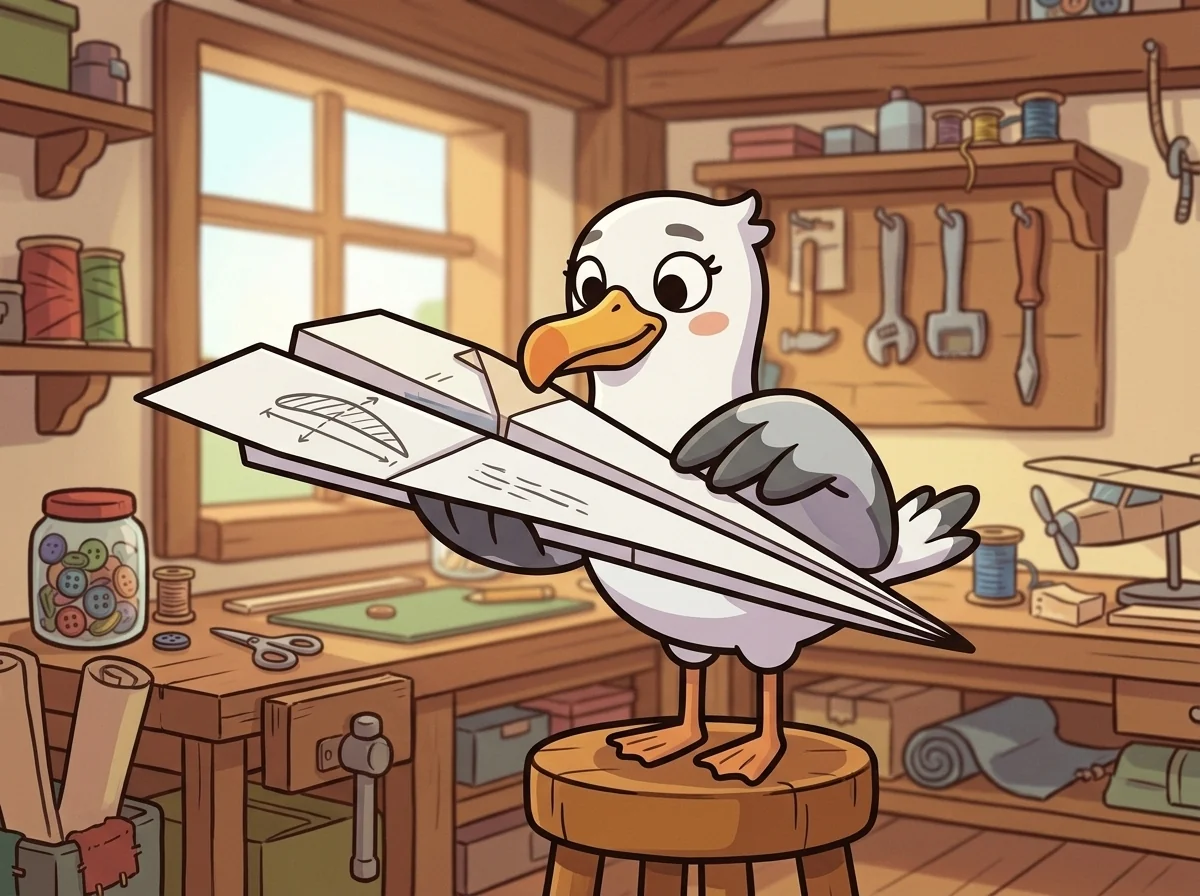
That is why, she said, gliders look the way they do. "Long, smooth, slender wings. Nothing sticking out to snag the air. Every bump, every rough edge, every dangling bit is drag — and drag is what steals from the trade. The albatross I'm named for glides across whole oceans barely flapping, because its shape is almost pure lift and almost no drag. Smoothness is not decoration on a glider. Smoothness is the distance."
A flyer asked whether a steeper dive would go farther, since it's faster. "No," Sail said. "A steep dive spends your height fast — lots of speed, but you hit the ground long before you've traveled far. Gliding is spending height slowly. The gentlest nose-down that keeps the wings flying buys the most distance. It is patience, made of shape."
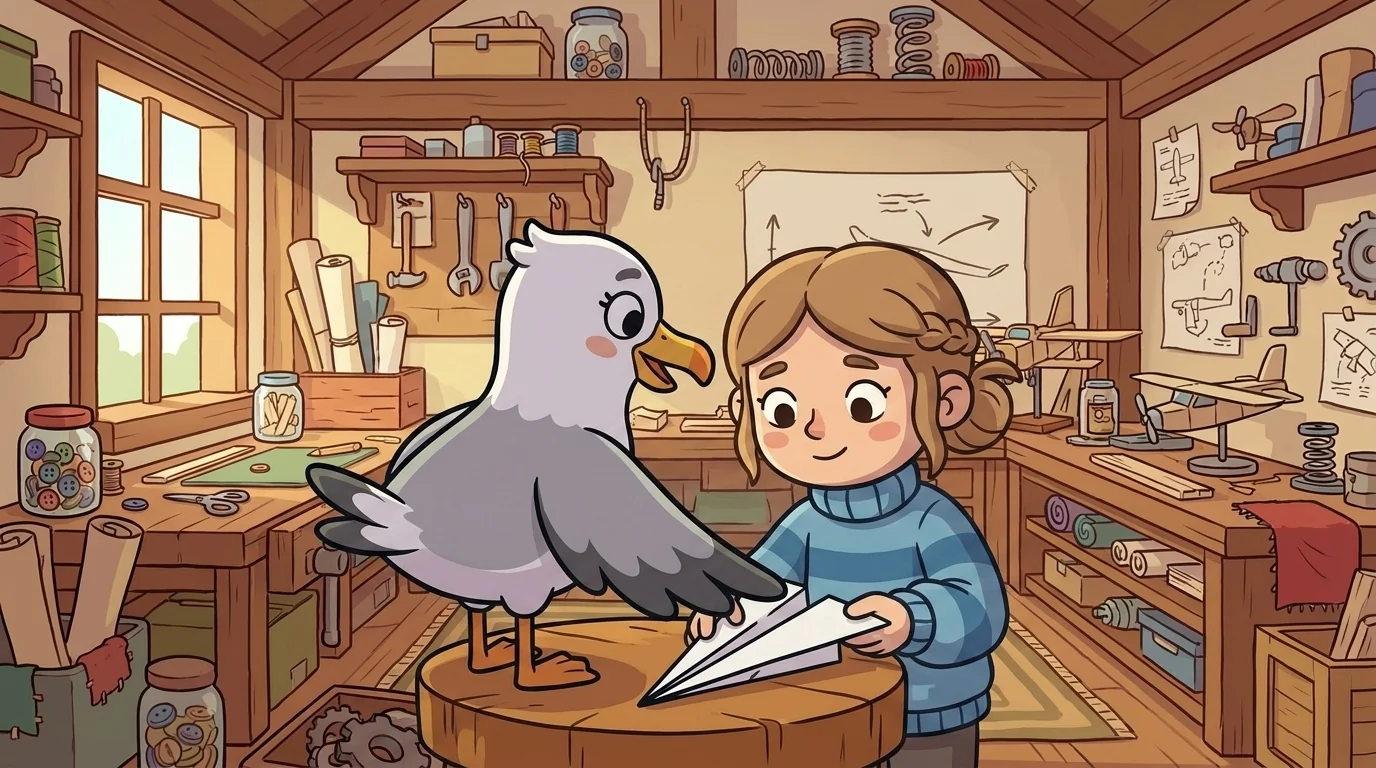
A restless young flyer named Pell kept diving his glider steeply to 'make it go farther,' and it kept crashing short. Sail took it and eased the nose to almost-level. "You are spending all your height in the first second," she said. "Spend it slowly. A gentle glide, on a smooth shape, outruns a steep dive every time." She released it level, and it sailed the length of the room.
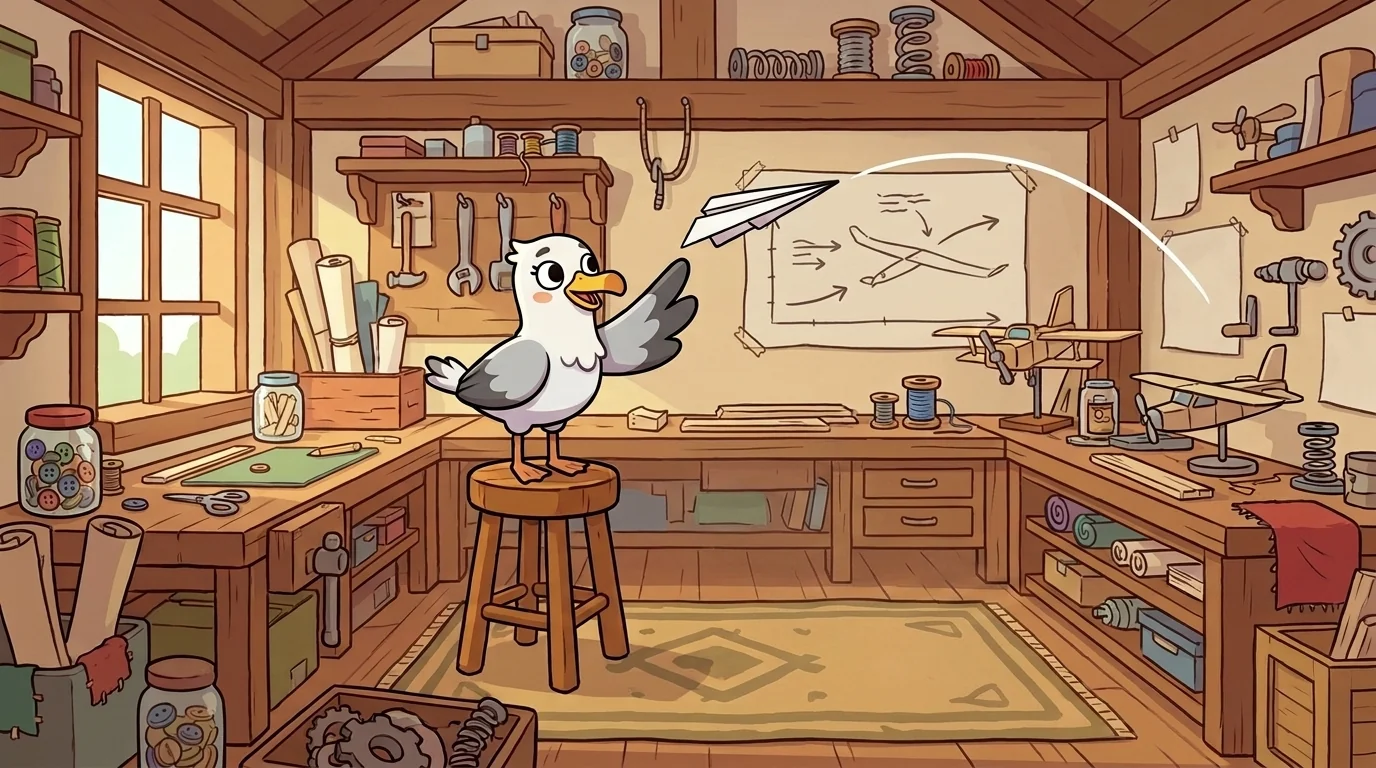
What amazed Pell was that going gentler went farther — that the smooth, patient glide beat the fast dive. Sail nodded. "A glider has no engine, so height is all the fuel it has. Spend it slowly, on a shape smooth enough that each bit of height buys a long way forward. That is the whole art: distance is height, spent with patience and a clean shape." She smoothed one more glider's wings and let it sail, unhurried, across the workshop.
The FlightForge ensemble
Sail the Height-Spender is part of FlightForge's distributed-narrative cast. Each character embodies a different curricular primitive; together they teach the full subject.
-

Wing
Lift generation — airfoil + camber + Bernoulli AND Newton both-right complementary
-
Drag
Resistance — drag isn't bad, drag is information; shape-fights-air conversation
-

Thrust
Propulsion — every engine just throws air the wrong way (propeller/jet/rocket same trick different scale)
-

Yaw
Vertical-axis control — the rudder is the POLISH on the turn not the steering
-

Tail
Horizontal + vertical stabilizer family — quiet-control-from-the-back; the tail is why your paper plane goes straight
-
Attitude
Aircraft pitch attitude — the nose points where the elevator aims it; climbing is aim plus enough wing to hold it
-
Bite
Angle of attack and the stall — a wing grips the air at an angle; steeper grips harder until, past the critical angle, the grip lets go all at once
-

Heel
Banking to turn — a plane turns by leaning, not pushing sideways; tilt the wings and lift itself pulls you around the corner
-
Keel
Center of gravity and balance — weight pulls down, but WHERE the weight sits decides level flight versus a tumble