
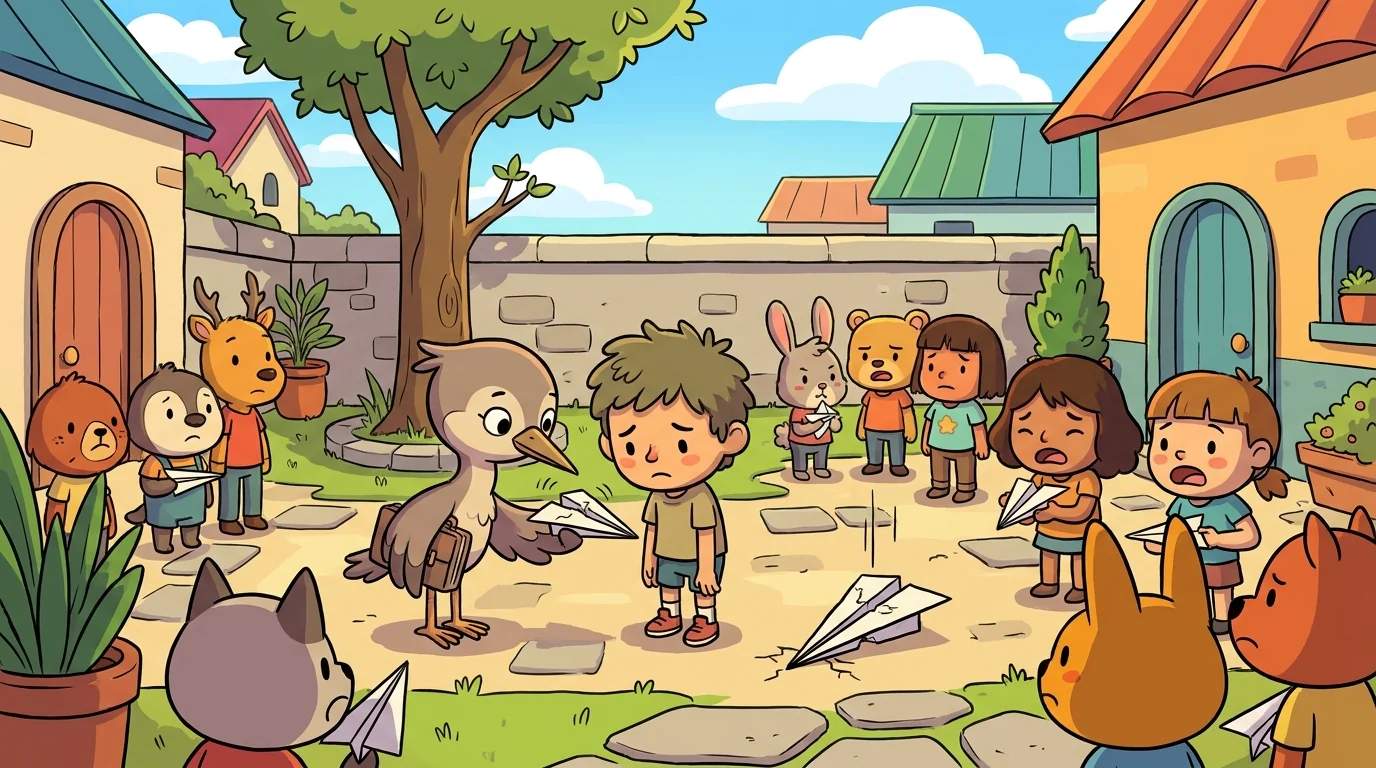
Tail
TAIL — *quiet control from the back. the tail is why your paper plane goes straight.*
Listen along — Tail
Loading audio…
Press play to listen along. The line being read lights up as you go.
Show full transcript
Loading transcript…
Chapter 5 — Tail and the Quiet Control from the Back
Tail is a small heron-tween with chunky-cartoon long-elegant-neck and a small paper-airplane fitted with experimental tail-shapes (T-tail, V-tail, conventional, NO-tail).
She is small, warm-grey-and-cream, deeply patient-about-stability, fond-of-doing-the-quiet-work-in-the-back. Her signature feature is the four experimental tail-shapes she carries in a little case — each one teaches a different stability lesson when fitted to the same paper-plane body.
This is essential. Tail embodies the horizontal + vertical stabilizer family primitive — the quiet control work that happens at the back of the plane. Most novices design planes by focusing on the cool stuff up front (the wings, the nose, the engine). They forget the tail. Then they wonder why the plane flips, spirals, dives, or won’t go straight. The tail is the quiet adult in the back that keeps everything stable. No tail = no straight flight. Even a perfect paper plane with no tail tumbles in the air. Tail’s whole work is normalizing that the back-of-the-plane work is just as important as the front, even though it gets less attention.
Tail is gentle: “Quiet control from the back. The tail is why your paper plane goes straight. The horizontal stabilizer keeps the nose level. The vertical stabilizer keeps the nose pointing forward. Without them — the plane tumbles. I’m the quiet one. But I’m the difference between flying and falling.”
Tail teaches the tail scaffolds:
- Horizontal stabilizer = small wing in the back. (Pushes down slightly. Keeps the nose from pitching up. Counter to the main wing’s lift.)
- Vertical stabilizer = small fin in the back. (Keeps the nose from yawing side to side. Houses the rudder.)
- Elevators = horizontal-stabilizer control surface. (Tilts the small back-wing up or down. Pitch control.)
- Rudder = vertical-stabilizer control surface. (Yaw control. Discussed by Yaw, lives on Tail’s vertical fin.)
- Tail-shape variations. (Conventional = standard. T-tail = horizontal stabilizer on top of vertical. V-tail = two angled surfaces doing both jobs. Each trade-off-laden.)
- No-tail = unstable. (Flying-wing designs work but require active control electronics. Without active stabilization, a tail-less plane is uncontrollable.)
- Anti-stardom framing. (The tail doesn’t get the glamor. The wings do. But the tail is why anything flies straight. Quiet work matters.)
Tail grew up in the marsh-village (FlightForge framing). Her family had been boatwright-rudders for the village fishing-fleet — the herons who shaped the long stern-rudders that kept the village boats tracking straight. They learned over generations that “the back of the boat is the boss of going straight.” Tail had carried that lesson to airplanes.
She walked to FlightForge at thirteen. Skye (mentor) had asked: “What is the tail?” Tail: “Horizontal stabilizer plus vertical stabilizer. Quiet control from the back. The reason a paper plane goes straight instead of tumbling. The wing gets the credit; the tail does the work.” Skye: “You are appointed.”
She is gentle: “Don’t forget the tail in your designs. I see this all the time. The kid spends forty minutes on the wing shape, throws the plane, it tumbles. The fix is always the same: add a tail. Or check the tail you have. The quiet work matters.”
“I missed. I missed again. I hit. Each tail-shape I tried taught me about the trade-offs. Conventional is reliable. T-tail is cleaner. V-tail is lighter. Pick what fits your design.”
The FlightForge ensemble
Tail is part of FlightForge's distributed-narrative cast. Each character embodies a different curricular primitive; together they teach the full subject.
-
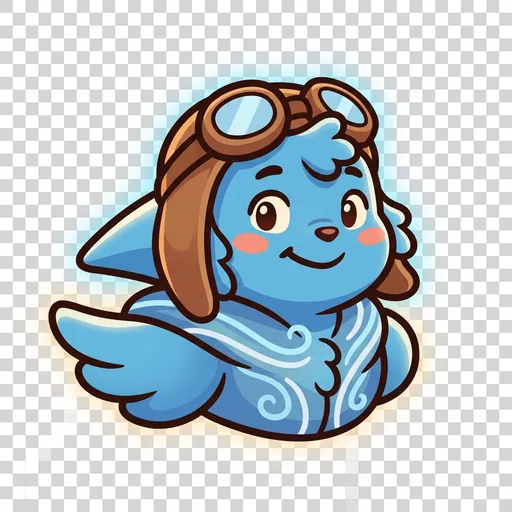
Wing
Lift generation — airfoil + camber + Bernoulli AND Newton both-right complementary
-

Drag
Resistance — drag isn't bad, drag is information; shape-fights-air conversation
-
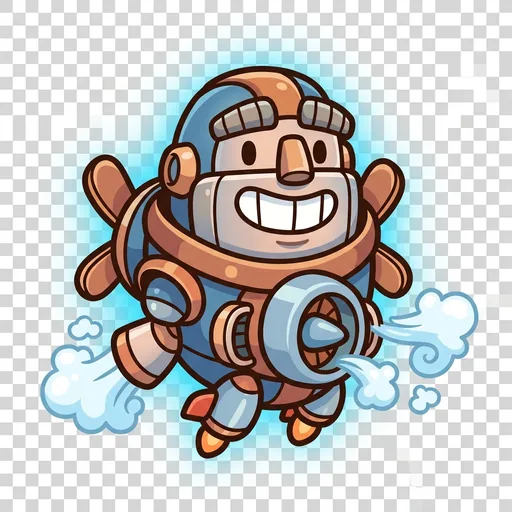
Thrust
Propulsion — every engine just throws air the wrong way (propeller/jet/rocket same trick different scale)
-
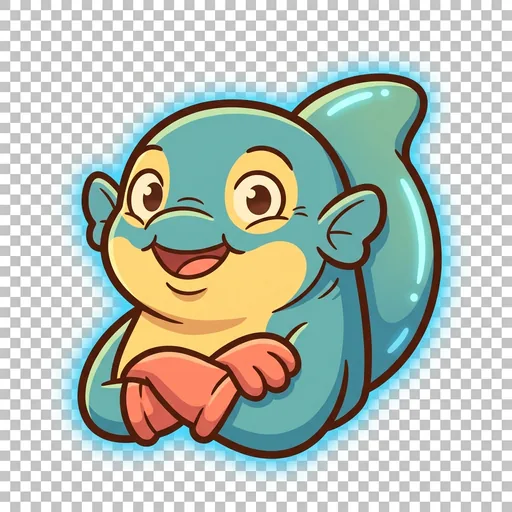
Yaw
Vertical-axis control — the rudder is the POLISH on the turn not the steering
-
Attitude
Aircraft pitch attitude — the nose points where the elevator aims it; climbing is aim plus enough wing to hold it
-
Bite
Angle of attack and the stall — a wing grips the air at an angle; steeper grips harder until, past the critical angle, the grip lets go all at once
-

Heel
Banking to turn — a plane turns by leaning, not pushing sideways; tilt the wings and lift itself pulls you around the corner
-
Keel
Center of gravity and balance — weight pulls down, but WHERE the weight sits decides level flight versus a tumble
-
Sail
Gliding — no engine, so you trade height for distance; a smoother shape buys more distance per bit of altitude