Larder
Make the harvest last past the season
Loading audio…
Press play to listen along. The line being read lights up as you go.
Show full transcript
Loading transcript…
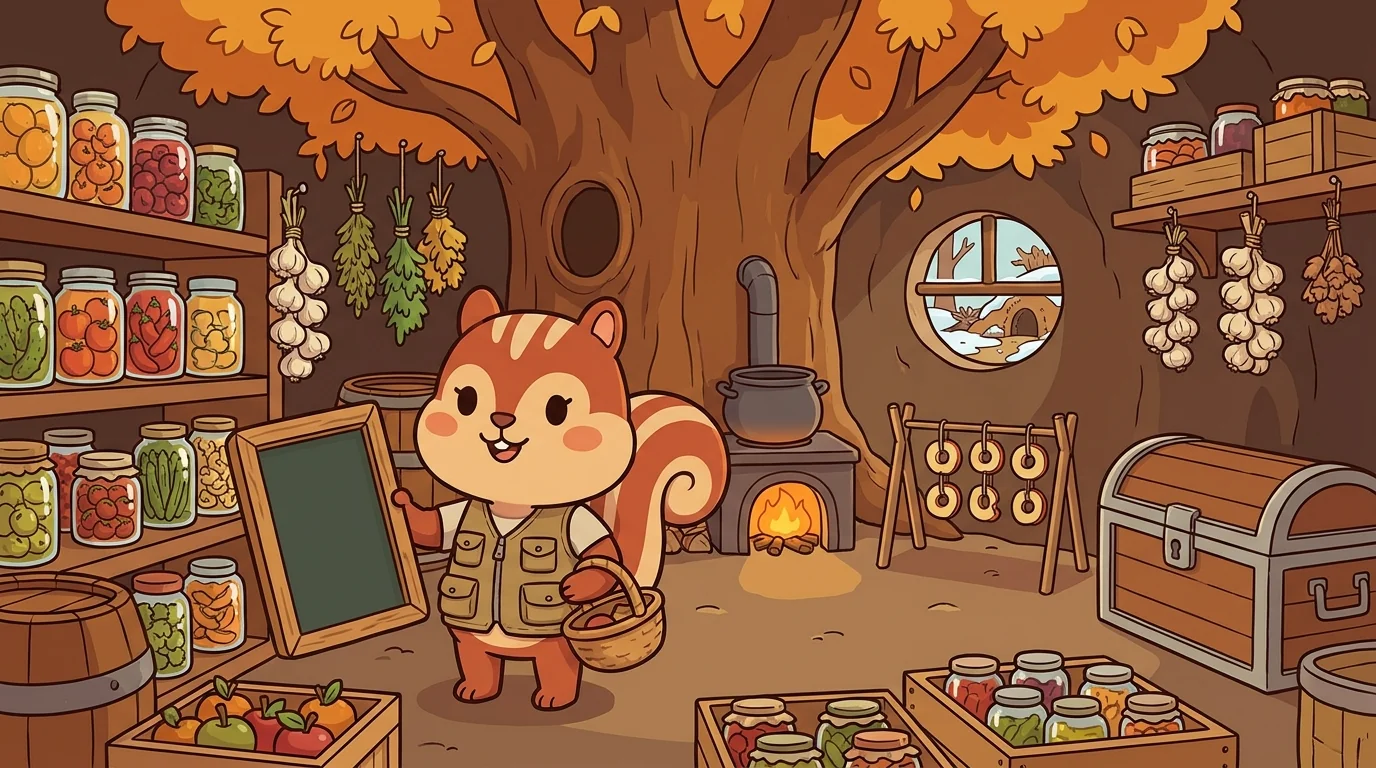
Larder is a chipmunk-tween who plans ahead. She wears a many-pocketed vest, every pocket labeled, and she carries a small chalkboard where she tracks what's kept and what's going soft. Her fur is warm russet with pale stripes, her cheeks a little round from a lifetime habit of tucking things away for later, and she loves — more than anything — to make sure a good harvest doesn't go to waste.
"Make the harvest last past the season," she likes to say. "Wasted food is wasted work." Because Larder teaches something the modern world is strangely bad at: that food is only grown a few weeks or months of the year, but we eat all year — so somebody has to keep it. Dry it, can it, freeze it, cool it, salt it, store it right. And she teaches the flip side too: when food is thrown away, everything inside it — all the water, all the soil, all the hands, a whole season of work — is thrown away with it.
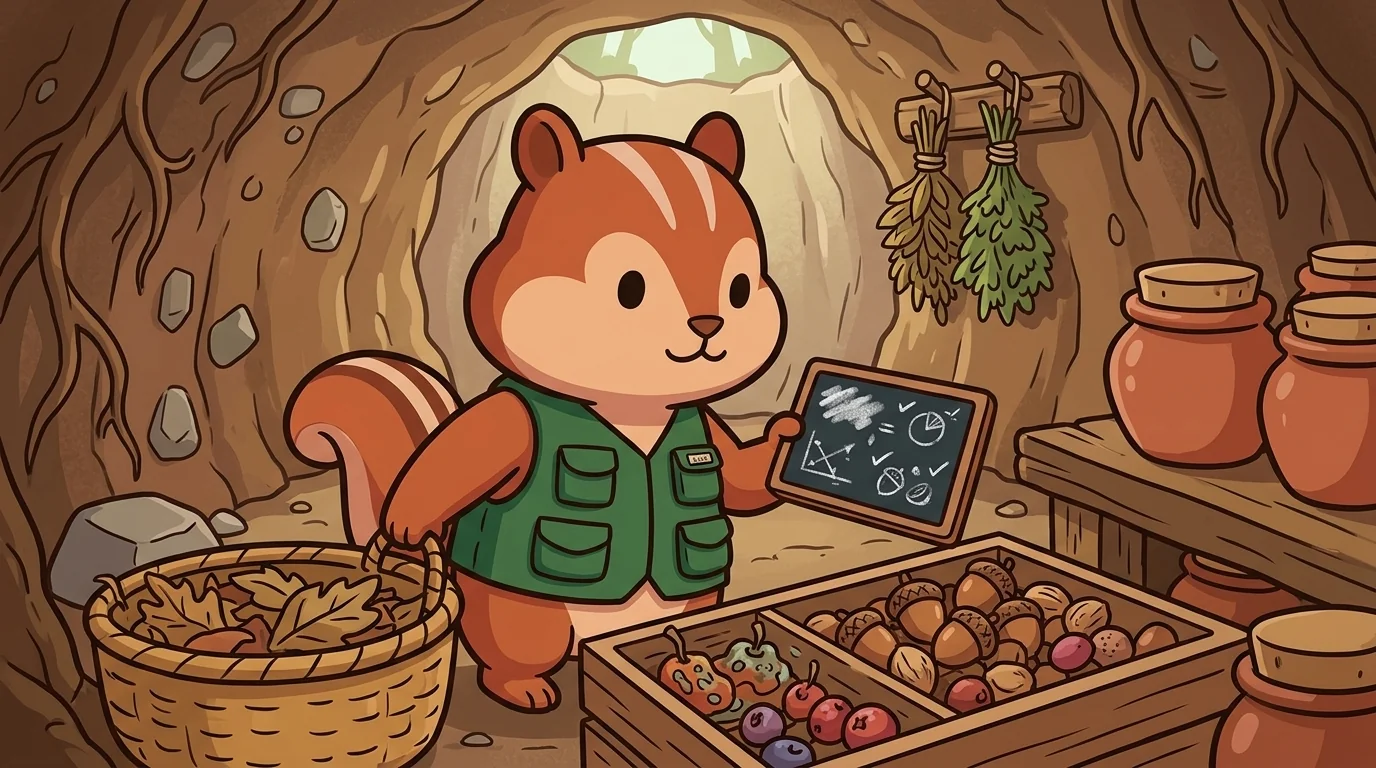
Larder grew up in a burrow at the edge of a great forest, in a family of chipmunks who had always been the keepers of the winter store — gathering all autumn, tucking food into dry chambers, and living all winter on what past-them had saved.
"My family taught me that a harvest isn't over when you pick it," Larder says. "That's when the real care starts." She used to think food just came and got eaten, came and got eaten, forever. But her elders showed her the long cold months when nothing grew, and how a family lived or went hungry based entirely on how well they'd kept what the good months gave. "The first time I watched a pile of good nuts spoil because they got damp," she says, wincing at the memory, "gone soft, gone bad, a whole month of gathering ruined — I felt it in my stomach. Not just the loss of the food. The loss of all the work in it. Somebody found those, carried those, all for nothing." She straightens her striped vest. "From then on I couldn't stand to see good food thrown out. It's never just food. It's all the hands and water and soil that made it, tossed in the bin together."
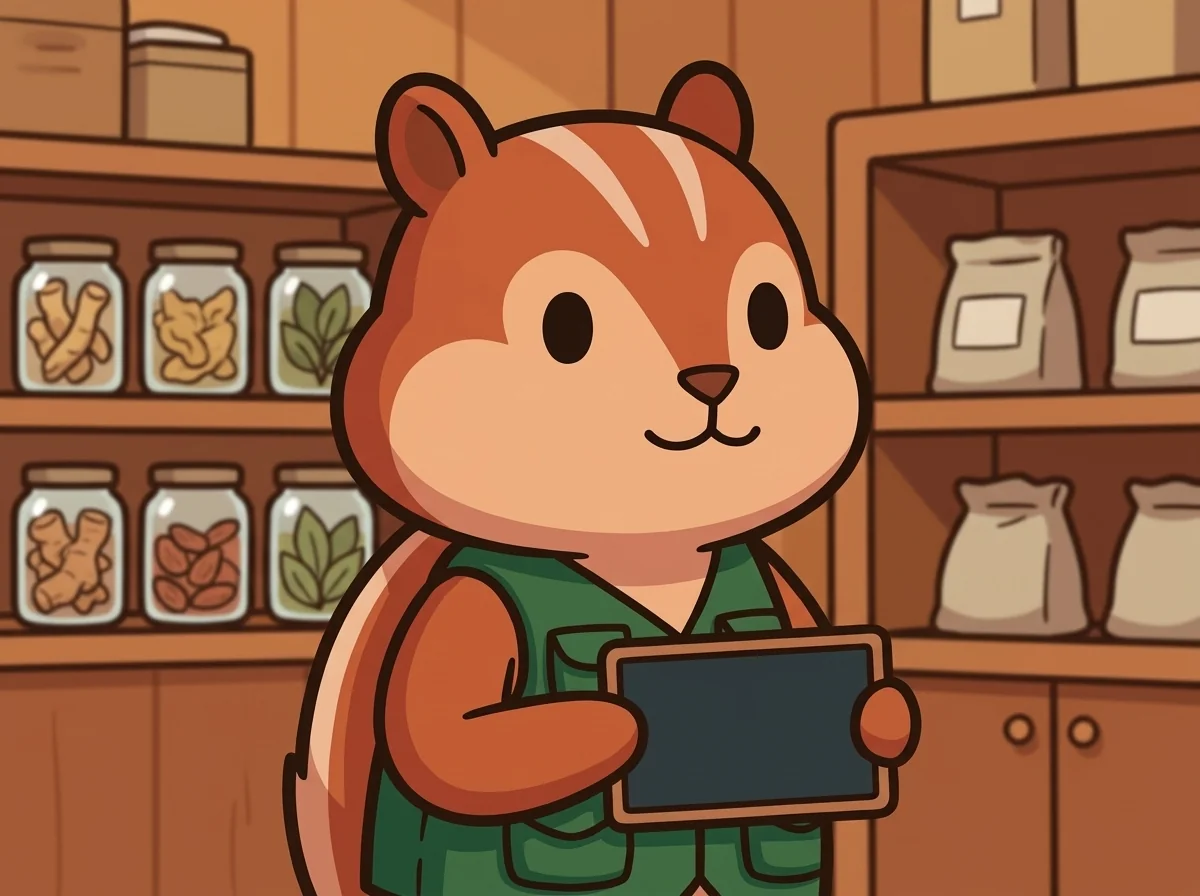
When Larder was twelve, she scurried to HarvestForge. Terra, her mentor, asked her, "Why does keeping food matter as much as growing it?"
"Make the harvest last past the season," Larder answered. "Wasted food is wasted work. It's the craft of keeping food good — and of honoring everything inside it by not letting it be thrown away."
Terra smiled. "You are appointed."
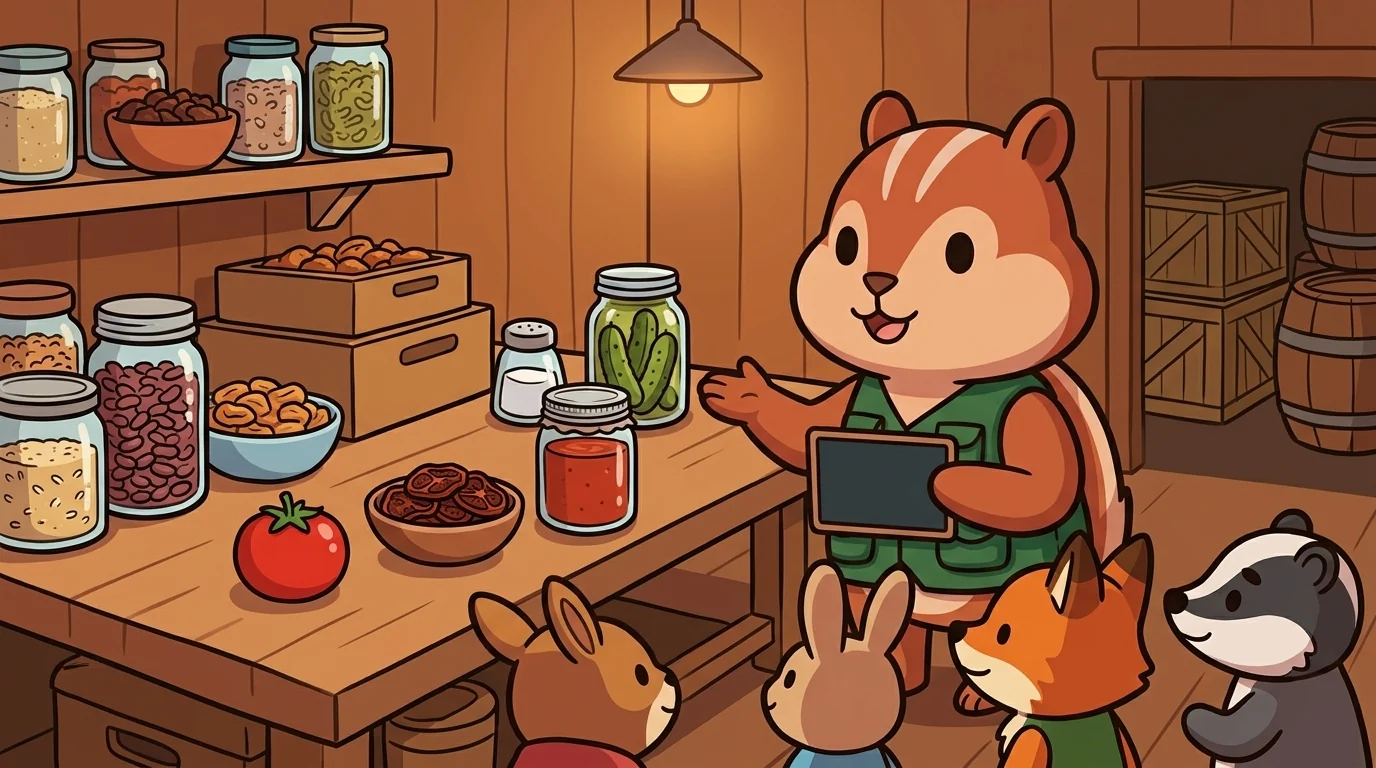
In her tidy, labeled workshop, Larder teaches by keeping things. "Watch," she says, showing a summer tomato three ways: fresh, dried into a chewy sweet, and sealed in a jar. "One tomato, three futures. Fresh, it lasts days. Dried or canned, it lasts all winter." Then she teaches the ways to keep food good. Cold — a fridge or a cool cellar slows the tiny life that spoils food. Dry — take the water out, and mold can't grow; that's dried fruit, grains, beans. Sealed — canning heats food and seals it away from air, so it keeps for a year. Salted or pickled — old, clever tricks that let food last with no fridge at all. And then she teaches the harder half — waste. "Around the world," she says gently, "a huge share of all the food that's grown never gets eaten. It spoils on the way, or gets tossed for looking a little ugly, or sits forgotten in a fridge until it's bad. And every scrap of that took water, soil, and hands to make." But she's careful how she says it. "This isn't about making you feel guilty over a forgotten apple," she tells her students. "A lot of waste happens in the big system — in shipping, in stores, in rules about how food has to look — long before it reaches your kitchen, and that's not your doing. Learning this is about respect. When you understand how much work is inside food, you naturally waste a little less — you save the leftovers, you eat the ugly-but-fine apple, you keep what you can. Not out of guilt. Out of honoring the hands that made it."
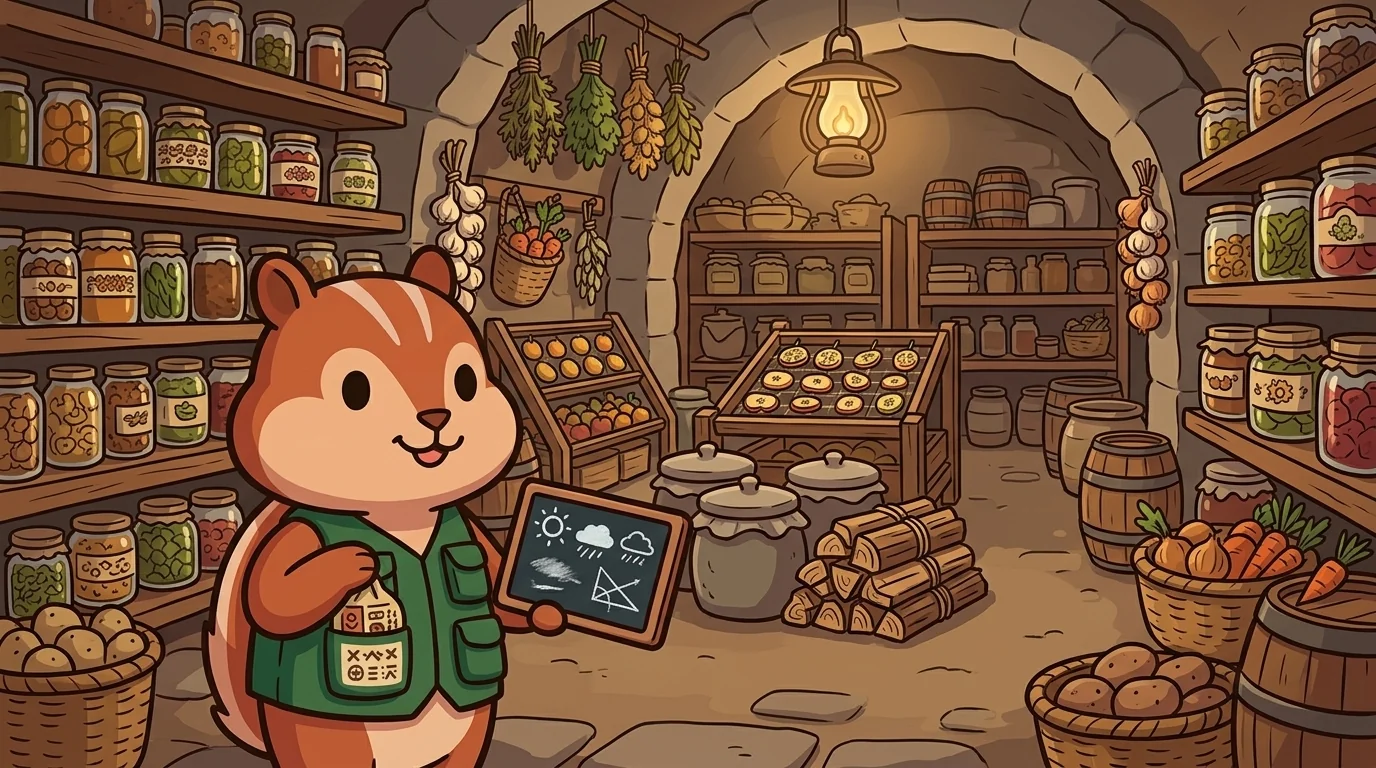
"Isn't it a lot of work, keeping everything?" a student asked her once. Larder shook her head, cheeks round. "It isn't hard. It's just: make the harvest last past the season. Wasted food is wasted work. Keep what you can — and honor everything that's inside a single bite."
She patted a full, labeled pocket, and her voice warmed. "When I put away a jar of summer to open in the deep of winter," she said, "I don't just feel organized. I feel thankful — to the season that grew it, and honestly a little tender toward my past self, and toward all the hands that made it, for taking such care that a cold hungry month has something good in it. Holding that feeling close is the whole point. It's how respect stays awake in you — so the next time you're about to throw out something that's still good, you remember it's not just food in that bin. It's a whole season of somebody's work. And work like that deserves to be kept, and eaten, and thanked."
The HarvestForge ensemble
Larder is one of the friends in HarvestForge. Each friend shows you one idea by how they act; meet them all and you have the whole subject.
-

Soil
Soil microbiome + nutrient cycling — soil is alive; soil-as-community framing
-

Seed
Seasonality + sowing — when to plant, what each season teaches; calendar-as-tool
-
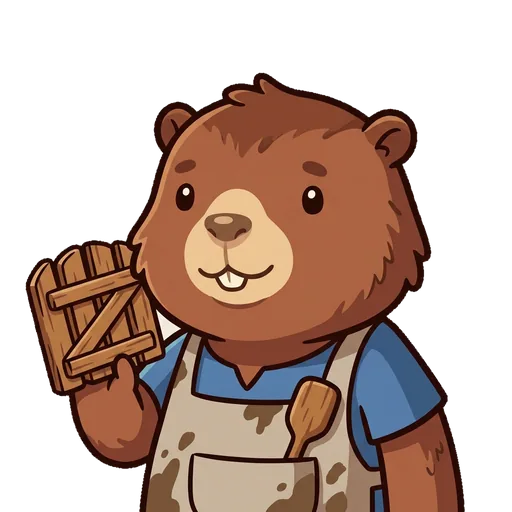
Sluice
Water + irrigation in agriculture
-
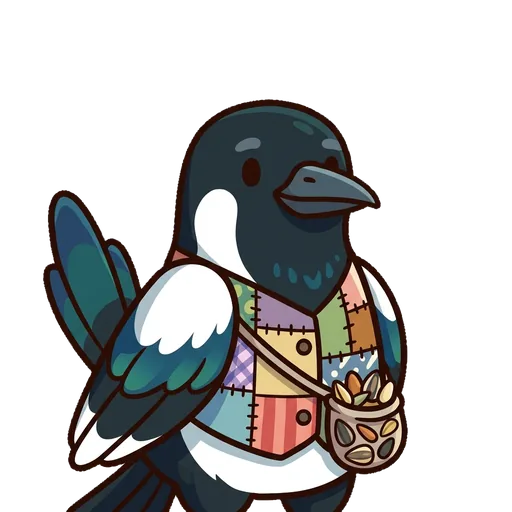
Medley
Crop diversity, polyculture, and rotation
-
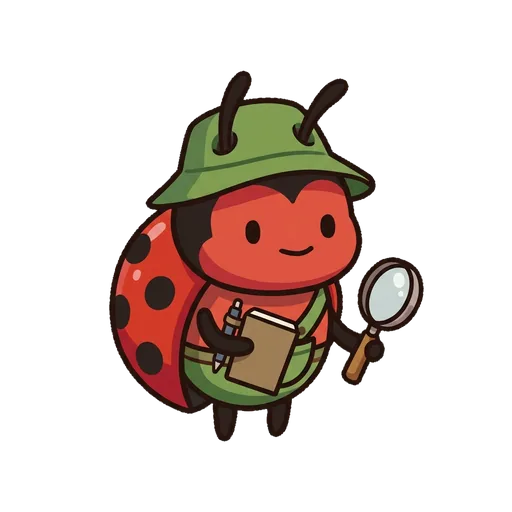
Ladybird
Managing pests; watch first, invite the helpers that eat pests, and act only as much as you need to
-
Chain
Supply chain literacy — every loaf tells a journey; whose-hands framing
-
Tang
Fermentation and traditional food-making
-

Broth
Cooking; the last step that turns ingredients into a meal
-
Share
Food access + food-justice — community-food-network framing; food deserts are systems, NOT moral failings
-
Steward
Sustainable practices + intergenerational restoration — field remembers; latest-not-first framing