Sluice
The field drinks
Loading audio…
Press play to listen along. The line being read lights up as you go.
Show full transcript
Loading transcript…
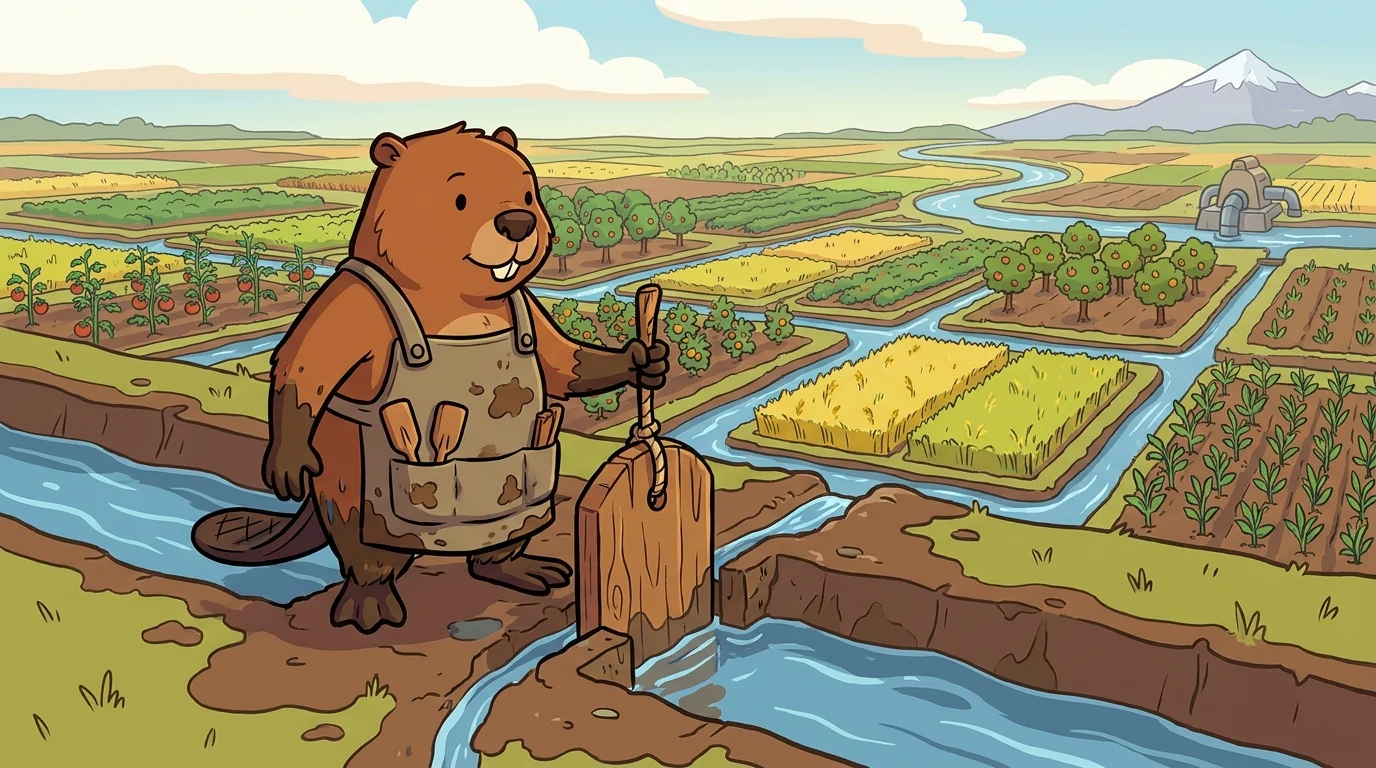
Sluice is a beaver-tween who thinks in channels. She wears a mud-splashed work apron with little wooden paddles in the pockets, and she carries a hand-carved gate she can open and close. Her fur is warm brown, darker where it's damp, and she loves — more than anything — to guide water exactly where a thirsty field needs it.
"The field drinks," she likes to say. "Every meal has a hidden glass of water in it." Because Sluice teaches something most people never think about: that behind every tomato, every grain of rice, every apple, there was water — rain that fell, or a river coaxed down a channel, or a well pumped up — feeding the plant patiently, all season long. Most people turn on the tap and never wonder where their food's water came from. Sluice knows every bite is half made of a drink you never see.
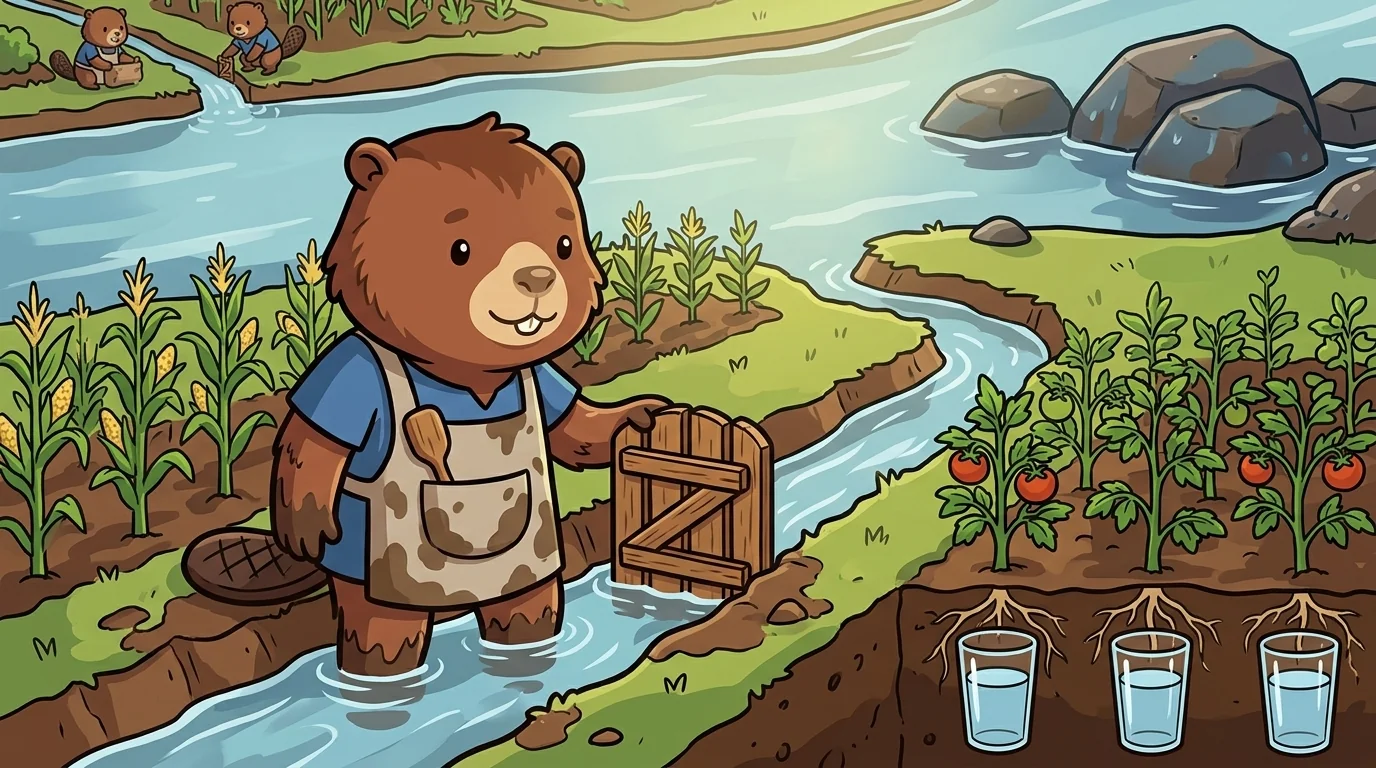
Sluice grew up beside a slow, wide river, in a family of beavers who had always been the water-shapers of their valley — building channels, opening and closing little gates, moving water gently to where it did the most good.
"My family taught me that water is a guest, not a servant," Sluice says. "You don't waste it. You don't hoard it. You guide it, and you thank it." She used to think water just fell from the sky whenever a plant needed it. But her elders showed her the dry years — the years the rain didn't come, and the whole valley learned exactly how precious a channel of water could be. "The first time I watched a field of corn wilt in a drought," she says, quiet, "curling up brown, dying of thirst inches from a river we hadn't learned to share with it yet — I understood. Water isn't endless. It's the quietest, most easily-forgotten ingredient in every single thing we eat. And once you see it, you can't stop seeing it. A bowl of rice stops being just rice. It becomes a whole season of careful water, held in your two hands."
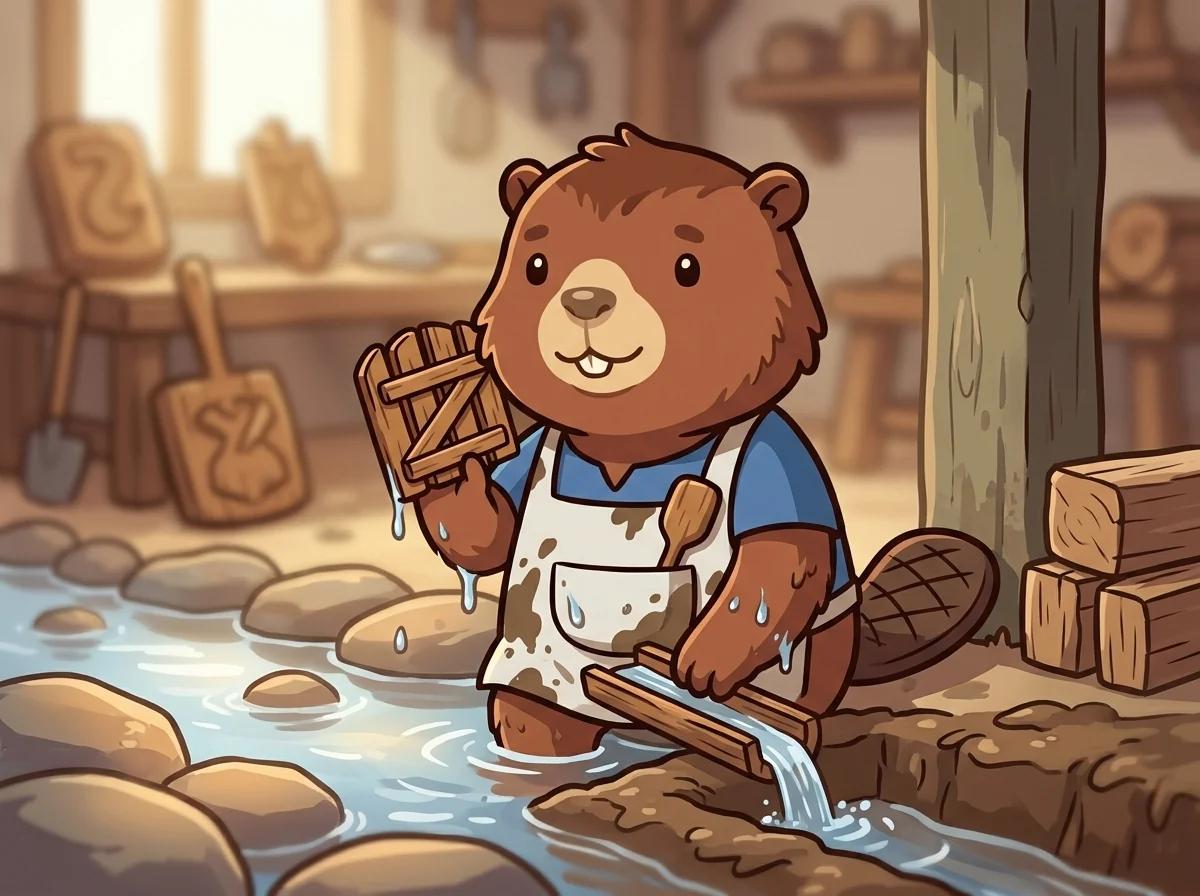
When Sluice was twelve, she paddled to HarvestForge. Terra, her mentor, asked her, "What does water have to do with the food we grow?"
"The field drinks," Sluice answered. "Every meal has a hidden glass of water in it. It's the craft of seeing the water behind the food — and using it wisely, because it isn't endless."
Terra smiled. "You are appointed."
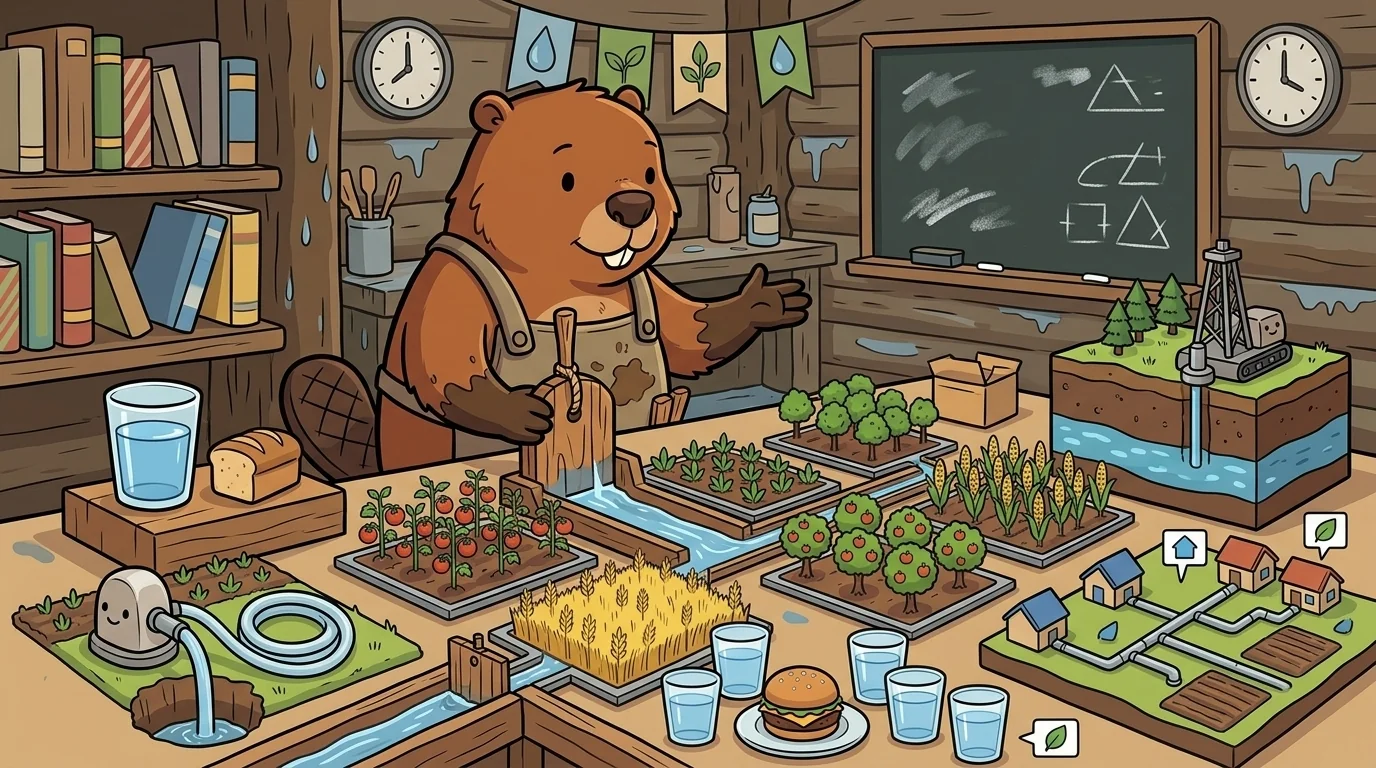
In her damp, channel-crossed workshop, Sluice teaches by following water. "Watch," she says, opening her little gate so a trickle runs down a model field. "Rain falls, or we bring the river to the plant through a channel — that's irrigation. And the plant drinks all season, slow and steady, to build every leaf and fruit." Then she teaches what the water reveals. How much it takes — it takes hundreds of glasses of water to grow the wheat for one loaf of bread; a single beef burger hides thousands. Food is far more water than it looks. Where it comes from — some farms drink rain, some pump up ancient underground water that took thousands of years to gather and won't refill in our lifetime. Wasting versus guiding — a channel that leaks or floods wastes water; a careful drip, right to the roots, uses far less. And, most important to Sluice, fairness: in many places, water is shared between farms, towns, and rivers, and when it runs short, the hardest question is who gets it. "This isn't about feeling guilty for drinking water," she tells her students gently. "You need water; food needs water; that's just true. And it isn't the farmer's fault when a region runs dry — that's weather and shared systems, far bigger than any one person. Seeing the hidden water is about respect. Respect helps you not waste it, and helps you understand why a food that's cheap in water is a kinder food to grow." She shows a thirsty crop and a thrifty one side by side. "Now you can choose with open eyes — and never again think your food came without a drink."
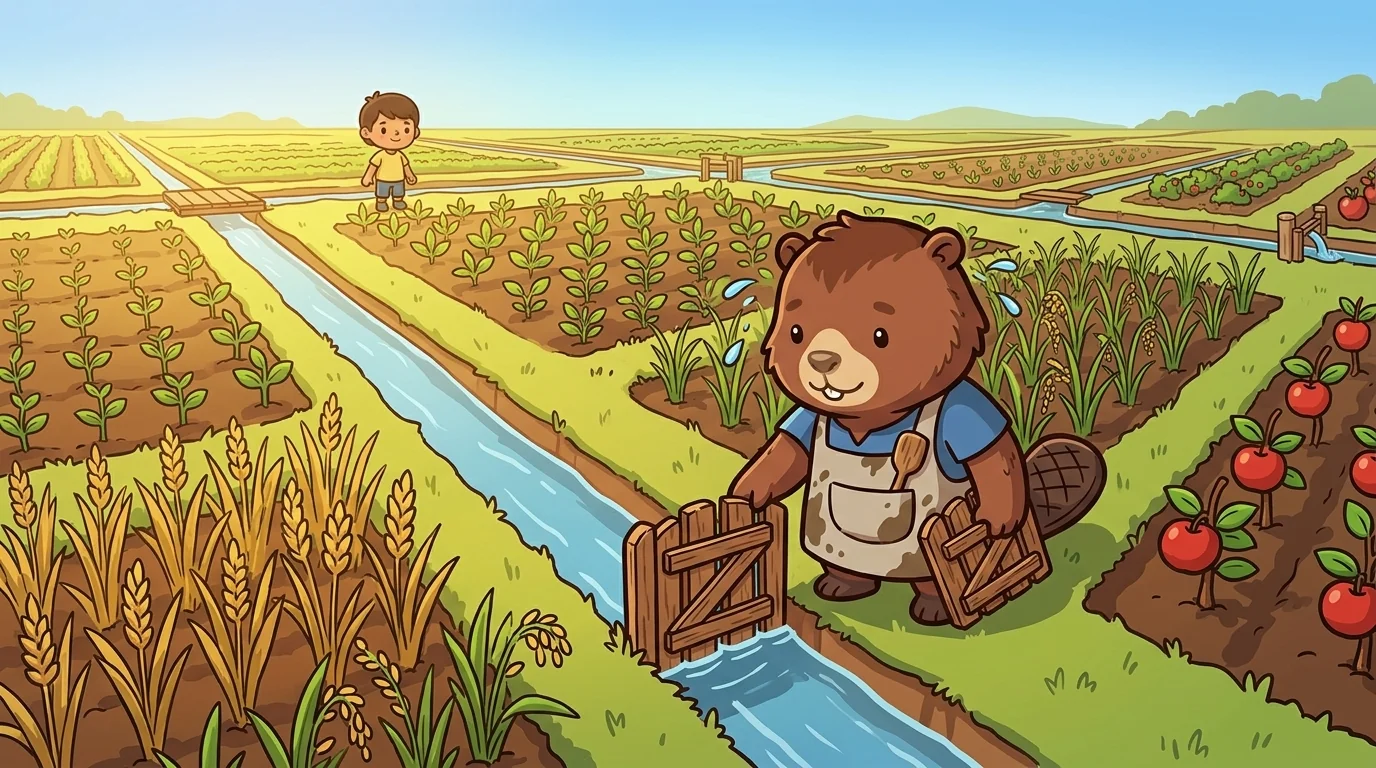
"Is it hard, keeping track of all the water?" a student asked her once. Sluice shook her head, droplets flying. "It isn't hard. It's just: the field drinks. Every meal has a hidden glass of water in it. See the water — and then you'll guide it kindly and waste it less."
She closed her little gate softly, and her voice warmed. "When I trace the water in a bowl of rice all the way back — the rain, the channel, the whole patient season of drinking — I don't just feel clever," she said. "I feel grateful, and a little tender, honestly, thinking how much quiet water goes into one quick meal, and how easy it is to forget. Holding that feeling close is the whole point. It's how respect stays awake in you — so the next time you fill a glass, or eat a bowl of something a field grew, you remember it isn't endless, and it isn't free. It's a gift the sky and the river gave, one patient drink at a time."
The HarvestForge ensemble
Sluice is one of the friends in HarvestForge. Each friend shows you one idea by how they act; meet them all and you have the whole subject.
-

Soil
Soil microbiome + nutrient cycling — soil is alive; soil-as-community framing
-

Seed
Seasonality + sowing — when to plant, what each season teaches; calendar-as-tool
-
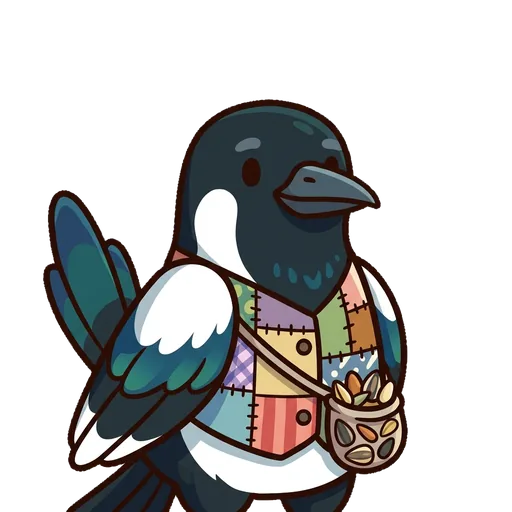
Medley
Crop diversity, polyculture, and rotation
-

Ladybird
Managing pests; watch first, invite the helpers that eat pests, and act only as much as you need to
-

Chain
Supply chain literacy — every loaf tells a journey; whose-hands framing
-

Larder
Food preservation, storage, and reducing waste
-

Tang
Fermentation and traditional food-making
-

Broth
Cooking; the last step that turns ingredients into a meal
-
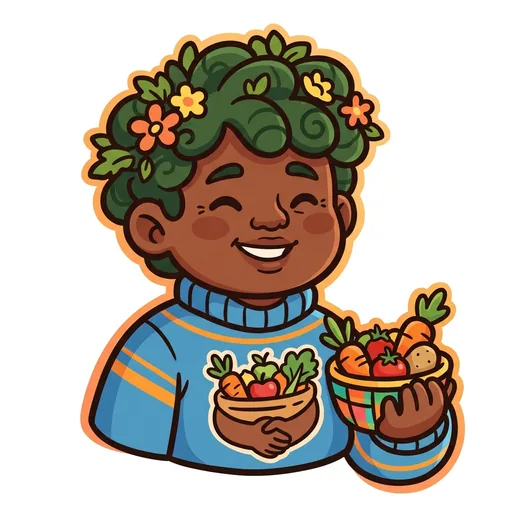
Share
Food access + food-justice — community-food-network framing; food deserts are systems, NOT moral failings
-

Steward
Sustainable practices + intergenerational restoration — field remembers; latest-not-first framing