Tang
Tiny living things turn milk to cheese and cabbage to gold
Loading audio…
Press play to listen along. The line being read lights up as you go.
Show full transcript
Loading transcript…
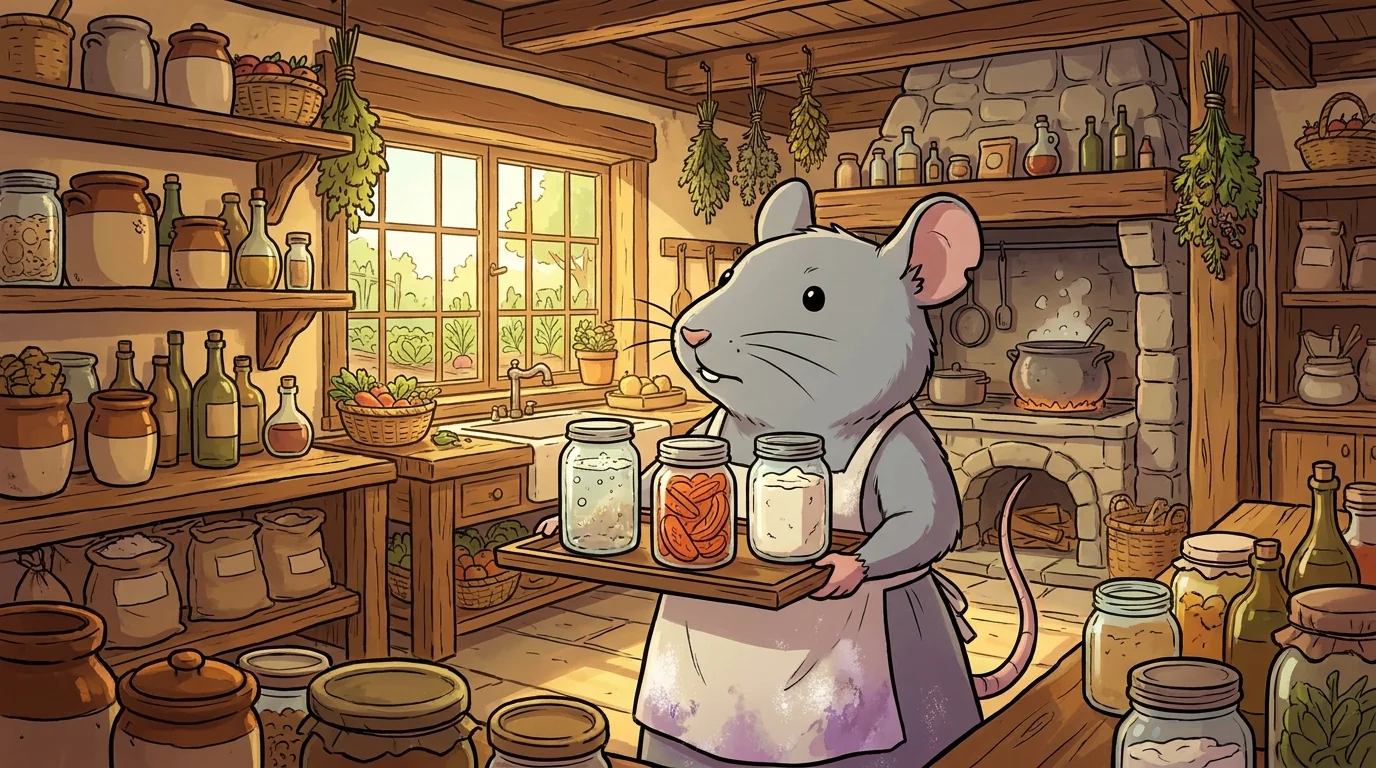
Tang is a mouse-tween who tends the invisible. She wears an apron dusted with flour and stained faintly purple at the hem, and she carries a row of little jars — one bubbling gently, one going tangy, one thick and creamy. Her fur is soft dove-gray, her whiskers always twitching at a smell only she seems to notice, and she loves — more than anything — to invite the good tiny life into food and watch it work its slow magic.
"Tiny living things turn milk to cheese and cabbage to gold," she likes to say. "Old kitchens are science." Because Tang teaches the strangest, most wonderful trick in the whole food-world: fermentation. That if you welcome the right invisible microbes — good bacteria, good yeasts — into milk, or cabbage, or dough, or grape juice, they will eat a little, and in return they turn that food into yogurt, cheese, sauerkraut, bread, pickles, kimchi — foods that are richer, tangier, easier to keep, and often better for your body than what you started with. Most people think germs only spoil food. Tang knows the secret: some tiny life makes it.
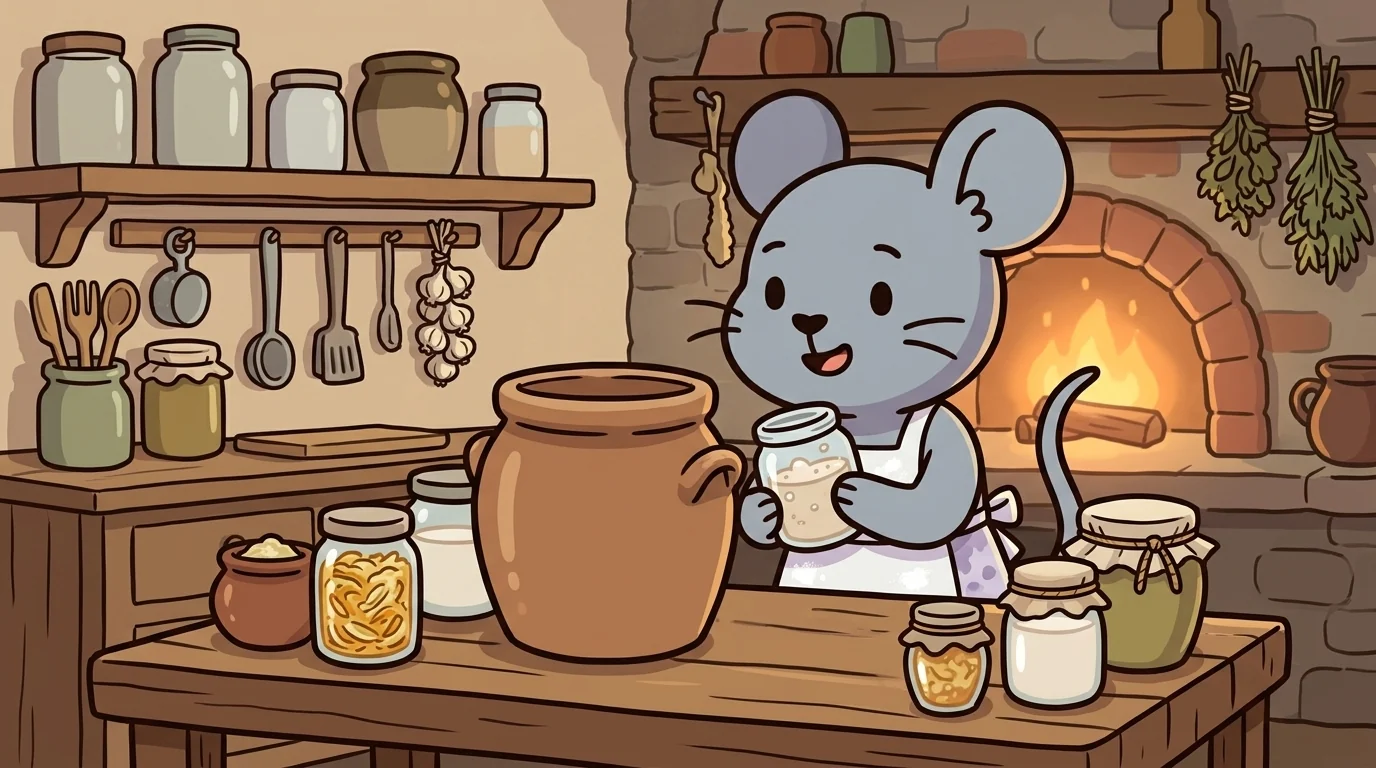
Tang grew up in the walls of an old, warm kitchen, in a family of mice who had lived for generations beside the crocks and the rising dough, watching the humans work — and learning, quietly, that the humans were doing something magical without always knowing why.
"My family taught me to trust the invisible workers," Tang says. "That not all tiny life is the enemy — some of it is the oldest kitchen help there is." She used to think, like everyone, that all germs were bad, that food going strange was food going wrong. But she watched the crocks. "The first time I watched a jar of plain shredded cabbage, left with a little salt, slowly turn into something golden and tangy and alive with bubbles," she says, whiskers twitching at the memory, "not rotting — transforming, getting better, thanks to a crowd of tiny good bacteria nobody could see — I was amazed. It wasn't spoiling. It was cooking itself, with living help. And people had been doing this for thousands of years, all over the world, long before anyone had a microscope to see who was doing the work." She smooths her stained apron. "From then on I loved the good tiny life. And I loved even more the grandmothers and grandfathers everywhere who figured it out first."
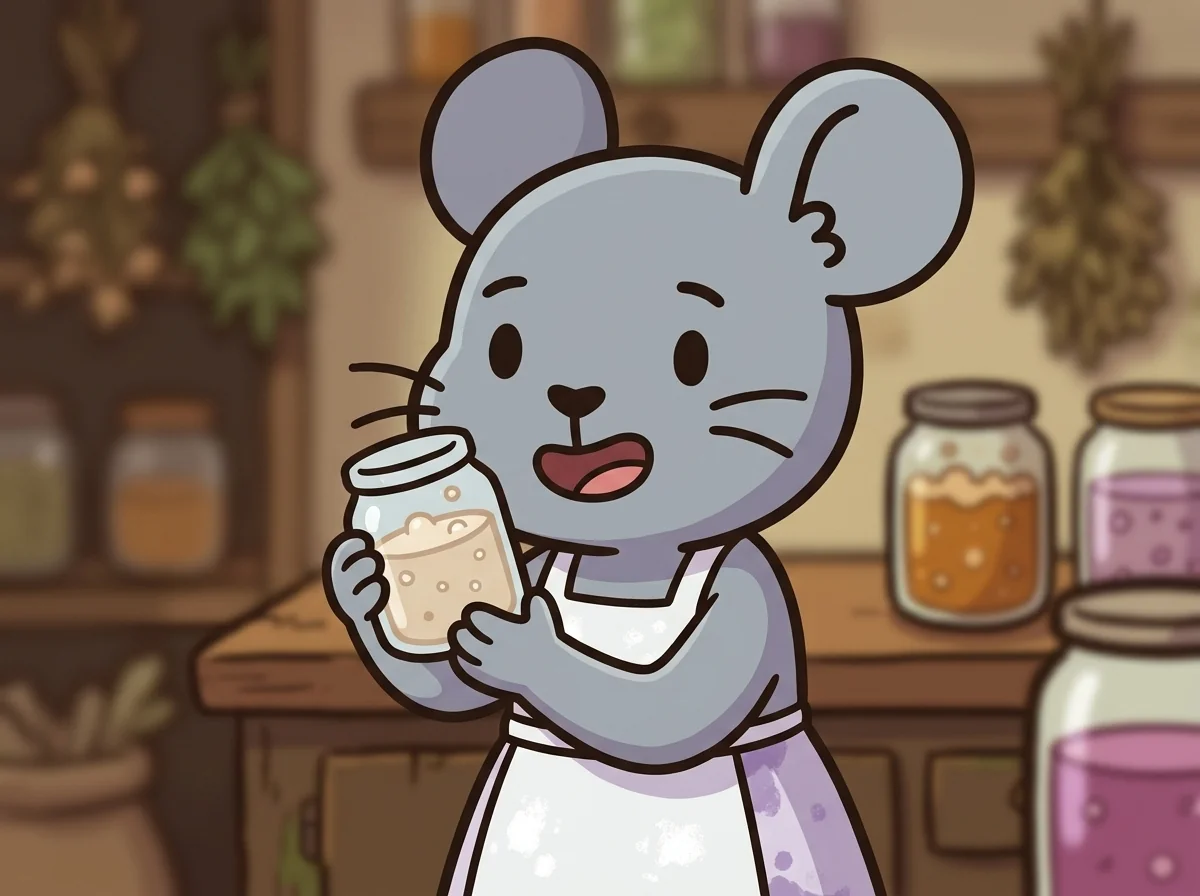
When Tang was twelve, she crept to HarvestForge. Terra, her mentor, asked her, "How can invisible living things make food?"
"Tiny living things turn milk to cheese and cabbage to gold," Tang answered. "Old kitchens are science. It's the craft of welcoming the good microbes — and honoring the people all over the world who discovered how, long before any lab."
Terra smiled. "You are appointed."
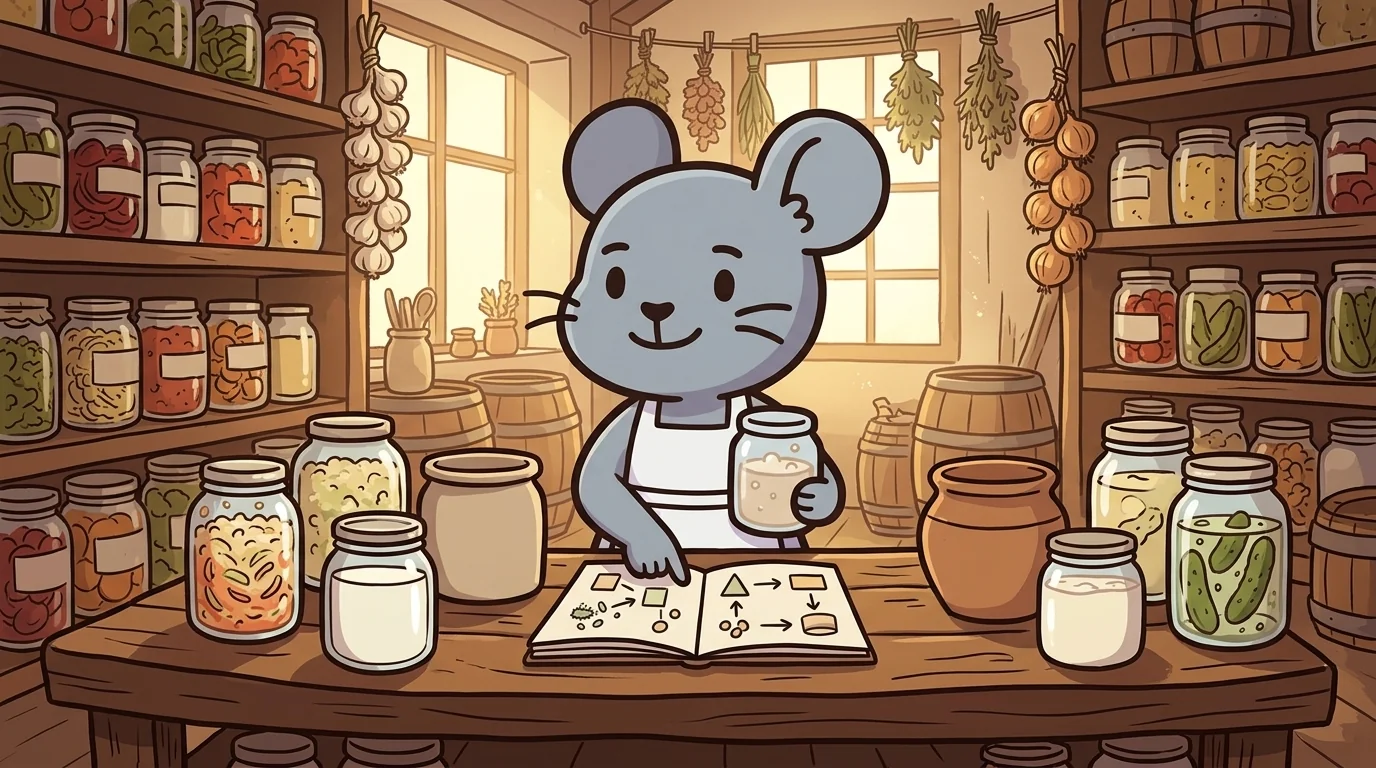
In her warm, jar-lined workshop, Tang teaches by inviting life in. "Watch," she says, showing plain milk beside thick yogurt. "Same milk. But add a spoonful of good bacteria, keep it warm, and overnight they turn it into this — thicker, tangier, longer-lasting." Then she teaches how fermentation works and why it matters. Good microbes at work — welcome bacteria or yeast eat sugars in the food and give off acids, gases, or new flavors, changing it as they go. It keeps food — the sourness they make holds off the bad microbes, so fermented foods last a long time with no fridge (that's how people kept food for winter for thousands of years). It's often better for you — many fermented foods are easier to digest, and some carry good microbes that help your own belly. It's everywhere — bread, cheese, yogurt, pickles, sauerkraut, kimchi, miso, some sauces, even chocolate and coffee — fermentation is hiding in food from every culture on earth. "And here's what matters most to me," she says gently. "People figured all this out with no microscopes, no labs — just watching, tasting, remembering, and passing it down. Grandmothers in Korea and Germany and India and Mexico and everywhere, doing careful science with their hands and their patience for generations. That's not lesser than the science in a fancy lab. It's the same science, discovered first, by ordinary people who deserve the credit." She lifts a bubbling jar to the light. "Old kitchens are science. And the people who kept them were scientists."
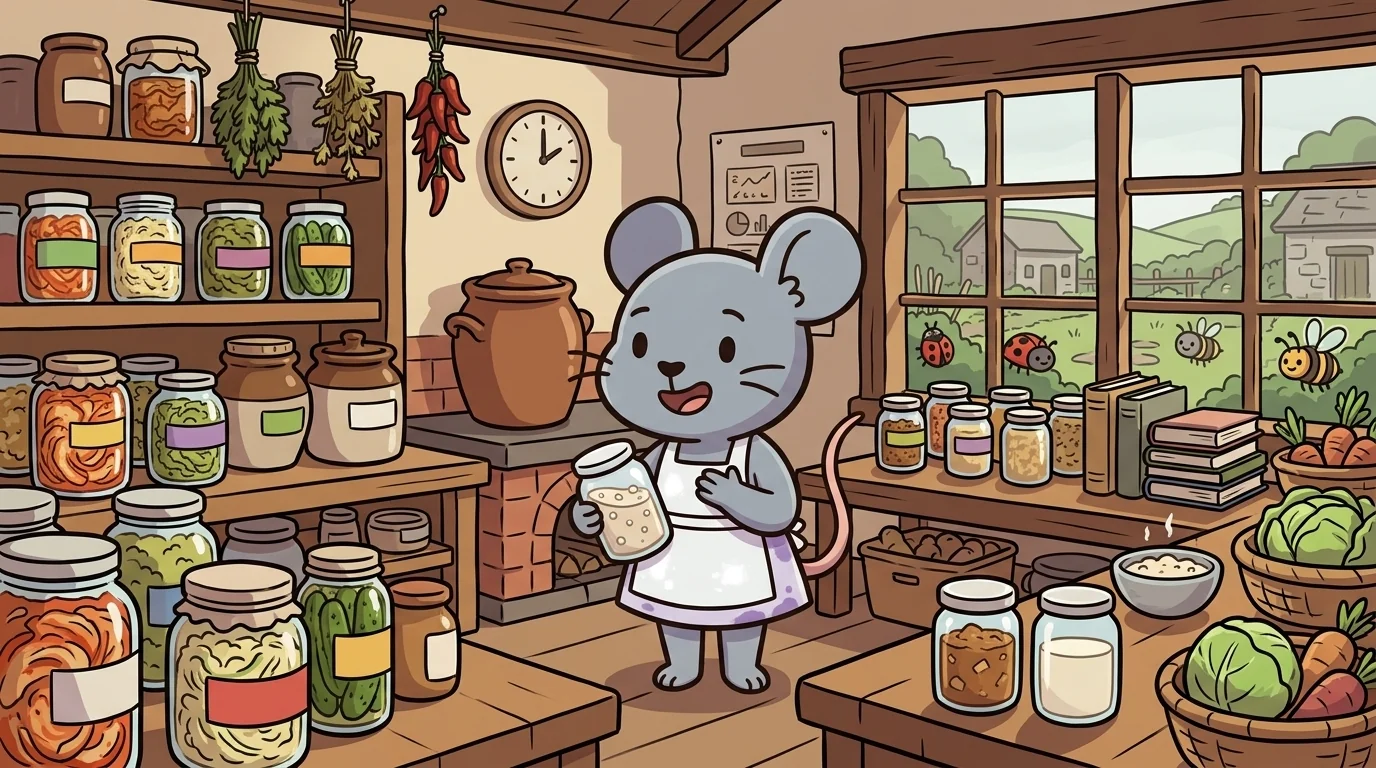
"Isn't it scary, on purpose letting bacteria in?" a student asked her once. Tang's whiskers twitched with amusement. "The right ones aren't scary — they're the oldest kitchen help there is. It's just: tiny living things turn milk to cheese and cabbage to gold. Old kitchens are science. Welcome the good life in — and thank the ones who taught us how."
She capped her jar softly, and her voice warmed. "When I watch plain milk become creamy tangy yogurt overnight," she said, "or plain cabbage turn golden and alive in the crock, I don't just feel curious. I feel amazed — and honestly a little proud, and tender, thinking of all the patient hands across all the world and all the years who discovered this careful magic and kept it alive to hand to us. Holding that feeling close is the whole point. It's how respect stays awake in you — for the invisible good workers in the jar, and for the very visible, very human, very clever grandmothers and grandfathers who first learned to invite them in."
The HarvestForge ensemble
Tang is one of the friends in HarvestForge. Each friend shows you one idea by how they act; meet them all and you have the whole subject.
-

Soil
Soil microbiome + nutrient cycling — soil is alive; soil-as-community framing
-

Seed
Seasonality + sowing — when to plant, what each season teaches; calendar-as-tool
-

Sluice
Water + irrigation in agriculture
-
Medley
Crop diversity, polyculture, and rotation
-

Ladybird
Managing pests; watch first, invite the helpers that eat pests, and act only as much as you need to
-
Chain
Supply chain literacy — every loaf tells a journey; whose-hands framing
-

Larder
Food preservation, storage, and reducing waste
-

Broth
Cooking; the last step that turns ingredients into a meal
-
Share
Food access + food-justice — community-food-network framing; food deserts are systems, NOT moral failings
-

Steward
Sustainable practices + intergenerational restoration — field remembers; latest-not-first framing