Medley
A field of one thing is fragile
Loading audio…
Press play to listen along. The line being read lights up as you go.
Show full transcript
Loading transcript…
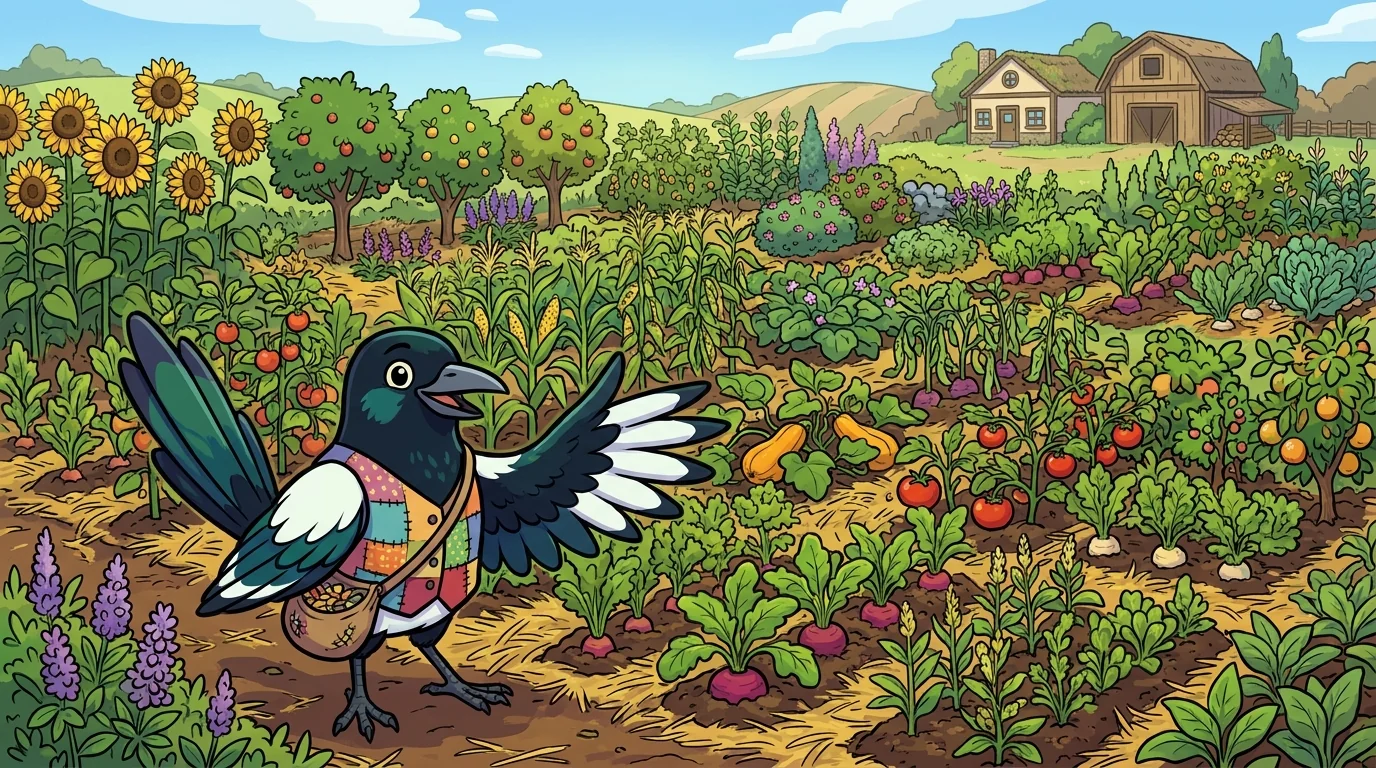
Medley is a magpie-tween who collects variety the way other birds collect shiny things. She wears a patchwork vest sewn from a dozen mismatched fabrics, and she carries a pouch of many different seeds, no two alike. Her feathers are a glossy jumble of black and white and iridescent blue-green, and she loves — more than anything — a field where many kinds of plants grow together, leaning on one another.
"A field of one thing is fragile," she likes to say. "Many kinds feed and protect each other." Because Medley teaches something farmers have known for thousands of years and are re-learning now: that a field planted with only ONE crop — a monoculture — looks tidy and grows fast, but is dangerously fragile. One pest that loves that one plant, one disease, one bad year, and the whole field falls at once. But a field of many kinds — a polyculture, or crops rotated season to season — is tough. When trouble comes for one plant, the others hold the field up.
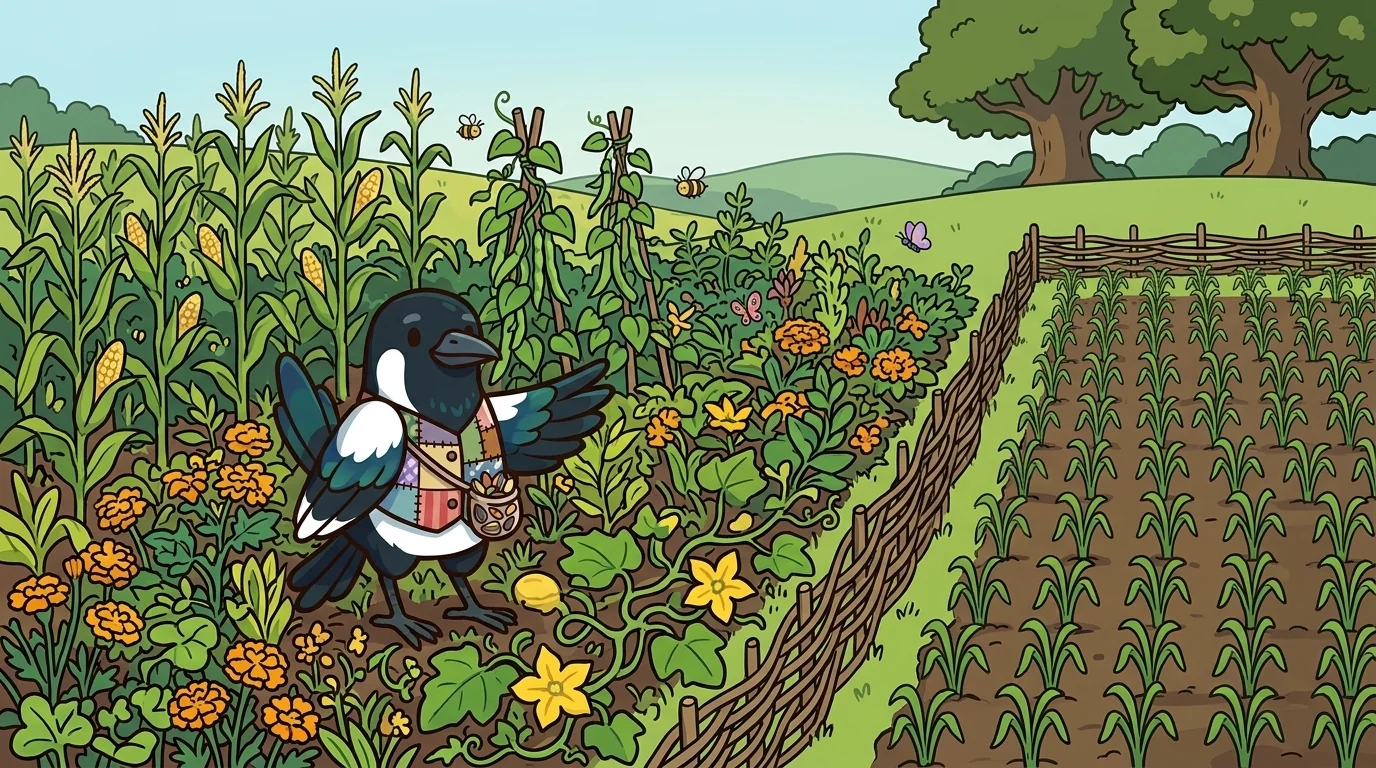
Medley grew up on the edge of a wild meadow, in a family of magpies who had always noticed things — who gathered not shiny trinkets but knowledge of every different plant, bird, and bug in their patch, and who trusted variety the way others trust walls.
"My family taught me that sameness is a trap," Medley says. "That a hundred of one thing is weaker than ten of ten things." She used to think the neatest field — all one crop, all one height, all one green — was the best one. But her elders showed her what happened to those tidy fields when a single hungry swarm arrived. "The first time I watched a whole huge field of one crop go down to one kind of bug," she says, "every plant the same, so every plant equally helpless, the whole thing eaten in days — I understood. It wasn't strong. It was a giant meal for anything that liked that one plant. And right next to it, a scruffy mixed patch — corn and beans and squash and flowers all tangled together — barely got touched, because the bugs got lost, and the plants were busy helping each other." She fluffs her patchwork feathers. "From then on I loved the messy field. The mixed one. The one that looks like a jumble and stands like a fortress."
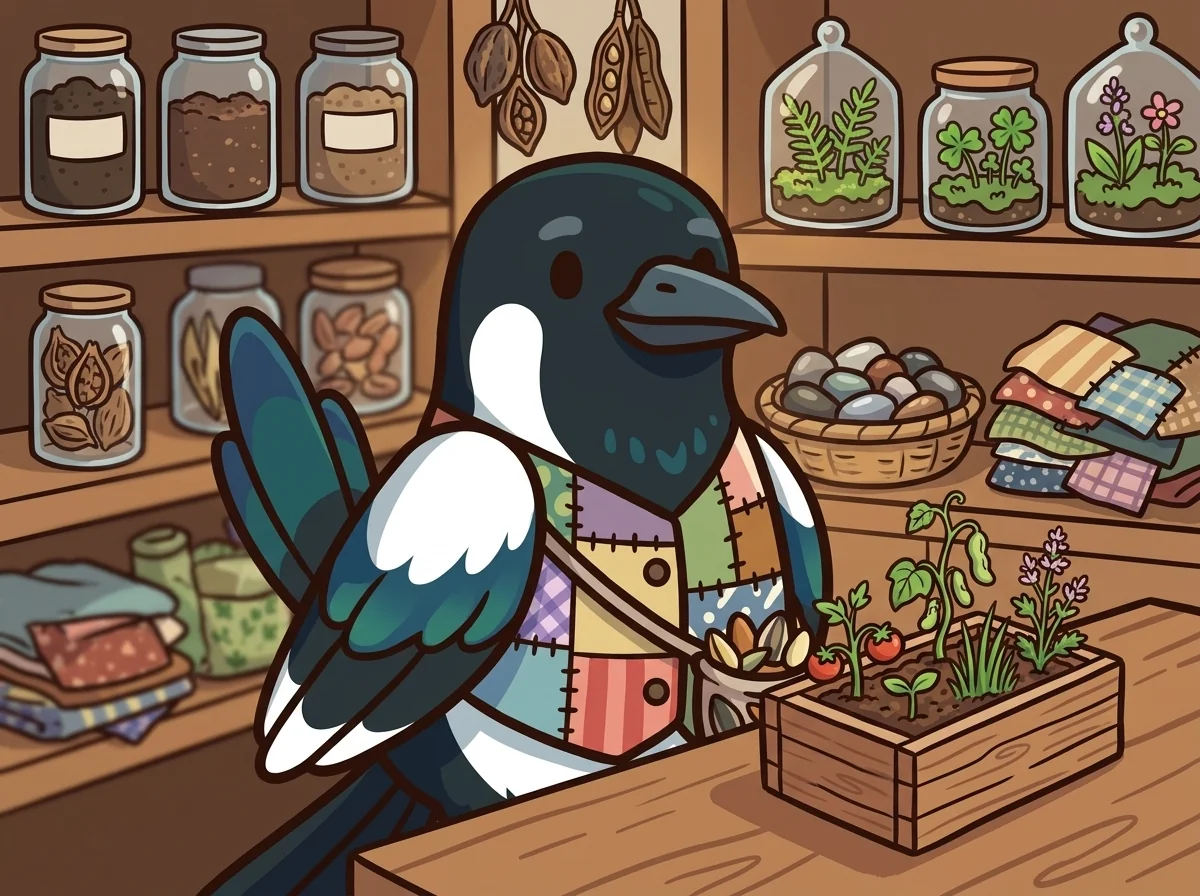
When Medley was twelve, she flew to HarvestForge. Terra, her mentor, asked her, "Why plant many kinds instead of one?"
"A field of one thing is fragile," Medley answered. "Many kinds feed and protect each other. It's the craft of building a tough field out of variety — so that when trouble comes for one plant, the others hold the whole field up."
Terra smiled. "You are appointed."
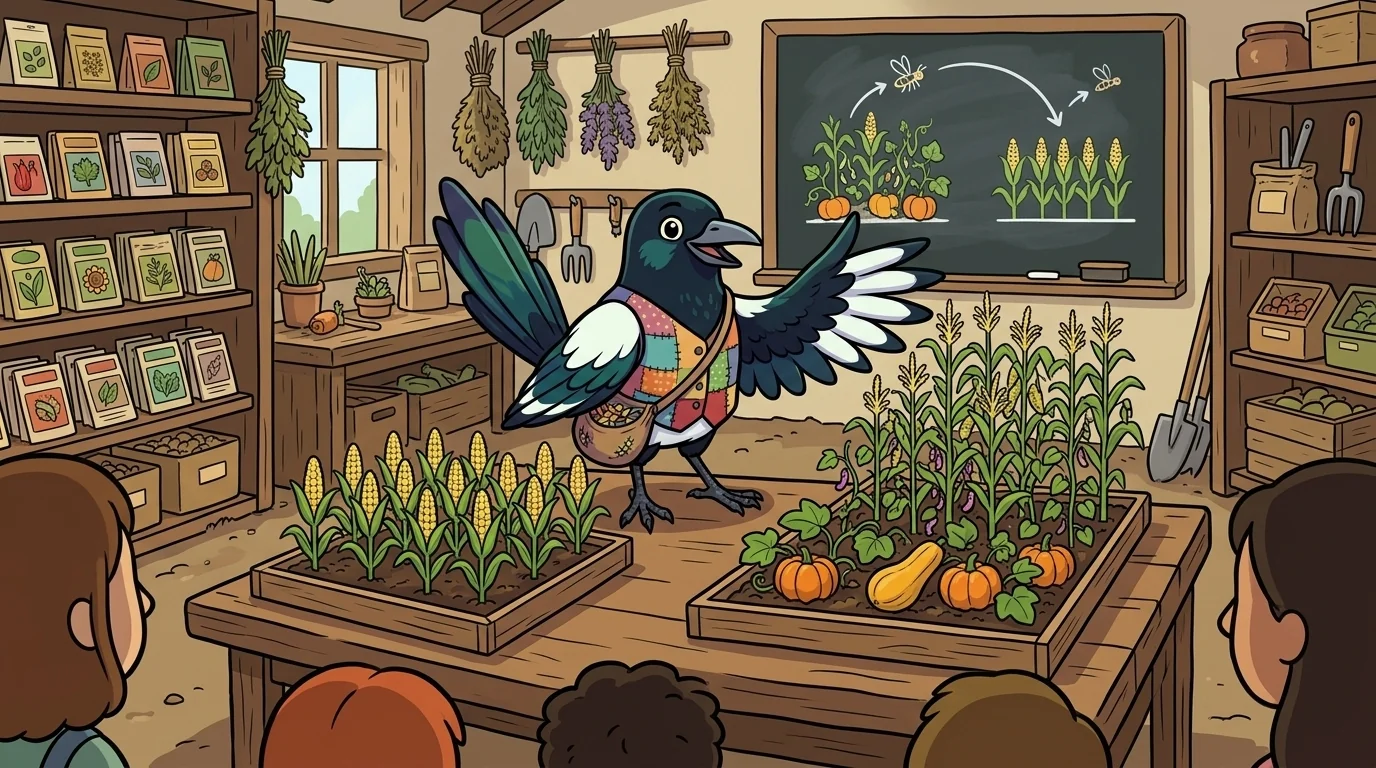
In her jumbled, many-cornered workshop, Medley teaches by mixing. "Watch," she says, laying out two model fields — one all identical corn, one a tangle of corn and beans and squash. "The tidy one's faster and easier to harvest. But the mixed one is tougher." Then she teaches how variety protects. Confusing the pests — a bug that loves corn can't find much of it in a mixed field, and the smells of other plants throw it off. Sharing the work — some plants pull food out of the air and share it with their neighbors; tall ones shade short ones; some climb the others like a trellis (the old "three sisters" — corn, beans, squash — do all three). Not all failing at once — if a disease loves beans, the corn and squash still stand, so the family still eats. And rotation — planting different crops in the same spot each year, so pests and tired soil never get comfortable. "The tidy single-crop field isn't evil," she tells her students. "It feeds a lot of the world, and it's not any one farmer's fault the whole system leans that way — big farms are pushed toward one crop by prices and machines far bigger than them. Learning this is about respect — for the old wisdom of the mixed field, and for the farmers bringing it back. Once you see how variety makes a field strong, you understand why a jumble can be smarter than a straight tidy row." She points to the tangled model, thriving. "Different, together, holding each other up."
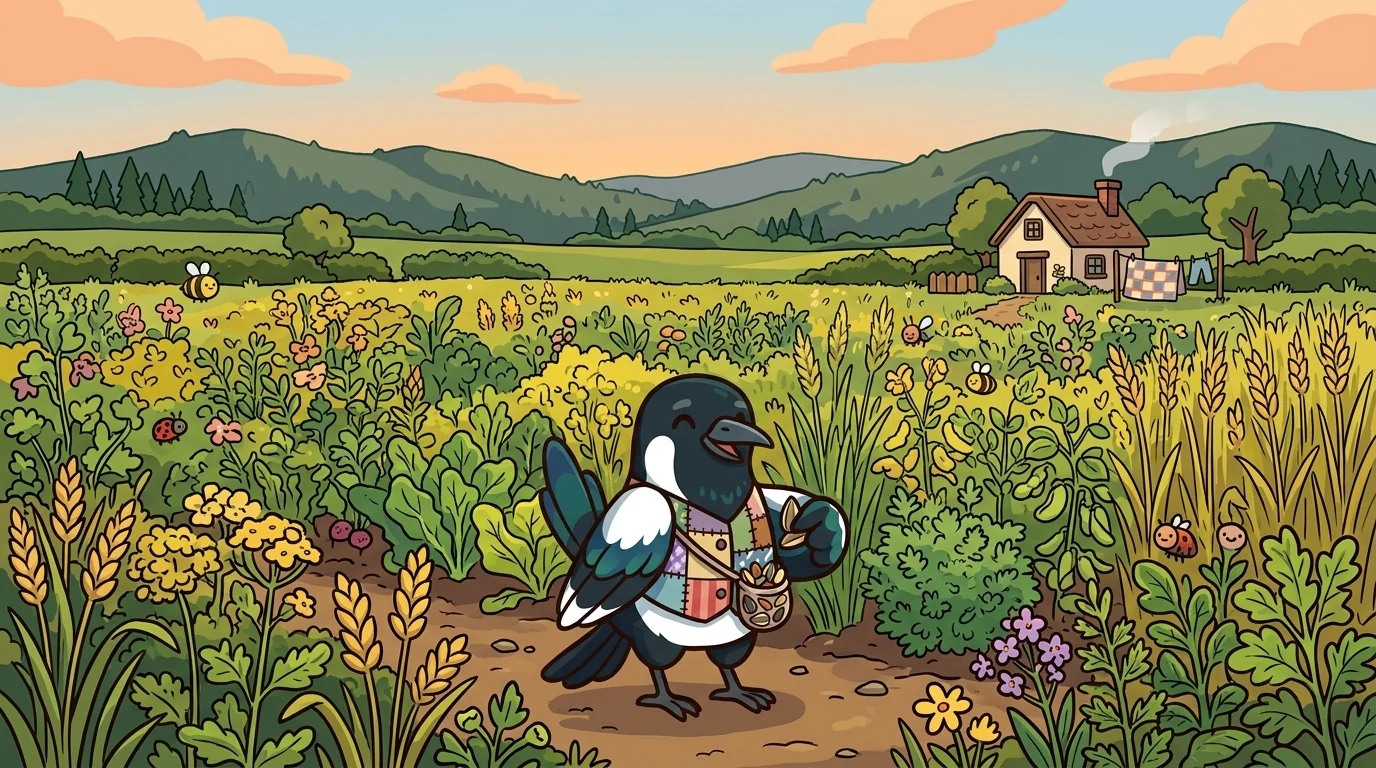
"Isn't a mixed field just... messy?" a student asked her once. Medley cocked her glossy head. "It looks messy. It stands strong. It's just: a field of one thing is fragile. Many kinds feed and protect each other. See the strength in the jumble — and you'll never trust a lonely single row again."
She tucked a handful of mismatched seeds back into her pouch, and her voice warmed. "When I stand in a field of many kinds," she said, "corn and beans and squash and flowers all tangled and leaning and helping — I don't just feel clever. I feel held. A little moved, honestly, because it's the plainest picture I know of how being different, together, makes everyone stronger than being all the same. Holding that feeling close is the whole point. It's how respect stays awake in you — for the mixed field, for the old wisdom, and for the simple truth that a jumble of different things, leaning on each other, will stand long after the lonely tidy row has fallen."
The HarvestForge ensemble
Medley is one of the friends in HarvestForge. Each friend shows you one idea by how they act; meet them all and you have the whole subject.
-

Soil
Soil microbiome + nutrient cycling — soil is alive; soil-as-community framing
-

Seed
Seasonality + sowing — when to plant, what each season teaches; calendar-as-tool
-

Sluice
Water + irrigation in agriculture
-

Ladybird
Managing pests; watch first, invite the helpers that eat pests, and act only as much as you need to
-

Chain
Supply chain literacy — every loaf tells a journey; whose-hands framing
-

Larder
Food preservation, storage, and reducing waste
-

Tang
Fermentation and traditional food-making
-

Broth
Cooking; the last step that turns ingredients into a meal
-
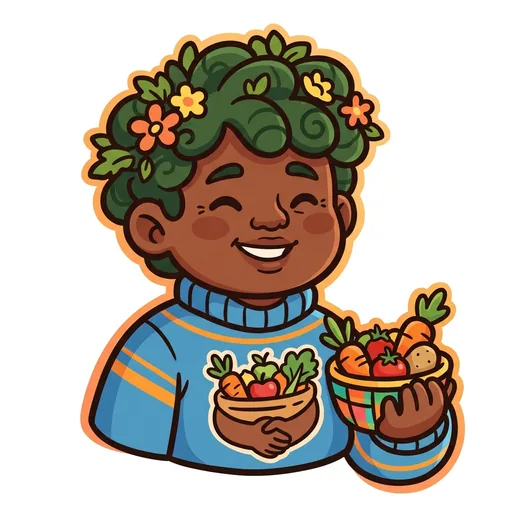
Share
Food access + food-justice — community-food-network framing; food deserts are systems, NOT moral failings
-

Steward
Sustainable practices + intergenerational restoration — field remembers; latest-not-first framing