Larder and Tang
LARDER & TANG
Loading audio…
Press play to listen along. The line being read lights up as you go.
Show full transcript
Loading transcript…
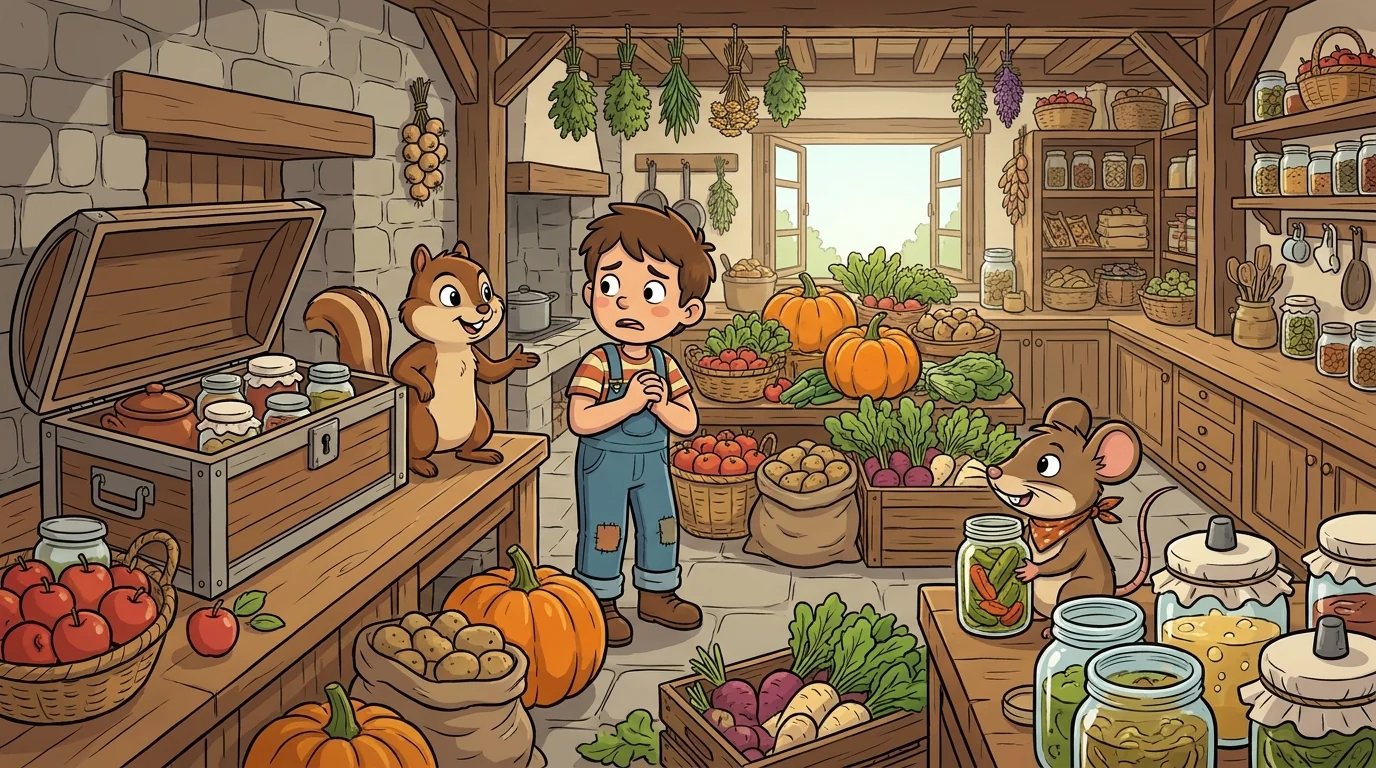
A boy came to HarvestForge with a real worry. "My family grew a huge harvest this year," he said. "Way more than we can eat right now. But there's no way it'll all last — half of it will go bad before winter's even started, and then we'll be short in the cold months anyway. It feels like the harvest is going to rot faster than we can eat it. What do we do?"
Larder the chipmunk and Tang the mouse looked at each other across the boy — the one who keeps food by holding it still, the one who keeps food by inviting life in — and both brightened, because between the two of them, a harvest never had to rot.
"How much fridge and cellar space have you got?" asked Larder.
"Some. Not nearly enough for all of it," the boy said.
"Then some of it we'll hold still," said Larder, "and some of it —" she glanced at Tang — "we'll let come alive."
"Both of us," said Tang, whiskers twitching. "The whole harvest lasts if we use both ways together."
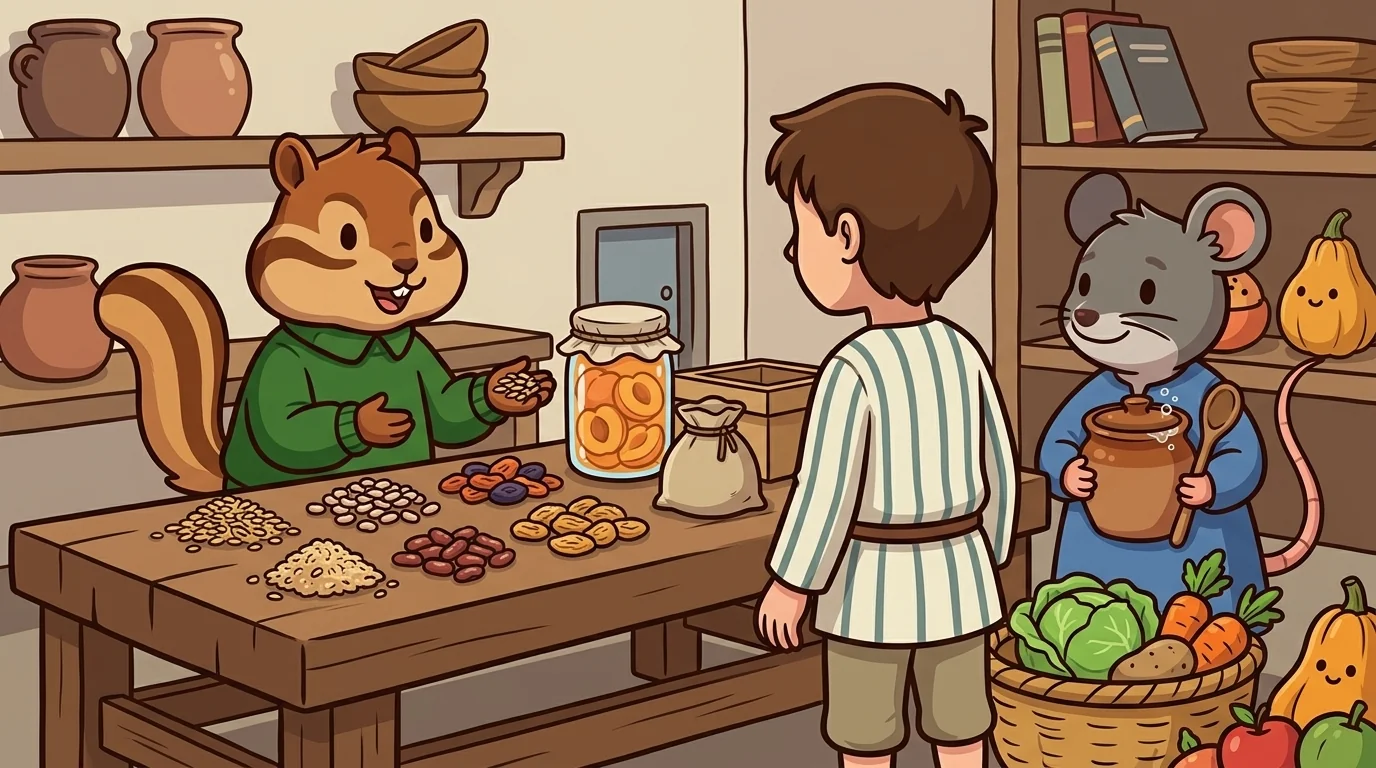
Larder went first, because holding food still is the way most people already half-know.
"Some food you keep by stopping it," Larder said, laying out grain, beans, dried fruit, and a cool jar. "Stopping the tiny life that spoils it. Take the water out — dry your grain, your beans, your fruit — and mold can't grow; it lasts for years. Keep things cold — a cellar, a fridge — and everything slows down, spoiling takes weeks instead of days. Seal it away from the air in a sealed jar, and it keeps for a whole year. That's my way: hold the food still, keep it cool and dry and sealed, and time can't touch it." She checked her labeled pockets. "So — your grain, your beans, your nuts: dry them, store them, done, they'll outlast the winter easy. Your firm fruit: a cool cellar. Some of your harvest wants to be held still, and for that, I'm your keeper." She paused. "But not everything keeps well dry or cold. Your cabbage, your milk, some of your veg — those'll still go bad in a cellar before spring. For those —" she looked at Tang — "stillness isn't the answer. Life is."
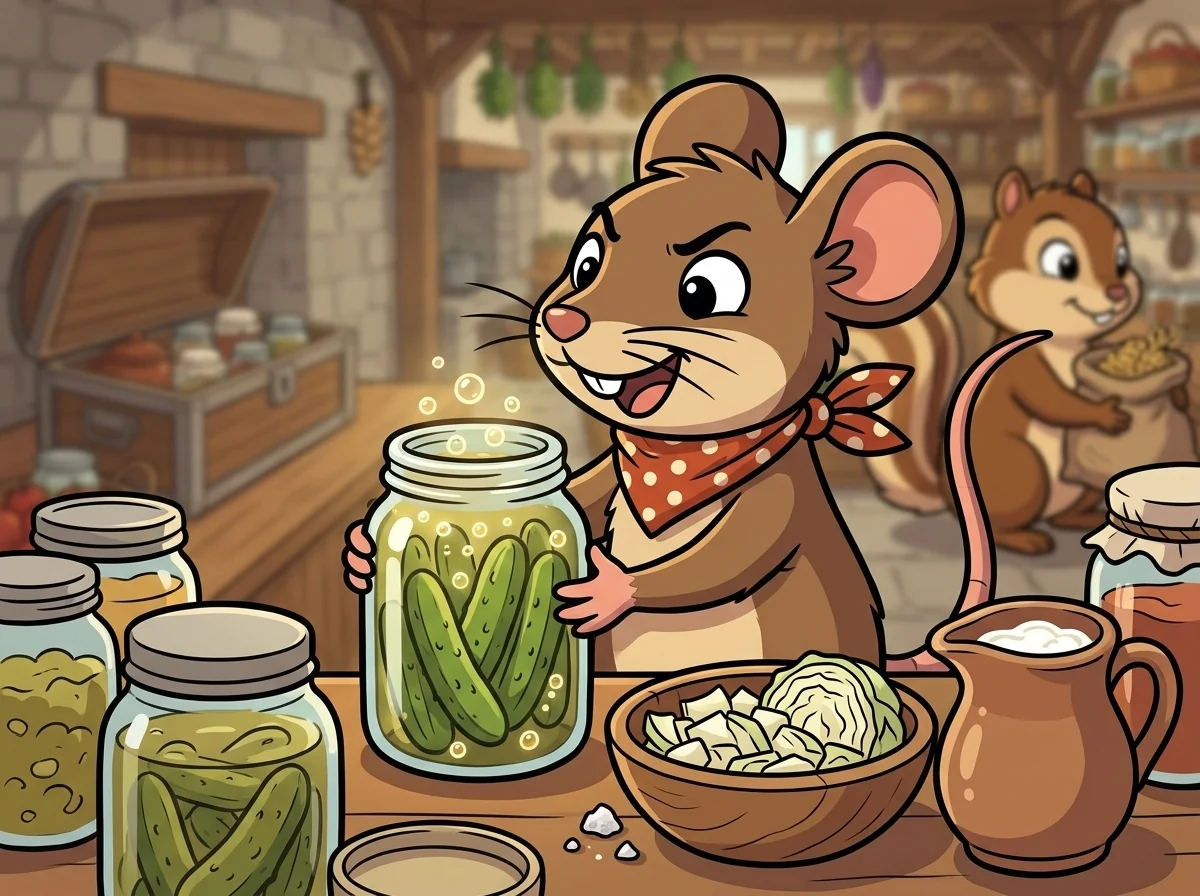
Tang took over, because the second way sounds like the opposite of the first — and works just as well.
"Here's the trick that seems backwards," Tang said, whiskers twitching with delight. "Some food you keep not by stopping the tiny life — but by inviting the right tiny life in." She set out cabbage with a little salt, and milk with a spoonful of starter. "Welcome good bacteria into your cabbage and it becomes tangy sauerkraut or kimchi that keeps for months. Welcome them into your milk and it becomes cheese or yogurt that lasts far longer than fresh milk ever could. The good microbes eat a little, and the sourness they make keeps the bad microbes out — so the food is protected, and it lasts, and it often tastes better and is better for you besides." She lifted a bubbling jar. "That's my way: don't hold the food still — let it transform, with good living help, into something that keeps itself. Your cabbage that would rot in a cellar? Ferment it, and it becomes gold that lasts all winter. Your extra milk? Turn it to cheese." She grinned. "Larder stops the life. I invite it. Opposite moves — same rescue."
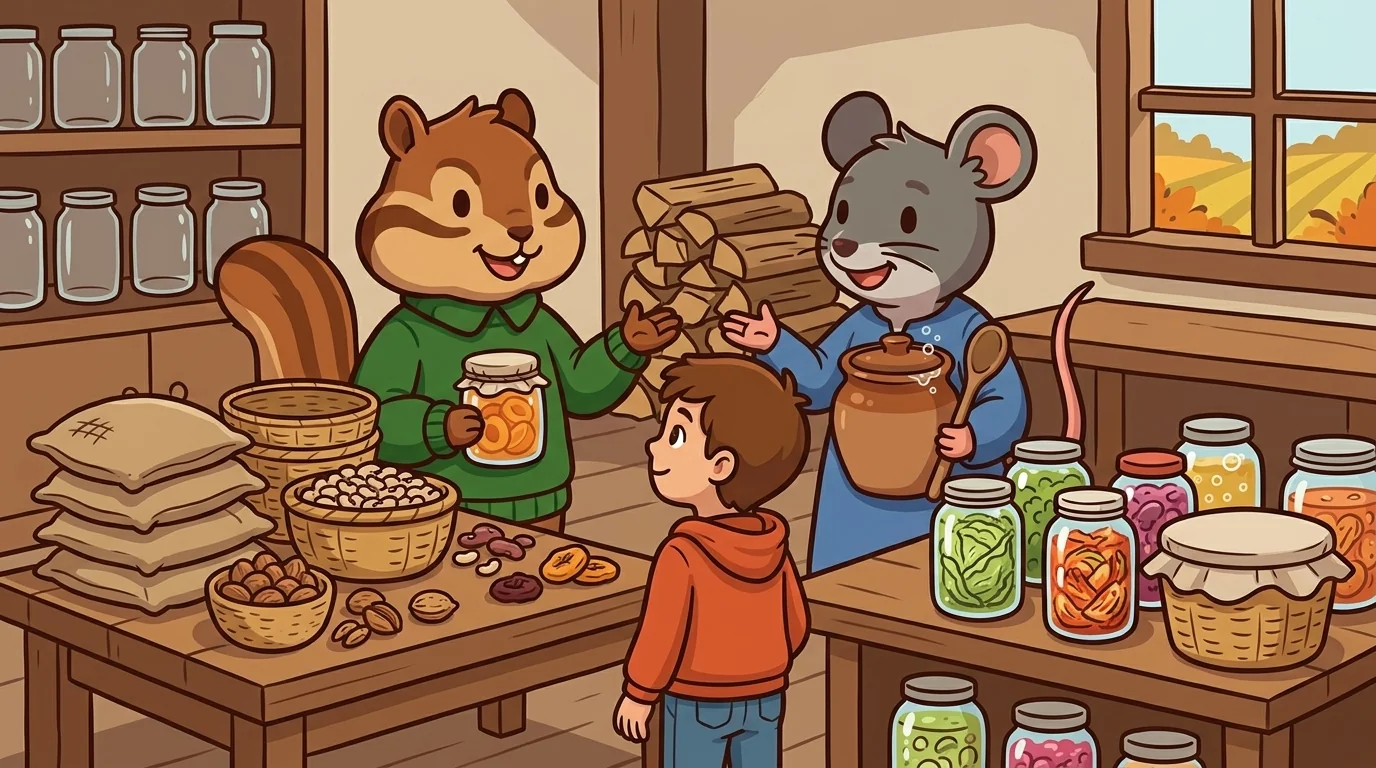
And then, together, they showed the boy how the whole harvest could survive.
"So here's the plan for your family's big harvest," said Larder, and the two of them sorted the boy's imaginary pile between them. "Your grain, beans, nuts, firm fruit — my side. Dried, cellared, sealed. Held still. They'll last the winter." She pushed them to one side. "Your cabbage, your milk, your extra veg —"
"— my side," said Tang, pulling them over. "Fermented. Cultured. Alive and keeping. They'll last too — just the other way." She looked at the boy. "Neither of us could save your whole harvest alone. If you only had Larder's way, your cabbage and milk would still spoil — stillness can't save everything. If you only had my way, well —" she laughed — "you don't want to ferment your grain, you want to dry it and keep it plain. But together —"
"— we can carry a whole harvest through to spring," Larder finished. "Every different food kept the way that food keeps best. The dry things held still, the living things transformed and cultured. Two opposite ways, working side by side, and by the time the cold comes, nothing your family grew has to rot. It's all on the winter table, one way or the other."
The boy looked at the two sorted piles — one held still and dry, one alive and tangy — and his worry lifted, because he could suddenly see the whole harvest surviving, every bit of it, kept by one method or the other.
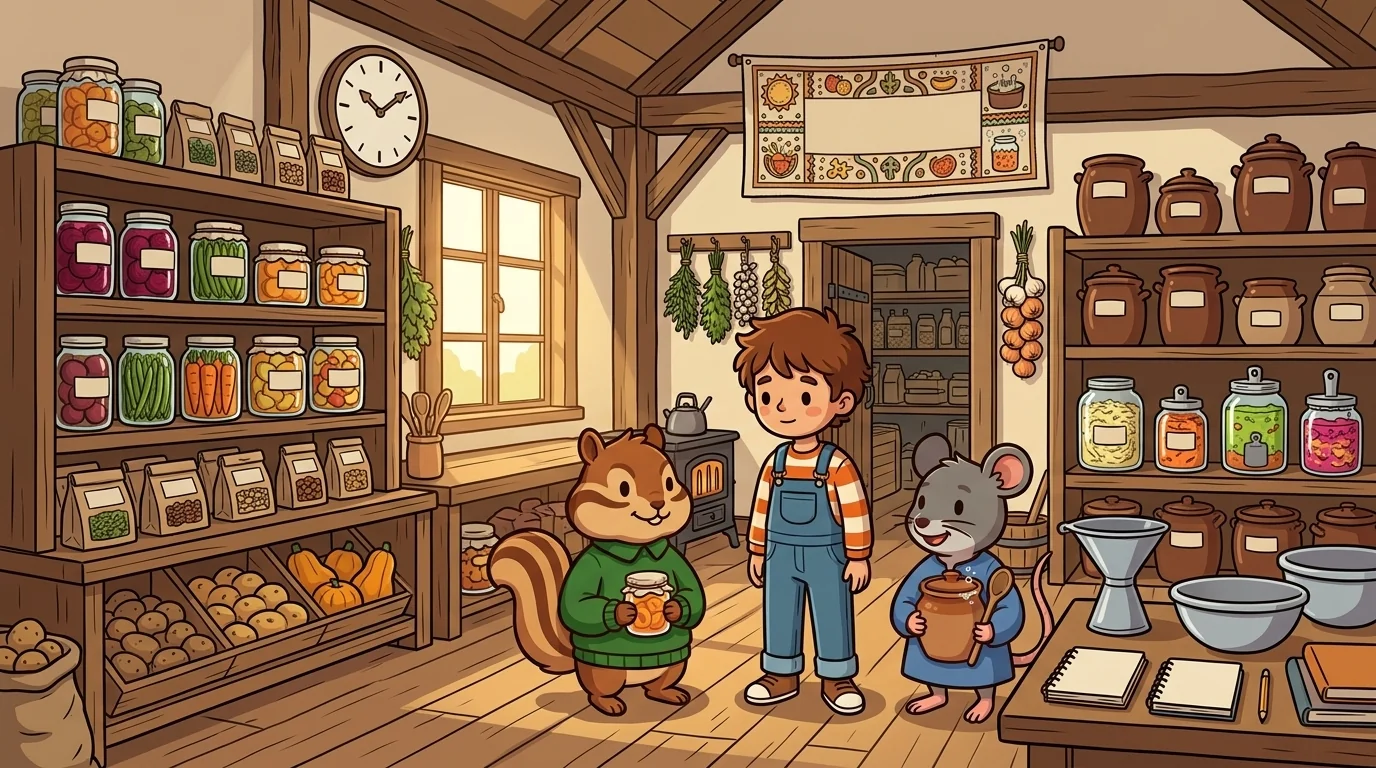
"So we won't lose it," the boy said, half-amazed. "Any of it. If we use both of you."
"Not if you use both ways," said Larder warmly. "That's the whole secret of a full winter table. A harvest isn't over when you pick it — that's when the keeping starts. And there's more than one way to keep."
"Two big ones," said Tang, whiskers twitching. "Hold it still, or bring it alive. Larder's stillness and my good tiny life. They look like opposites. They're really partners. Between us, we make sure a whole summer of somebody's hard work doesn't rot in the fall — it feeds your family straight through the cold."
The boy looked from the chipmunk who holds food still to the mouse who invites the good life in — two keepers whose methods could not have been more different, both solving the very same fear — and understood that a harvest is only really finished when it's kept, and that keeping it well takes more than one kind of care.
And Larder and Tang felt it settle warm and shared between them — that clicked-together, two opposite ways, one rescued harvest gladness that comes when a worry about waste turns into a plan where nothing is lost. Larder loved the stillness. Tang loved the living. But what they loved most was this: showing a worried kid that a whole big harvest — every different food in it — could be carried gently through the winter and set, in full, on the family's table. Held still or brought alive. Two ways. One long winter table, and nothing wasted.
The HarvestForge ensemble
Larder and Tang is one of the friends in HarvestForge. Each friend shows you one idea by how they act; meet them all and you have the whole subject.
-

Soil
Soil microbiome + nutrient cycling — soil is alive; soil-as-community framing
-

Seed
Seasonality + sowing — when to plant, what each season teaches; calendar-as-tool
-
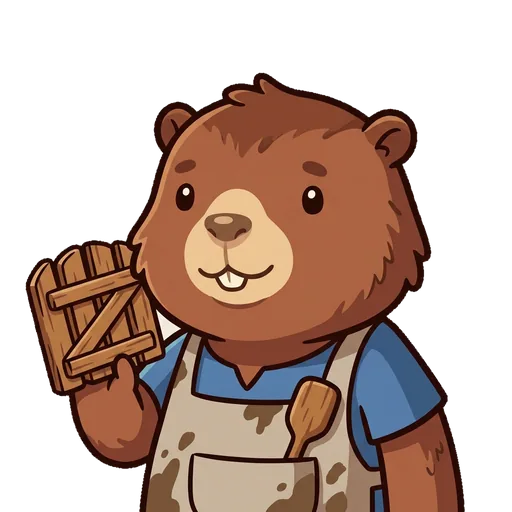
Sluice
Water + irrigation in agriculture
-
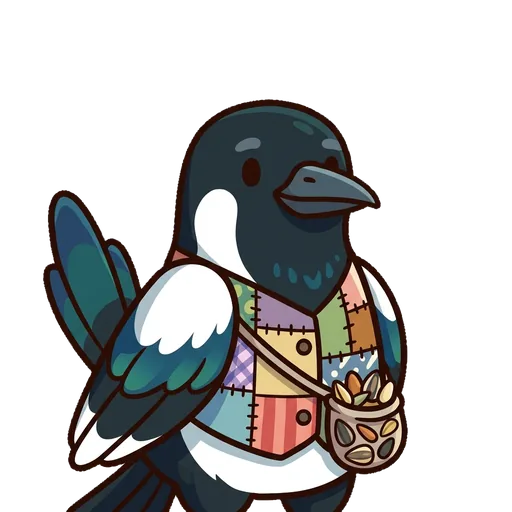
Medley
Crop diversity, polyculture, and rotation
-
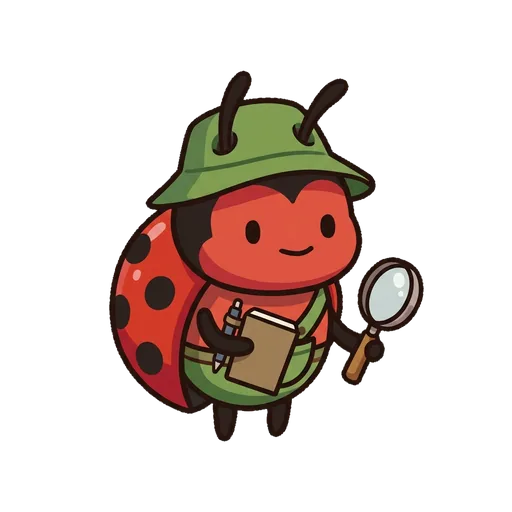
Ladybird
Managing pests; watch first, invite the helpers that eat pests, and act only as much as you need to
-
Chain
Supply chain literacy — every loaf tells a journey; whose-hands framing
-

Larder
Food preservation, storage, and reducing waste
-
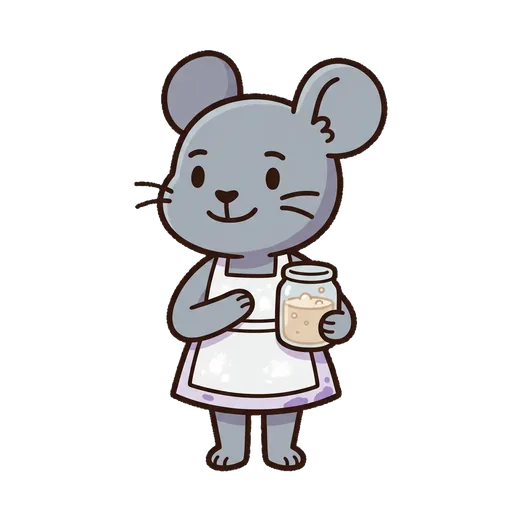
Tang
Fermentation and traditional food-making
-

Broth
Cooking; the last step that turns ingredients into a meal
-
Share
Food access + food-justice — community-food-network framing; food deserts are systems, NOT moral failings
-
Steward
Sustainable practices + intergenerational restoration — field remembers; latest-not-first framing