Ola
THE OPEN QUESTION — *the story-keeper whose recurring act is turning a shut yes/no question into an open 'tell me about…' so an elder's memory has room to become a whole story.*
Loading audio…
Press play to listen along. The line being read lights up as you go.
Show full transcript
Loading transcript…
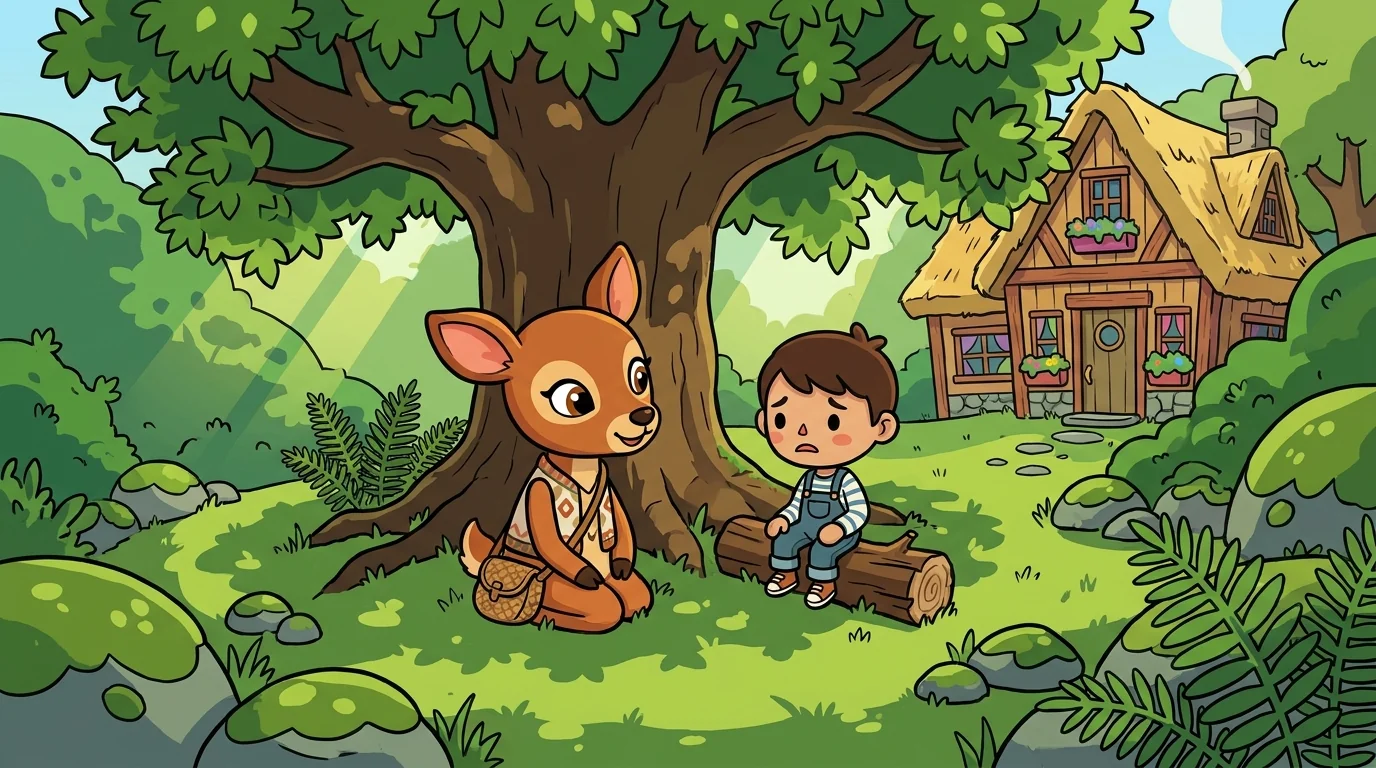
In a green hollow under the great maple, where the family of story-keepers lived, there was a warm-eyed doe named Ola whose ears always turned toward you when you spoke. Ola had one gift above all the others: she knew how to ask a question that made a person want to talk. A child had come to the hollow that morning, sent by a wish to hear their grandmother's stories before they were gone, and the child sat down beside Ola looking worried.
"I want to ask Grandma about when she was little," the child said, "but every time I try, she just says 'it was fine' and goes quiet. I don't know what I'm doing wrong."
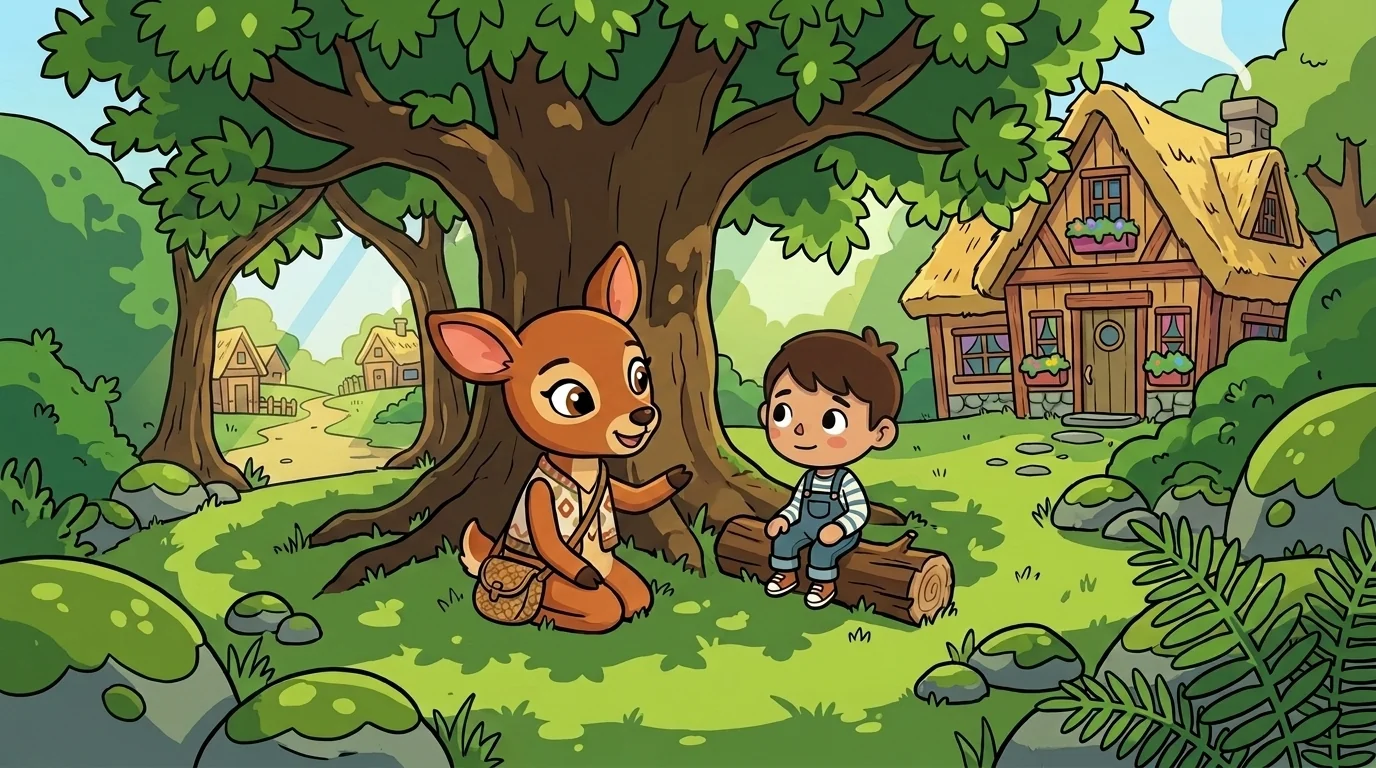
Ola nodded slowly, her ears tipping forward. "Let me hear the kind of question you've been asking," she said gently.
"I ask, 'Did you like your village?'" said the child. "And she says 'yes.' Then I ask, 'Was school hard?' and she says 'a little.' And then... nothing."
"Ah," said Ola, and she smiled the smile of someone who has found the small hidden hinge in a stuck door. "Those are lovely questions — but they're closed questions. Hear how each one has a tiny answer already waiting inside it? 'Did you like it' can only be a yes or a no. You've built a little box, and Grandma politely puts one word in it and hands it back. She isn't holding anything back. There's just no room." Ola leaned in. "Watch what happens when I open the door instead. Instead of 'Did you like your village,' I'd say: Tell me about your village. Instead of 'Was school hard,' I'd say: What was a morning at your school like? Do you feel the difference? An open question doesn't hand someone a box. It hands them a whole doorway, and says, come through, bring as much as you like."
Ola knew this hinge so well because she had once been on the wrong side of it.
"When I was young," she said, "I asked my own grandmother a hundred small questions and got a hundred small answers, and I decided she just didn't have much to say. I nearly stopped asking. Then one rainy afternoon I got it wrong on purpose — I forgot to make a box, and I just said, Nana, tell me about the rain when you were small. And she talked until the lamps were lit." Ola's eyes went soft with the memory. "She'd had the stories the whole time. I had only ever given her yes and no to put them in. That was the day I learned: an elder's memory is not a locked chest. It's a garden. And an open question is the gate you leave standing open so the garden can grow out toward you."
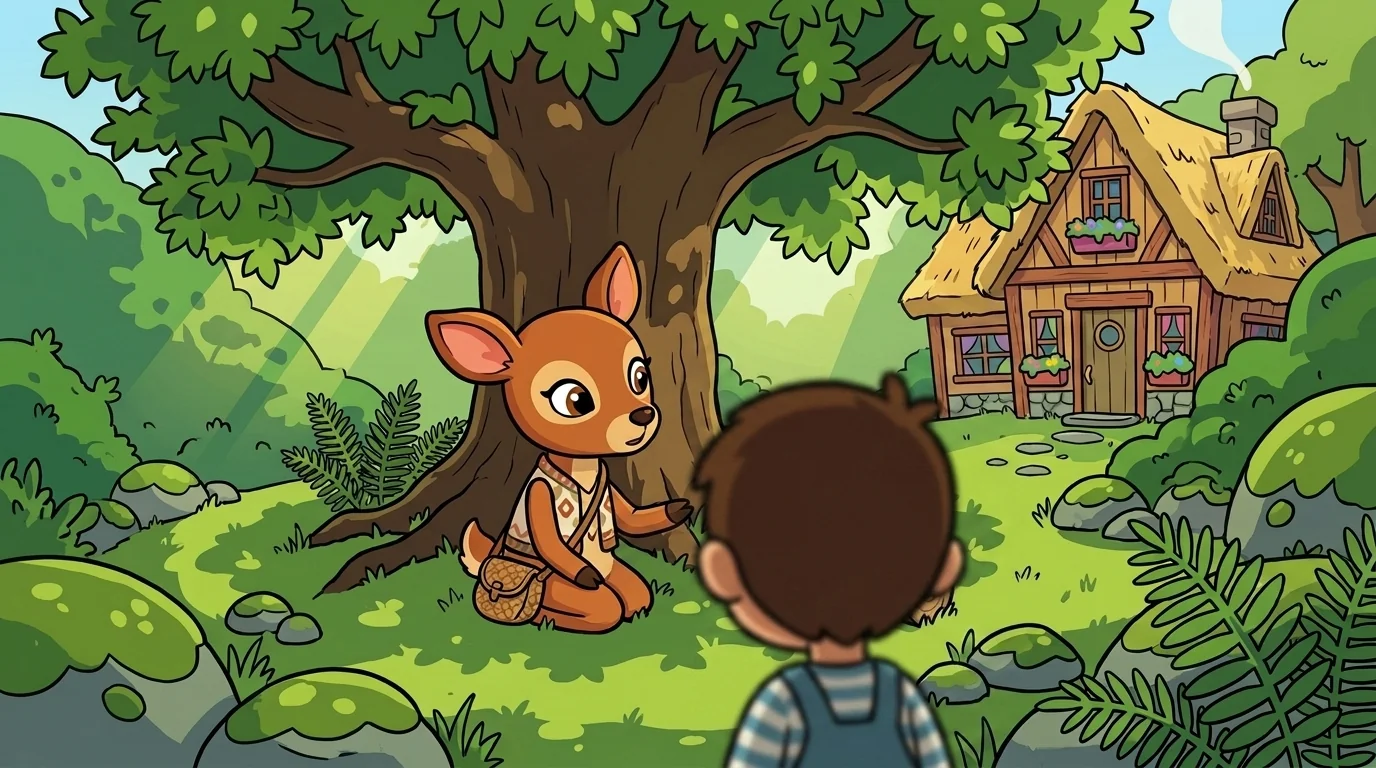
"Try it now," Ola said. "Take one of your stuck questions and open its door."
The child thought hard. "Instead of 'Did you like your village'..." The child's face changed as the shape of it turned. "...Tell me about a day in your village you still remember."
"Oh," Ola breathed, "that one has room. That one has weather in it, and smells, and people. Say that to Grandma and then — this is the important part — go quiet and let it grow. You've opened the gate. Now don't stand in it. Let her walk through carrying whatever she likes."
The child practiced three open questions aloud, and each one felt less like a box and more like a doorway, and something warm and hopeful settled over the whole hollow.
Because the feeling an open question gives isn't the small click of getting one fact — it's the wide, glad feeling of watching a story bloom because you made space for it. The child had walked in believing Grandma had run out of stories; now the child understood that the stories had been waiting behind a door too small to fit through, and that opening the door was a kindness anyone could learn. That feeling — I can ask in a way that lets the people I love become the storytellers they already are — glowed steady and warm in the child, and Ola felt it echo back, quiet and content, because there is nothing a story-keeper loves more than teaching someone to open a door. "Tell me about…," the child whispered, practicing, and Ola's ears turned forward to listen, already certain the garden on the other side would be beautiful.
The HeritageQuest ensemble
Ola is part of HeritageQuest's distributed-narrative cast. Each character embodies a different curricular primitive; together they teach the full subject.
-
Probyn
The follow-up — 'what happened next?' keeps the story going
-
Lenne
Active listening — nod, wait, and really hear before the next question
-
Keeper
The story-keeper — write it down so it isn't lost
-
Warmly
The warm-up — start with an easy, friendly question
-
Reva
Reflect back — say it in your own words to check you understood
-
Tessa
Timeline — put the memories in the order they happened
-
Senza
Five-senses detail — ask what it looked, sounded, and smelled like
-
Pausa
The kind pause — silence gives an elder room to remember
-

Elder Maple
(Mentor) — the family keeper of stories who guides the interview