Senza
THE FIVE-SENSES QUESTION — *the story-keeper whose recurring act is asking for the sights, sounds, and smells of a memory — 'what did it look/sound/smell like?' — so a flat fact becomes a scene the listener can almost stand inside.*
Loading audio…
Press play to listen along. The line being read lights up as you go.
Show full transcript
Loading transcript…
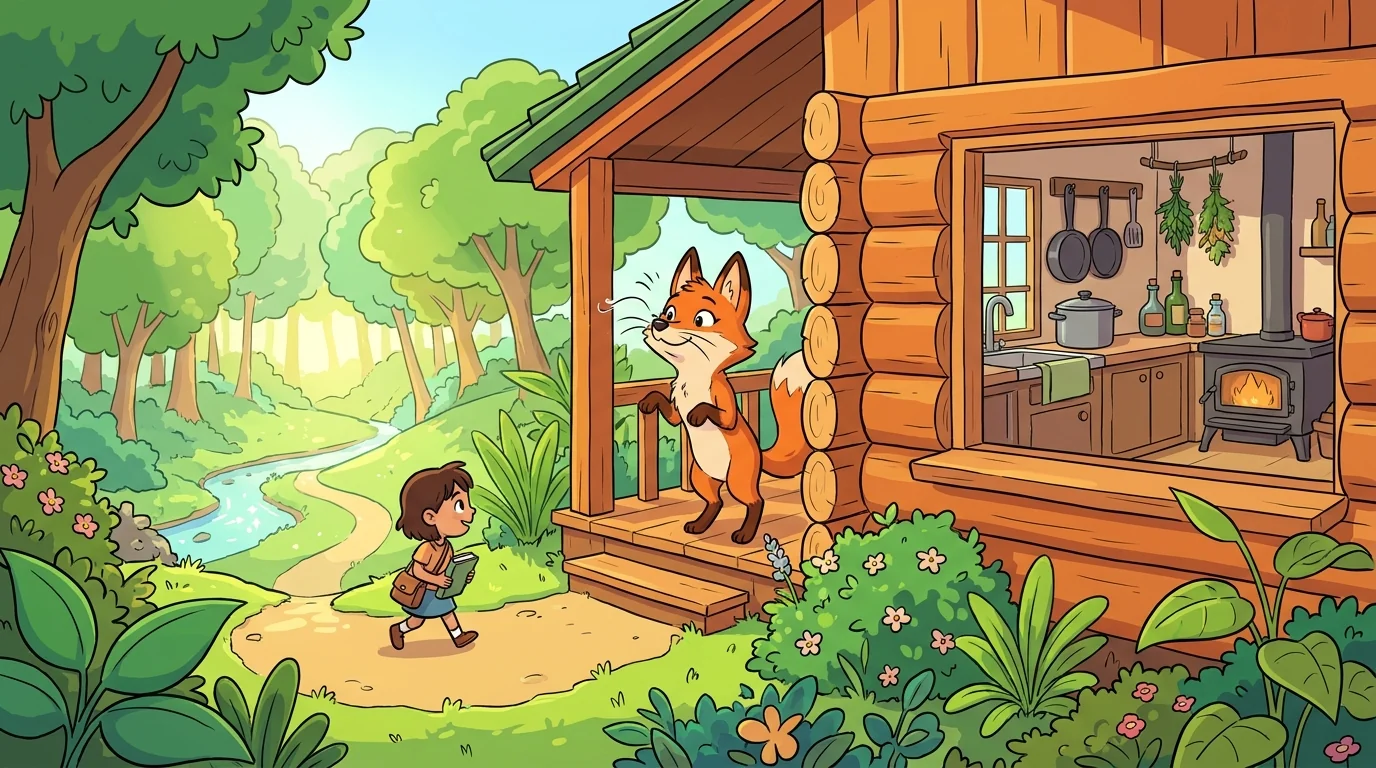
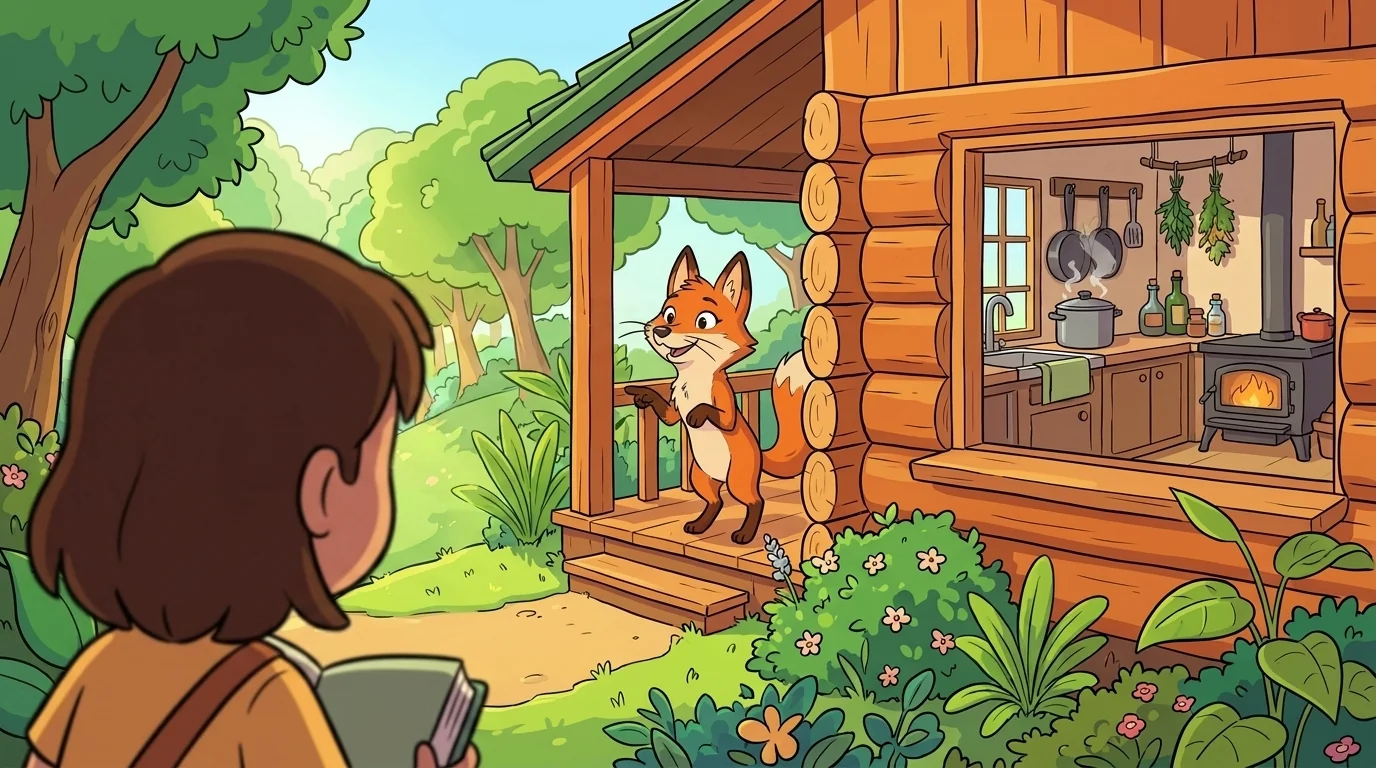
At the bright edge of the hollow lived a keen-nosed fox named Senza, whose whiskers twitched at every scent on the breeze and who noticed the small things nobody else did — the exact colour of the light, the sound under the sound. She believed a memory was never really told until you could smell it. The child came to her with a book of stories that felt, somehow, a little flat.
"I've got so many of my grandmother's stories now, all in order," the child said, "but when I read them back they feel kind of... thin. Like a list of things that happened. She told me she used to help her mother cook on holidays — and that's all I wrote: 'helped her mother cook on holidays.' It's true, but it doesn't feel like anything."
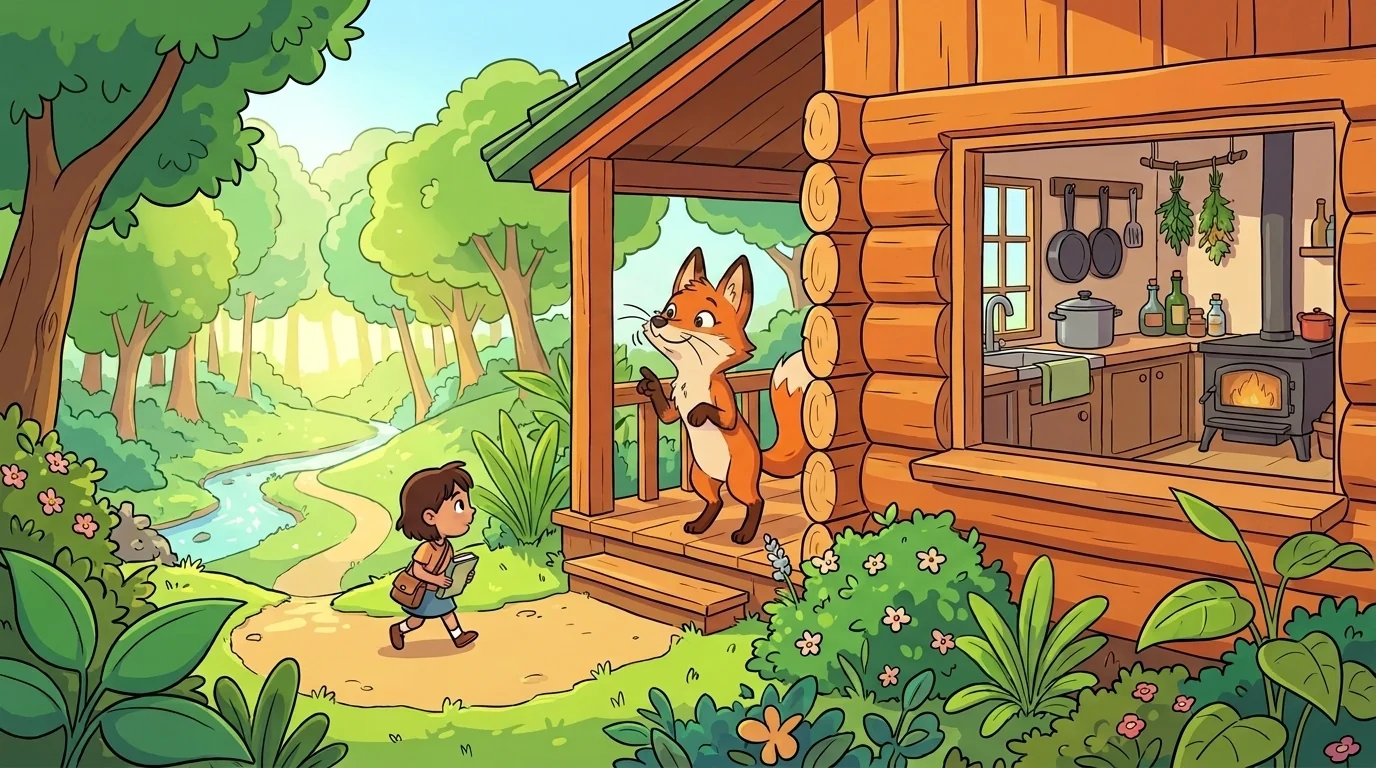
Senza's nose twitched. "Ah," she said, "you caught the fact but you let the scene get away. 'Helped her mother cook' is a true, dry little bone. But somewhere inside your grandmother, that memory has a smell — and a sound, and a colour, and a warmth on the skin. Your job is to ask for those." She leaned in, eyes bright. "Next time, when she says something like that, you follow it with a senses question. What did the kitchen smell like? What could you hear while you cooked — was there singing, or the radio, or just the pot? What did your mother's hands look like as she worked? Was it hot in there? What did you taste when it was finally done?" Senza's whiskers quivered with delight. "Watch what happens. She won't just remember the fact — she'll be back there. And so will you. 'Helped her mother cook' becomes cardamom and woodsmoke and her mother humming and the sweat on her own small forehead. Now it's not a bone. It's a whole warm room you can step into."
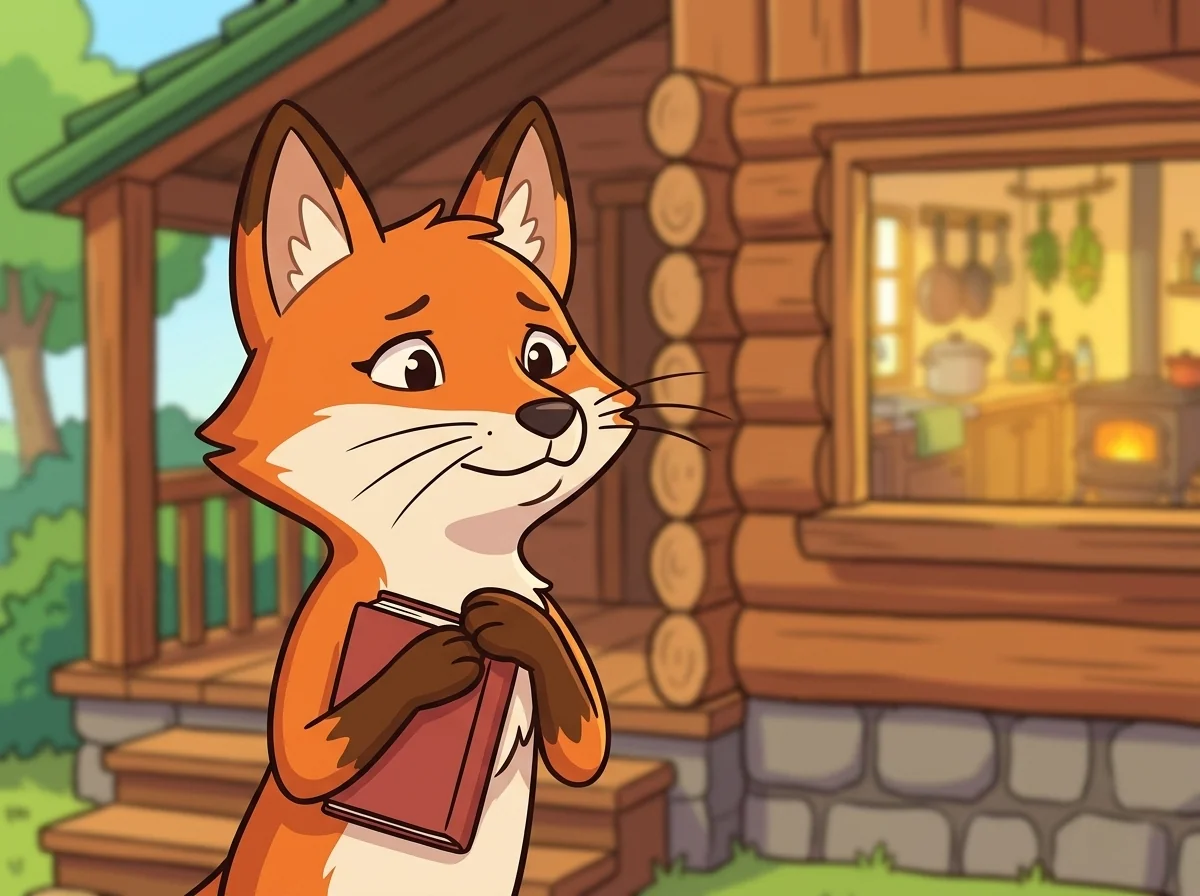
"I learned to ask this because I once nearly lost a smell forever," Senza said, more quietly. "My grandfather used to bake bread, and when he died all I had written was 'Grandpa baked bread.' I could not, no matter how I tried, remember the smell of it — and I hadn't asked, and now there was no one left to ask. A fact I could keep. But the smell, the thing that would have brought him back to me in an instant — that I had let slip." Her bright eyes were soft. "So now I always, always ask for the senses while I still can. Because facts are the skeleton of a memory. The senses are its warmth — and warmth is the thing you'll miss most, and the hardest thing to get back once it's gone."
"So after every story," the child said, "I ask what it was like to be there."
"Exactly," said Senza. "Pick one sense at a time so you don't overwhelm her. What did it smell like? Let her find it. Then, what could you hear? An elder's face changes when you ask this — you can watch the memory light up from the inside. And write down the answers in her own words: the cardamom, the humming, the heat. Those tiny sensory details are the difference between a story your grandchildren will read and a story your grandchildren will feel."
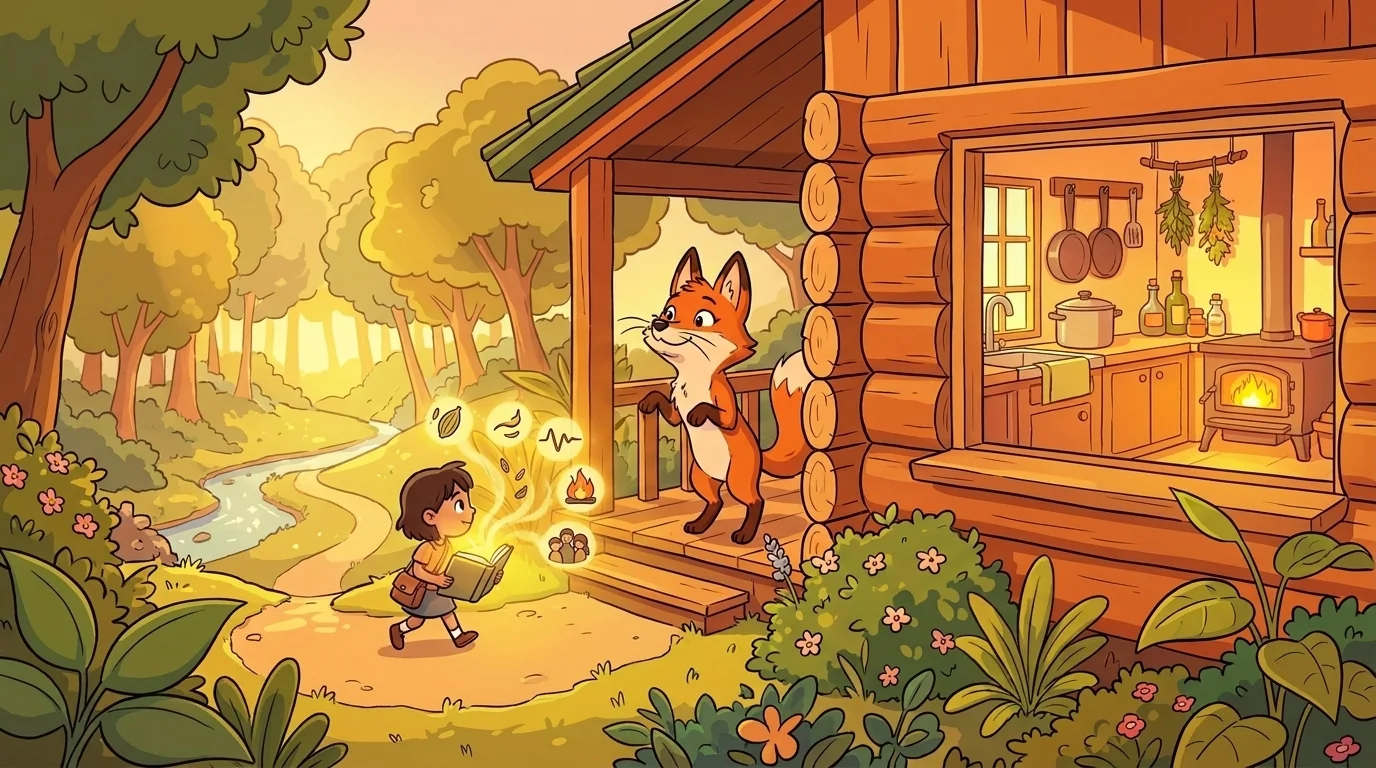
The child went back through the flat little stories, imagining the senses hidden inside each one, and as the kitchen filled with imagined cardamom and humming a rich, vivid warmth bloomed all through the hollow.
Because the feeling a senses question gives isn't the neatness of a fuller page — it's the astonishing, transporting joy of making a memory so alive you can almost stand inside it, of bringing a vanished kitchen back into the room. The child had feared the stories were thin; now the child understood that under every dry fact waits a whole living scene, and that asking for its sights and sounds and smells is how you keep not just what happened, but what it felt like to be there. That feeling — I can make a memory come fully back to life, warm enough to step into — settled bright and glowing in the child, and Senza lifted her nose to the breeze, content, certain that somewhere a grandmother was about to be asked what her mother's kitchen smelled like, and was about to go, for a moment, all the way home. "What did it look, and sound, and smell like," the child whispered, and Senza's whiskers curved into a smile.
The HeritageQuest ensemble
Senza is part of HeritageQuest's distributed-narrative cast. Each character embodies a different curricular primitive; together they teach the full subject.
-

Ola
Open questions — ask 'tell me about…' so the story can grow
-

Probyn
The follow-up — 'what happened next?' keeps the story going
-
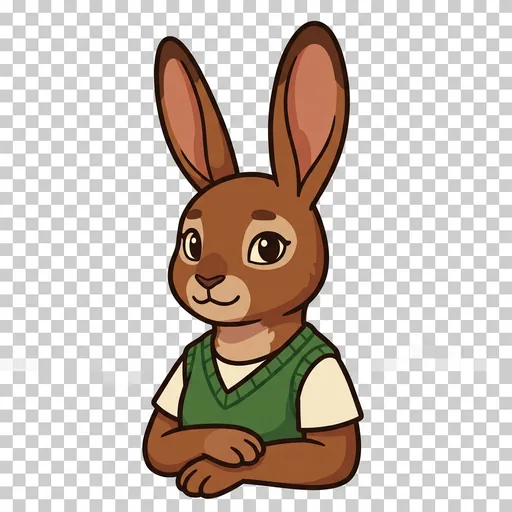
Lenne
Active listening — nod, wait, and really hear before the next question
-

Keeper
The story-keeper — write it down so it isn't lost
-

Warmly
The warm-up — start with an easy, friendly question
-

Reva
Reflect back — say it in your own words to check you understood
-

Tessa
Timeline — put the memories in the order they happened
-
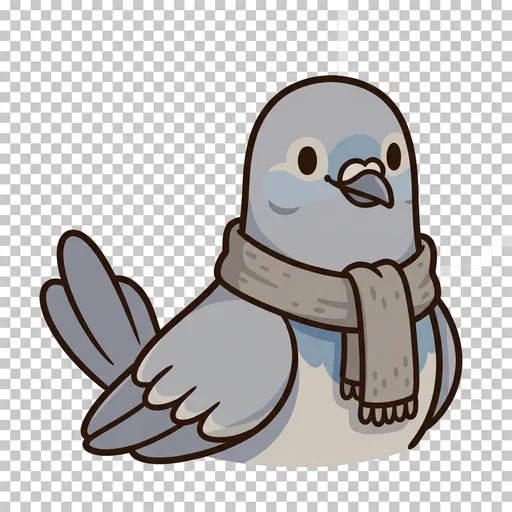
Pausa
The kind pause — silence gives an elder room to remember
-

Elder Maple
(Mentor) — the family keeper of stories who guides the interview