
Mason
ENOUGH, NOT MORE — *ask for exactly what your next build needs; two good things, well matched, become one strong corner.*
Loading audio…
Press play to listen along. The line being read lights up as you go.
Show full transcript
Loading transcript…
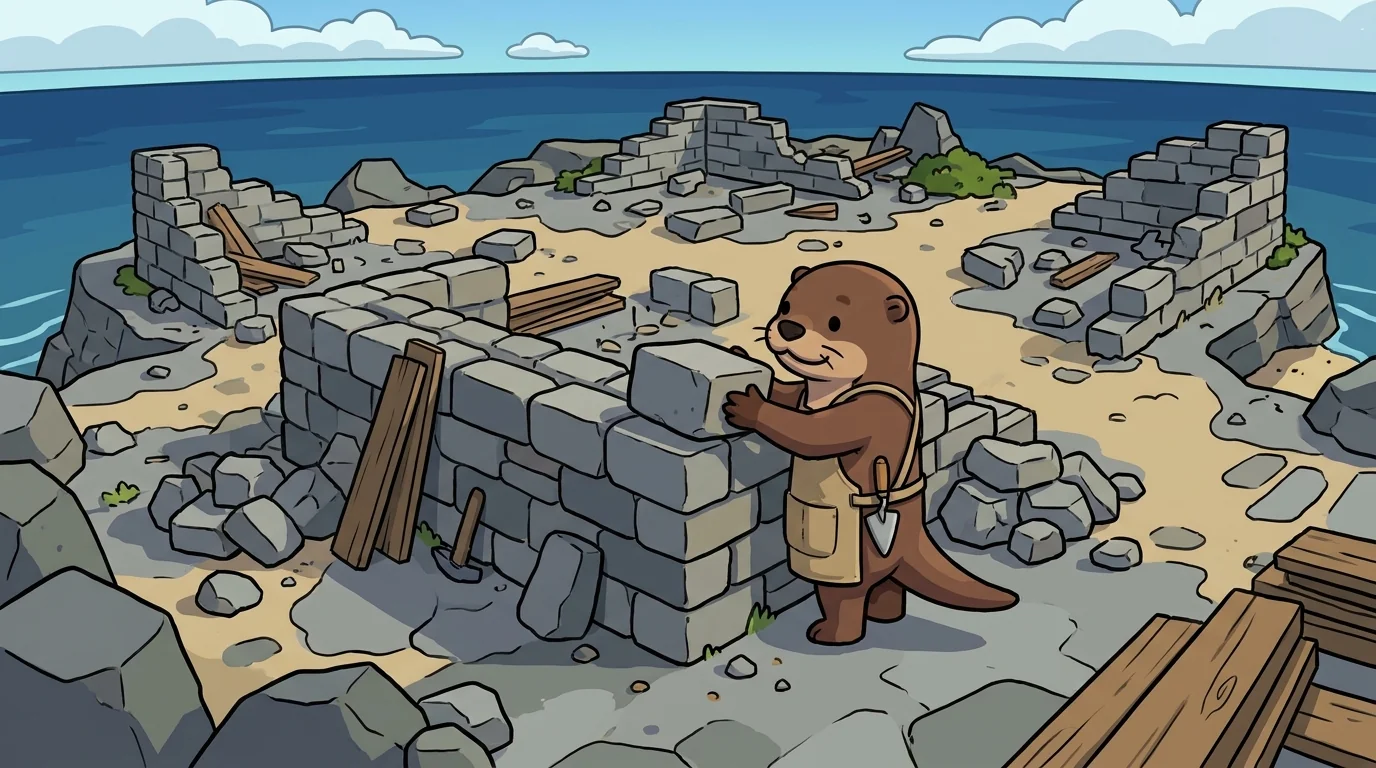
On the workshop side of Gullwick, where the shore turns to grey stone, there is an otter named Mason. He wears a clean canvas apron the colour of wet sand, and a trowel rides at his belt like a friend that has been everywhere with him. When the storm scattered the island, a lot of walls came down. Mason did not rush to raise them all at once. He picked one corner — the one the whole hall would lean on — and he built that one to last.
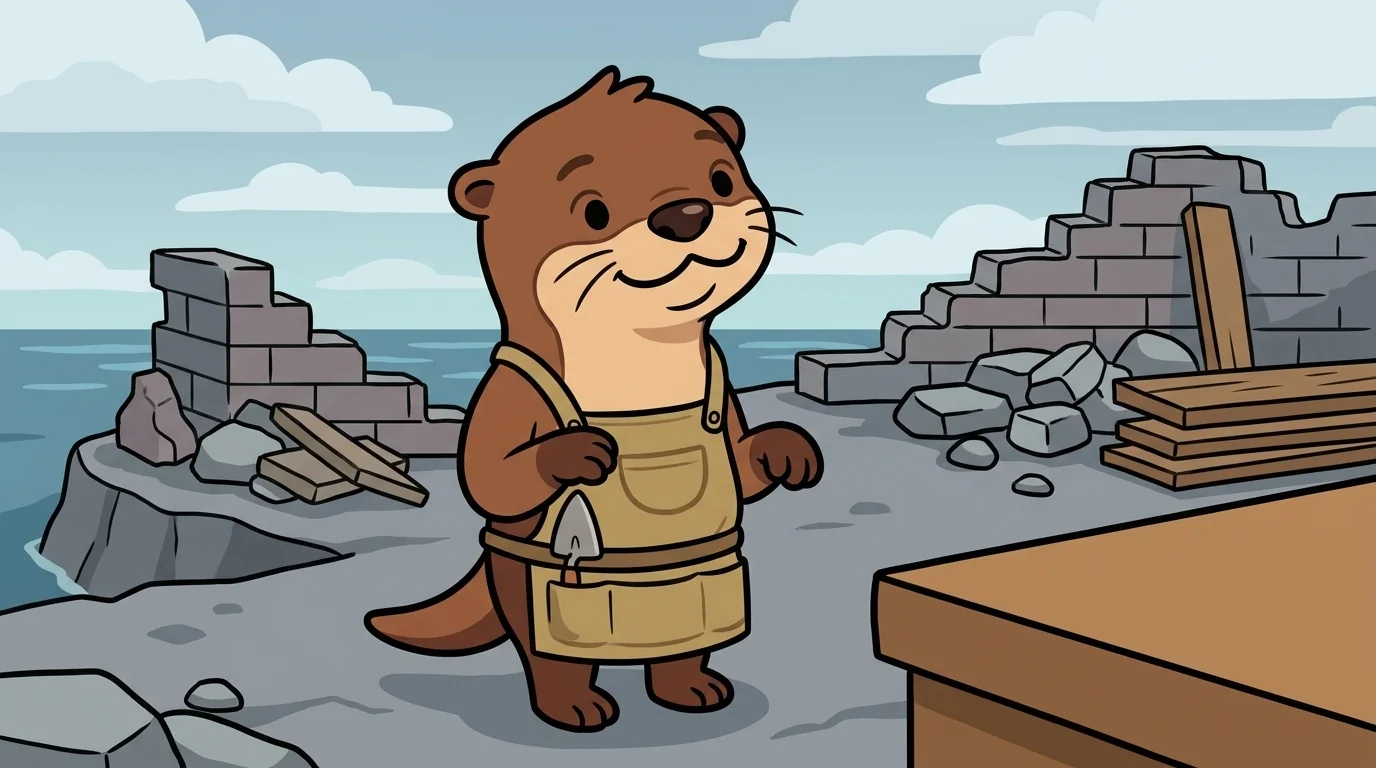
Here is the thing about Mason, the thing the other traders count on: he asks for exactly what his next build needs. Not a heap of spare stone "just in case." Not a whole cove of timber piled up where it would only sit and grow damp. When a hall needs two good things — say, a load of stone and a beam of timber — Mason asks for those two, matches them well, and turns them into one strong urban corner. Two goods become one thing that holds.
You would think a builder would want more. More stone, more spare, more everything. But Mason has learned something the storm taught him. The islanders who hoarded spare goods spent all their time guarding piles that never became anything. Mason would rather have a little and build than have a lot and worry. So when he stands at the trade counter and someone asks, "How much do you need, Mason?" he tips his head, pictures the corner in his mind, and says the true number. "Two of stone. One of timber. That does it."

The first time young Piper watched him do this, she was sure he had made a mistake. "You could ask for four," she whispered. "They'd give you four."
"I could," said Mason, setting the first stone. "But then I'd carry four, and store four, and fret over four — and I only need three to build the corner. Watch." And he matched the stone to the timber, and pressed them true, and the corner came up square and solid on the first try. He rested a paw on it and pushed. It did not budge. A quiet, grounded gladness spread across his face — the good, settled feeling of a thing built right the first time, from exactly enough.
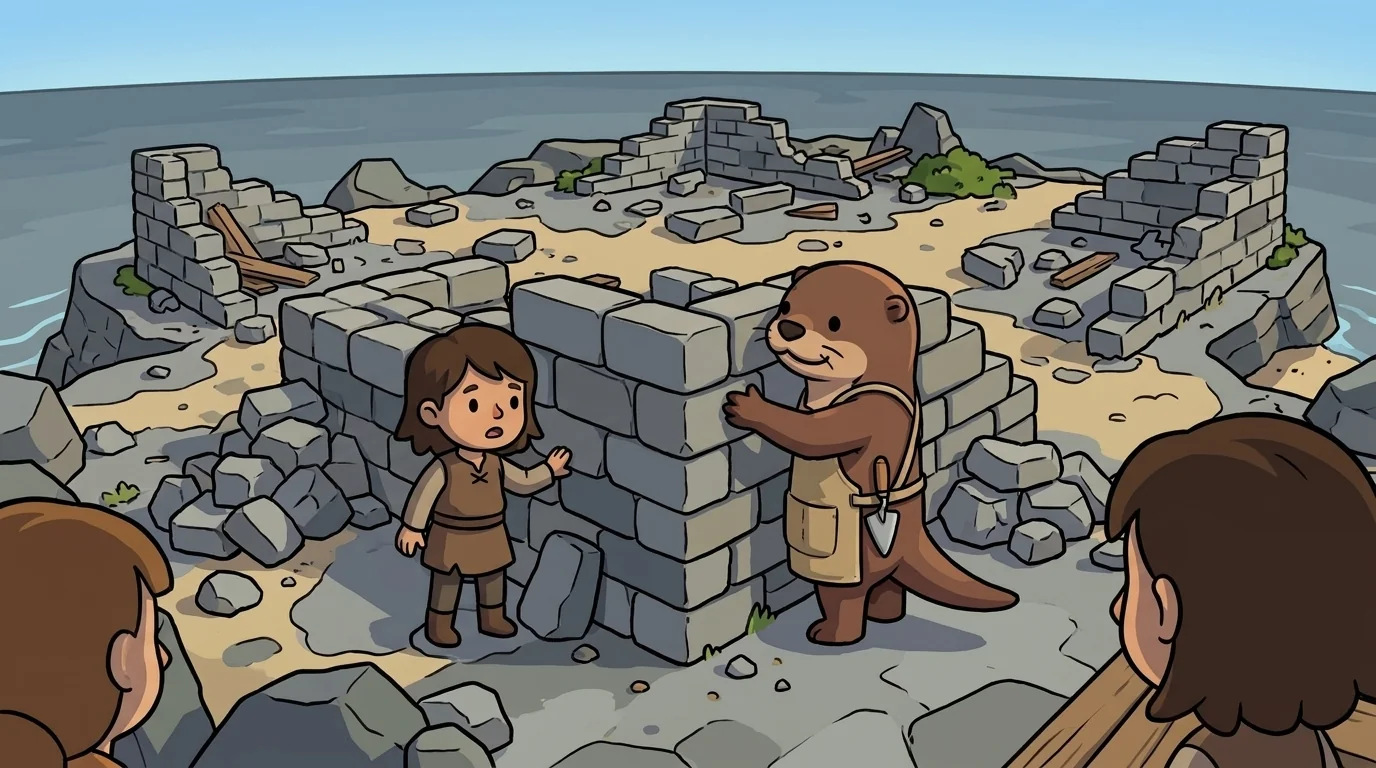
Piper pushed the corner too. Solid. "It held," she said, surprised.
"It held because it was matched," said Mason. "Not because it was big. A pile isn't strength. A pile is just a pile. Strength is two good things put together on purpose."
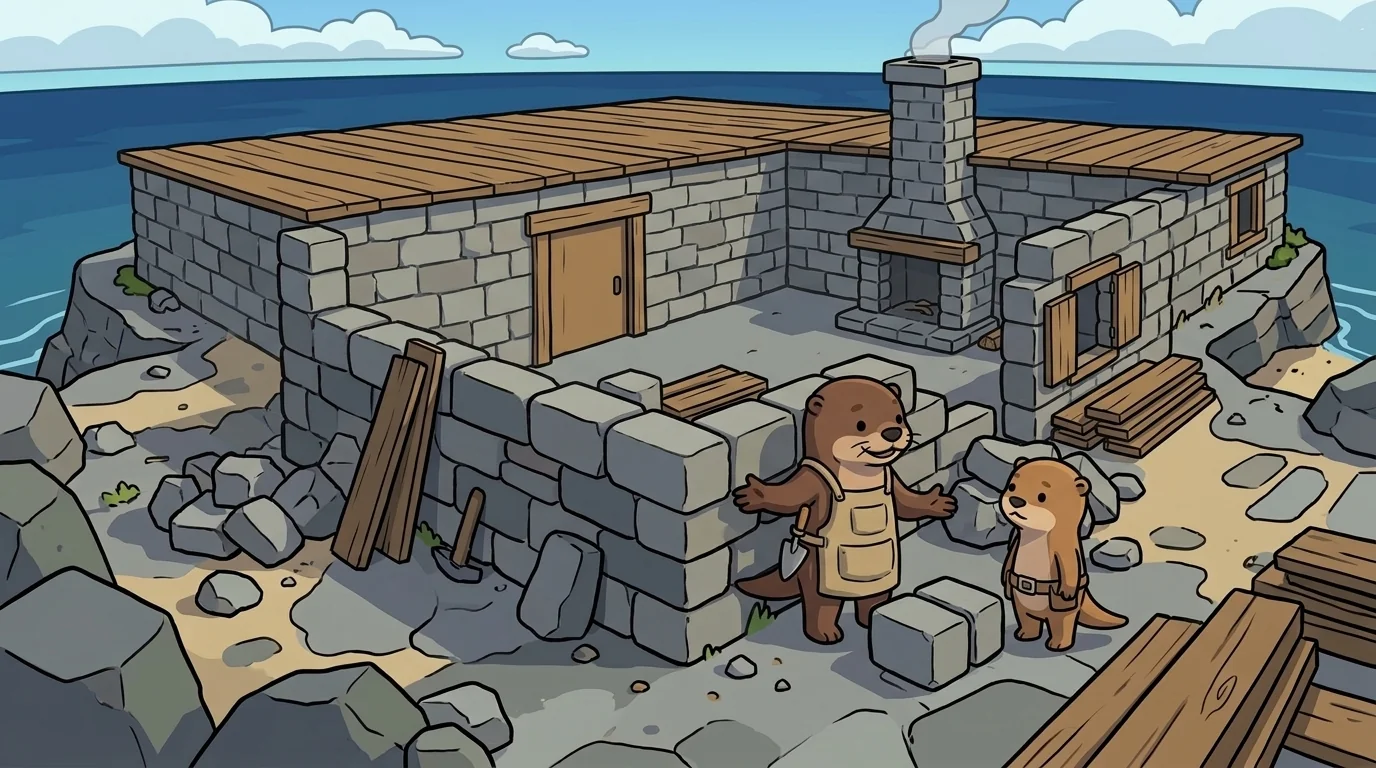
That became the way the islanders rebuilt the hall — corner by corner, each one asked for plainly, each one built from just enough. And on the day the roof went on and the whole hall stood, nobody could point to the corner that was doing the most work, because they were all doing their share. That is what Mason wanted all along.
So if you ever find yourself at your own trade counter — deciding what to ask for, what to gather, what to take — do what Mason does. Look at the very next thing you are building. Ask for exactly what that needs. Match your good things well. And feel how much lighter it is to carry enough than to carry too much.
Ask for exactly what your next build needs — no more, no less — and two good things become one strong corner. That's Mason.
The isleforge ensemble
Mason is part of isleforge's distributed-narrative cast. Each character embodies a different curricular primitive; together they teach the full subject.