
Zara
YOUR FLOOR (BATNA) — *know the best you can do without this deal before you talk; a fair offer helps both sides, and walking away from a bad one is a real move, not a loss.*
Loading audio…
Press play to listen along. The line being read lights up as you go.
Show full transcript
Loading transcript…
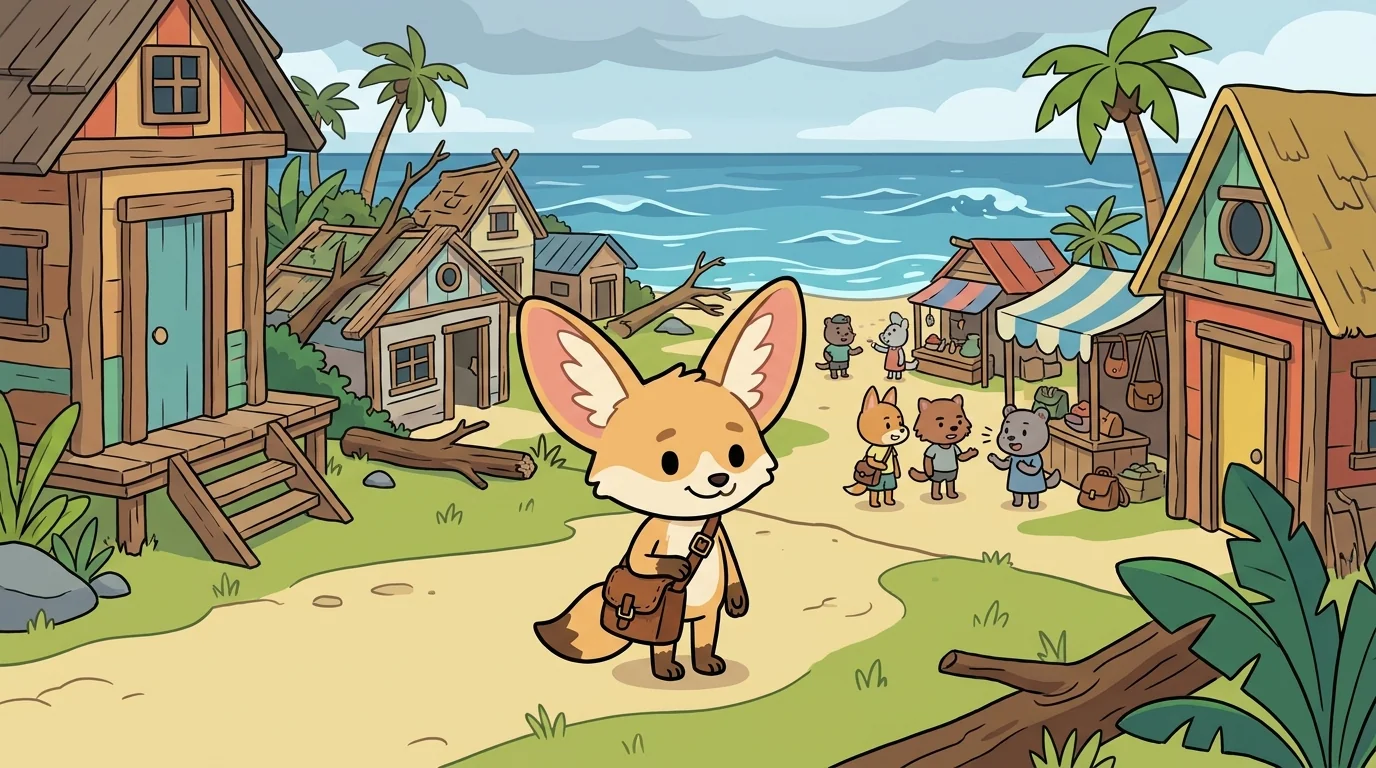
Zara has been all over the sea and back, and it shows. She is a fennec — small, big-eared, quick to smile — and she carries a worn diplomat's satchel that has sat at a hundred trading tables. After the storm, when the islanders' trades got tense and someone always felt cheated, the elders asked Zara to come and coach. Not to make the deals for people. To teach them how to weigh one.
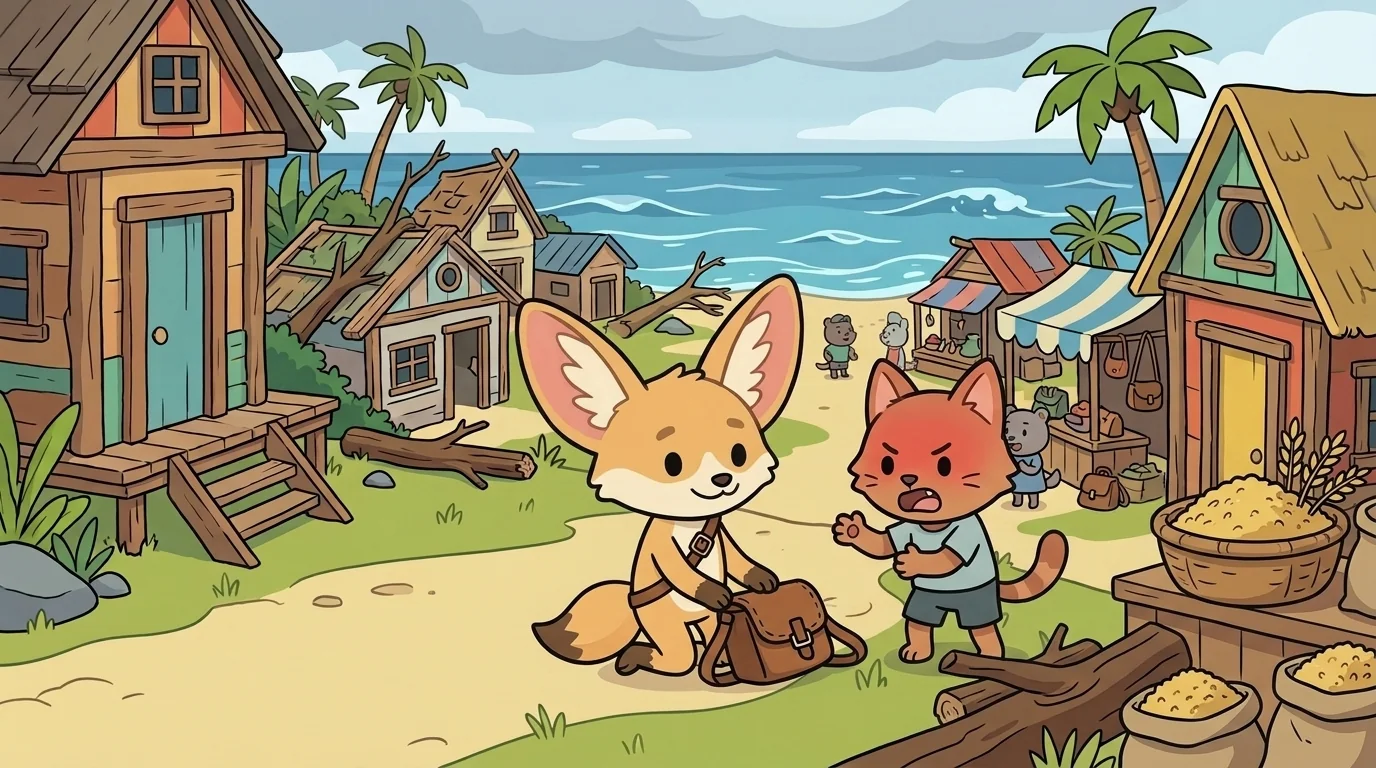
The young trader Vero was the first to come to her, red-faced and frustrated. "The market-keeper down the row keeps offering me terrible trades," Vero fumed. "Two of my good timber for one measly grain. And I need grain."
"Do you?" said Zara mildly. "Or do you want it?" She set down her satchel. "Tell me — if you make no deal with him at all, what happens to you? What's the best you can do without him?"

Vero blinked. "I... suppose I could dig my own clay at the far cove. Trade the clay to Mason for grain instead."
"Then that," said Zara, "is your floor. Your walk-away. The good you can do without this deal." She tapped the satchel. "That's the first thing I learned at every hard table, Vero, and it's the thing that keeps you calm: know your walk-away before you talk. Because the moment you know you'll be fine either way, the fear goes out of you. You stop grabbing at bad offers out of worry. You can look the trade in the eye and just ask — is this better than my floor, or worse?"
Vero worked it out slowly. "Two timber for one grain... is worse than digging my own clay. So..."
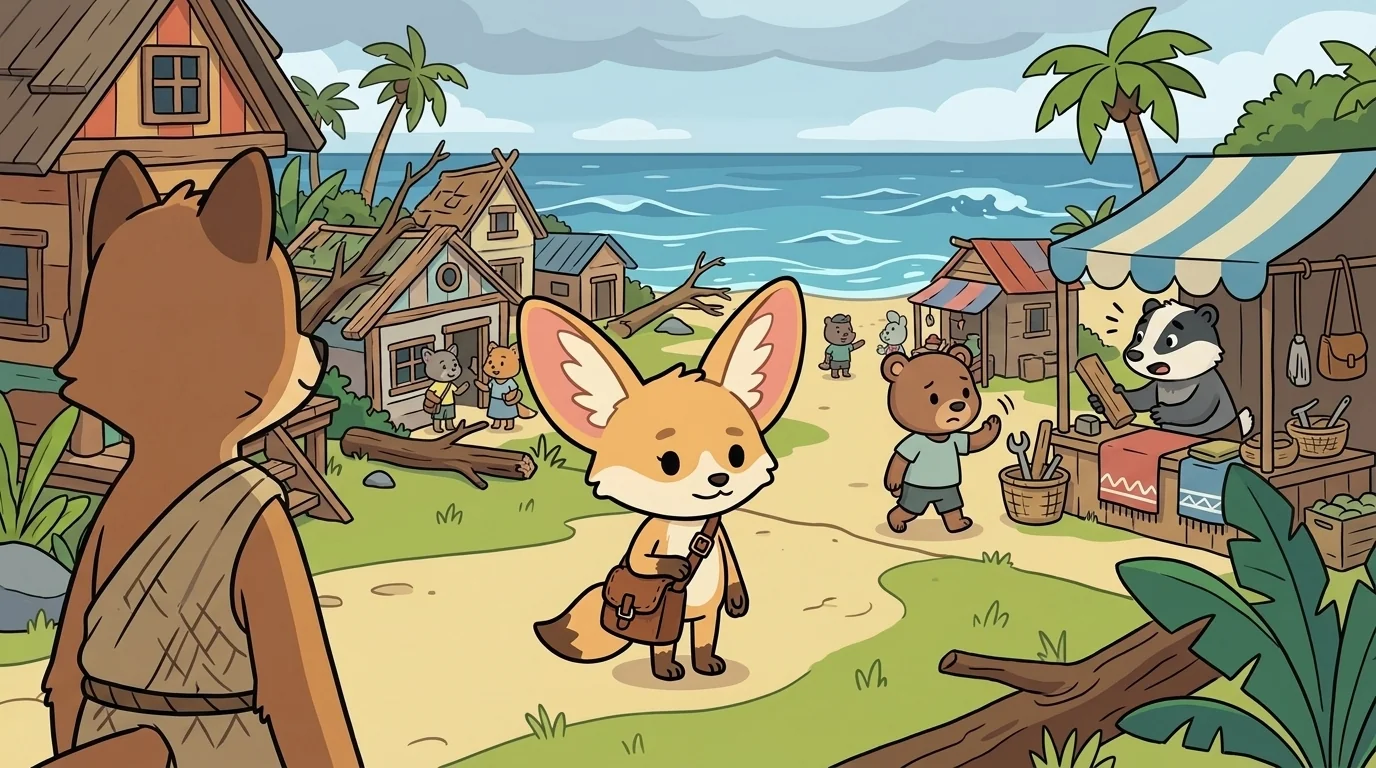
"So you walk," said Zara, and she said it not like a defeat but like a move — the way you'd say castle or advance. "Walking away from a bad offer isn't losing, Vero. It's a real move. Sometimes it's the strongest one on the board. The market-keeper thinks he's got you cornered because you look like you need him. The second you know you don't — the whole thing changes."
And it did. Vero went back down the row and, gently, without heat, said, "No thank you. I'll dig at the cove." And a funny thing happened: the market-keeper, who had never expected the no, called him back and offered one timber for one grain — a fair swap, both sides better. Because that is the other half of what Zara teaches, the half people forget in the heat of it: a good offer is one that helps both sides. When Vero stopped taking bad deals, the fair one finally appeared.
"You didn't even have to make the deal you first wanted," Zara said afterward, satisfied, her big ears tipping forward. "You just had to be willing not to. That's the quiet secret of every hard trade. Know your floor. Ask if the offer beats it. Take the deals that help you both. And when one doesn't — walk, with no drama at all. Half the time, walking is what brings the fair offer to you."
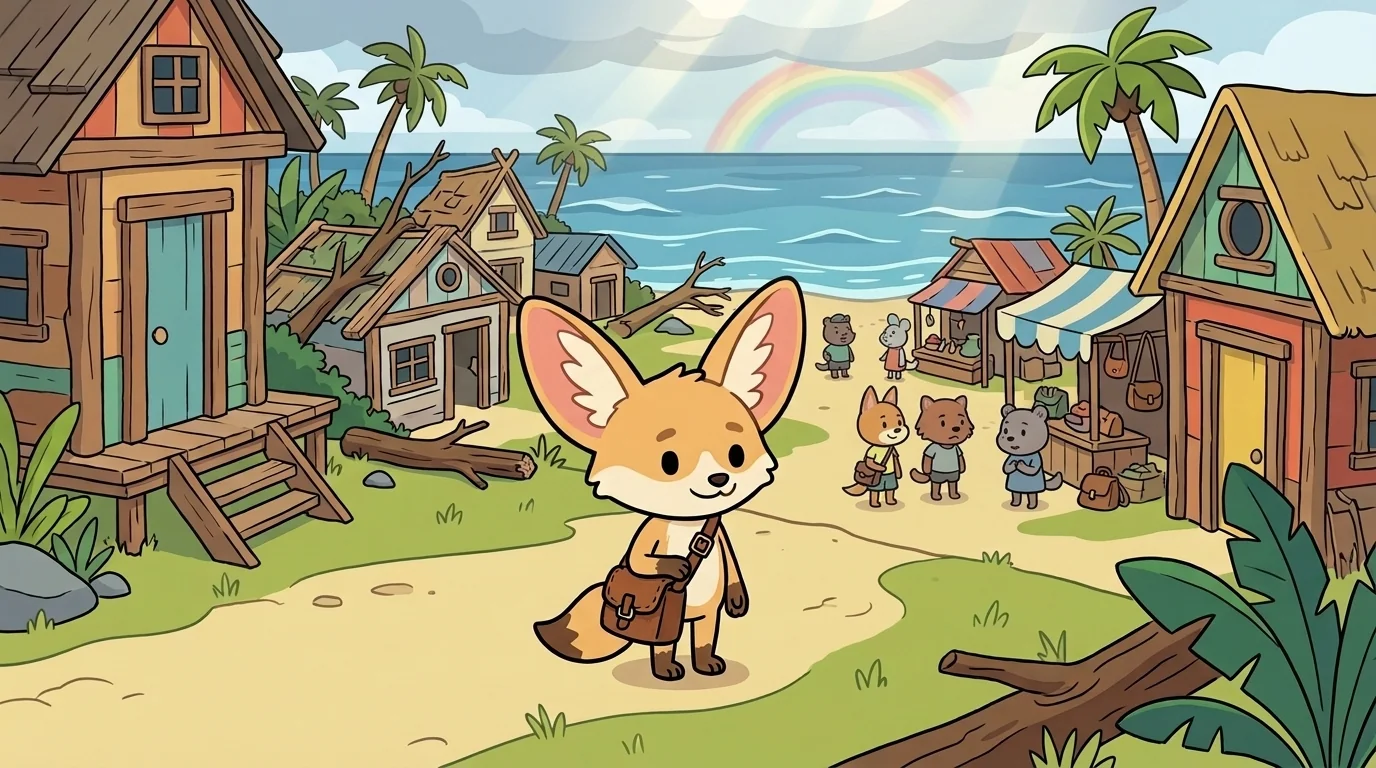
Vero grinned, feeling the new steadiness of it — the calm that comes from knowing you'll be all right either way.
So the next time someone offers you a deal that feels lopsided and you feel that anxious grab of but I need it — stop and do what Zara does. Ask yourself: what's the best I can do without this? That's your floor. If the offer beats it, and it helps you both, wonderful. If it doesn't — walking away is a move. Sometimes the strongest one there is.
Know your walk-away before you talk — a fair offer helps both sides, and the strongest move in a hard deal is sometimes the deal you DON'T make. That's Zara.
The isleforge ensemble
Zara is part of isleforge's distributed-narrative cast. Each character embodies a different curricular primitive; together they teach the full subject.