Barter and Boon
BARTER & BOON — *stories are built on exchange, and there are two kinds. the thing you GRASP for comes at a price that comes due (Barter). the kindness you GIVE freely returns to save you (Boon). the grasping exchange costs; the generous exchange repays. a tale weighs which one a hero chooses.*
Loading audio…
Press play to listen along. The line being read lights up as you go.
Show full transcript
Loading transcript…
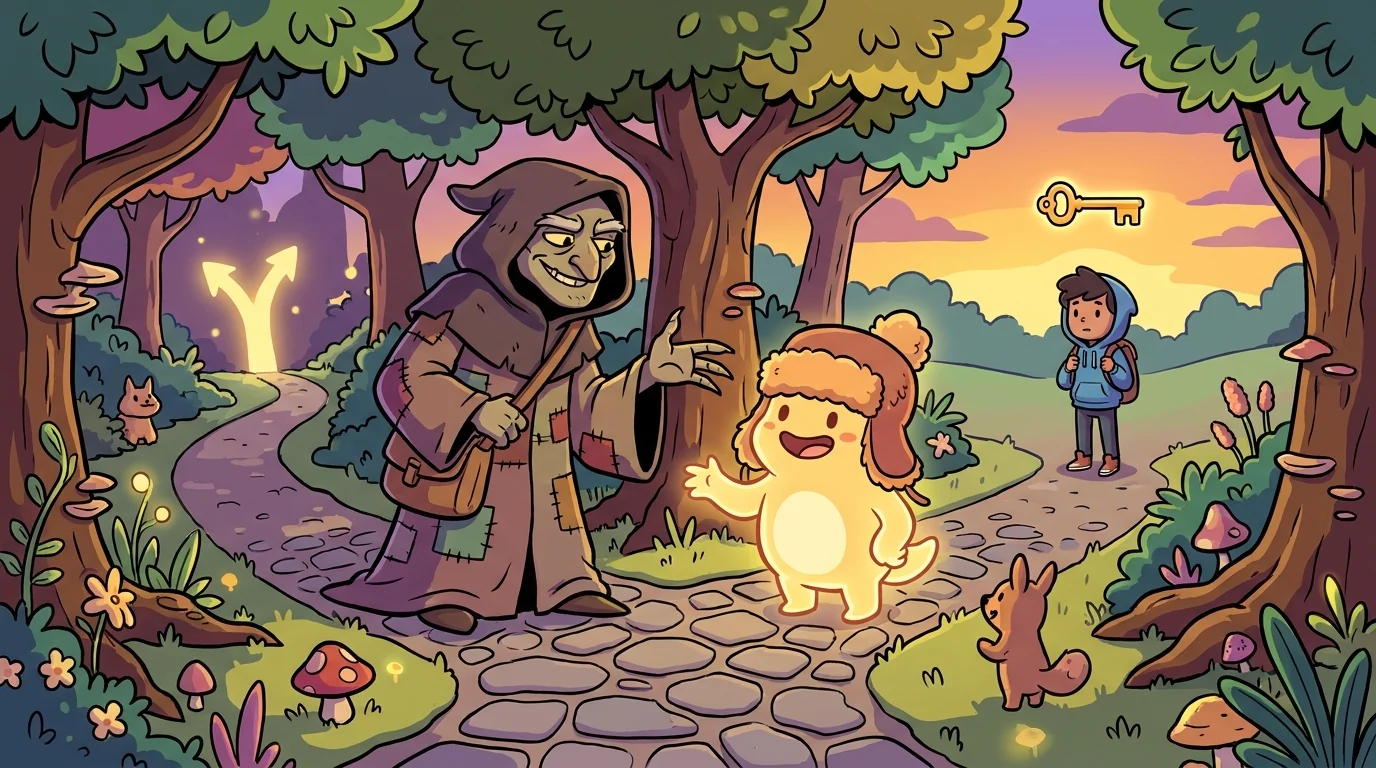
A student came to LoreQuest turning a hard question over and over. "In my story," she said, "my hero needs a magic key. And I've got two ideas for how she gets it, and I can't tell which is right. Either she strikes a bargain with a strange creature to get the key fast — or she does a bunch of small kindnesses along the way and one of them just... gives her the key at the end. Both work. But they feel completely different, and I don't understand why."
Barter the crossroads-dealer and Boon the small warm helper looked at each other — the one who knows the grasping exchange, the one who knows the generous one — and both smiled, because the student had felt the deepest fork in all of story without knowing its name.
"They feel different," said Barter, "because they're the two ways a story can trade."
"And a tale is always secretly weighing which one your hero chooses," said Boon. "Both of us, then. Because you can't understand either exchange until you see it against the other."
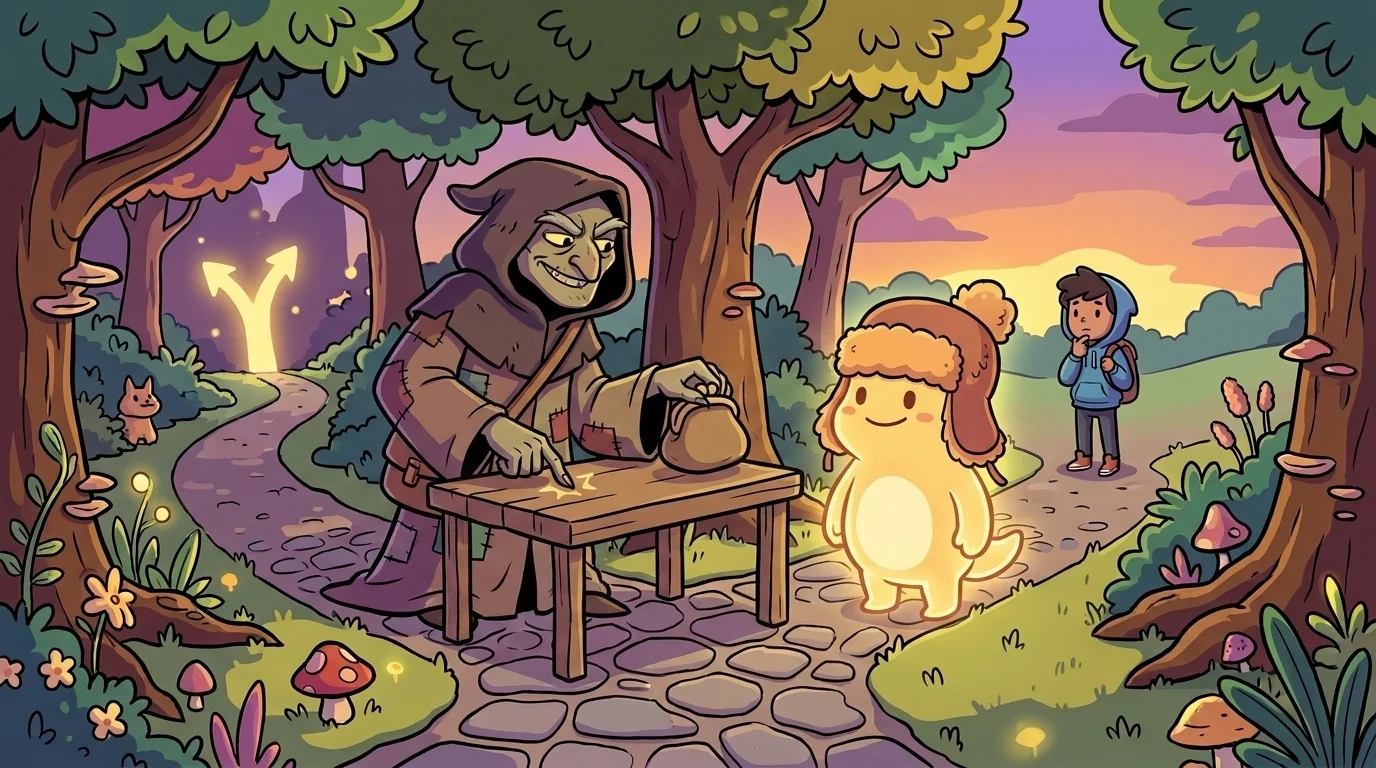
Barter went first, because the grasping exchange is the loud, tempting one.
"Your first idea — the bargain — is mine," Barter said, tapping her crossroads table. "Your hero wants the key now, so she grasps for it: she strikes a deal, pays a price, takes a shortcut. And it works — she gets the key fast." She slid a covered coin across the table. "But here's the shape of my kind of exchange: the thing you grasp always costs, and the price comes due later. So her fast key isn't free. Maybe it opens the door but locks something else. Maybe the strange creature will want something terrible in return. Maybe the shortcut skips the very thing she needed to become to be ready for what's behind the door." She looked at the student. "The bargain gets her the key. It also plants a debt. That's not wrong to write — grasping-and-paying is one of the truest engines there is — but know what you're choosing: a story about a hero who seized what she wanted and must now reckon with the cost." She glanced at Boon. "That's the grasping exchange. But there's another kind entirely — the opposite kind — where getting a thing doesn't cost, but repays. And that's her half."
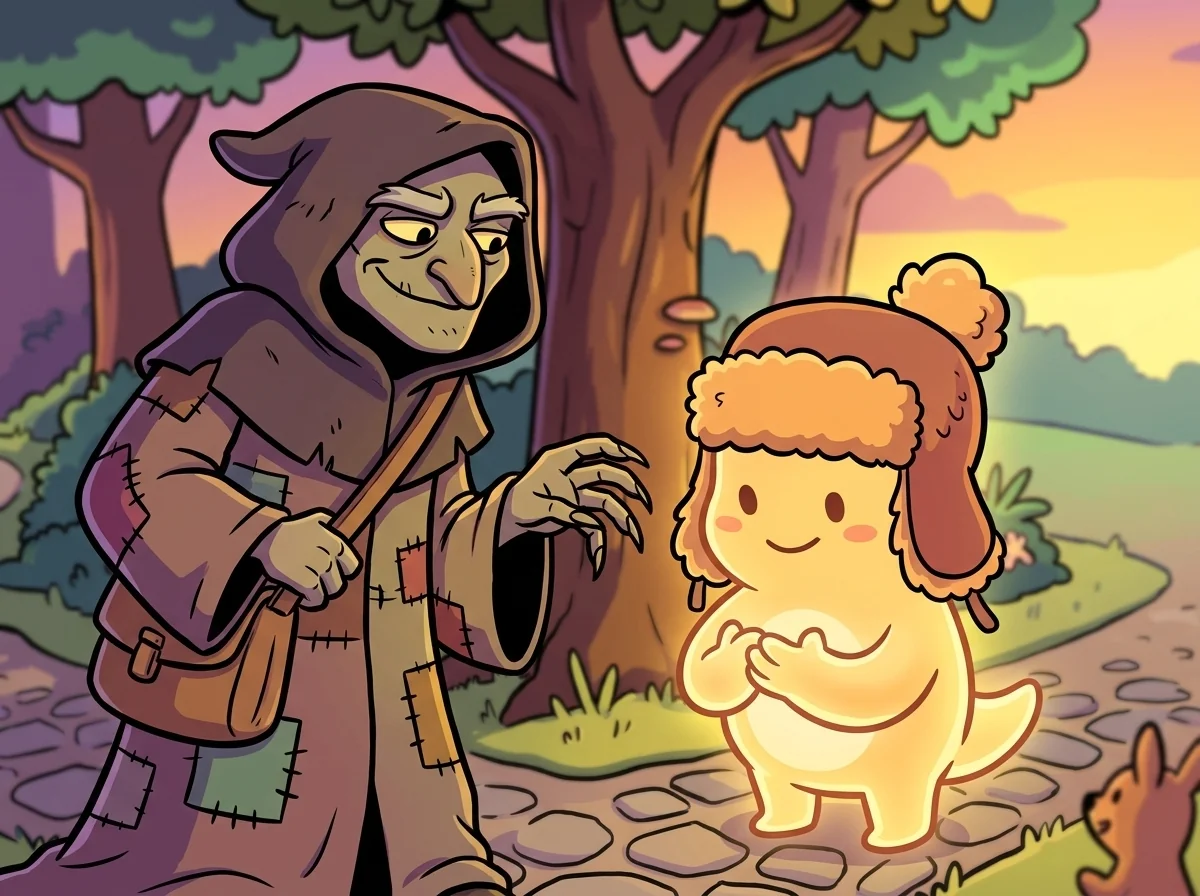
Boon took over, warm and round, because the generous exchange is the quiet, patient one.
"Your second idea — the kindnesses — is mine," Boon said. "Your hero doesn't grasp for the key at all. She just... scatters small mercies along her way. Frees a trapped creature. Shares her bread. Helps the overlooked one everybody else passed by. Asking nothing." She cupped her hands, as if holding something small. "And here's the shape of my kind of exchange: a kindness given freely doesn't cost — it travels, and it comes back, usually from the least likely door, right when she needs it most. So the key isn't seized at a price. It's given, at the end, by the very creature she was gentle with at the start — a gift returned." She smiled. "It's the exact reverse of Barter's. In hers, you take now and pay later. In mine, you give now and are repaid later. One plants a debt. The other plants a blessing." She looked across at Barter. "Same key. Two completely different souls to the story — because how you get a thing is never separate from what the thing means."
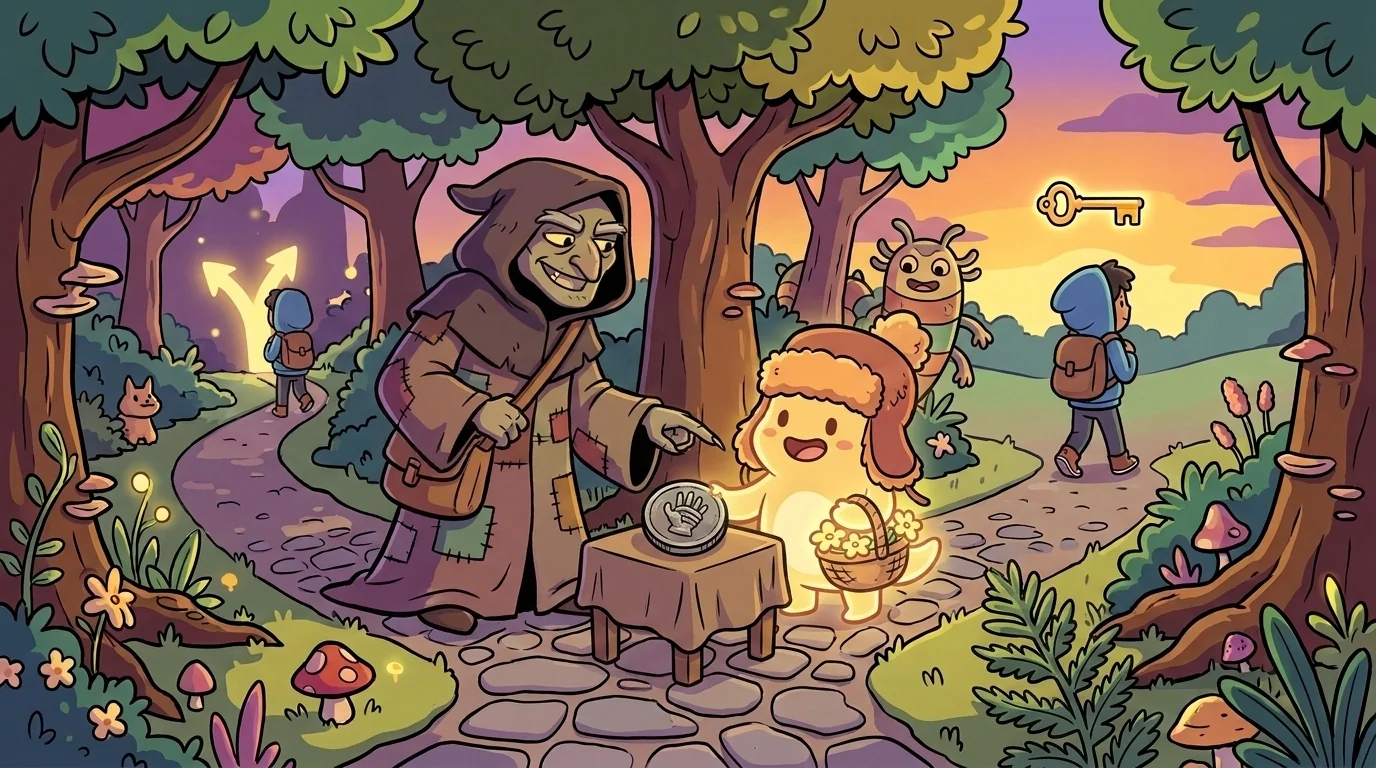
And then, together, they showed the student the fork she'd been standing at.
"So here's why your two ideas feel so different," said Barter. "They're the two poles of exchange, and every story lives somewhere between them." She set the covered coin and Boon's cupped hands side by side. "Grasping — my pole. Take what you want, fast, at a price that comes due. It makes a hero reckon."
"Giving — my pole," said Boon. "Scatter kindness freely, and be repaid when you least expect it. It makes a hero deserve." She and Barter faced each other. "And here's the thing your story is secretly deciding: which kind of trade does your hero make — and which does your tale reward?"
"Separately," said Barter, "each teaches something. A story of grasping teaches the cost of shortcuts and seized wishes."
"A story of giving teaches that no kindness is wasted," said Boon.
"But together," said Barter, "held up against each other, they teach the deepest thing of all: that how you get a thing shapes what it becomes. The key seized at a price and the key given for kindness might open the same door — but the hero who grasped arrives with a debt, and the hero who gave arrives with a friend." She tapped her table. "Put both in a story and let the hero choose between them, and you've got the oldest question there is: will she grab, or will she give? Will she take the shortcut and pay, or scatter mercy and be repaid?"
The student's eyes went wide. "So the two ideas aren't just how she gets the key," she said slowly. "They're two different hearts for the whole story."
"Now you understand the fork," said Barter and Boon together.
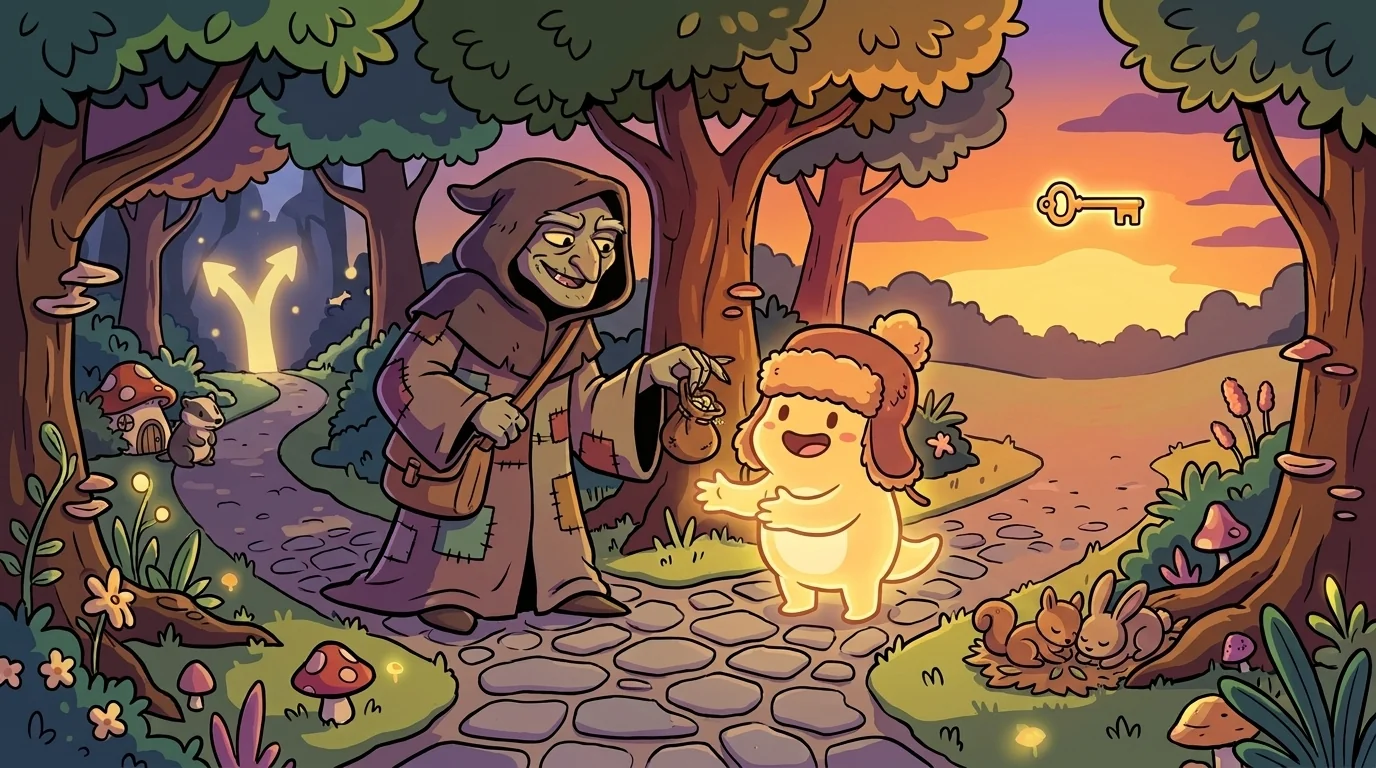
"It's more than I thought a story could hold," the student admitted. "I thought I was just picking a plot. I was really picking what kind of person my hero is."
Barter and Boon traded a look, warm now.
"That's the secret of the two exchanges," Barter said, shrewd and kind at her crossroads. "Grasping and giving aren't just two ways to move a plot. They're two ways to be. And a story that knows the difference — that lets a hero grasp and pay, or give and be repaid — is a story that's really about the deepest choice a person makes."
"You can even weave them," Boon added, glowing. "Let your hero start by grasping — take the bargain, feel the price come due — and then learn, and start giving instead, and be saved at the end by a kindness she scattered along the way. That's a whole journey: from the exchange that costs to the exchange that repays." She smiled. "Because in the truest tales, the hero doesn't just get the key. She learns which kind of trade makes a life worth living."
The student looked from the covered coin to the cupped hands — the grasping and the giving — and understood that she'd been choosing not a plot but a soul, and Barter and Boon watched the whole story deepen behind her eyes.
And Barter and Boon felt it settle warm and shared between them — that clicked-together, the two exchanges are the two ways to be gladness that comes when the grasping bargain and the generous gift reveal themselves as opposite poles of one truth. Barter loved the honest weight of a price. Boon loved the quiet return of a kindness. But what they loved most was this: showing a young writer that a story is never only about what a hero gets — it's about how, and that between grasping-at-a-price and giving-to-be-repaid lies the oldest, warmest choice any tale can offer.
The LoreQuest ensemble
Barter and Boon is part of LoreQuest's distributed-narrative cast. Each character embodies a different curricular primitive; together they teach the full subject.
-
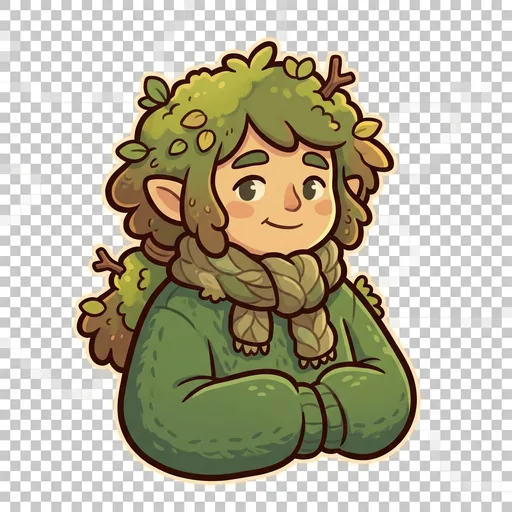
Mossy
Forest / nature-spirit archetype (the quiet local-landscape entity who appears across many traditions — wood-elves, dryads, kami of place, etc., abstractly)
-
Refrain
Repeating-tale / echo motif archetype (motif recurrence — same story-pattern appearing across cultures: flood myth, hero descent to underworld, twin gods, etc.)
-
Thread
Hero-journey / fate-spinner archetype (the spinning thread of destiny that recurs across heroic narratives — Moirai, Norns, Anansi-as-spider, etc., abstractly)
-
Ruse
Clever-fool / trickster archetype (the figure who breaks the rules and teaches a lesson by doing so — recurs across MANY traditions, but referenced **abstractly** here; the cast...
-
Hearth
Origin / family / hearth-storyteller archetype (the figure who carries oral tradition; the grandmother / elder who tells the stories — found in nearly every tradition's framing...
-
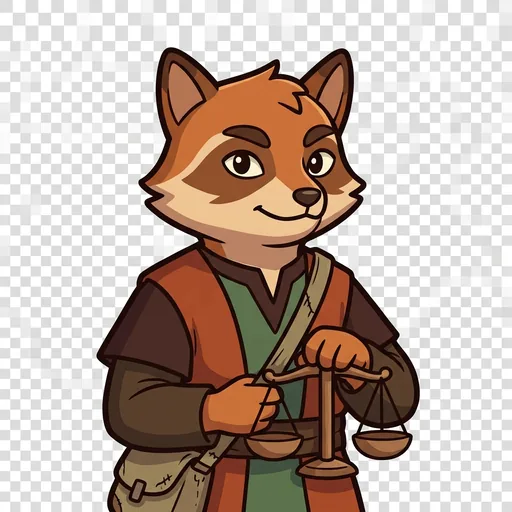
Barter
The bargain — the wish granted with a catch, and the price is the point
-
Behest
The forbidden thing — the one rule a story hangs on (do not open it)
-

Boon
The grateful gift — a small kindness freely given that returns
-
Thrice
The rule of three — two tries set the pattern, the third breaks it
-
Verge
The threshold — the door out of the known world into the strange one