Thrice
THE RULE OF THREE — *stories come in threes. two tries to set the pattern, and a third that breaks it — the one that's different is the one that matters.*
Loading audio…
Press play to listen along. The line being read lights up as you go.
Show full transcript
Loading transcript…
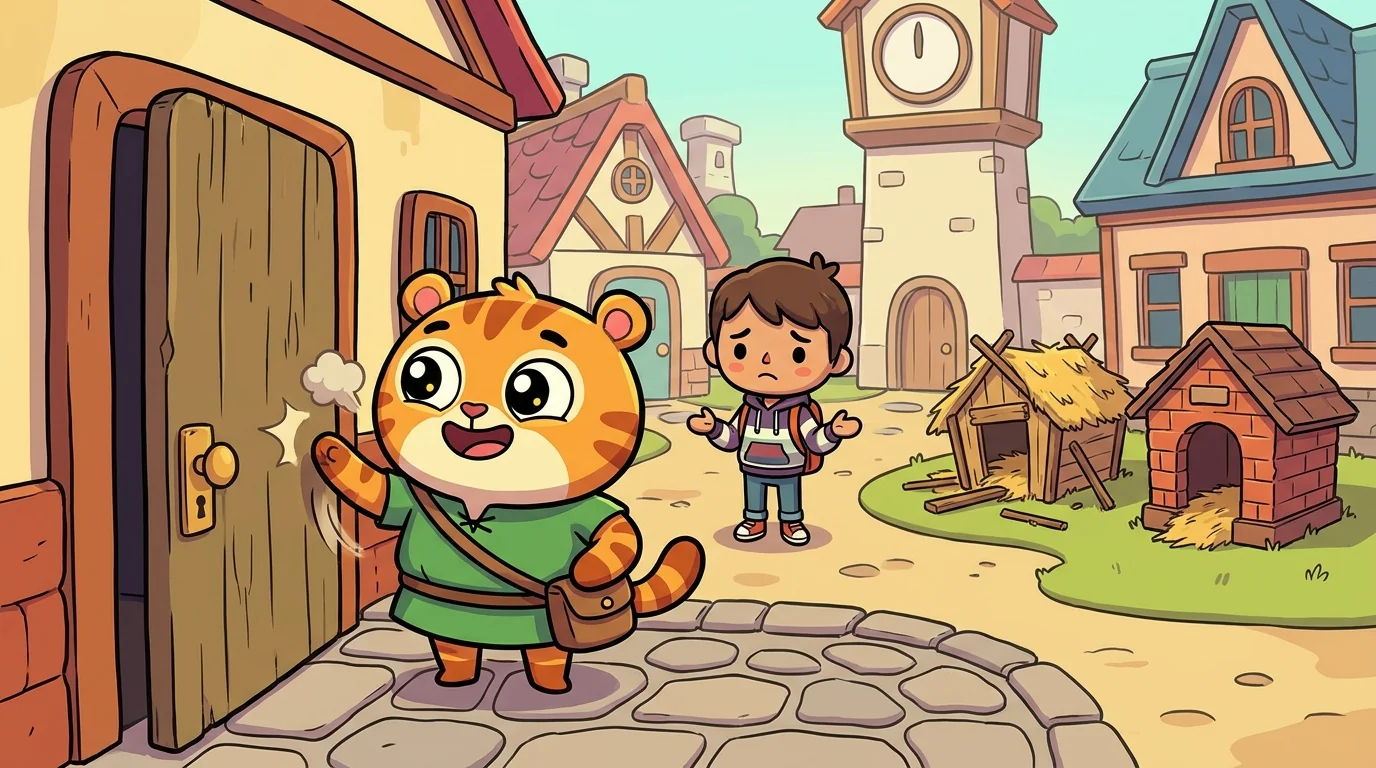
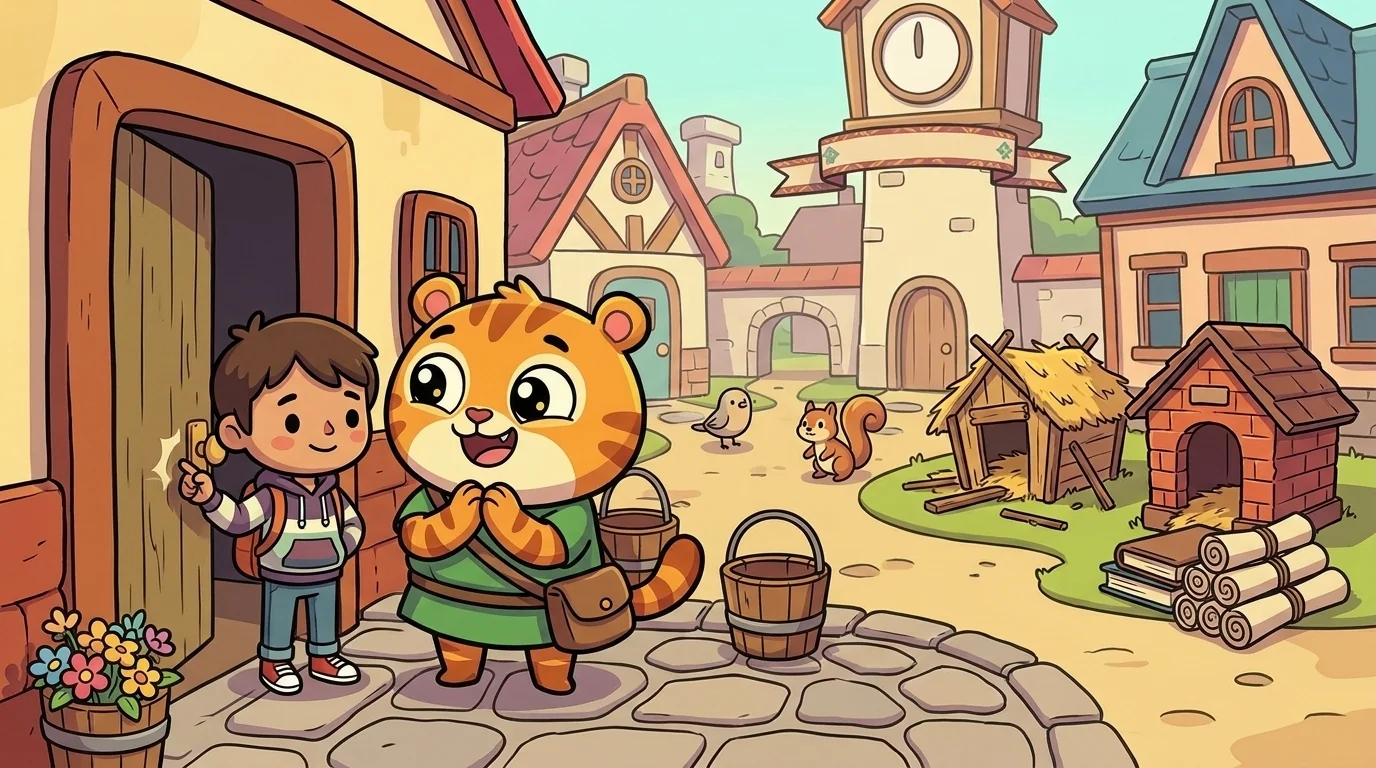
In the LoreQuest courtyard, a bright-eyed creature named Thrice was knocking on a wooden door. She knocked once, softly — nothing. She knocked twice, the same soft way — nothing. Then she paused, grinned, and the third time she knocked loud, three big thumps, and the door swung open.
A student watched, baffled. "Why not just knock loud the first time?"
"Because then there'd be no story," Thrice said, delighted. "Watch what your ears did. Soft knock — nothing. Soft knock again — now you're expecting nothing. So you've settled into the pattern: knock, silence, knock, silence. And then —" she thumped the door three times, loud "— the third one breaks it, and it lands, because you weren't ready." She spun on her heel. "Two the same, and a third that's different. That's the oldest rhythm in every story there is. Two little pigs' houses fall, the third stands. Two brothers fail the test, the third — the youngest, the odd one — passes. Two soft knocks and a loud one. The world of tales is built by threes."
The student found herself, without meaning to, tapping the rhythm on her knee: da, da — DA. And feeling, in her chest, exactly why the third beat hit.
Thrice had learned the rhythm before she understood it.
She'd grown up impatient — she wanted to get things right on the first go, and hated that she so often didn't. Try, fail. Try again the same way, fail again. It felt like proof she was bad at things.
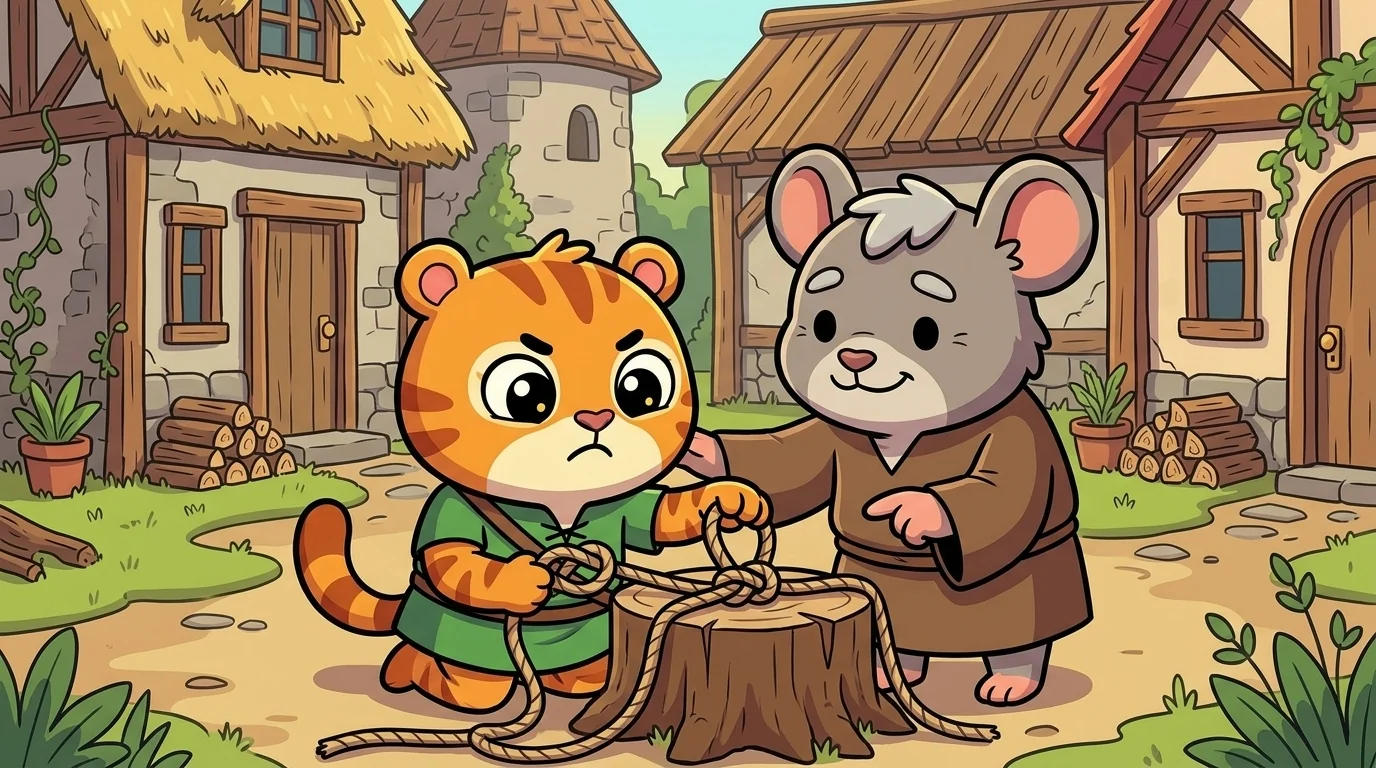
An elder found her fuming after a third failed attempt at a knot. But this third try had been different — she'd finally changed her grip — and this time the knot held.
"You're angry you failed twice," the elder said. "Look closer. The first two times, you did it the same. This time you did it different — and it worked." The elder took up the knot. "That's not you being slow, child. That's the truest rhythm there is. The first try teaches you. The second try — usually the same as the first — proves the pattern won't budge. And the third is where you finally change something, and the change is what breaks it open." The elder smiled. "Storytellers have always known this. Three is the smallest number that makes a pattern — two to set it, one to break it. Two the same, and a third that turns. The magic is never in the sameness. It's in the difference the third time brings."
So Thrice stopped hating her failed first tries. She started listening for the rhythm — same, same, different — and looking, on the third go, for the one thing to change.
She skipped her way to LoreQuest at twelve, because a place that studied stories ought to understand the beat that runs through nearly all of them.
Plot, the old mentor, met her at the gate. "What is the rule of three?"
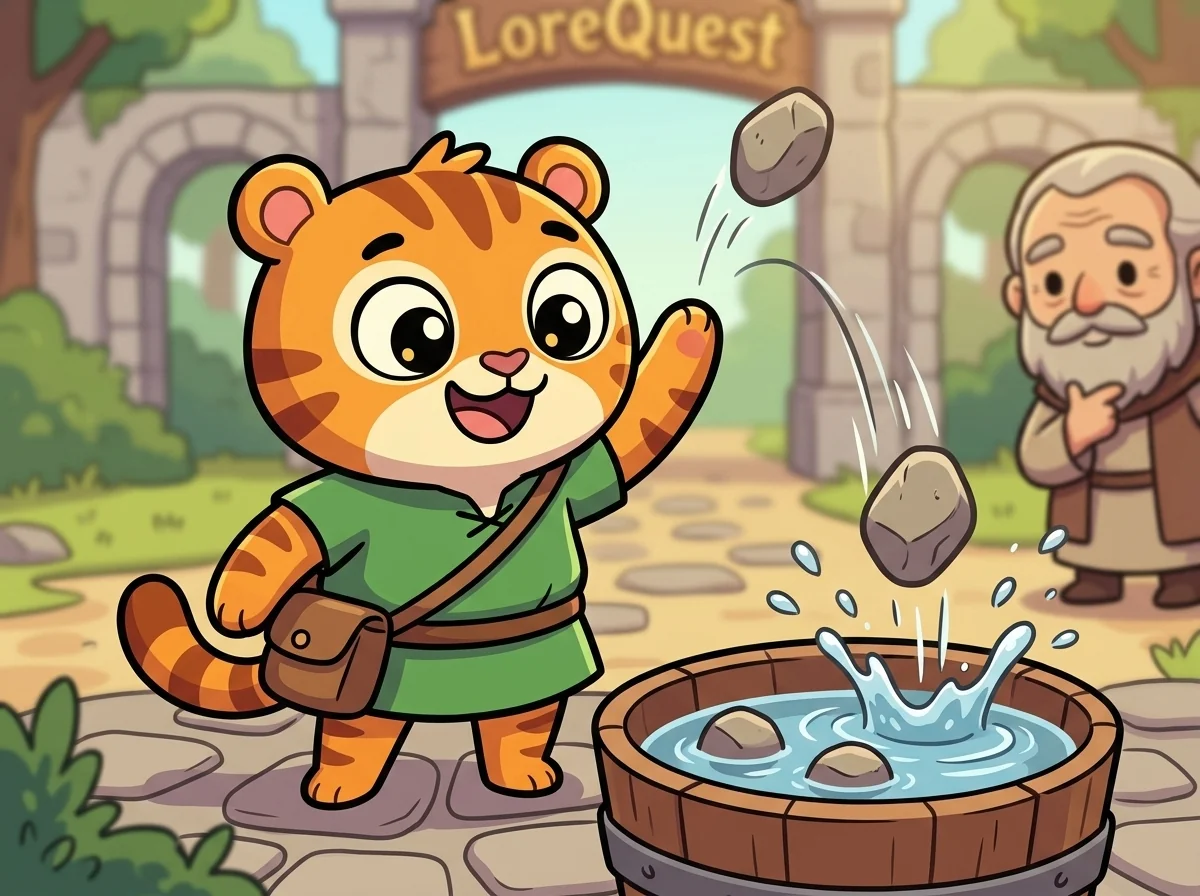
Thrice didn't recite a definition. She picked up three stones. She tossed the first gently into a bucket — plunk. The second, the same — plunk. Then she paused, met Plot's eye, and tossed the third stone in a great high arc so it landed with a splash.
"That," she said. "Two the same, to build a rhythm your ear trusts. And a third that breaks it, so the surprise has somewhere to land. Two to make the pattern; one to turn it. It's the smallest shape that can build a promise and then keep it sideways." She grinned. "Take away the third-that's-different, and it's just repeating. Take away the two-the-same, and the third has nothing to break. You need all three — and the whole point is the last one."
Plot watched the high arc of the third stone, and the splash, and was quiet a long moment.
"You belong here," he said.
Thrice's workshop had a bouncy rhythm to it, and a student came in one afternoon frustrated with a scene that fell flat.
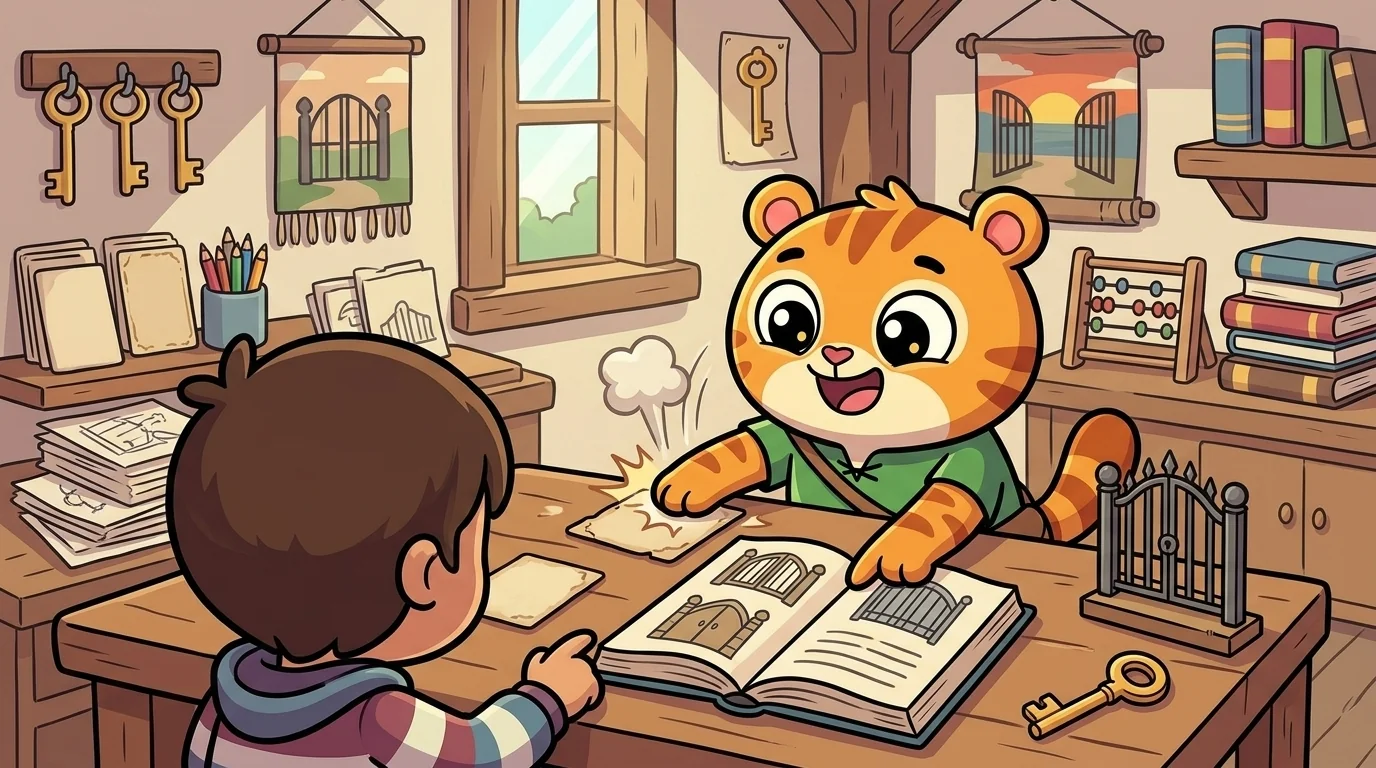
"My hero tries to open the magic gate," she said, "and it just... opens. And it's boring. It should feel big, but it doesn't. What's wrong?"
Thrice's eyes sparkled. "It opened on the first try. So there's no rhythm to break." She pulled down a card. "Here's the fix, and it's the oldest trick in the book. Don't let it open the first time. Or the second. Let your hero try the obvious thing — fail. Try the obvious thing again, a little harder — fail again, so the reader settles into this gate won't open." She thumped the table twice, soft. "And then — the third time — let your hero do something different. Not stronger. Different. They stop pushing and ask. They stop forcing and listen. They realize the gate opens inward, or opens to a whisper, or opens for kindness instead of strength." She thumped the table once, loud. "The gate opens on the third try, because the hero finally changed what they were doing. Now it's not boring — it's a triumph, because the reader felt the two failures and earned the third." She tapped the page. "Same, same, different. Two to set it up. The third to pay it off — and the third is where your hero learns something."
The student's face opened like the gate. "So the two failures aren't wasted. They're what makes the third one mean something."
"Now you've got the rhythm," said Thrice, delighted.
Later, when the workshop had quieted, the student lingered, tapping the beat on the doorframe.
"When the gate finally opens on the third try," she said, "I feel this little pop of satisfaction. Why does three feel so right?"
Thrice thought about the knot that held on the third try, and the elder, and the difference the third time brings.
"Because three is exactly enough," she said. "One thing is just a thing. Two things is a coincidence — you don't quite trust the pattern yet. But three? Three is where your mind goes ah, a pattern — and the moment it does, the third one gets to break it, and breaking a pattern you just started to trust is the most satisfying little surprise there is." She tapped the beat, da-da-DA. "That pop you feel is the rhythm resolving — the promise made by the two, and kept-with-a-twist by the third. It's in songs, in jokes, in tales that never met across the whole world, because it's just how our ears and hearts like to be led: two steps you know, and a third that lifts you somewhere new." She grinned. "The first two build the trust. The third spends it. And the difference — always the difference — is where the magic lives."
The student laughed and knocked the doorframe da, da — DA, and Thrice knocked it back.
She didn't say the last part aloud, but she felt it, bright and rhythmic under her ribs: the sameness is only there to make room for the difference — and the third time, the changed time, is always the one that matters.
The LoreQuest ensemble
Thrice is part of LoreQuest's distributed-narrative cast. Each character embodies a different curricular primitive; together they teach the full subject.
-

Mossy
Forest / nature-spirit archetype (the quiet local-landscape entity who appears across many traditions — wood-elves, dryads, kami of place, etc., abstractly)
-

Refrain
Repeating-tale / echo motif archetype (motif recurrence — same story-pattern appearing across cultures: flood myth, hero descent to underworld, twin gods, etc.)
-

Thread
Hero-journey / fate-spinner archetype (the spinning thread of destiny that recurs across heroic narratives — Moirai, Norns, Anansi-as-spider, etc., abstractly)
-

Ruse
Clever-fool / trickster archetype (the figure who breaks the rules and teaches a lesson by doing so — recurs across MANY traditions, but referenced **abstractly** here; the cast...
-

Hearth
Origin / family / hearth-storyteller archetype (the figure who carries oral tradition; the grandmother / elder who tells the stories — found in nearly every tradition's framing...
-

Barter
The bargain — the wish granted with a catch, and the price is the point
-

Behest
The forbidden thing — the one rule a story hangs on (do not open it)
-

Boon
The grateful gift — a small kindness freely given that returns
-

Verge
The threshold — the door out of the known world into the strange one