Errata
ERRATA — *when you get it wrong, fix it out loud. a paper is judged by how it owns its mistakes.*
Loading audio…
Press play to listen along. The line being read lights up as you go.
Show full transcript
Loading transcript…
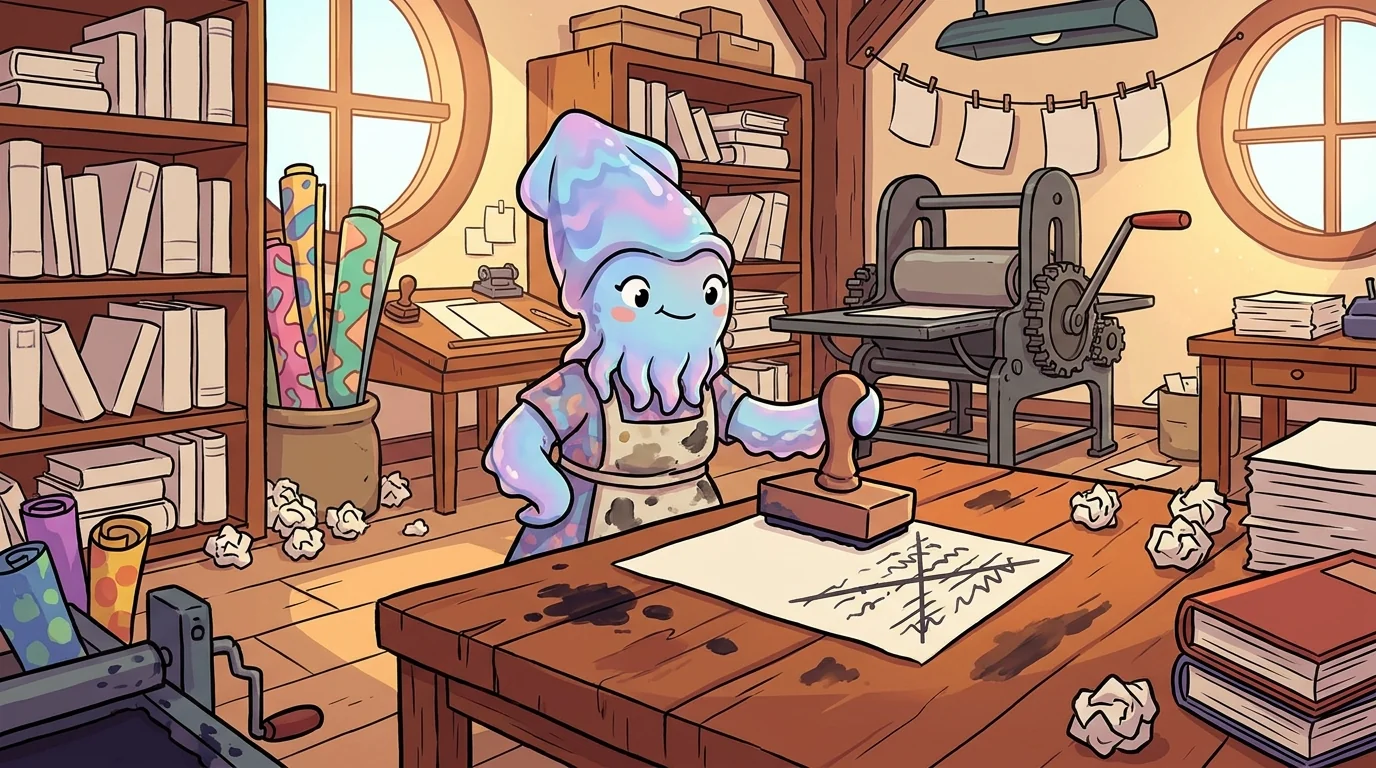
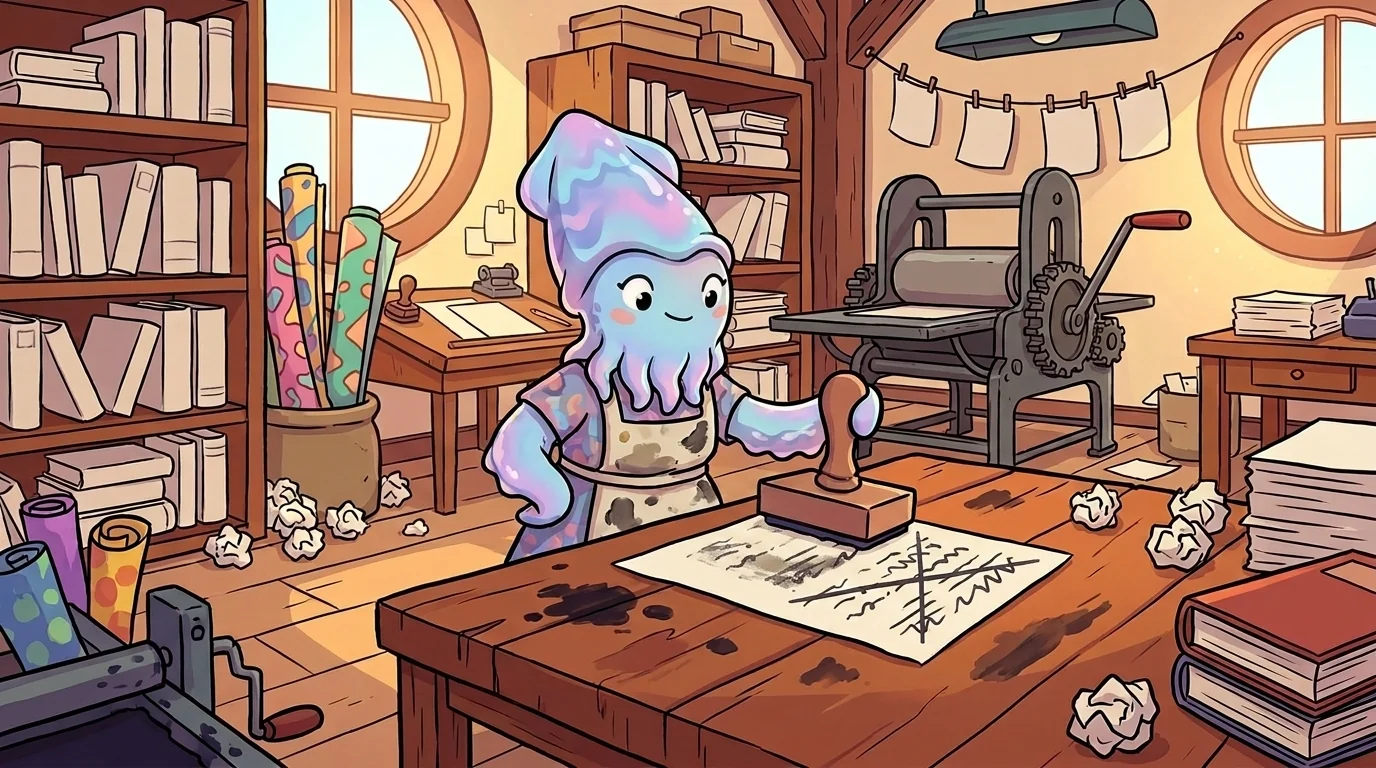
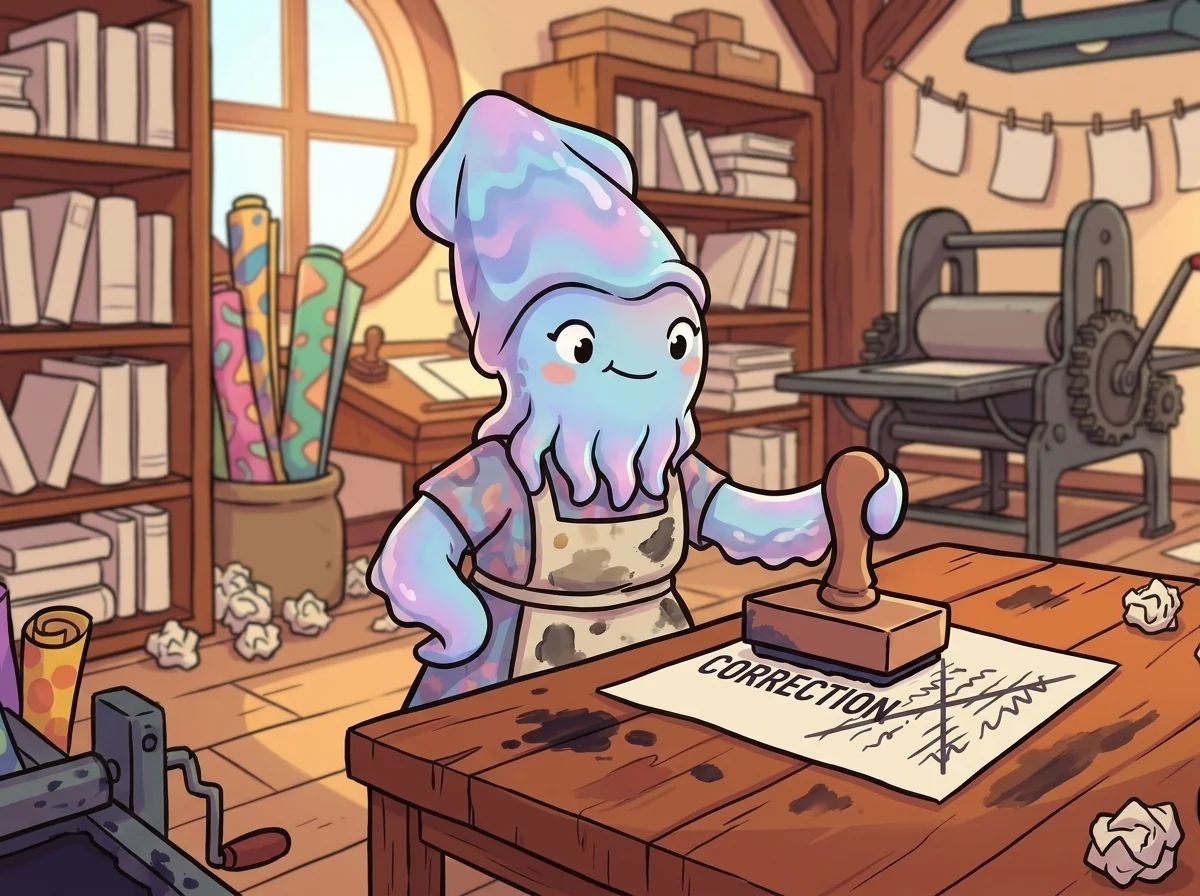
Errata is a cuttlefish-tween who can change her colors in an instant — and who long ago decided that the most important color-change of all was the flush of owning up. She wears a little printer's apron stained with ink, and she carries a special stamp that reads, in clean bold letters: CORRECTION. Her whole job is the one most reporters dread: finding the paper's mistakes, and fixing them where everyone can see.
Errata teaches corrections — accountability to the reader. "Everybody gets things wrong sometimes," she says, her skin rippling. "Reporters too. A wrong name, a wrong number, a fact that turned out false. The mistake isn't the disaster. Hiding it is." Most people, caught in an error, want to quietly bury it and hope no one noticed. Errata knows the opposite is true. "A paper nobody can trust is one that never admits it's wrong," she says. "The paper you can trust is the one that says, loud and clear: We got this wrong. Here's the truth. We're sorry."
Errata grew up on a reef where her family were the color-truth-tellers — cuttlefish whose skin flushed honestly with every feeling, unable to hide a thing even when they wanted to.
And young Errata had once wanted very badly to hide. She'd helped copy out a village notice and gotten a date wrong — the harvest festival, printed a whole day early. Dozens of animals showed up to an empty field. She was mortified. Her first instinct was to say nothing, to let it blur into an honest mix-up, to hope it faded.
Her grandfather, an old cuttlefish gone pale-and-wise, found her hiding in a crevice, her skin dark with shame. "You made a mistake," he said. "That's just being alive. But now you've got a choice, and this one matters more than the mistake did." He flushed a clear, steady color. "You can hide it, and carry the little cold weight of it, and teach everyone who finds out that our word can't be trusted. Or you can flush it out — say it, plainly, fix it fast — and teach everyone that when we're wrong, we own it. One of those makes you smaller. The other, strange as it sounds, makes people trust you more." So Errata had gone to the village square and announced, clearly, the right date, and said she was sorry — and found, to her amazement, that animals thanked her for it. The owning-up had cost her a blush and bought her something worth far more.
When Errata turned twelve, she scuttled to InkQuest. Caret, the head mentor, met her. "Why do corrections matter as much as the story?"
Errata's skin rippled steady and clear. "Because a paper is only as trustworthy as the way it handles being wrong," she said. "Anyone can print a story. The real test is what you do when you find out part of it was mistaken. You fix it — out loud, up front, fast, and with an apology if it hurt someone. Hiding a mistake breaks the reader's trust worse than the mistake ever could. Owning it builds trust. That's the whole secret nobody believes until they try it."
Caret smiled. "You are appointed."
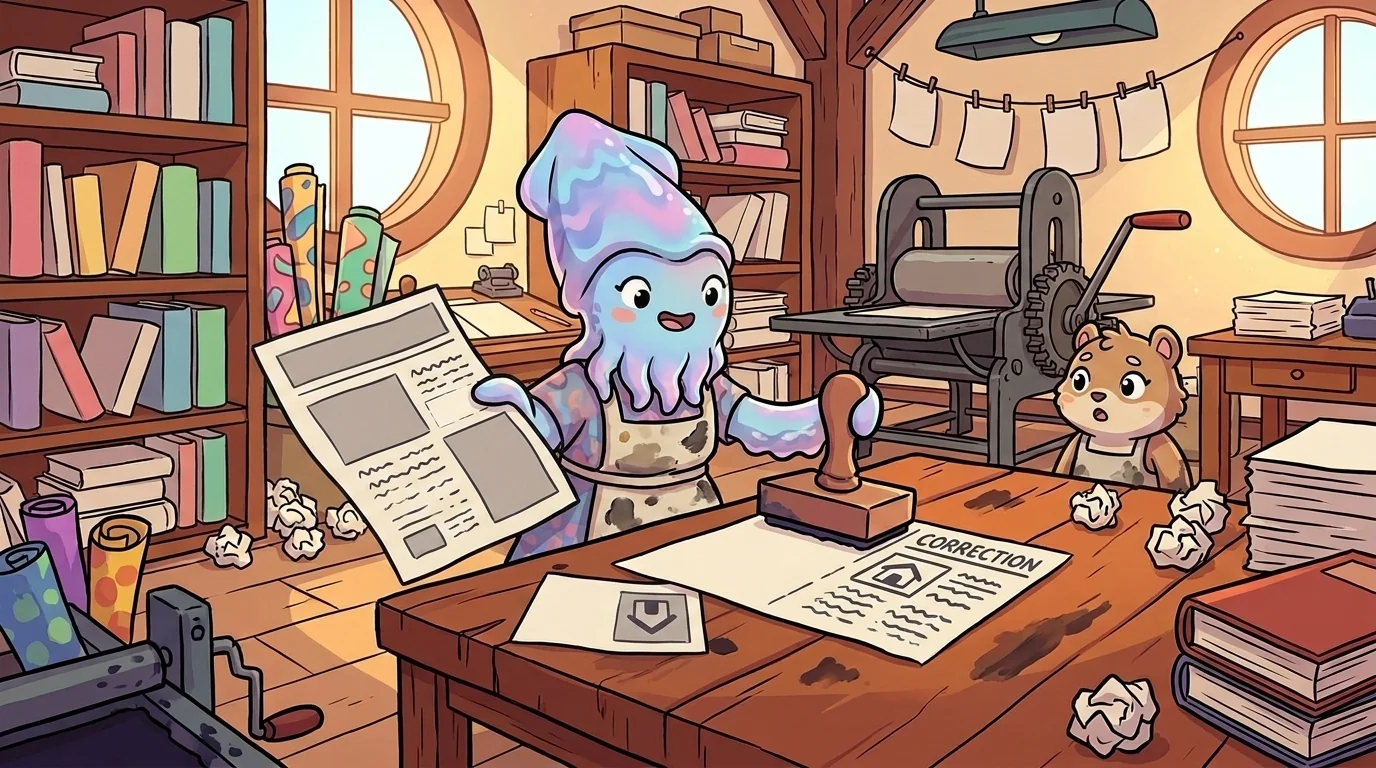
In her ink-stained workshop, Errata loves to show the two paths. "Watch." She holds up a story with a wrong number in it — a report that said a shelter took in 500 animals when it was really 50. "Big mistake. Off by ten times. Now — two ways to handle it." She mimes shoving a paper under a rug. "Path one: hope nobody notices. And when they do — and they always do — every reader thinks, what else in here is wrong? Can I trust any of it?" She stamps a fresh page: CORRECTION. "Path two: right up front, plainly. Correction: yesterday we reported the shelter took in 500 animals. The true number is 50. We regret the error." She sets it down. "Clean. Honest. And the reader thinks, these folks tell me when they're wrong — so I can believe them when they're right." Then she teaches the rules: correct it where people can see it, not hidden at the bottom; say what was wrong AND what's true, both; do it fast, before the wrong thing spreads further; apologize if it caused harm — a wrong name or accusation deserves a real sorry; and never argue that the mistake wasn't really a mistake — that's hiding wearing a disguise.
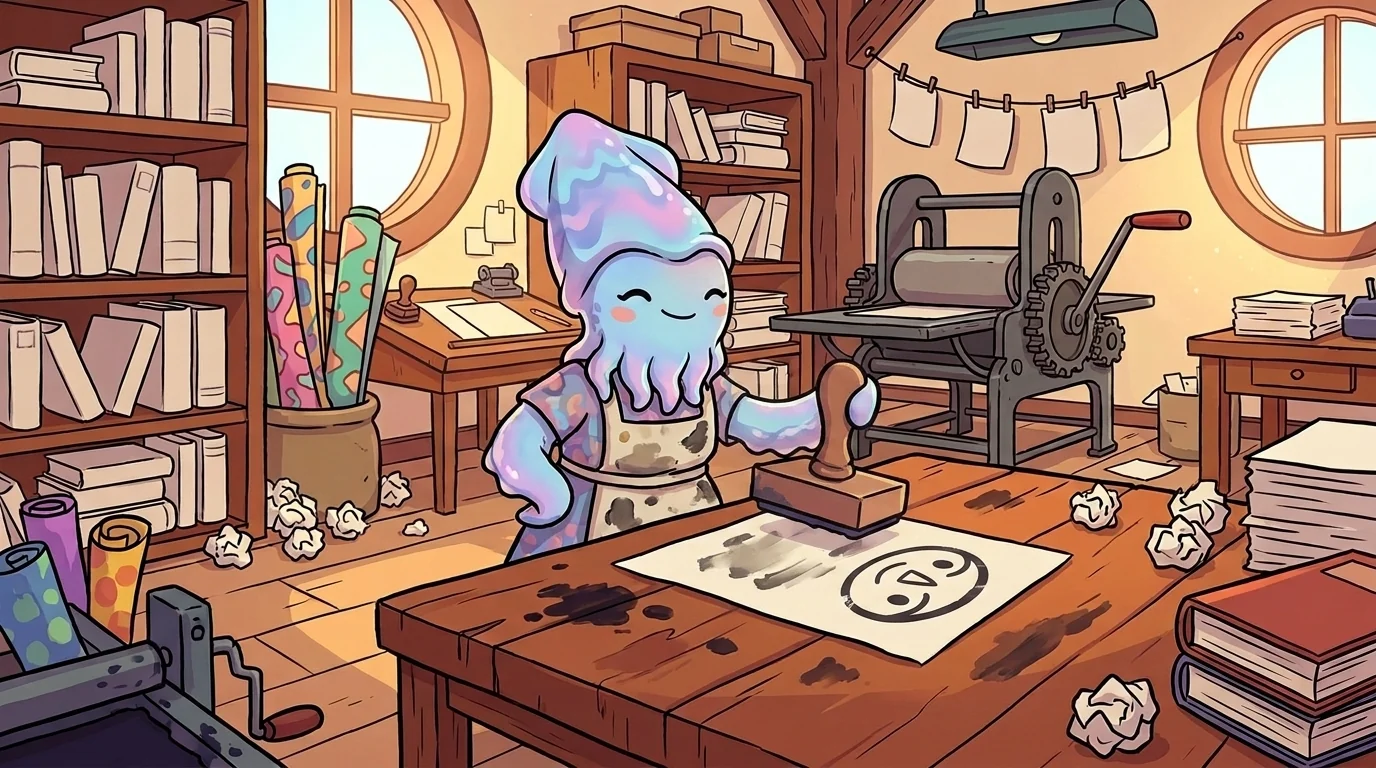
"Isn't it embarrassing, printing your own mistakes?" a student asked her once. Errata's skin flushed, then settled clear. "A little, for a second. And a thousand times better than the alternative. It's just: did we get something wrong? Then say so, out loud, right away. Fix it where they can see."
She looked at her CORRECTION stamp, worn smooth from honest use, and felt that steady, clean warmth she always felt after owning up — not the cold weight of a buried mistake, but the light, unclenched relief of a thing set right in the open. It surprised her every time, how good it felt: that admitting you were wrong, quickly and plainly, didn't shrink you at all. It made you someone people could trust. That trust — earned not by never failing, but by how honestly she fixed it when she did — was, to Errata, the truest thing a paper could ever own.
The InkQuest ensemble
Errata is part of InkQuest's distributed-narrative cast. Each character embodies a different curricular primitive; together they teach the full subject.
-

Lede
Story-from-data — finding the angle; what's the story under the numbers?
-
Pad
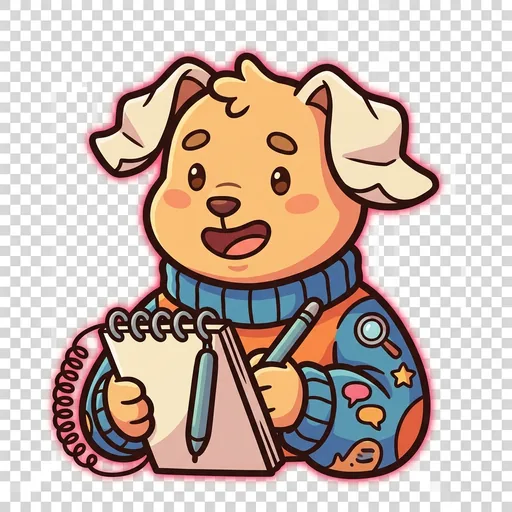
Field-capture + interview craft — open the question; let the answer breathe
-

Crosscheck
Verification + triangulation — three sources say the same thing, now I have something
-

Margin
Data-table + chart-annotation craft — label the axes; caption the chart; credit the data
-

Footer
Citation + provenance — every number has a name behind it; tell the reader who counted
-
Column
Fact-vs-opinion — what happened and what I think about it are two different things; label which is which
-

Dig
Investigative persistence — the first 'no' is where the story starts; keep asking, keep following
-
Rejoinder
Fairness + right-of-reply — before you print it, get the other side; everyone named gets to answer
-

Yardstick
Context — a number alone means nothing; compared to what? give the reader something to measure against