
Fiva
SQUARING NUMBERS ENDING IN 5 — *take the tens digit n, multiply the friendly pair n x (n+1), then write 25 after it: 35 x 35 = 3x4=12, then 25, so 1225.*
Loading audio…
Press play to listen along. The line being read lights up as you go.
Show full transcript
Loading transcript…
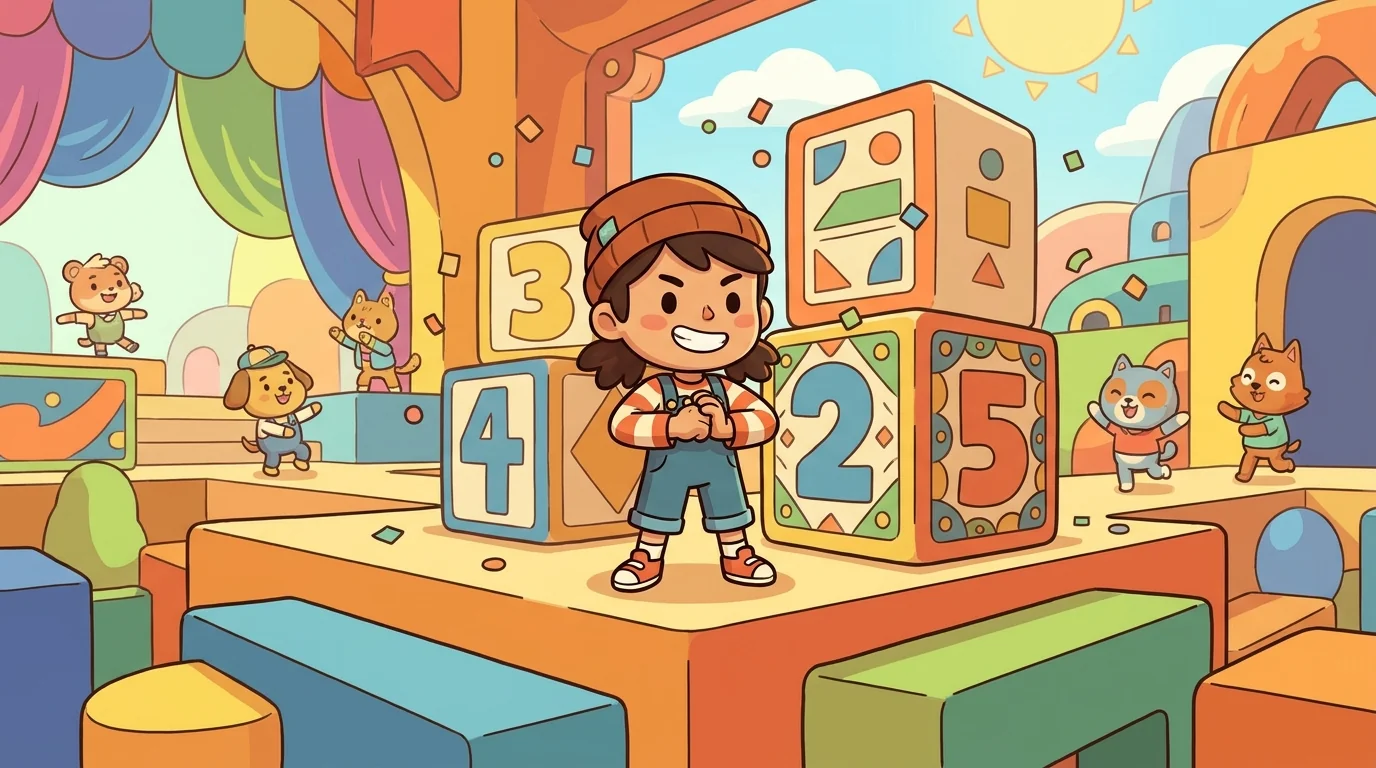
Fiva loved endings, which made everyone else on the crew slightly nervous. Most performers treated the final ten seconds of a routine like a burning fuse. That was the stretch where juggled clubs collided in midair, or where a trapdoor jammed on a frayed cable. Fiva, however, leaned straight into the finish.
"Squaring a number that ends in five is the cleanest trick under these lights," Fiva told the stagehands, leaning against a stack of wooden crates. "People think the end is where you slip. With fives, the end is the only part that never lets you down."
Out in the house, someone would inevitably yell a test number from the third row. A loud voice would bark, "Thirty-five squared!"
Fiva never touched a pencil or reached for a stage calculator. Instead, Fiva isolated the tens digit—the three sitting on the left. Every whole number had an older sibling waiting directly above it on the counting line. For three, that neighbor was four.
"Three times four is twelve," Fiva would call out, tracing the number against the heavy velvet curtain.
Then came the grin. The audience leaned forward, bracing for long division or carried digits, but the heavy lifting was already finished.
"Now you take the gift," Fiva told them. "Every single time, you drop twenty-five onto the end. Twelve, twenty-five. Twelve hundred twenty-five."
When a skeptic yelled sixty-five, Fiva did not hesitate. Six multiplied by seven gave forty-two. Slap twenty-five to the tail, and forty-two hundred twenty-five landed before the skeptic could pull out a phone.
"The front does the work, but the ending stays locked," Fiva said. "Twenty-five, twenty-five, twenty-five. You cannot break it even if you try."
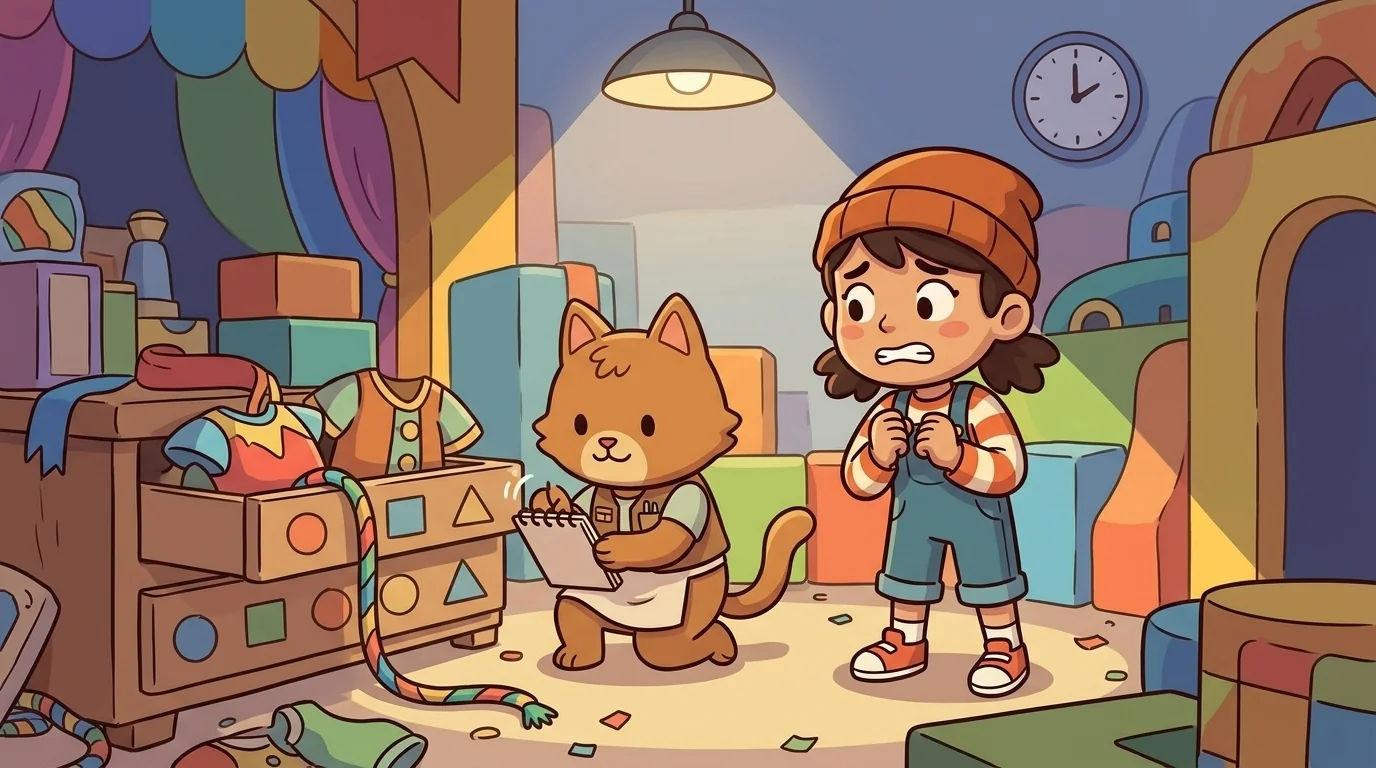
Ten years earlier, Fiva had run from every ending in sight.
Back then, Fiva was an apprentice who could start any routine with blinding confidence and finish none of them. Routines opened with flare, music, and promises. Then, right at the climax, Fiva’s hands would shake, the rhythm would shatter, and the routine would stall out entirely.
The fear was simple and cold: the ending was where the audience finally noticed you were faking. If you never completed the act, you never had to face the quiet after a botched reveal.
So Fiva accumulated beginnings. Backstage, behind the lighting dimmer boards, Fiva kept a green tackle box stuffed with half-learned illusions. It held untied silk handkerchiefs, marked decks missing their final aces, and ring puzzles abandoned mid-twist. Living like that felt like living in the word almost. You were always about to arrive, yet you never stepped onto the platform.
Marlow, the house manager, eventually noticed the pile of half-carved props gathering sawdust in the alley. Marlow smelled of stale black coffee and cedar shavings. He carried an eight-inch steel ruler in his back pocket like a weapon.
One rainy Tuesday, Marlow hauled two folding chairs into the prop room and set a blank cardboard flat between them.
"You drop the routines because you think the finish line is a drop-off," Marlow said, pulling a stub of carpenter's pencil from his ear. "Look here."
Marlow dragged the pencil across the cardboard, writing forty-five times forty-five.
"You think the ending is where the trap snaps shut," Marlow continued, his voice dry as split pine. "Look at the tail. What is five times five?"
"Twenty-five," Fiva muttered, arms crossed against the draft.
"It is always twenty-five," Marlow said. "It does not change for forty-five. It does not change for ninety-five. The end is the easiest step in the building because someone already nailed the floorboards down."
Marlow circled the four at the front. He drew a small arrow up to five.
"Four times five is twenty," Marlow said, tapping the flat. "Slide the twenty-five beside it. Two thousand twenty-five. You have been panicking over the one part of the job that is already done."
Fiva looked at the two numbers pressed together on the scrap card. For months, lungs had felt tight behind the ribs, as if every breath were borrowed on credit. Looking at that unmoving twenty-five, something in Fiva’s chest finally unlocked and settled flat.
The new apprentice was named Arlo, and Arlo moved through the wings like a stray cat avoiding a broom.
Arlo had quick hands and sharp eyes, but his notebooks were full of scratched-out diagrams. He would practice a rope trick twenty times, get to the final knot, and drop the cord onto the floorboards. Then he would kick it under a riser and pretend he was looking for a wrench.
Fiva found him behind the backdrop curtain, staring at a three-digit multiplication sheet like it had insulted his family.
"I keep dropping the last column," Arlo said without looking up. He held his pencil so hard the lead had snapped off twice. "I get the middle part fine, and then the end goes sideways."
"Pick a number that ends in five," Fiva said, sitting down on an overturned cable spool.
Arlo blinked through his bangs. "Why?"
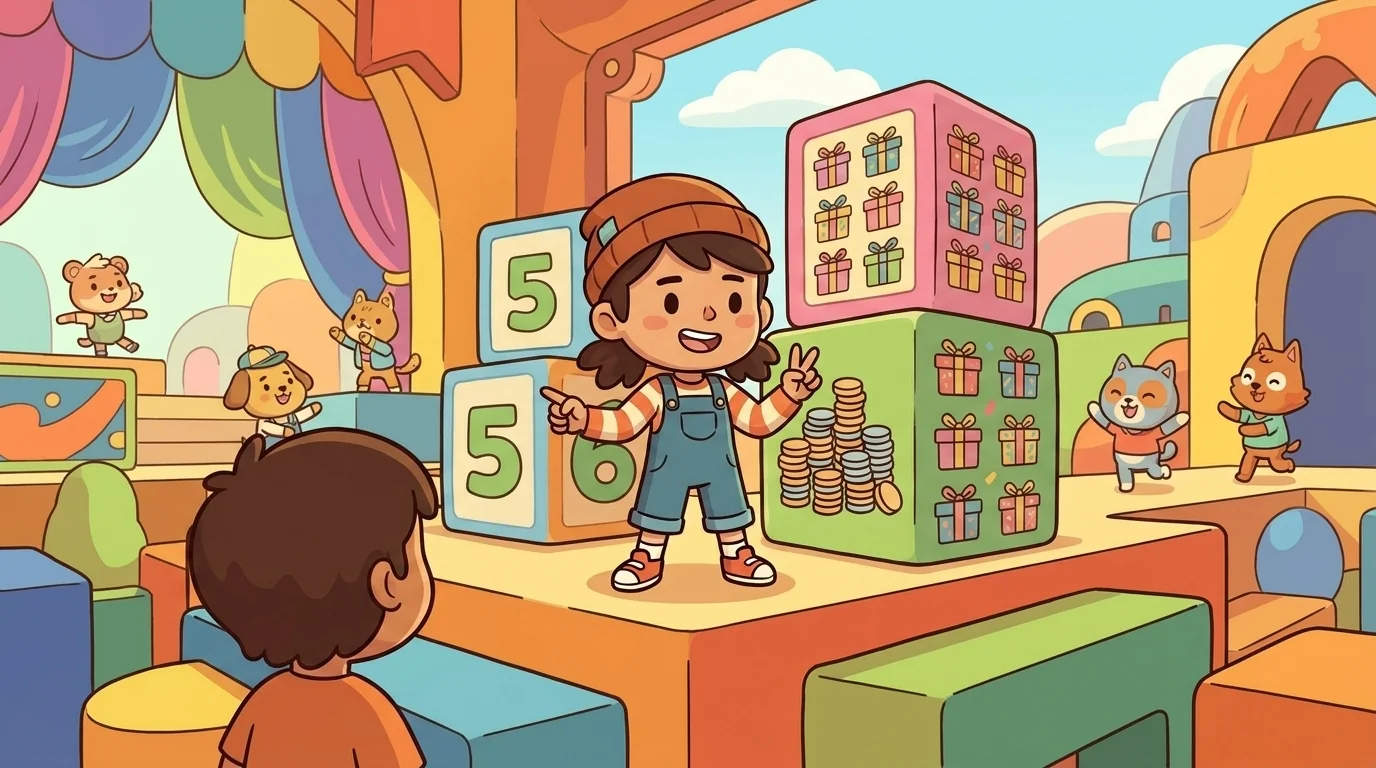
"Because we are going to start with a trick where you cannot fail the landing," Fiva said. "Pick one."
Arlo hesitated, chewing on his thumb. "...Fifty-five?"
"Take the tens digit," Fiva said. "What sits right above five?"
"Six," Arlo said warily.
"Multiply them. Give me the front."
"Five times six is thirty."
"Good," Fiva said, leaning forward on his knees. "Now comes the part you usually run away from. What belongs on the end?"
Arlo stared at his crumpled paper, waiting for the catch. He looked for the trick wire, the hidden catch, the sudden arithmetic tax. "Twenty-five?"
"Say the whole thing," Fiva told him.
"Three thousand... twenty-five?"

"Exactly three thousand twenty-five," Fiva said. "Not twenty-four, not twenty-six. You cannot get that ending wrong unless you deliberately write another number. The tail is bolted to the wall."
They moved across the floorboards, taking numbers off the top of their heads.
They tried twenty-five squared. Arlo took two, found its neighbor three, and muttered six under his breath. Then he tagged twenty-five to the back: six hundred twenty-five.
They jumped to eighty-five squared. Arlo tapped his knee in rhythm: eight times nine was seventy-two, followed immediately by twenty-five. Seventy-two hundred twenty-five.
With each calculation, the hunch left Arlo’s shoulders. He stopped checking the dark corners of the backstage hall to see if someone was laughing at him. The work was not simple because he was cheating; it was simple because the pattern had rails. The front half was an active choice, a small sprint of multiplication. The back half was an anchor.
"Ninety-five," Arlo said, not waiting for Fiva to call the mark. "Nine times ten is ninety. So, ninety hundred twenty-five. Nine thousand twenty-five."
"Look at that," Fiva said quietly. "You finished four things in two minutes. The building is still standing."
Arlo looked down at his palms, turning them over as if checking for residue. The relief on the boy's face was not the frantic buzz of winning a prize. It was the quiet, structural breath of realizing a bridge could actually hold your weight.
Fiva recognized that breath instantly. It was the identical draft of air that had cleared out the old cedar-scented prop room years ago. The step that looked like a sheer cliff was actually a heavy iron railing, bolted down before either of them had been born.
"The front is where you do the thinking," Fiva said, tapping Arlo’s notebook shut. "The ending is the guarantee. Once you know the finish is solid, you can actually enjoy the walk."
The ShowMath ensemble
Fiva is part of ShowMath's distributed-narrative cast. Each character embodies a different curricular primitive; together they teach the full subject.
-

Wendel
The Calendar-Keeper — anchors the year's doomsday and steps by sevens to name the weekday of any date
-

Elvi
The Eleven-Splitter — pries a number's digits apart and drops their sum into the gap (times-eleven shortcut)
-
Missa
The Missing-Digit Diviner — sums the shown digits and reads the hidden one as the shortfall to the next nine (casting out nines)
-

Squarl
The Squaring-Bouncer — bounces to the nearest round number and back to square any number in her head
-

Dashel
The Left-to-Right Racer — answers biggest-place-first, out loud, before the calculator finishes
-

Magda
The Magic-Square Weaver — seeds a four-by-four square from a date so every row, column, and diagonal sums the same
-

Nabo
The 1089 Conjurer — reverses, subtracts, reverses, adds, and always lands on 1089
-

Halvra
The Double-and-Halver — doubles one factor and halves the other until multiplying is easy
-

Modo
The Clock-Winder — wraps numbers around a clock of any size, the engine under the calendar and missing-digit tricks
-

Marlow
The Stage Manager (mentor) — a warm, attentive adult who coaches rehearse-then-perform and reveal-the-secret, and never performs for the kid