Fiva
SQUARING NUMBERS ENDING IN 5 — *take the tens digit n, multiply the friendly pair n x (n+1), then write 25 after it: 35 x 35 = 3x4=12, then 25, so 1225.*
Loading audio…
Press play to listen along. The line being read lights up as you go.
Show full transcript
Loading transcript…
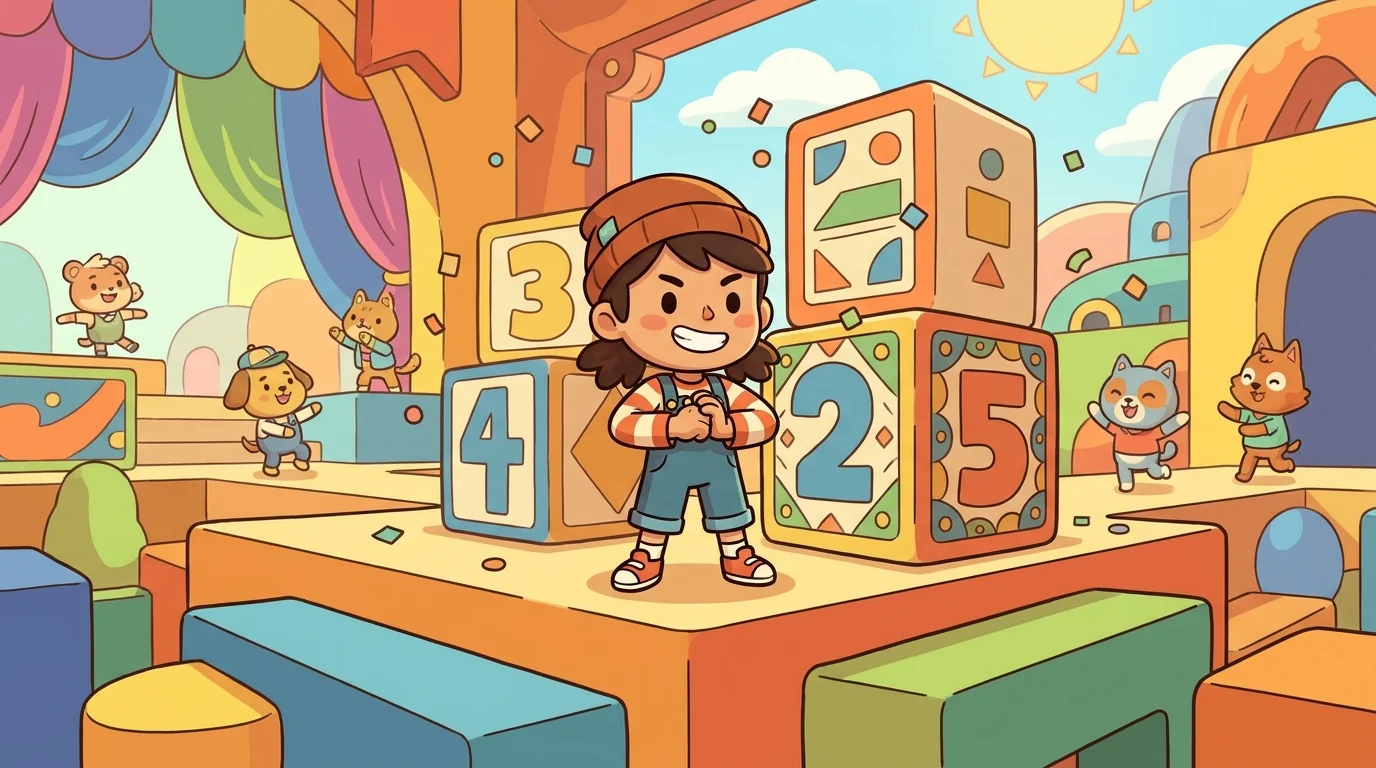
Fiva loved endings. Where other crew members dreaded the last few seconds of a routine — the part where a trick could fall apart — Fiva ran toward them. "Squaring a number that ends in five?" Fiva would say, cracking knuckles. "That's my favorite, because the ending is a gift. It's always the same."
Someone shouts "Thirty-five squared!" Fiva doesn't reach for a calculator. Fiva looks at the tens digit — the 3 — and finds its friendly neighbor, the 4 right above it. "Three times four is twelve." Then Fiva smiles, because here comes the gift. "And every single time, you just tack twenty-five on the end." Twelve, twenty-five. "Twelve hundred twenty-five." For 65 squared: 6 times 7 is 42, then 25 — forty-two hundred twenty-five. "The front changes. The ending never does. Twenty-five, twenty-five, twenty-five."
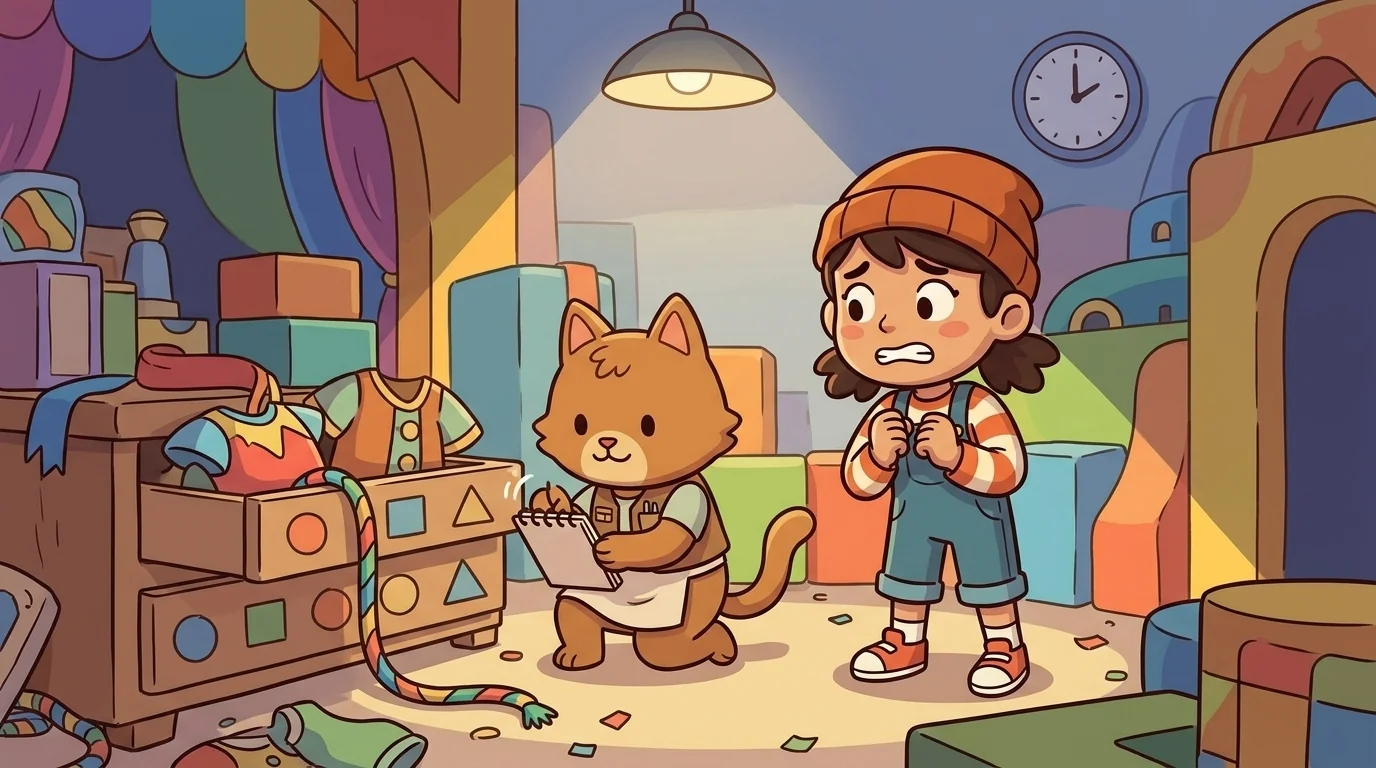
But Fiva used to fear endings.
As a young performer, Fiva could start anything and finish nothing. Routines would begin bright and confident and then fall apart in the last moment, because Fiva was sure the ending was where everyone would finally see the mistake. So Fiva left things half-done — tricks abandoned right before the reveal, a drawer full of beginnings. It felt like being someone who could only ever almost.
Marlow, the stage manager, sat with Fiva one evening among the half-finished things. "You think the ending is where it breaks," Marlow said. "But look." Marlow wrote 45 times 45. "The scary part — the finish — is actually the easiest part, because it's the same every time. Four times five is twenty, then twenty-five: two thousand twenty-five." Marlow tapped the 25. "You've been afraid of the one step you never have to figure out. It's already done. It's waiting for you." Something in Fiva that had been holding its breath for years finally let go.
The kid who came to Fiva had that half-finished look — the look of someone who starts strong and then quietly gives up before the end.
"I always mess up the last part," the kid said.
"Not this time," Fiva promised. "Because in this trick, the last part is a gift. Give me a number ending in five."
"...Fifty-five?"
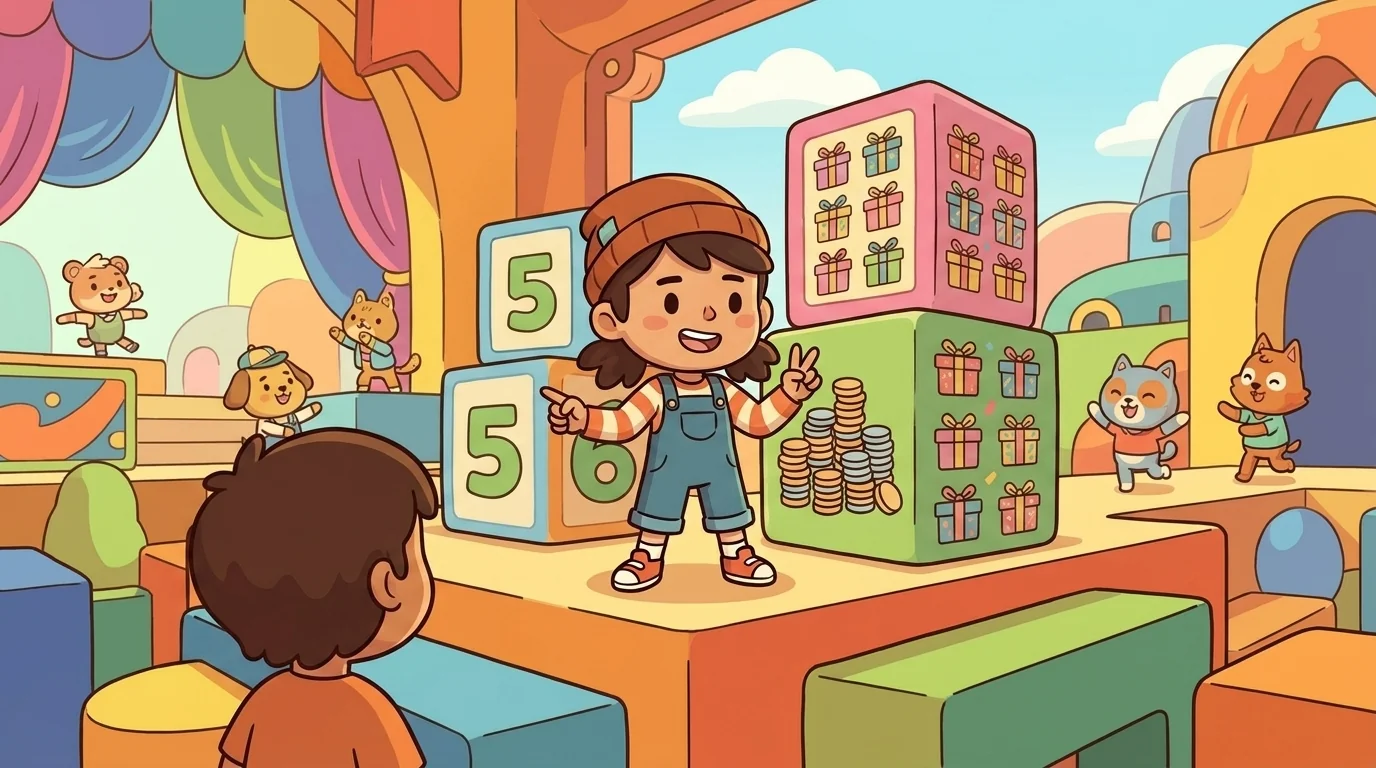
"Tens digit is five. Its friendly neighbor is six. Five times six?"
"Thirty."
"Now the gift — the ending that's always the same." Fiva waited.
"...Twenty-five?" the kid said, uncertain.

"Thirty, twenty-five. Three thousand twenty-five. And you'll never square wrong on the ending again, because it's always twenty-five."
They tried 25 squared (2 times 3 is 6, then 25 → 625), then 85 squared (8 times 9 is 72, then 25 → 7225). Each time the kid did the friendly-pair multiply, then let the ending arrive — the same, the same, the same — and each time they seemed a little more willing to reach the end instead of flinching from it.
And the feeling that settled into the kid then wasn't only the pride of a squared number. It was steadier and kinder: the discovery that the ending they'd been dreading was the part they could count on most. The step that had felt like the cliff was actually the handrail. That gentle relief — I can finish; the hard part was already done for me — spread all the way through, and Fiva felt it too, the old held breath releasing again, because it was the exact gift Marlow had once handed a performer with a drawer full of beginnings.
"Friendly pair, then twenty-five," Fiva said, warm and certain. "The front is the puzzle. The ending is the gift. And you deserve to reach it."
The ShowMath ensemble
Fiva is part of ShowMath's distributed-narrative cast. Each character embodies a different curricular primitive; together they teach the full subject.
-

Wendel
The Calendar-Keeper — anchors the year's doomsday and steps by sevens to name the weekday of any date
-

Elvi
The Eleven-Splitter — pries a number's digits apart and drops their sum into the gap (times-eleven shortcut)
-
Missa
The Missing-Digit Diviner — sums the shown digits and reads the hidden one as the shortfall to the next nine (casting out nines)
-

Squarl
The Squaring-Bouncer — bounces to the nearest round number and back to square any number in her head
-

Dashel
The Left-to-Right Racer — answers biggest-place-first, out loud, before the calculator finishes
-

Magda
The Magic-Square Weaver — seeds a four-by-four square from a date so every row, column, and diagonal sums the same
-

Nabo
The 1089 Conjurer — reverses, subtracts, reverses, adds, and always lands on 1089
-

Halvra
The Double-and-Halver — doubles one factor and halves the other until multiplying is easy
-

Modo
The Clock-Winder — wraps numbers around a clock of any size, the engine under the calendar and missing-digit tricks
-

Marlow
The Stage Manager (mentor) — a warm, attentive adult who coaches rehearse-then-perform and reveal-the-secret, and never performs for the kid