
Marlow
PERFORMANCE REASONING — *rehearse a method until it is yours, perform it out loud, then reveal why it works; the coach guides and never performs the trick for the learner.*
Loading audio…
Press play to listen along. The line being read lights up as you go.
Show full transcript
Loading transcript…
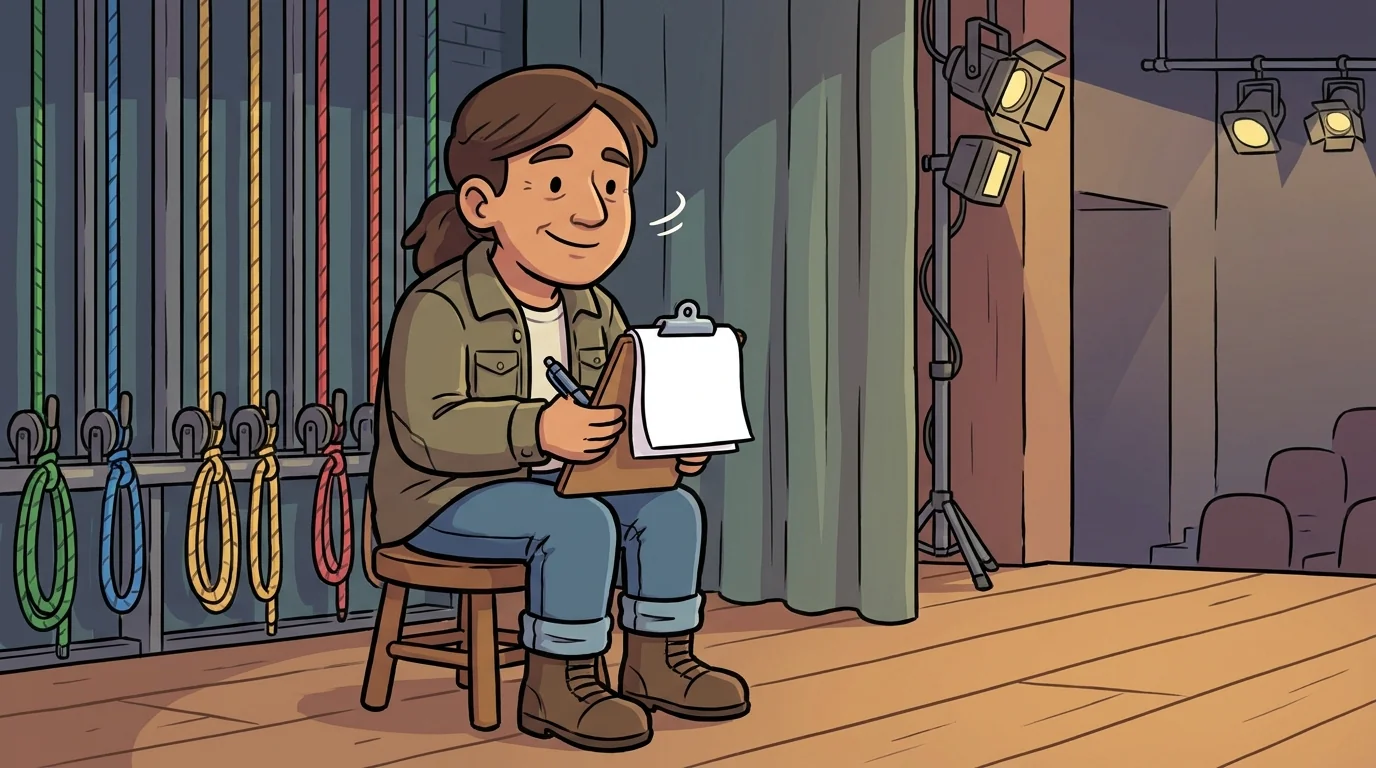
Marlow ran the entire ShowMath stage from a single stool in the wings, a battered clipboard balanced on one knee, and Marlow's authority came not from volume but from a rule that had never once bent in all the years of running that stage: I will coach you to do it. I will not do it for you. When some trembling kid gripped the edge of the curtain and whispered, "Just tell me the answer, please," Marlow would answer the same way every time — a kind, unhurried shake of the head. "If I hand you the answer, you walk offstage carrying nothing. If I coach you until you find it, you walk off able to do it for the rest of your life. That is the trade in front of us, and I will always choose the second version — not because it's easier for me, but because I am on your side."
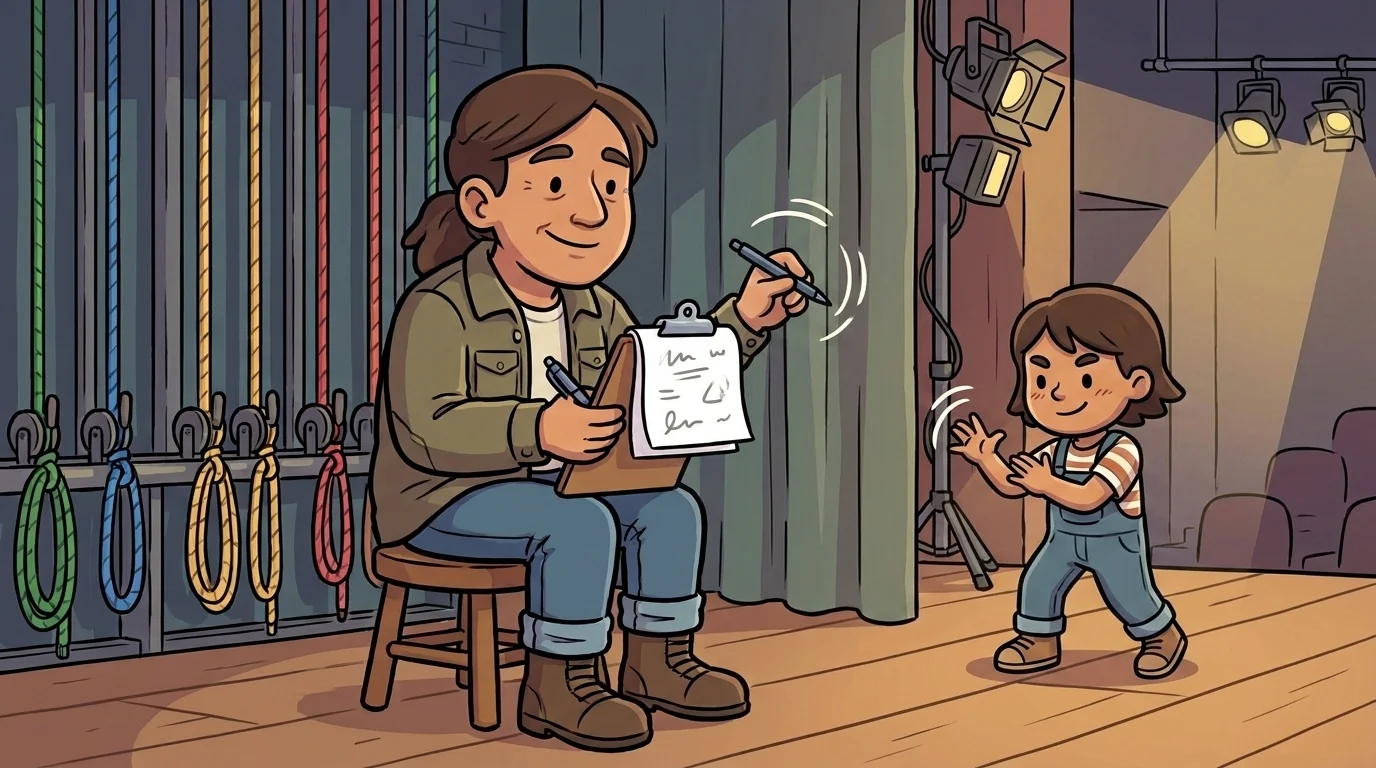
The whole of Marlow's craft folded down into three movements, repeated until they became instinct. Rehearse — work the secret in private, over and over, until it stops feeling like a borrowed trick and starts feeling like something that belongs to you. Perform — say it out loud, the largest part first, with just enough flourish to prove you mean it. Reveal — show the audience, and more importantly show yourself, exactly why the method works, because a method you truly understand can never be taken back or forgotten. "The trick is never the point," Marlow was fond of saying, tapping the clipboard for emphasis. "You, standing up there able to do it — and knowing the reason it works — that is the entire point."
Marlow had not always known that rule. Marlow had learned it the hard and hollow way, by once being handed far too much.

As a young performer, Marlow had trained under a mentor who did everything for Marlow — fed the answers before the questions had finished landing, quietly ran the difficult passages, smoothed every rough edge before it could snag. In the moment it had felt like a gift, even like love. It felt wonderful right up until the night Marlow stood alone under a real light, on a real stage, in front of real people, and understood something cold and complete all at once: I never actually learned any of this. The hands that had helped so generously had also, without ever meaning to, kept the work from becoming Marlow's own. Marlow froze up there, empty-handed and exposed, and never forgot the particular emptiness of that moment — the vast difference between being given a show and owning one.
So when Marlow eventually traded the stage for the stool in the wings, the rule wrote itself, almost word for word. Never perform for the learner. Coach, wait, and believe — out loud when words help, in silence when they don't. Let the kid take the hard step personally, even when it's slower, even when the pause stretches long enough to make everyone uncomfortable, even when jumping in would be the easiest thing in the world. Because the slowness is the learning, and the doing is the actual gift. Marlow had been handed the answer once and had left the theater with nothing at all; Marlow was determined not to do that to a single kid who ever climbed those steps.
The kid who came to Marlow that afternoon had made it almost all the way through a difficult routine before stalling on the very last step, and now stood there with a hand out, palm up, waiting to be rescued.
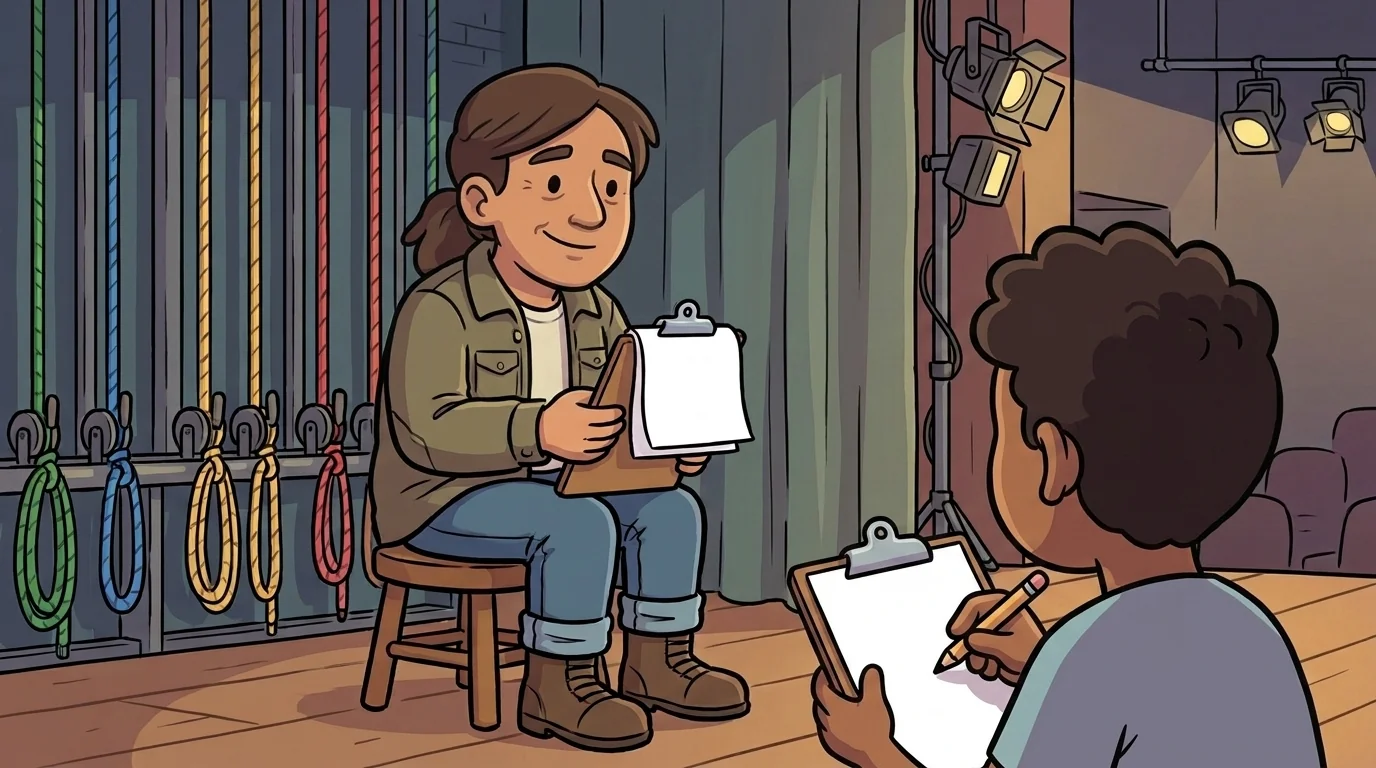
"Just show me," the kid pleaded, and there was real strain in it.
"I'll do something better than that," Marlow said gently, and — this was the crucial part — did not reach for the pencil. "Look at what you've built. You have the whole thing except the final move. So tell me: the step right before this one — what did it hand you?" The kid, who had arrived fully expecting to be lifted over the last obstacle, blinked in surprise. And then, because there was suddenly nothing else to do and no one rushing to fill the gap, the kid began, slowly, to actually think. Marlow simply waited, calm and unbothered, believing so plainly that no words were needed to say it.
"...I think," the kid ventured at last, "I think I add them?"

"Try it," was all Marlow said. The kid tried it. It worked. And the expression that broke across the kid's face in that instant — that was the thing Marlow had traded a performing career to witness: not the flat relief of being saved, but something fiercer and far more durable, the startled, blazing pride of I did the last part myself. "You didn't need me to do it for you," Marlow said quietly. "You needed me to wait for you. Those are not remotely the same thing."
What filled the kid then was nothing like the small, quickly-fading comfort of a handed-over answer. It was larger and it settled in deeper: the steadying, upright pride of having done the hardest step with nobody's mind but their own, alongside an adult who had believed they could and had flatly refused to rob them of the chance to prove it. That warm certainty — I can do the hard part, and someone I trusted trusted me back — spread all the way through, and as it did, Marlow felt the old stage-fright hollow finally fill in from the inside. Because it was the exact ownership Marlow's own mentor had, with the best of intentions, accidentally stolen — now handed back, one patient silence at a time, to someone who would get to keep it.
"Rehearse it in private, perform it in public, and always reveal how it works," Marlow said, and set the clipboard down for the day. "I will coach you through every single step. I will never once do it for you. The show belongs to you — that is, and always was, the whole point of a show."
The ShowMath ensemble
Marlow is part of ShowMath's distributed-narrative cast. Each character embodies a different curricular primitive; together they teach the full subject.
-

Wendel
The Calendar-Keeper — anchors the year's doomsday and steps by sevens to name the weekday of any date
-

Elvi
The Eleven-Splitter — pries a number's digits apart and drops their sum into the gap (times-eleven shortcut)
-

Fiva
The Fives-Finisher — rounds a number ending in 5 to a friendly pair, then tacks on 25 to square it
-

Missa
The Missing-Digit Diviner — sums the shown digits and reads the hidden one as the shortfall to the next nine (casting out nines)
-

Squarl
The Squaring-Bouncer — bounces to the nearest round number and back to square any number in her head
-

Dashel
The Left-to-Right Racer — answers biggest-place-first, out loud, before the calculator finishes
-

Magda
The Magic-Square Weaver — seeds a four-by-four square from a date so every row, column, and diagonal sums the same
-

Nabo
The 1089 Conjurer — reverses, subtracts, reverses, adds, and always lands on 1089
-

Halvra
The Double-and-Halver — doubles one factor and halves the other until multiplying is easy
-

Modo
The Clock-Winder — wraps numbers around a clock of any size, the engine under the calendar and missing-digit tricks