Norm and Yardstick
NORM-AND-YARDSTICK — a bare number can't scare you or calm you on its own. it needs TWO partners: how OFTEN does this happen (Norm), and compared to WHAT (Yardstick). give it both, and it finds its real size.
Loading audio…
Press play to listen along. The line being read lights up as you go.
Show full transcript
Loading transcript…
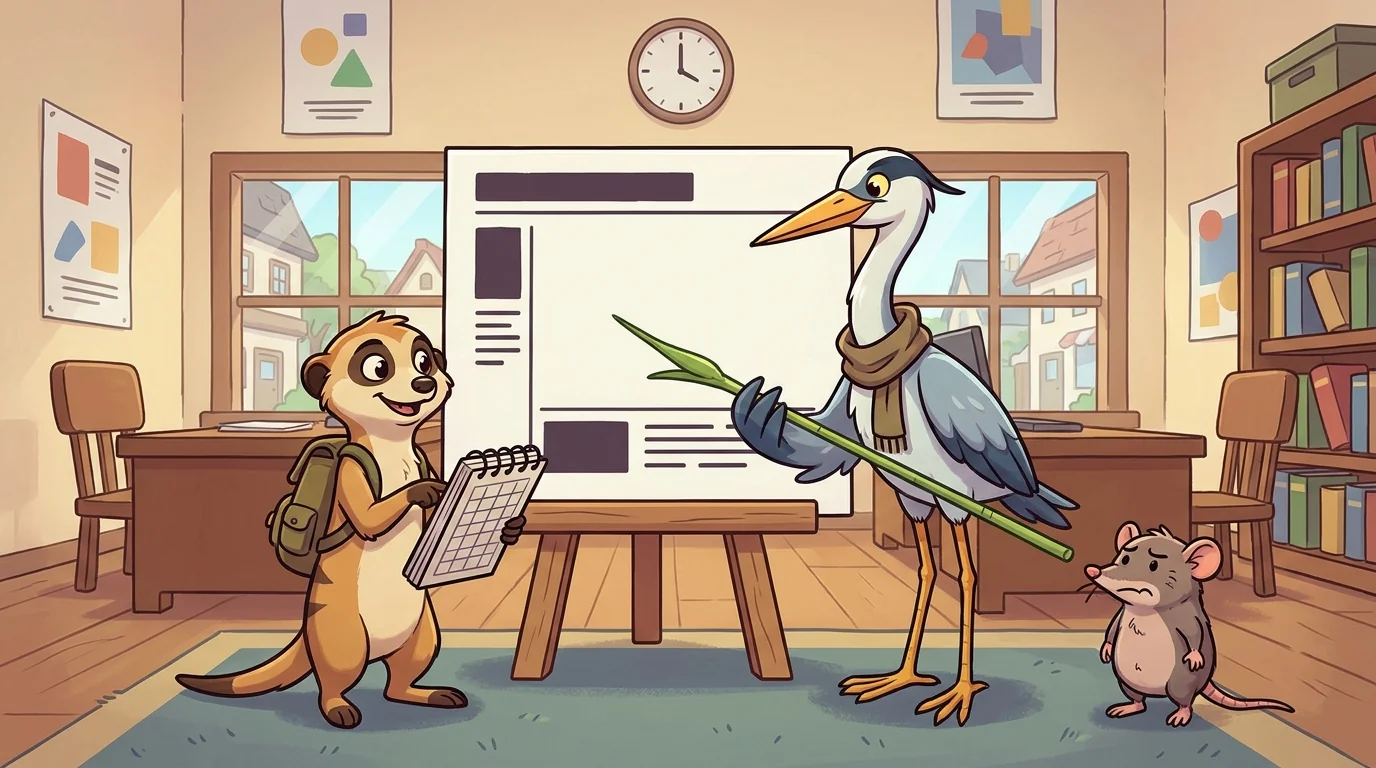
Norm the meerkat and Yardstick the heron stood together over an alarming notice, and a young shrew named Fen couldn't tell why the how-often-counter and the compared-to-what-measurer always sized up the same scary numbers side by side.
"Because a bare number is helpless on its own," Yardstick said, tall and calm. "It can't tell you if it's alarming until it has TWO partners." Norm tapped her tally-book. "It needs to know how OFTEN this usually happens — that's me, the base rate." Yardstick laid down his reed. "And it needs to know compared to WHAT — that's me, the context." Norm and Yardstick nodded together. "A bare number can't scare you or calm you on its own. It needs both partners: how often does this happen, and compared to what? Give it both, and it finds its real size."
Fen frowned. "But isn't one enough? If I know how often, isn't that the answer?"
"Watch what happens with only one," Norm said. "A number with only ONE of us is still half-lost. You'll see."
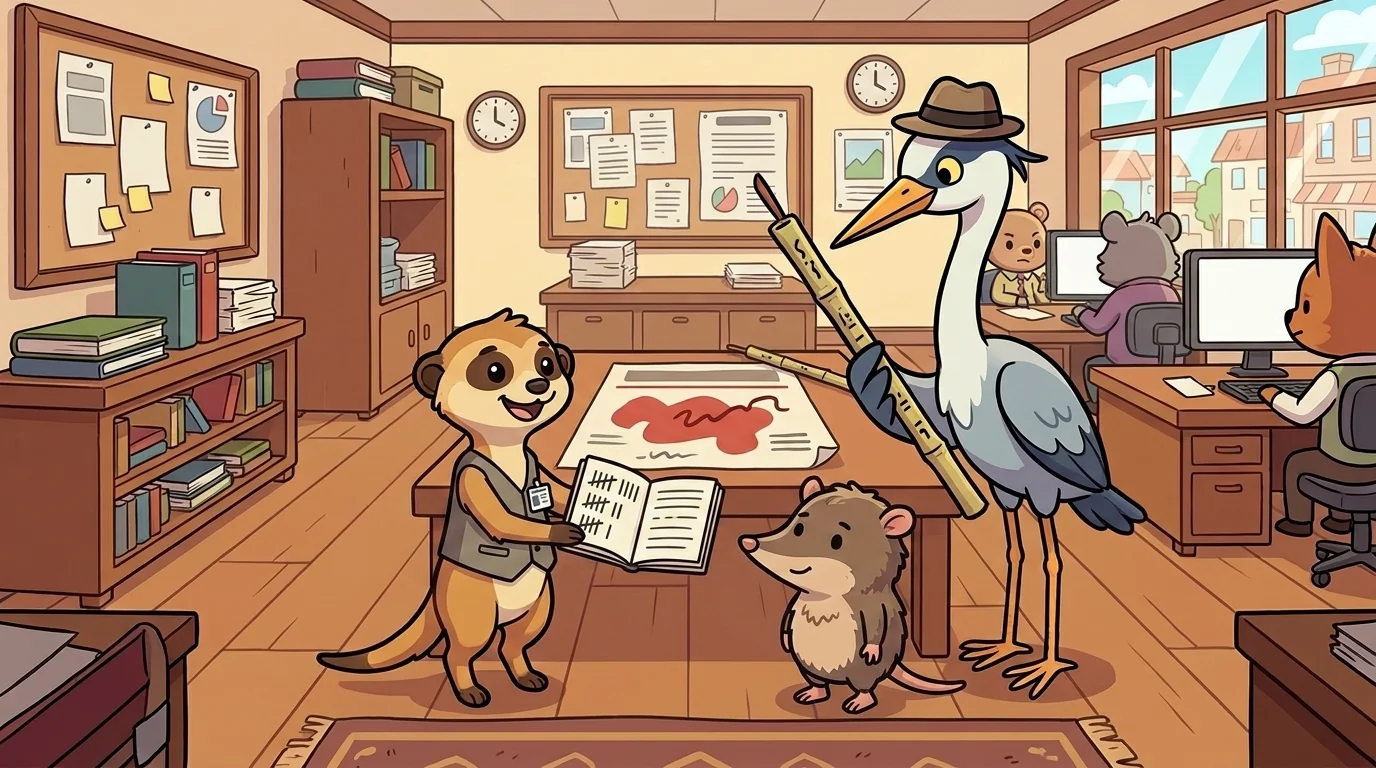
Norm went first, to show the how-often.
She held up her tally-book at an alarming notice: "FOUR foxes seen near the burrow this week!" "Four foxes sounds scary," Norm said. "So first: how OFTEN are foxes usually seen near the burrow?" She flipped to her counts. "Most weeks: three or four. Four foxes is a completely NORMAL week." She looked at Fen. "See? Knowing the base rate already helps — four isn't unusual." Then she paused. "But suppose the notice said 'four foxes' and I checked my book and four IS normal — I'd relax. Good. But what if the notice said 'a fox was seen FOUR HUNDRED FEET away'? My tally-book counts how OFTEN foxes appear — it says nothing about whether four hundred feet is CLOSE or FAR." She glanced at Yardstick. "How OFTEN is my question. But some scary numbers aren't about how often — they're about size and distance. For those, I need him."
Fen considered. "So YOUR question handles 'how many, how often'... but not 'how big, how far.'"
"Only the how-often," Norm agreed. "Half the sizing-up. The other half is his."

Then Yardstick took over, to show the compared-to-what.
He laid his reed against the same notice's other claim: "A fox was seen FOUR HUNDRED FEET from the burrow!" "Four hundred feet sounds close and scary," Yardstick said. "So: compared to WHAT?" He stretched a long wing. "Four hundred feet is right-next-door for a FLYING hawk. But for a fox padding through thick grass, four hundred feet is a long, slow way off — plenty of warning." He looked at Fen. "See? The comparison tells you four hundred feet is actually FAR, for a fox. That's my question — compared to what." Then he folded his wing. "But suppose the notice just said 'a fox was seen.' My reed measures size and distance — but 'a fox was seen' has no size to measure. The real question there is how OFTEN foxes are seen at all." He glanced at Norm. "For the how-often, I need her."
Fen looked from the meerkat to the heron. "So HIS question handles 'how big, how far, compared to what'... but not 'how often.' And YOUR question handles 'how often'... but not 'compared to what.'"
"Two partners," Yardstick said. "A scary number usually needs both."
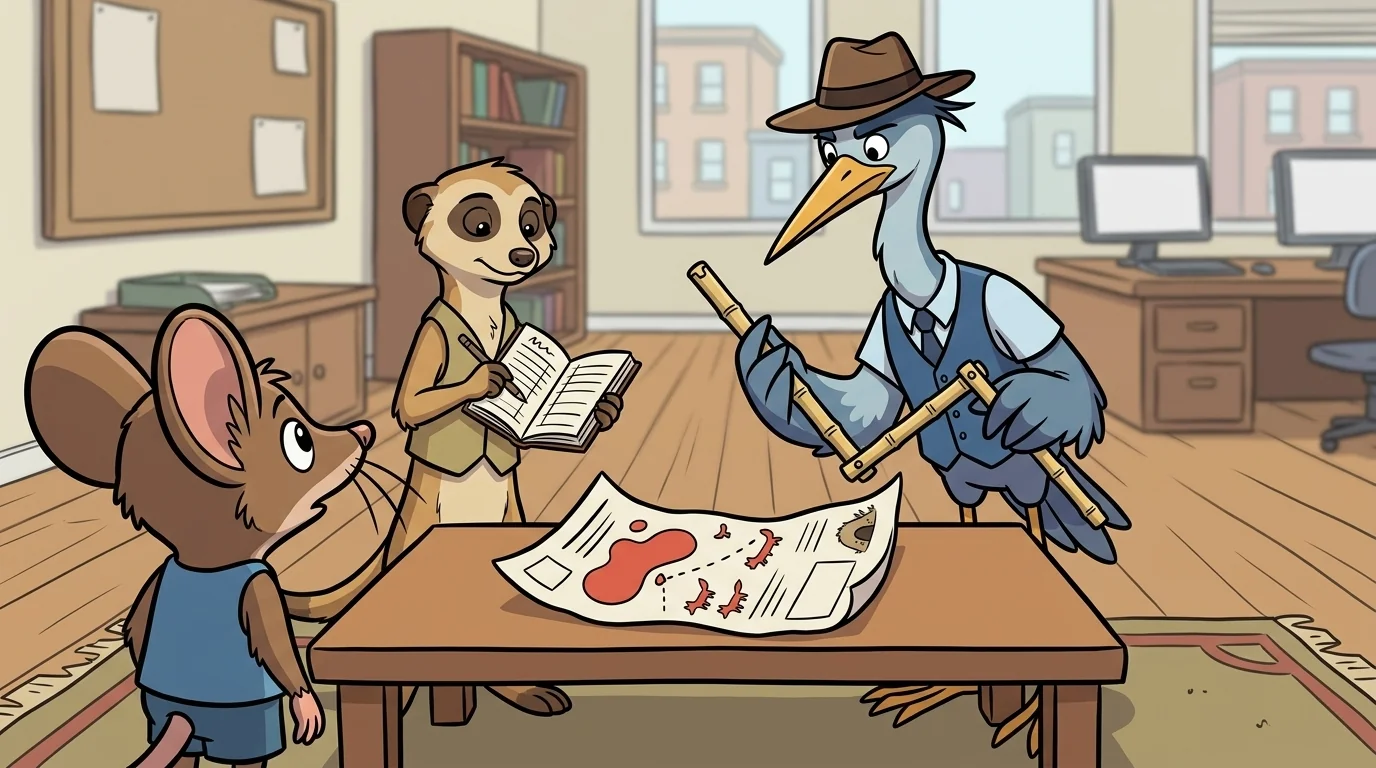
Then Norm and Yardstick sized up the whole alarming notice TOGETHER, and Fen finally saw a scary claim shrink to its real size.
The notice roared: "DANGER! FOUR foxes seen this week, one just FOUR HUNDRED FEET from the burrow!" Fen's heart pounded. But Norm asked her question — "How OFTEN, usually? Four foxes a week is... completely normal, three or four is every week." And Yardstick asked his — "Compared to WHAT? Four hundred feet, for a slow-padding fox, is a long, safe way off with lots of warning." And together, with both partners supplied, the terrifying notice deflated into what it really was: a normal number of foxes (Norm's half), at a safe distance (Yardstick's half). Nothing alarming at all. Fen's heartbeat slowed.
"OH," Fen breathed. "It only sounded like DANGER because the notice gave the numbers with NEITHER partner — no 'how often,' no 'compared to what'! And giving it both makes it ordinary!"
"That's it," Norm said. Alone, her how-often caught the 'four foxes' but not the 'four hundred feet.' Alone, Yardstick's compared-to-what caught the distance but not the frequency. But together — how often AND compared to what — they gave the scary numbers both missing partners, and the numbers found their true, ordinary size. "I tell you how often it usually happens," Norm said. "And I tell you what to measure it against," Yardstick said. "Both partners," they said together, "and a number built to scare you finds its real size instead."
Fen tried it on a small scary claim — "TWO owls, within a hundred wingbeats!" — asking both: "How often, usually? (Two owls is a normal night.) Compared to what? (A hundred wingbeats is far, for a walking shrew.)" — and the claim shrank to nothing. "I gave it both partners," Fen said, "and it stopped being scary."
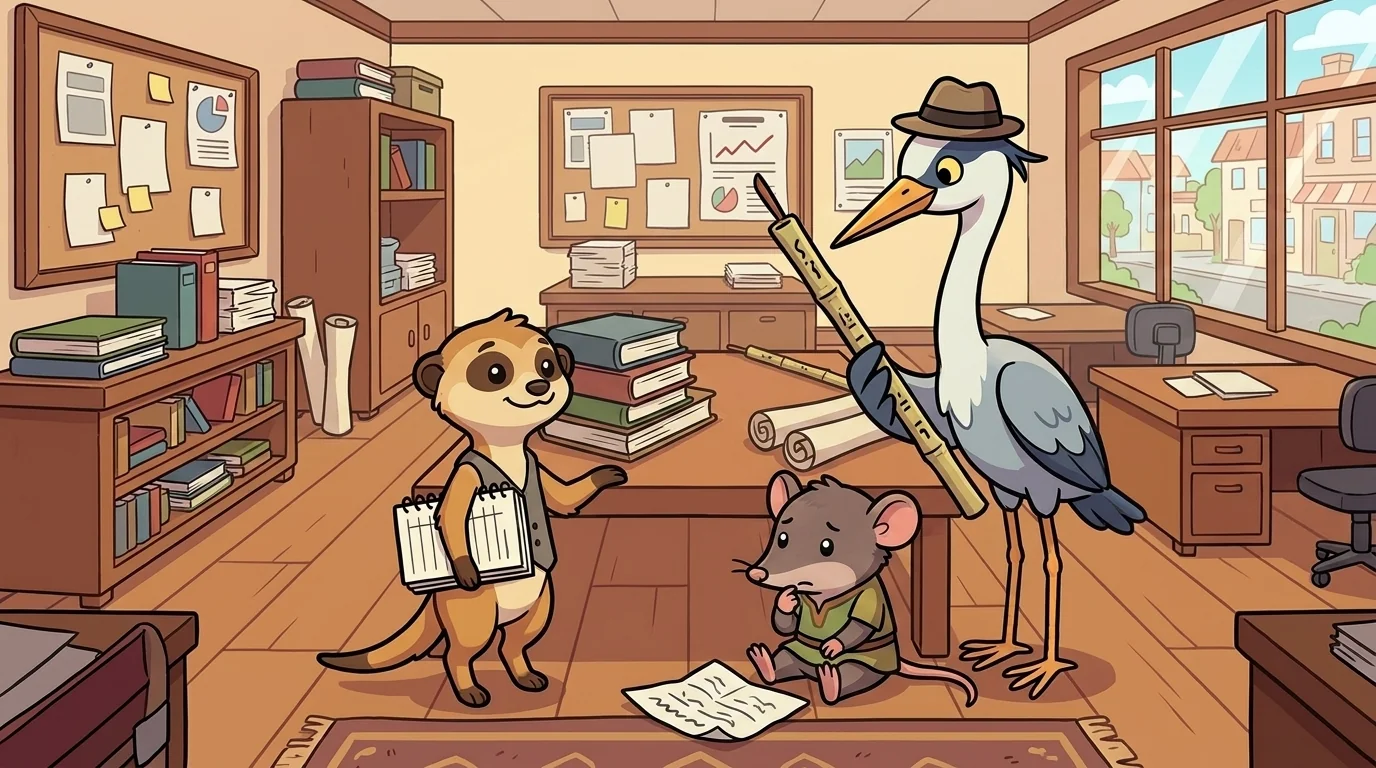
Norm and Yardstick let the young shrew sit with the deflated notice, then turned the lesson toward him.
"You'll meet numbers built to scare you everywhere," Yardstick said. "Alarming claims love to give you a bare number with neither partner attached." Norm nodded. "So don't panic and don't scoff. Just supply both: how OFTEN does this usually happen, and compared to WHAT?"
"I always just react to the number," Fen admitted. "It sounds huge or scary and my heart races, and then I feel silly when it turns out to be ordinary."
"You're not silly," Norm said gently. "A bare number is DESIGNED to borrow whatever fear you bring to it." She leaned against one of Fen's shoulders, and Yardstick lowered his long neck to the other. "How often, usually?" Norm said. "And compared to what?" Yardstick said. "Give a scary number both," they said together, "and it finds its real size."
Fen drew a slow breath, holding both questions, and the racing, silly-afterward feeling eased into a calm, measured steadiness — the warm gladness of a young thinker who's learned that a scary number is helpless on its own, and that two calm questions — how often, and compared to what — are enough to bring it down to its true, ordinary size.
The TruthQuest ensemble
Norm and Yardstick is part of TruthQuest's distributed-narrative cast. Each character embodies a different curricular primitive; together they teach the full subject.
-

Claim
Claim-identification — what EXACTLY is being asserted? distinguish claim from opinion from feeling from prediction
-

Weigh
Credibility-evaluation — who's in a position to KNOW? what stake? calibration not verdict (shared design language with DebateForge Weigh)
-

Trace
Evidence-traceback — where does this claim ORIGINATE? what's the chain? open four tabs; follow it back
-

Update
Belief-revision — being WRONG is how knowledge MOVES; visibly carry old-guess and new-guess as data (shared design language with DebateForge Yield)
-

Wonder
Epistemic-humility — 'I don't know yet' is the START of knowing; trust calibrated to evidence; counter-cynicism
-

Prove
Falsifiability — what would change my mind? a belief you could NEVER be proven wrong about isn't strong, it's just stuck
-

Vivid
Anecdote vs. data — one dramatic story feels truer than a hundred quiet ones; ask: is this ONE story, or the whole picture?
-

Norm
Base rates — before you panic at a scary number, ask how OFTEN it usually happens; most 'shocking' things turn out normal
-

Yardstick
Context — 'a lot' and 'a little' mean nothing on their own; always ask: compared to WHAT?
-

Cull
Cherry-picking / representativeness — anyone can find a few examples for anything; the real question is what got LEFT OUT?