
Norm and Yardstick
NORM-AND-YARDSTICK — a bare number can neither scare nor calm you alone. it needs two partners: how OFTEN does this happen (Norm's base rate) and compared to WHAT (Yardstick's reference). give it both and it finds its true size; give it one and it stays half-lost.
Loading audio…
Press play to listen along. The line being read lights up as you go.
Show full transcript
Loading transcript…
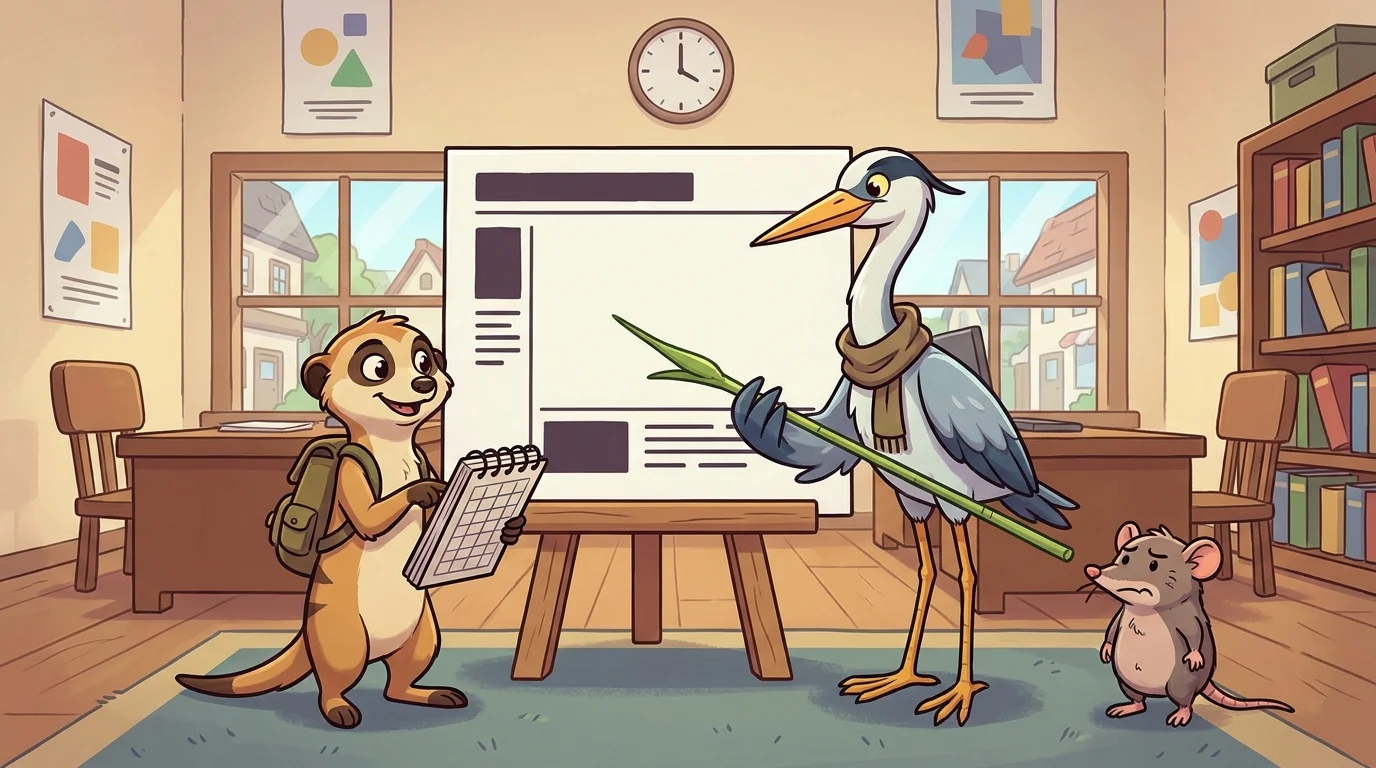
Norm the meerkat and Yardstick the heron stood together over an alarming notice, and a young shrew named Fen couldn't tell why the how-often-counter and the compared-to-what-measurer always sized up the same scary figures side by side. Norm's tally-book was open; Yardstick's reed lay ready.
"Because a bare number is helpless on its own," Yardstick said, tall and calm. "It can't tell you whether to worry until it has two partners." Norm tapped her columns of counts. "It needs to know how often this usually happens — that's me, its base rate." Yardstick laid down his reed. "And it needs to know compared to what — that's me, its reference." They nodded together. "A bare number can't scare you or calm you on its own. It needs both partners: how often, and compared to what. Give it both, and it finds its true size."
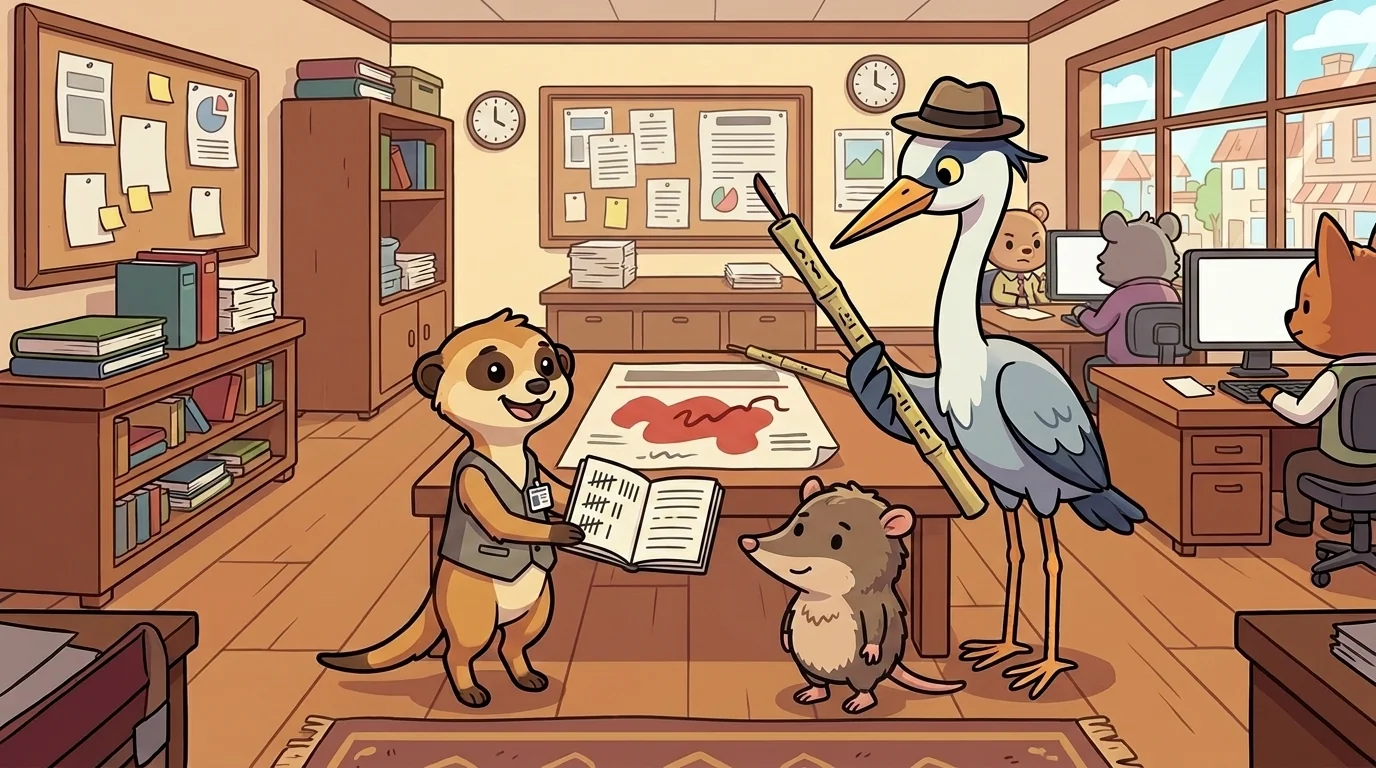
Fen frowned. "But surely one is enough? If I know how often, isn't that the whole answer?"
"Watch what happens with only one," Norm said. She wrote a figure on the notice: seven. "Seven of something happened. I can tell you it happens seven times most weeks — so it's completely usual, by frequency." Yardstick tipped his head. "But Norm's base rate still can't tell you if seven is a lot of the thing — seven out of ten is nearly all; seven out of ten thousand is almost none. That needs my question: compared to what total? Seven can be 'basically everything' or 'basically nothing,' and how often it happens doesn't settle which." Norm nodded. "And my base rate needs his reference right back. 'Usual' compared to a calm year is different from 'usual' compared to a stormy one. Alone, each of us leaves the number half-lost."
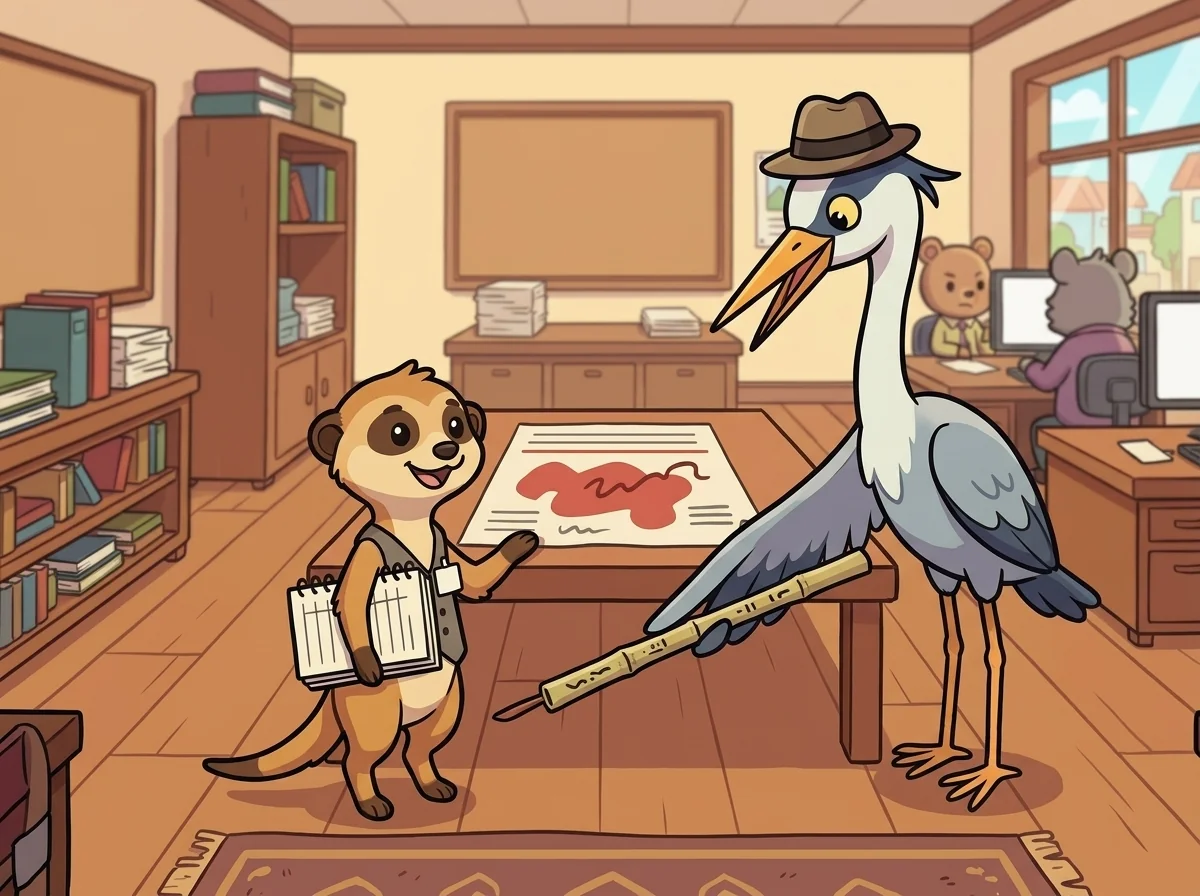
Fen's nose twitched. "So a number I'm handed with neither — just a bare 'seven, and isn't that shocking' —"
"— is a number stripped of both partners on purpose," Yardstick finished, "precisely so your fear supplies them for it. A figure with no base rate and no reference borrows whatever size your worry gives it. That's not information; it's a costume." Norm ran a claw down her counts. "So you dress it properly. First mine: how often does this usually happen? Then his: compared to what — out of how many, next to which fair baseline? Two questions, and the seven stops being a jolt and becomes a fact — maybe a reassuring one, maybe a genuinely serious one, but now a true-sized one either way."
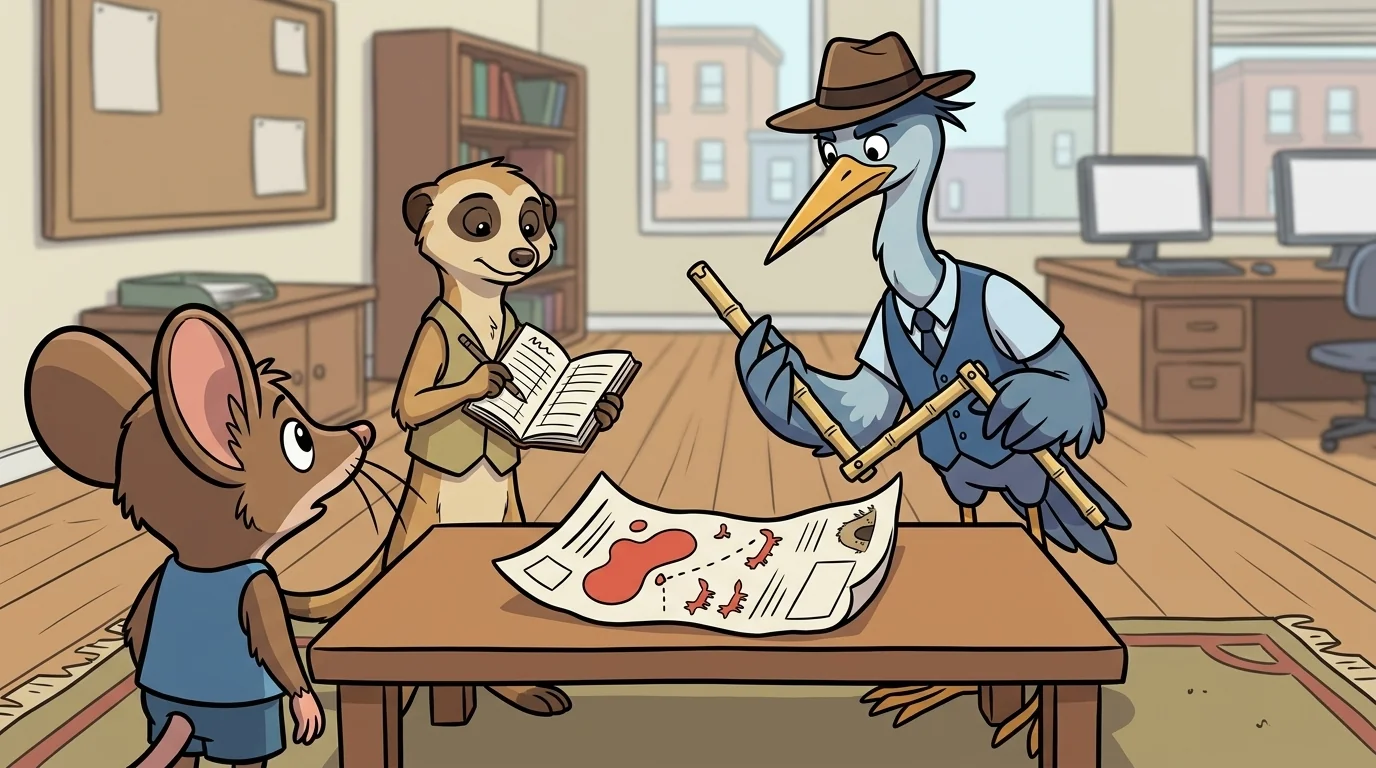
They had each learned their half young, and learned the hard way that half wasn't enough. Norm, a pup, had shrieked invasion at five beetles that turned out to wander in every morning — a fright cured by a base rate. Yardstick, a fledgling, had believed a mile-wide lake was the vastest water in the world until he crossed it in a lazy minute — a fright cured by a reference. But it was a single figure at the Tribune that taught them to stand together: a count that Norm proved perfectly usual by frequency, which Yardstick then showed was an enormous share of a tiny whole — usual and important at once. "One of us alone would have gotten it wrong," Norm admitted. "I'd have called it fine; he'd have missed that it was routine." Old Veritas had set them side by side after that. "A number has two ways of being misunderstood," the mentor said, "so it takes two guardians. Never let one of you pass judgement without the other. Together you give a figure back its honest size — no larger to feed a fear, no smaller to soothe one."
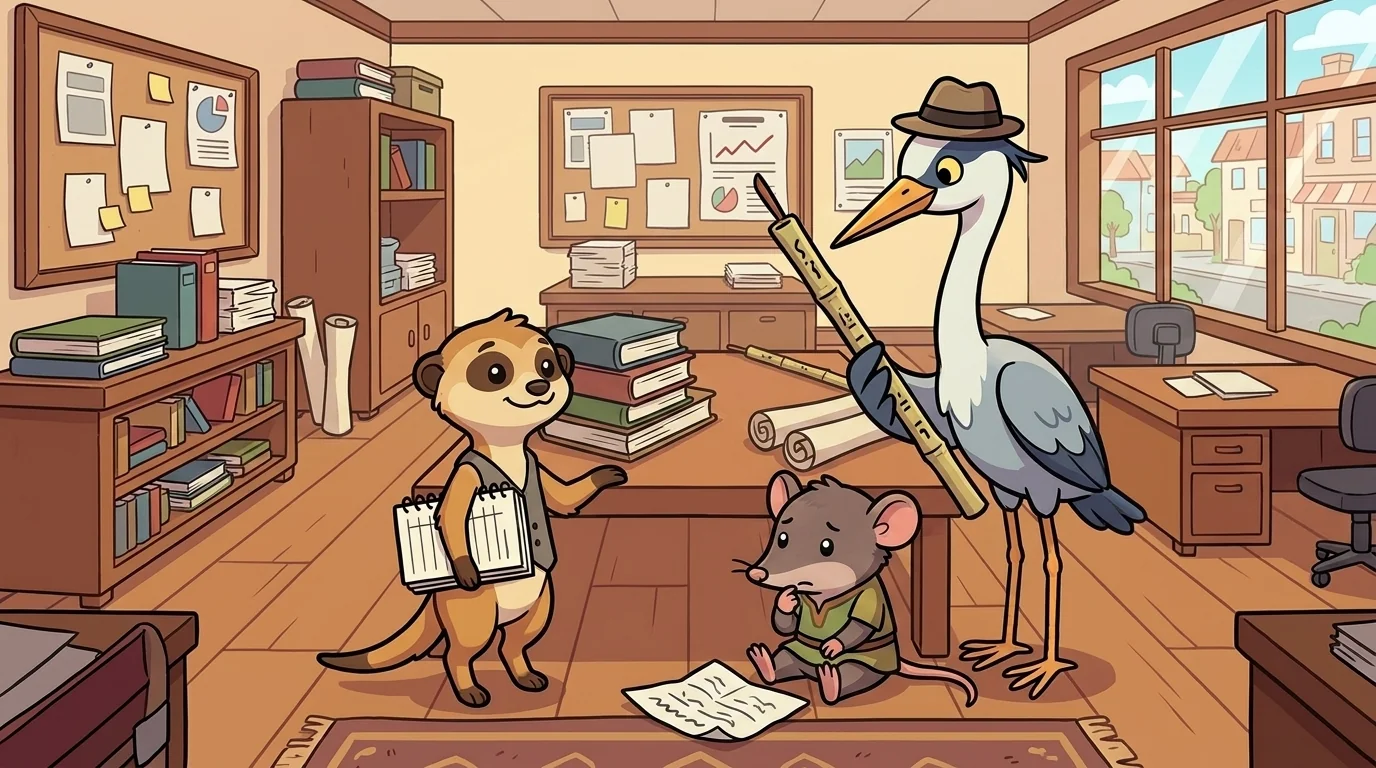
Fen looked at the notice, then supplied both partners aloud. "Seven happened... how often does seven usually happen? — that's the base rate. And seven out of how many, compared to what fair total? — that's the reference." As she named them, the notice's alarm quietly drained and left a plain, sized fact in its place — not dismissed, not inflated, just true. Norm closed her tally-book; Yardstick tucked away his reed. Fen's wound-up worry loosened into the grounded steadiness of a number that had finally told her exactly what it meant and nothing more. "How often," she said, "and compared to what." "Both," said Norm and Yardstick together, "always both — or the number stays half-lost."
The TruthQuest ensemble
Norm and Yardstick is part of TruthQuest's distributed-narrative cast. Each character embodies a different curricular primitive; together they teach the full subject.
-

Claim
Claim-identification — what EXACTLY is being asserted? distinguish claim from opinion from feeling from prediction
-

Weigh
Credibility-evaluation — who's in a position to KNOW? what stake? calibration not verdict (shared design language with DebateForge Weigh)
-

Trace
Evidence-traceback — where does this claim ORIGINATE? what's the chain? open four tabs; follow it back
-

Update
Belief-revision — being WRONG is how knowledge MOVES; visibly carry old-guess and new-guess as data (shared design language with DebateForge Yield)
-

Wonder
Epistemic-humility — 'I don't know yet' is the START of knowing; trust calibrated to evidence; counter-cynicism
-

Prove
Falsifiability — what would change my mind? a belief you could NEVER be proven wrong about isn't strong, it's just stuck
-

Vivid
Anecdote vs. data — one dramatic story feels truer than a hundred quiet ones; ask: is this ONE story, or the whole picture?
-

Norm
Base rates — before you panic at a scary number, ask how OFTEN it usually happens; most 'shocking' things turn out normal
-

Yardstick
Context — 'a lot' and 'a little' mean nothing on their own; always ask: compared to WHAT?
-

Cull
Cherry-picking / representativeness — anyone can find a few examples for anything; the real question is what got LEFT OUT?