
Build
BUILD — *the first version is supposed to be bad. make it. show it. learn from it.*
Listen along — Build
Loading audio…
Press play to listen along. The line being read lights up as you go.
Show full transcript
Loading transcript…
Chapter 4 — Build and the Fast-Bad-First-Draft
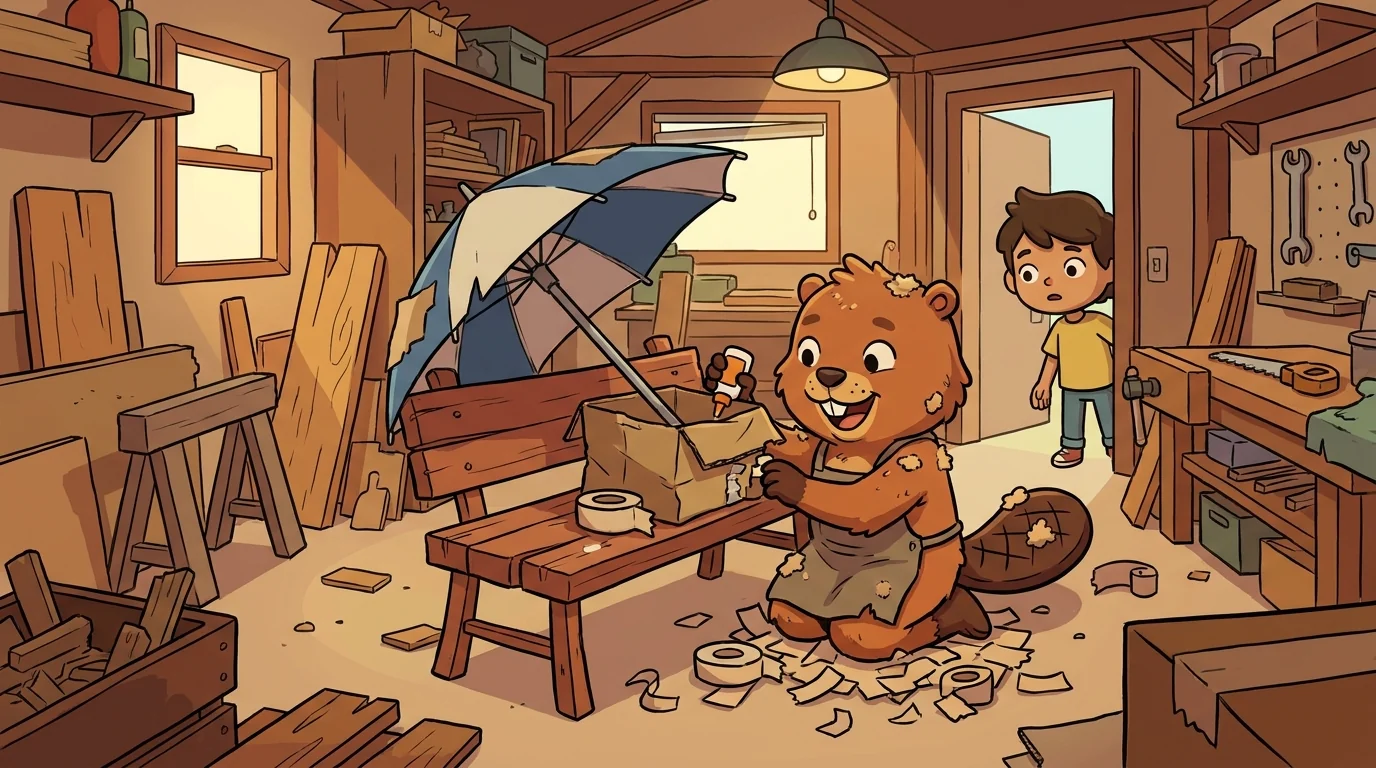
Listen’s interviews had finally surfaced the real problem — gardeners hated moving seedlings without flimsy trays — and Build could not wait to make something terrible about it.
In the garage, Build grabbed cardboard, plastic wrap, and tape, and in twenty minutes produced three prototypes: a cardboard caddy with a handle, a fabric apron-pouch, and a little wheeled cart. Were they good? Absolutely not. The caddy bent. The pouch leaked soil in a sad brown trickle. The cart wobbled and threw a seedling on the second push.
Build looked at all three and beamed. “PERFECT. Let’s go show them.”
Spot stared, doubtful. “They look so… bad.”
“They ARE bad,” Build agreed, delighted. “That’s the whole point. Now we take these three bad things to three real gardeners and ask one question: ‘which of these bad things is closest to useful for YOU?’ And they’ll tell us. We don’t have to GUESS which idea is right. We let the people who have the problem choose. Then we build the better version of the winning bad thing — and only that one.”
Spot frowned. “Why not just build one good one to start with?”
“Because building the ‘good’ one takes weeks — and it’s a guess,” Build said. “If the guess is wrong, that’s weeks gone. But three bad prototypes cost five dollars of cardboard and one afternoon. Being wrong THIS way is cheap and fast; being wrong the slow way is expensive and heartbreaking. So we get the being-wrong over with quickly, on purpose, while it’s still cheap.”
Ledger, watching from the workbench, nodded slowly. “That’s lean,” Ledger said quietly. “Bad fast beats perfect slow, every time you’re still learning what people actually need. The embarrassing first draft isn’t the failure. It’s the fastest question you can ask the world.”
“Fast bad first. Less-bad second. Useful eventually.”
The VentureQuest ensemble
Build is part of VentureQuest's distributed-narrative cast. Each character embodies a different curricular primitive; together they teach the full subject.
-
Spot
Opportunity recognition — noticing problems worth solving for real people
-

Listen
Customer discovery — asking + waiting + watching, never guessing
-

Pitch
Pitch craft — plain-language story, inviting people in, never pressuring
-

Weigh
Ethical decision-making — sitting with tradeoffs, holding stakeholder views