Surplus
Profit is what's left
Loading audio…
Press play to listen along. The line being read lights up as you go.
Show full transcript
Loading transcript…
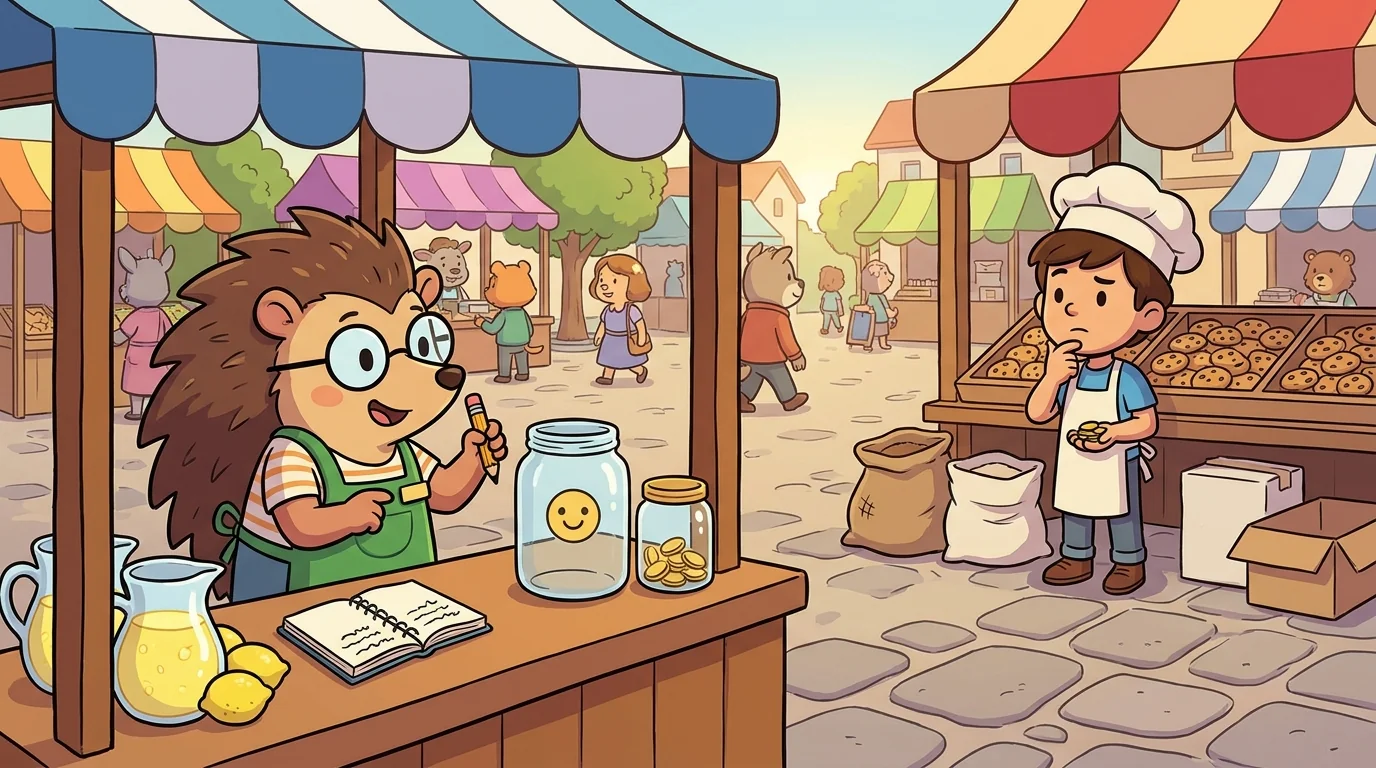
Surplus kept two jars on the market stall: a big one labelled with a smiley face, and a small one that was usually emptier.
She was a hedgehog-tween with soft brown quills, round spectacles, a green market apron with deep pockets and a stubby pencil she was always chewing thoughtfully. Her lemonade stall stood at the end of the VentureQuest market, under a striped awning.
At the end of a hot Saturday, a boy called Kai ran over from his cookie stall, beaming. "I took in forty coins today!" he said. "Forty! I'm rich!"
Surplus put down her pencil. "That's brilliant selling," she said. "Can I ask a question? How much did the cookies cost to make?"
Kai blinked. "Um. Flour, sugar, butter, chocolate chips. And I paid my sister to help." He counted on his fingers. "And the stall fee. And the paper bags."
"Let's add those up," said Surplus, "and take them away from the forty. Whatever's left is your profit. That's the part you actually earned."
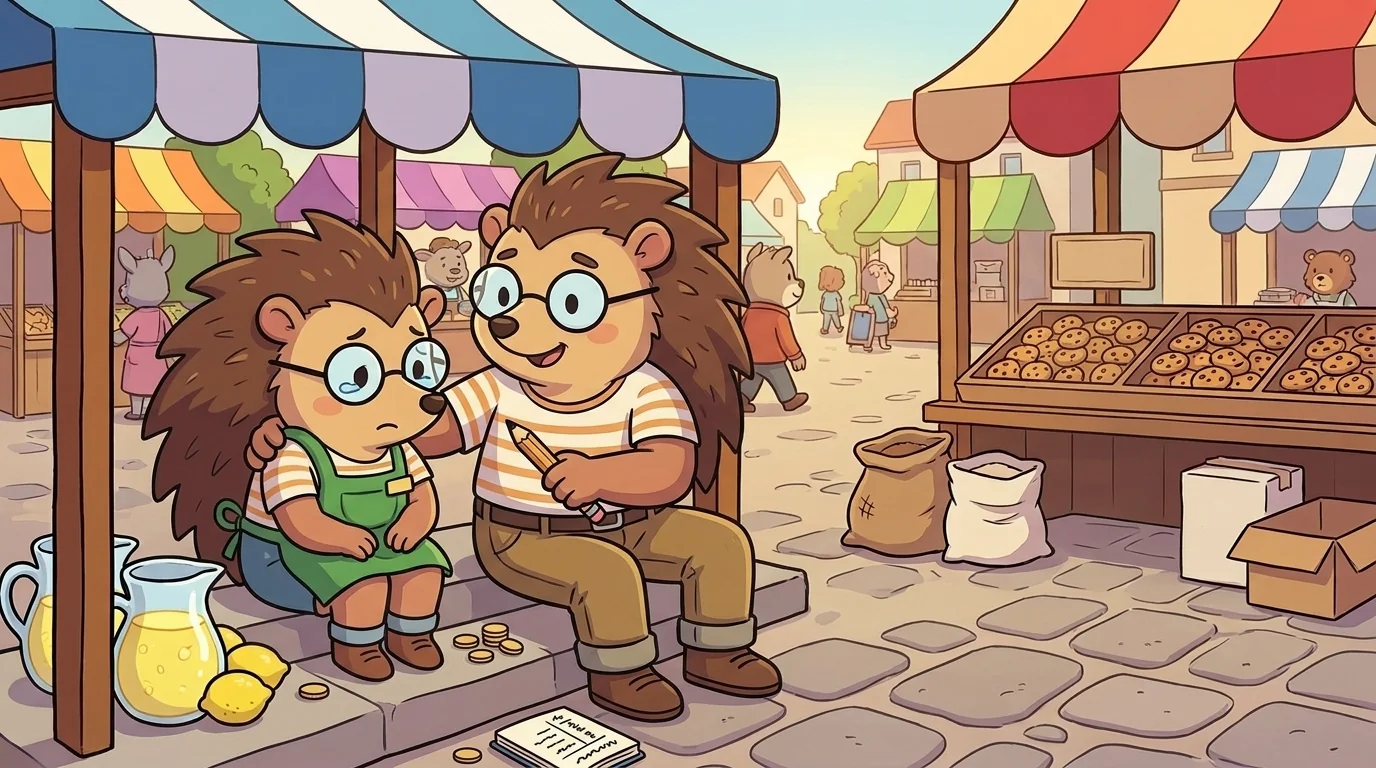
Surplus had not always known the difference.
When she was small, she ran her first lemonade stand and took in thirty coins. She felt enormously proud and told everyone she'd made thirty coins. Then her dad reminded her, very gently, that he'd bought the lemons, the sugar and the cups for her, and that had cost twenty-two. She'd made eight.
Eight felt so much smaller than thirty that she wanted to cry, and then she felt silly for wanting to.
Her dad sat beside her on the step. "Eight is real," he said. "Thirty was the money that came in. Eight is the money that stayed. The money that stays is what you can save, or spend, or use to make next week's stall better." He handed her a pencil. "Always write down every cost, even the little ones. Then take them away. What's left is the surplus."
She liked that word so much she kept it.
When she was old enough, Surplus came to VentureQuest, because it was a place for learning how to run something well.
The mentor met her at the gate. "What do you bring?"
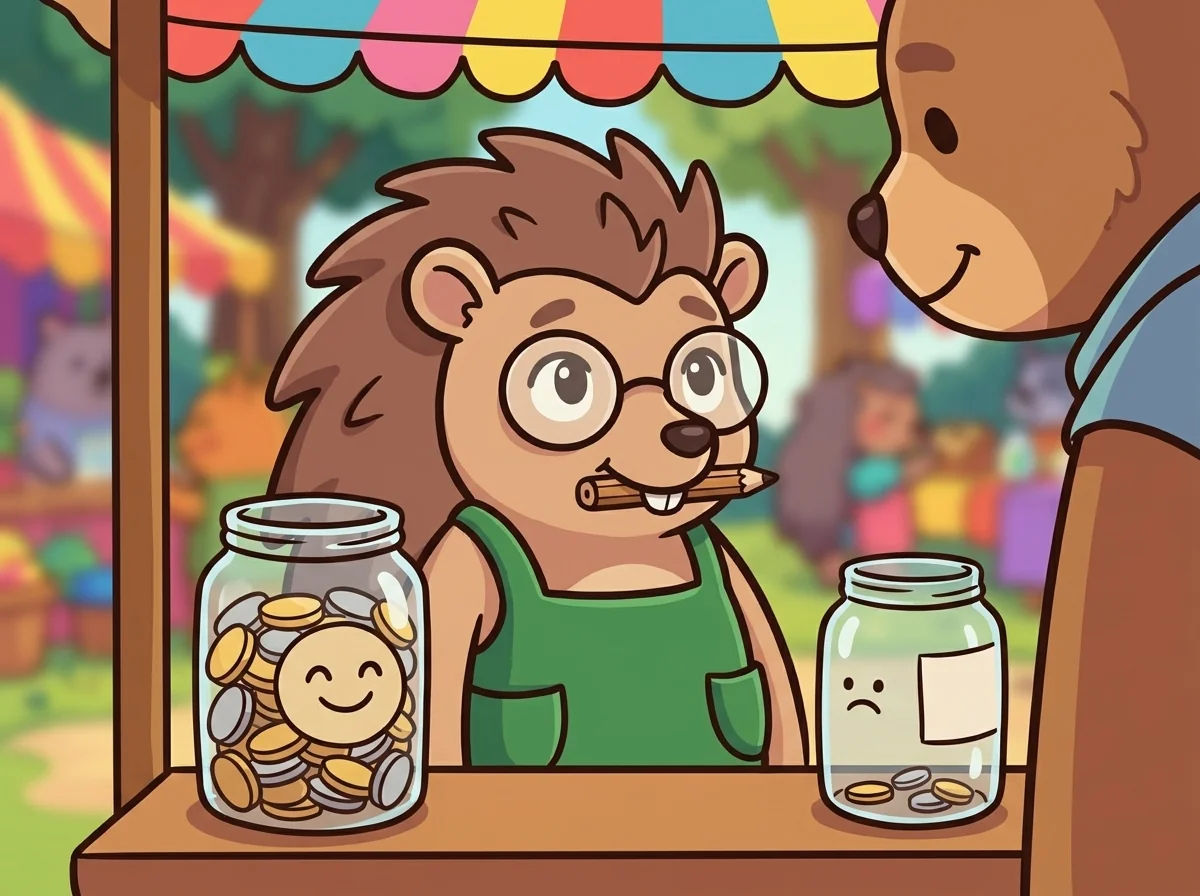
"Two jars," said Surplus. "One for money coming in, and one for what's left after the costs. People get excited about the big jar. I make sure they look at the small one."
The mentor smiled. "You belong here."
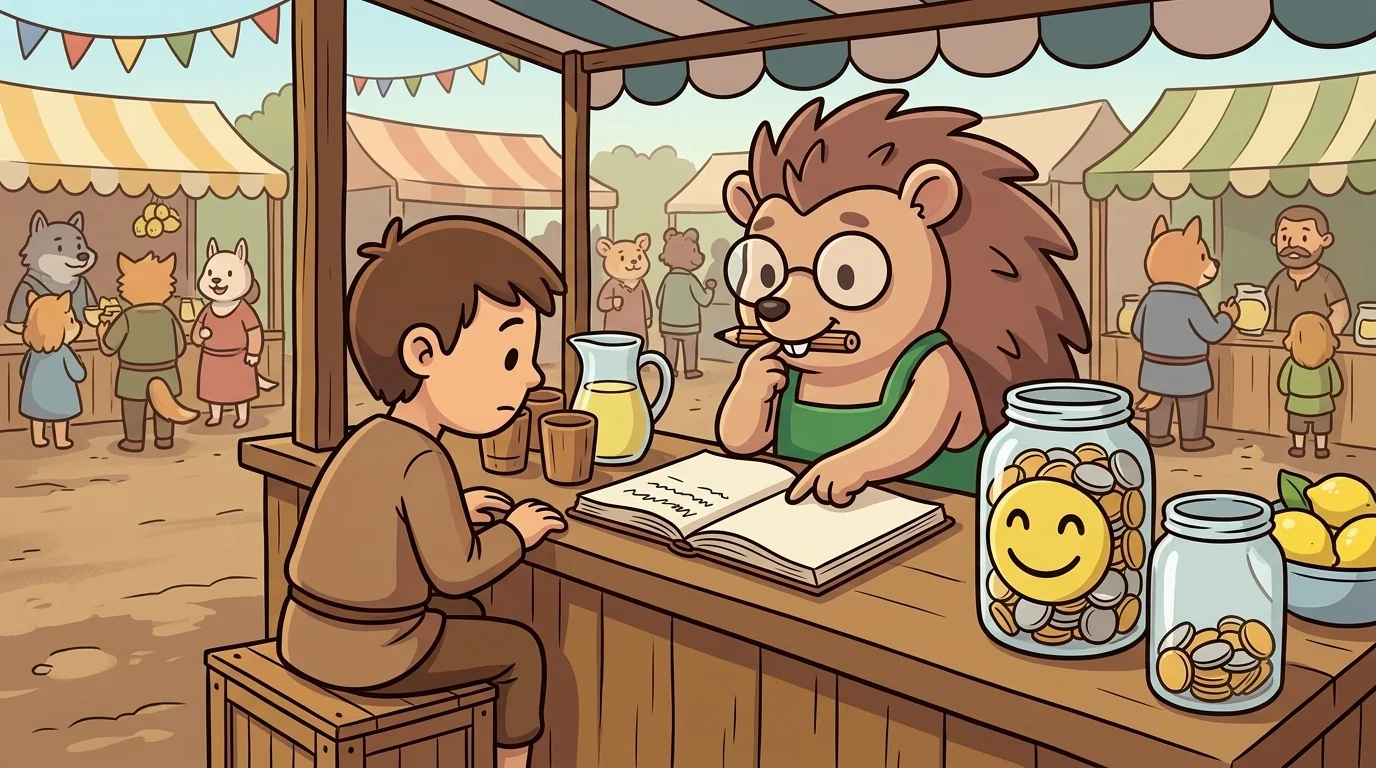
So Kai sat down with Surplus and her pencil.
"Ingredients were fifteen coins," he said. "My sister was eight. The stall fee was five. Bags were two." He added them up. "That's thirty."
"And you took in forty," said Surplus.
"So forty take away thirty," said Kai slowly. "Ten. I made ten coins of profit, not forty." His face fell a little, then he frowned and looked at the list. "But wait. If I bought the chocolate chips in a big bag, they'd be cheaper. And if I make bigger batches, the stall fee is the same no matter how many I sell." He looked up. "I could make more profit without even charging more."
"Now you're thinking like a business," said Surplus, warm and pleased. "The big jar tells you how well you sold. The small jar tells you how well you ran it."
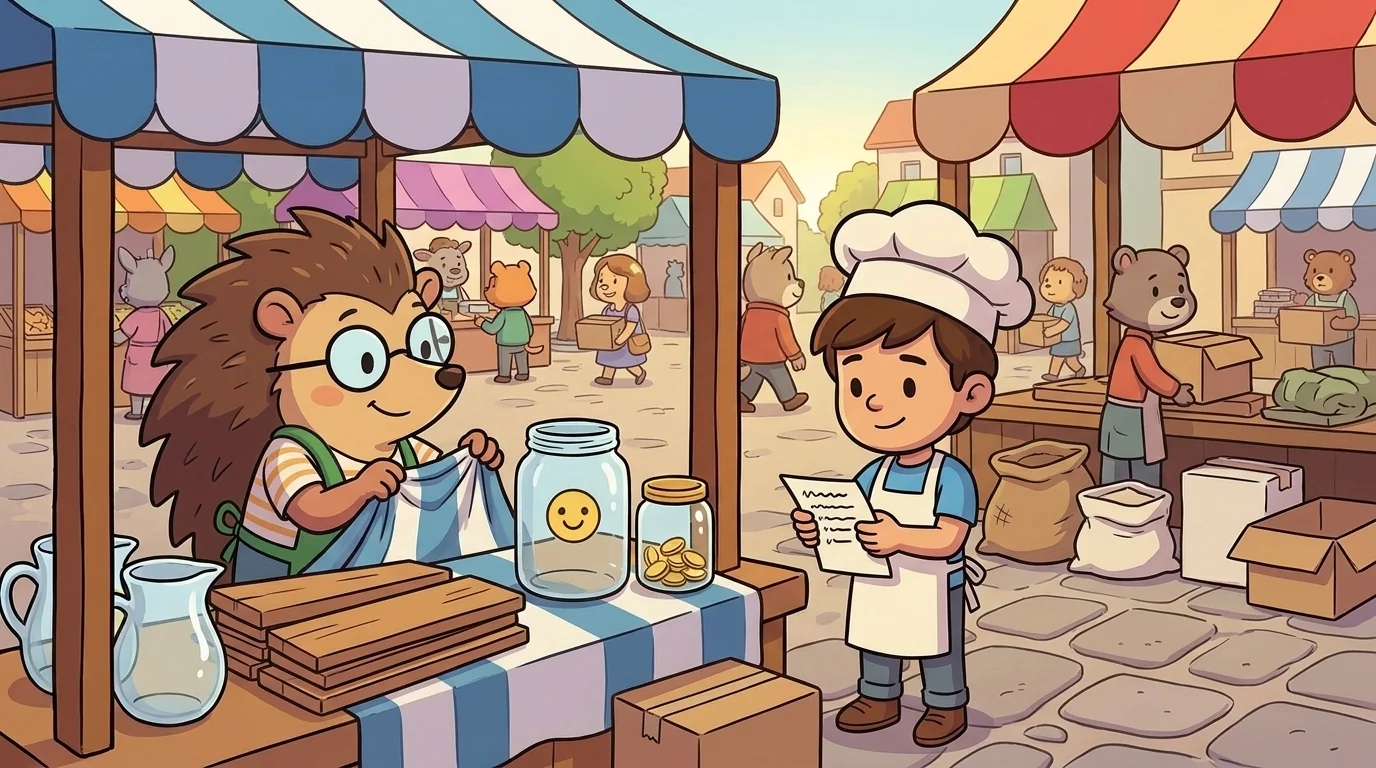
As the market packed up, Kai helped Surplus fold her awning.
"Doesn't it feel disappointing," he asked, "when the profit is so much less than what came in?"
Surplus thought about her first lemonade stand, and the thirty that became eight.
"It did the first time," she said. "Now I like knowing. If I only looked at the money coming in, I'd think I was doing great, right up until I couldn't afford lemons." She tapped the small jar. "When I count every cost and see what's really left, I get this clear, calm feeling. No surprises. I know what I can save and what I can spend. And when the small jar starts to fill up, I know I've earned every coin in it."
Kai looked at his own list, ten coins of real profit, and Surplus watched his disappointment turn into a quieter, prouder kind of grin.
The VentureQuest ensemble
Surplus is one of the friends in VentureQuest. Each friend shows you one idea by how they act; meet them all and you have the whole subject.
-

Spot
Opportunity recognition — noticing problems worth solving for real people
-

Listen
Customer discovery — asking + waiting + watching, never guessing
-

Build
Lean experimentation — rough first drafts, fast iteration, failure-as-learning
-

Kernel
Focus — the one essential thing
-

Pitch
Pitch craft — plain-language story, inviting people in, never pressuring
-
Till
Fair pricing
-
Barter
Fair exchange — a deal both sides win
-

Loyal
Reputation — customers who come back
-

Thrift
Saving and reinvesting
-

Weigh
Ethical decision-making — sitting with tradeoffs, holding stakeholder views