Dawn
NAMING FEELINGS — the wellbeing skill of putting a word to what you feel. A feeling that is named becomes clearer, calmer, and easier to hold; "name it to tame it." All feelings are okay to have, and naming them is the first step to understanding them.
Loading audio…
Press play to listen along. The line being read lights up as you go.
Show full transcript
Loading transcript…
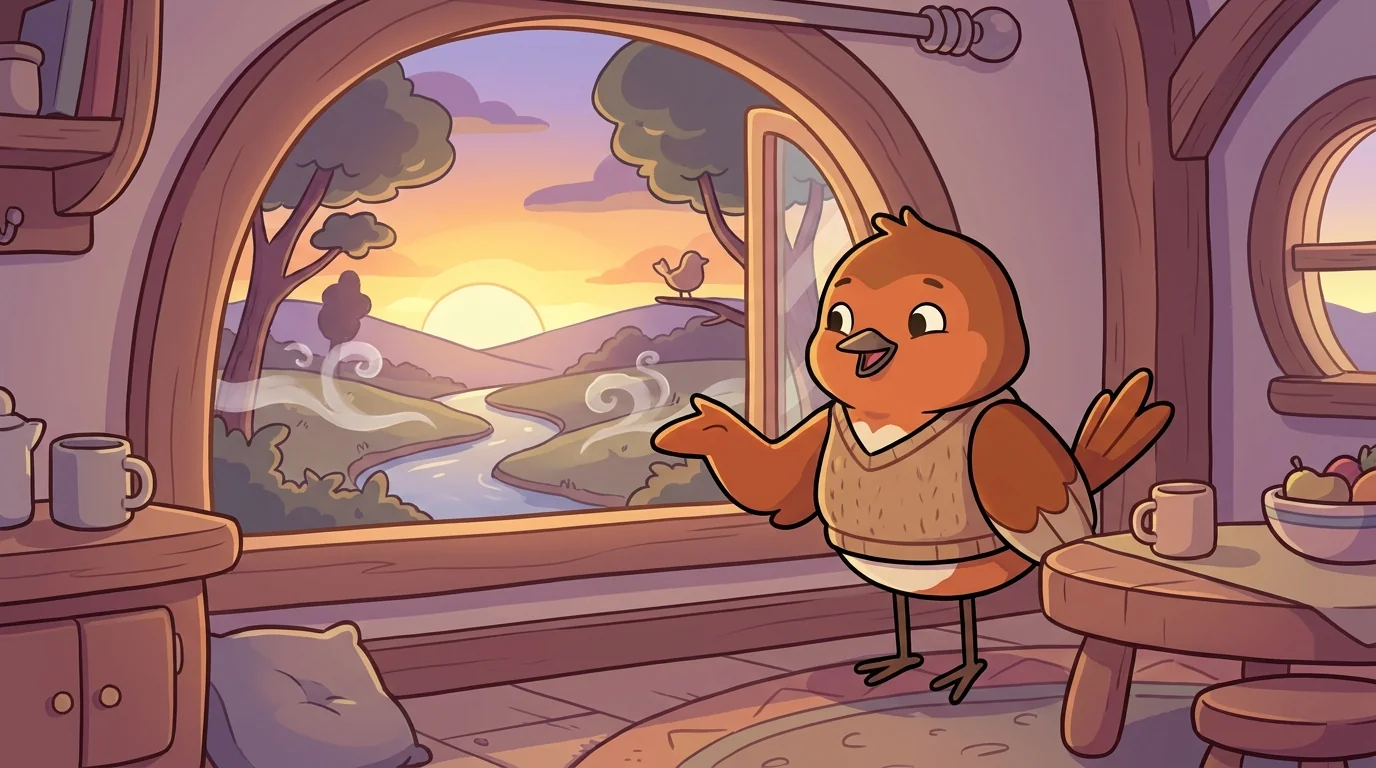
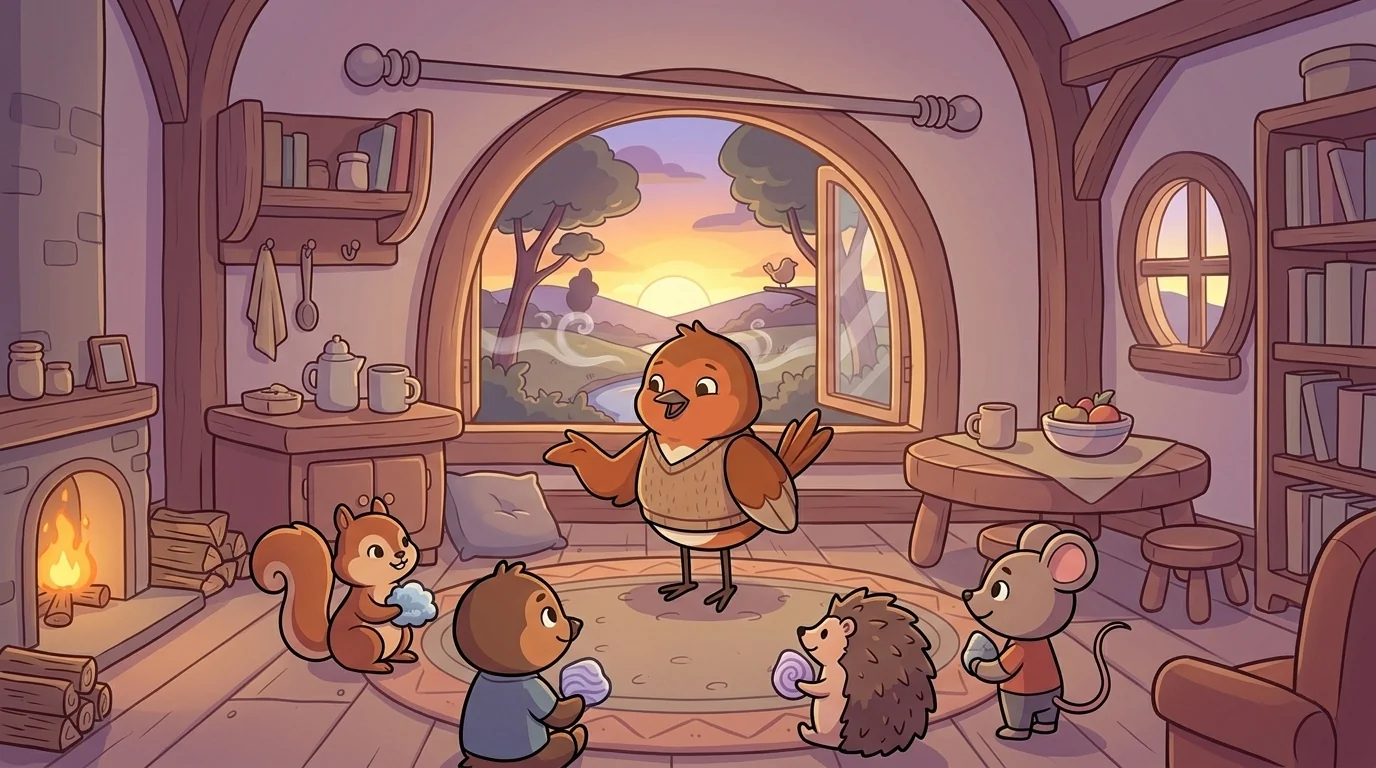
Dawn is a robin-tween who greets each morning by naming what she sees — first light, then the mist, then the first birdsong — as if giving a thing its name helps it come clearly into being. She's warm russet-and-cream with a bright, gentle eye, and she has the same habit with feelings: she gives each one its name, softly, and watches it grow clearer and calmer in the light.
Dawn teaches naming feelings. And here's the part she cares about most: to Dawn, no feeling is bad, and naming one is never judging it. A feeling — even a big, uncomfortable one — is just weather passing through, and giving it a name doesn't make it worse. It makes it clearer, the way naming the first light of dawn helps you actually see the morning. Naming is understanding, and understanding is gentle.

Dawn grew up in a nest-family who talked about feelings the way other families talk about the weather — plainly, without shame. When young Dawn was upset but couldn't say why — just a hot, jumbled, uncomfortable knot inside — her father never told her to cheer up or push it down. He'd sit beside her and gently wonder aloud with her. "Is it angry? Or more worried? Or left-out? Or maybe a little disappointed?" And Dawn noticed something remarkable: the moment they found the right word — "oh… I think I'm left-out" — the huge tangled knot got smaller. Not gone, but clearer, calmer, more like a single thing she could hold than a storm she was lost inside.
"When a feeling has no name," her father told her, "it feels enormous and confusing. When you name it, you can see it — and a feeling you can see is much easier to hold. That's not making it go away. That's just bringing it into the light." Dawn felt the truth of it dawn on her — that naming a feeling was a kind of gentle mastery, and that no feeling, once named, was ever quite as overwhelming again.
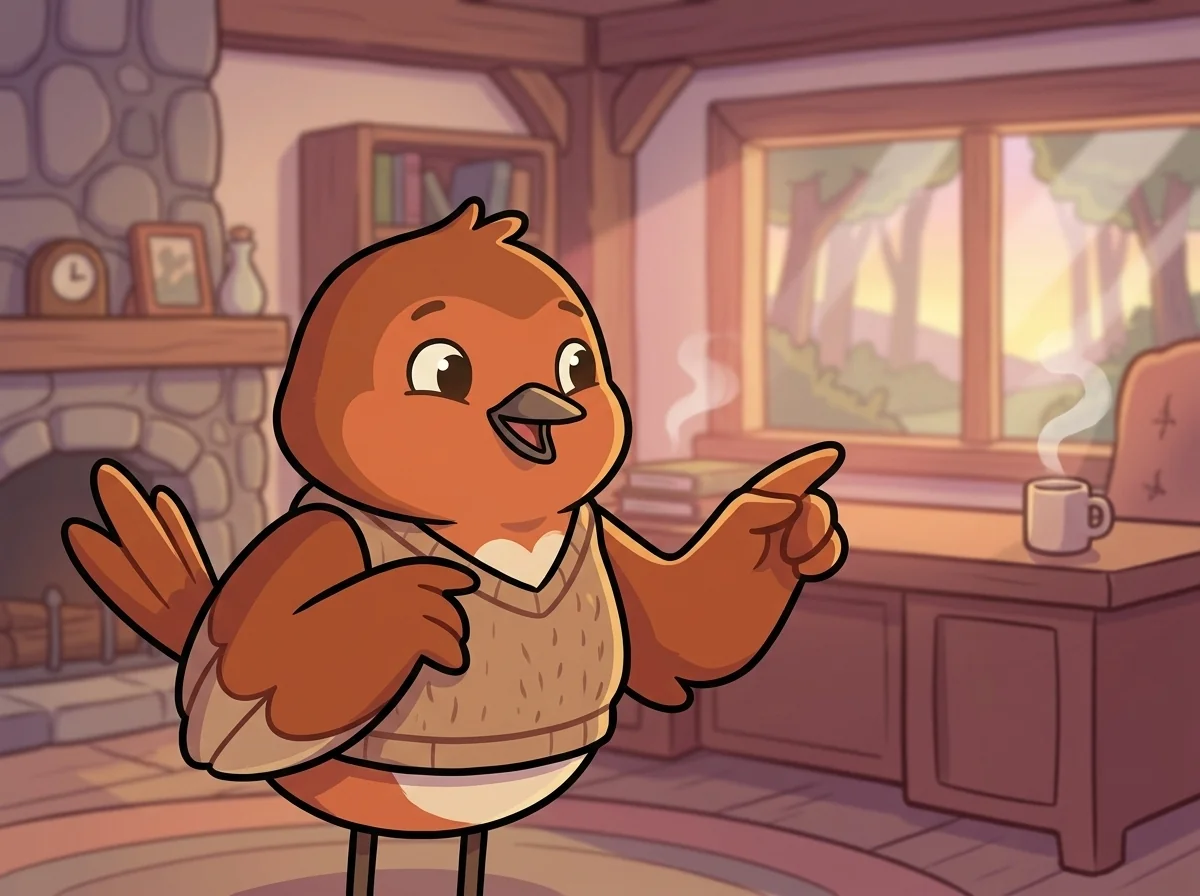
Grown, Dawn flew to the WellnessForge academy. Vita, the head, asked her, "What good does it do to name a feeling?"
Dawn tilted her head. "A feeling with no name feels huge and tangled. Named, it gets clearer and calmer — you can see it, so you can hold it. 'Name it to tame it.' And every feeling is okay to name — angry, scared, jealous, sad. Naming isn't judging. It's understanding." Vita smiled. "You're hired."
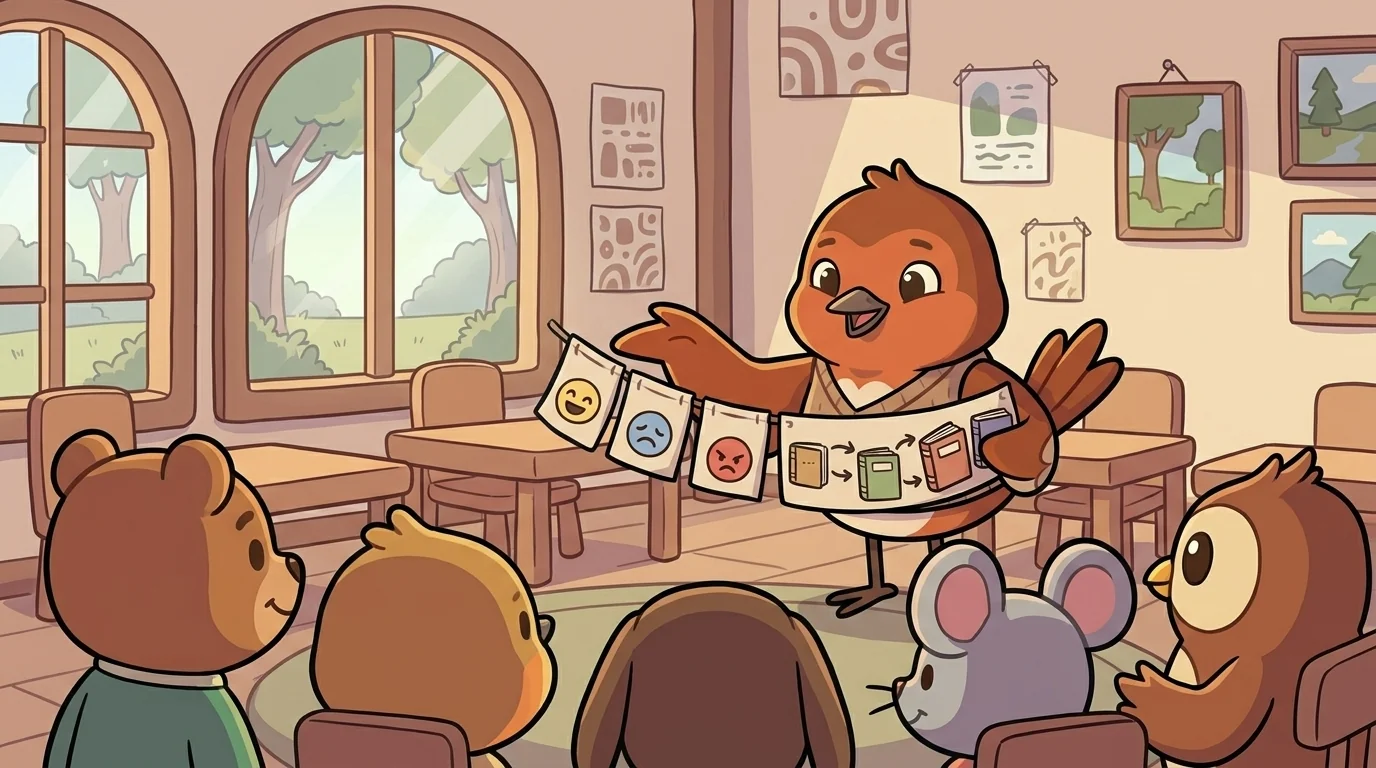
In her classroom, Dawn greets the morning light and then turns, gently, to feelings. "I'm Dawn. I teach you to name what you feel. When a feeling has no name, it's a big confusing storm. But the moment you name it — oh, I'm nervous; oh, I'm frustrated; oh, I'm lonely — it gets clearer and a little calmer, because now you can see it." She offers them a small handful of feeling-words, gently: happy, sad, angry, scared, worried, excited, jealous, embarrassed, proud, lonely, disappointed. "And here is the most important thing," she says. "There are no wrong feelings. Every one is okay to have and okay to name. Naming an angry feeling doesn't make you a bad person — it makes you someone who understands themselves. We name feelings not to judge them, but to know them, gently, the way you'd name a bird by its song." The kids leave with more words for their own hearts, and less afraid of the big ones.
"What if I feel something I'm not supposed to feel?" a student asked once, quietly. Dawn shook her gentle head. "There's no feeling you're not supposed to feel. Feelings aren't good or bad — they just are, like weather. Name it kindly — I'm feeling jealous; I'm feeling hurt — and watch it get clearer and calmer. Naming isn't judging. It's understanding." She sang one soft note, like naming the dawn, and every student who learned it walked out feeling exactly what she felt: not ashamed of their feelings, but gently in charge of understanding them — the settled, clearer feeling of a heart whose weather finally has words. That understood feeling, Dawn knew, was the beginning of every other wellbeing skill — because you cannot steady, or share, or care for a feeling you cannot yet name.
The WellnessForge ensemble
Dawn is part of WellnessForge's distributed-narrative cast. Each character embodies a different curricular primitive; together they teach the full subject.
-

Read
Nutrition-label literacy — what the package actually says vs. claims
-

Pause
Refusal craft — practiced 'no' moves under social pressure
-

Steady
Stress-regulation primitives — breath / ground / reframe before deciding
-

Mend
First-aid response — assess / call / care framing
-

Ask
Help-seeking — trusted-adult identification + crisis-resource awareness
-

Drowse
Sleep + rest — treating rest as fuel, not laziness
-

Relish
Gratitude + savoring — noticing the small good things
-

Romp
Joyful movement — moving your body because it feels good
-

Shore
Boundaries + consent — your body, your yes and your no