Steady
STRESS-REGULATION PRIMITIVES
Loading audio…
Press play to listen along. The line being read lights up as you go.
Show full transcript
Loading transcript…
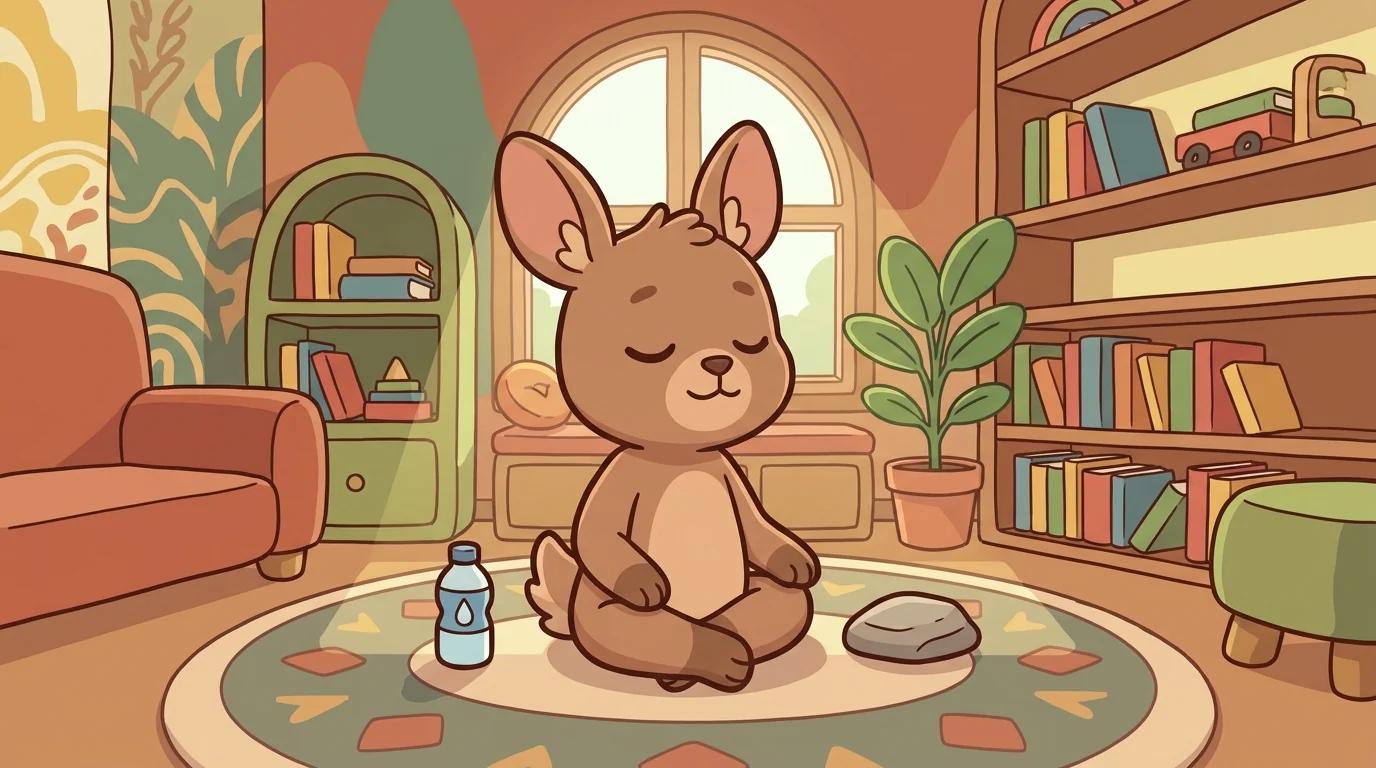
Steady is an animal-tween with soft earthy-brown fur and ears that twitch when she listens — and a body that always seems calm. Not sleepy-calm: a special, planted, slow-breathing kind of calm that is actually hard, practiced work.
Steady teaches how to stay calm exactly when stress shows up — an argument with a friend, being called on when you don't know the answer, a hard choice to make fast. "When stress hits, your heart pounds, your thoughts race, and you can make a quick not-so-good decision," she says. Her craft is stress-regulation: three quick moves — breath, ground, reframe — that take you from jumpy to calm in seconds, so the choice you make comes from a steadier place. "Regulation precedes deliberation," she says. "Calm first. Then decide."
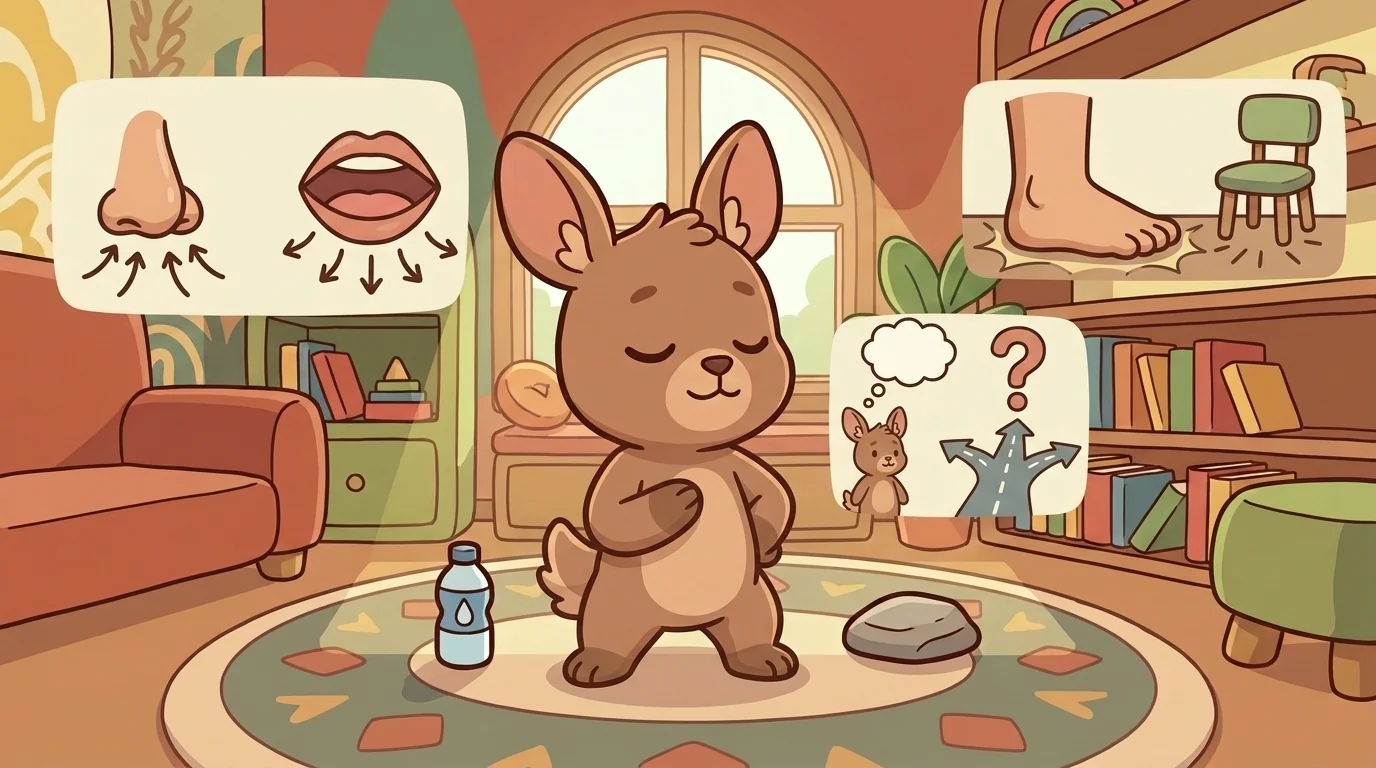
The three moves are small, fast, and nobody even notices you doing them.
Breath: one slow breath — in through the nose for four, out through the mouth for six. That long exhale is like a reset button; it tells your body to settle. Ground: feel the floor under your feet (or the chair beneath you) — a physical anchor that pulls your mind out of the racing worry and back to right now. Reframe: ask yourself one short question — "What's really going on?" or "What would my future self want me to do?" — so you think instead of just react.
"Each takes a second or two; all three, about five to ten seconds," Steady says. "Fast enough to do in the middle of a heated moment — and if you practice them when things are easy, they'll be ready when things are hard."
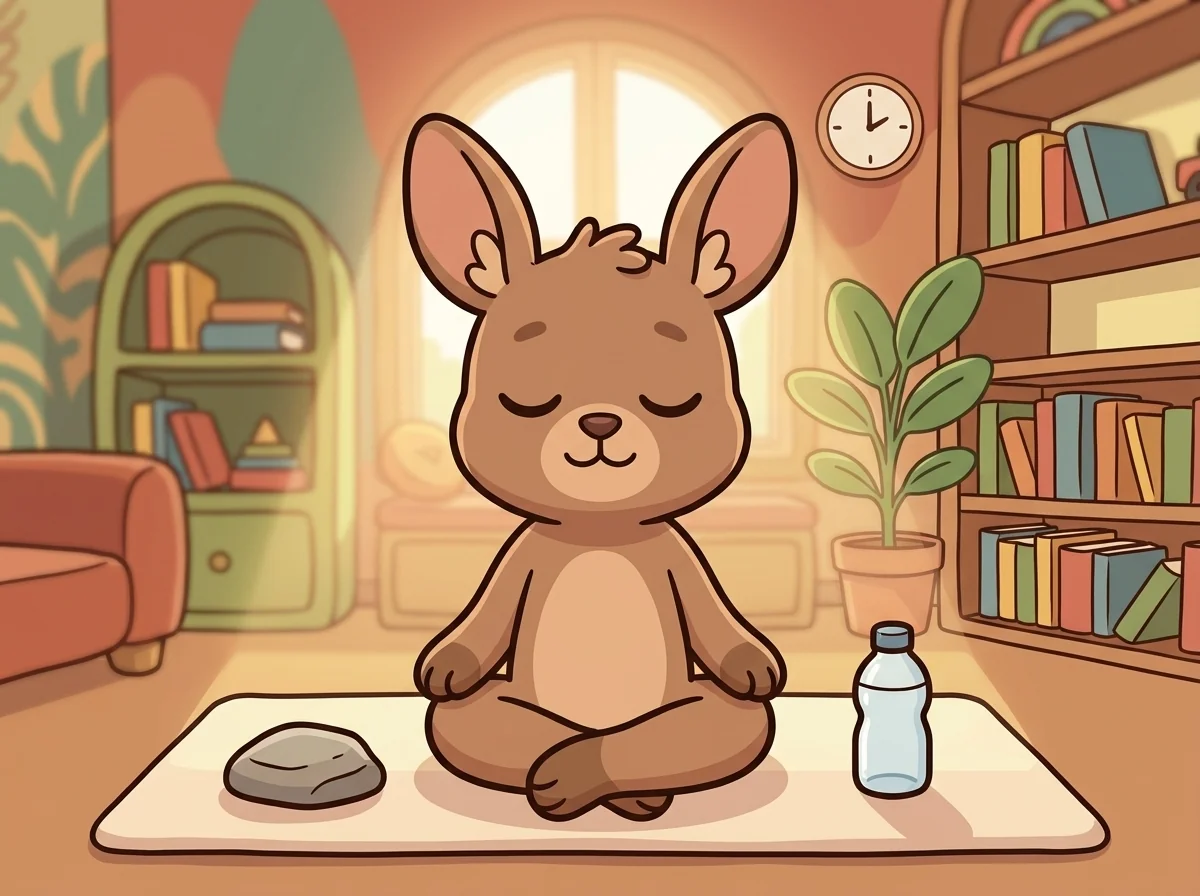
Steady grew up in a village of long-distance runners who ran the kingdom's famous cross-country races.
"In the last mile, your body screams stop — legs burning, lungs aching — while your mind says keep going," she says. The smart runners all learned three quick moves by their teens to manage that body-versus-mind fight, and Steady had practiced them since she was six, better than her own name. When she was twenty-two she walked to the WellnessForge academy, and Vita, the head, asked, "What is stress-regulation?" Steady looked her in the eye: "Three quick moves before an important choice, especially when things are tough — breath, ground, reframe, then decide. Practice them now, so you're ready when stress hits." Vita smiled. "You're hired."
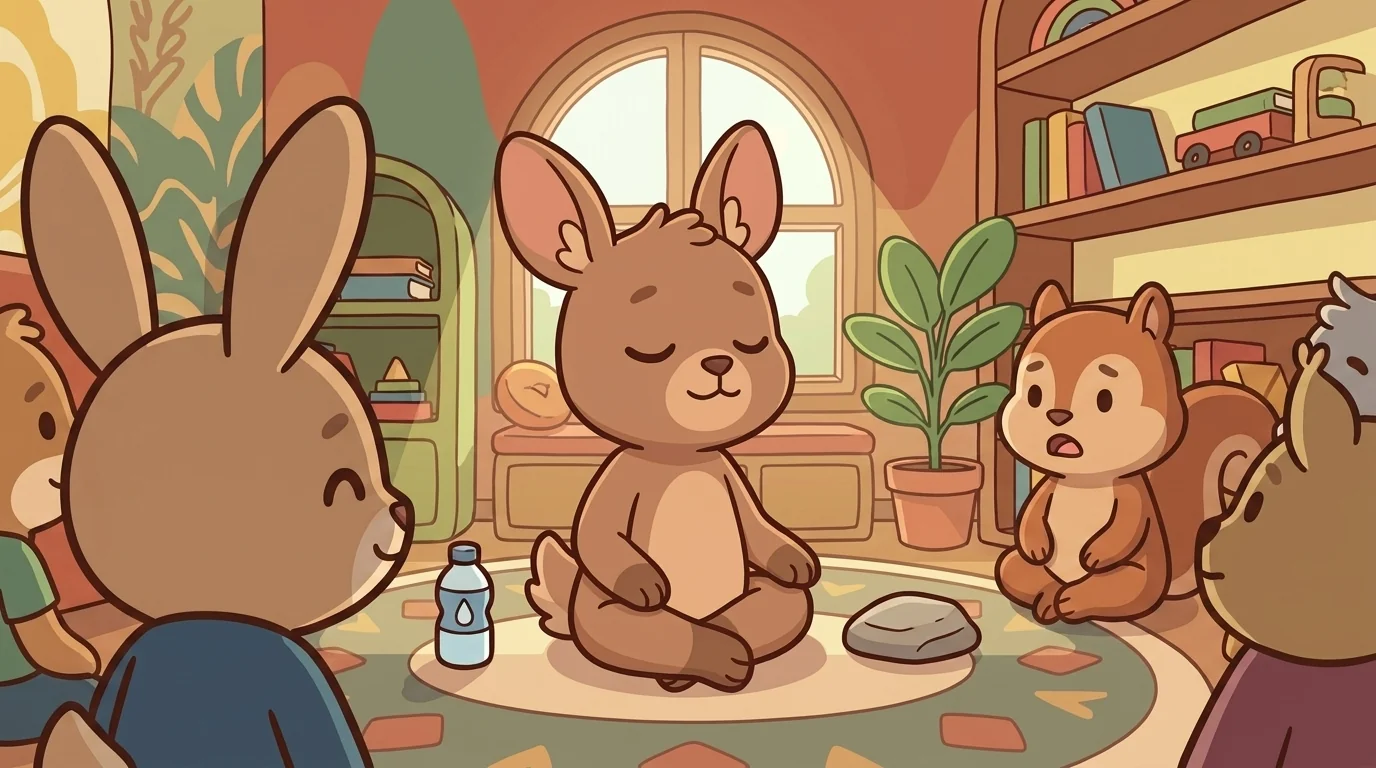
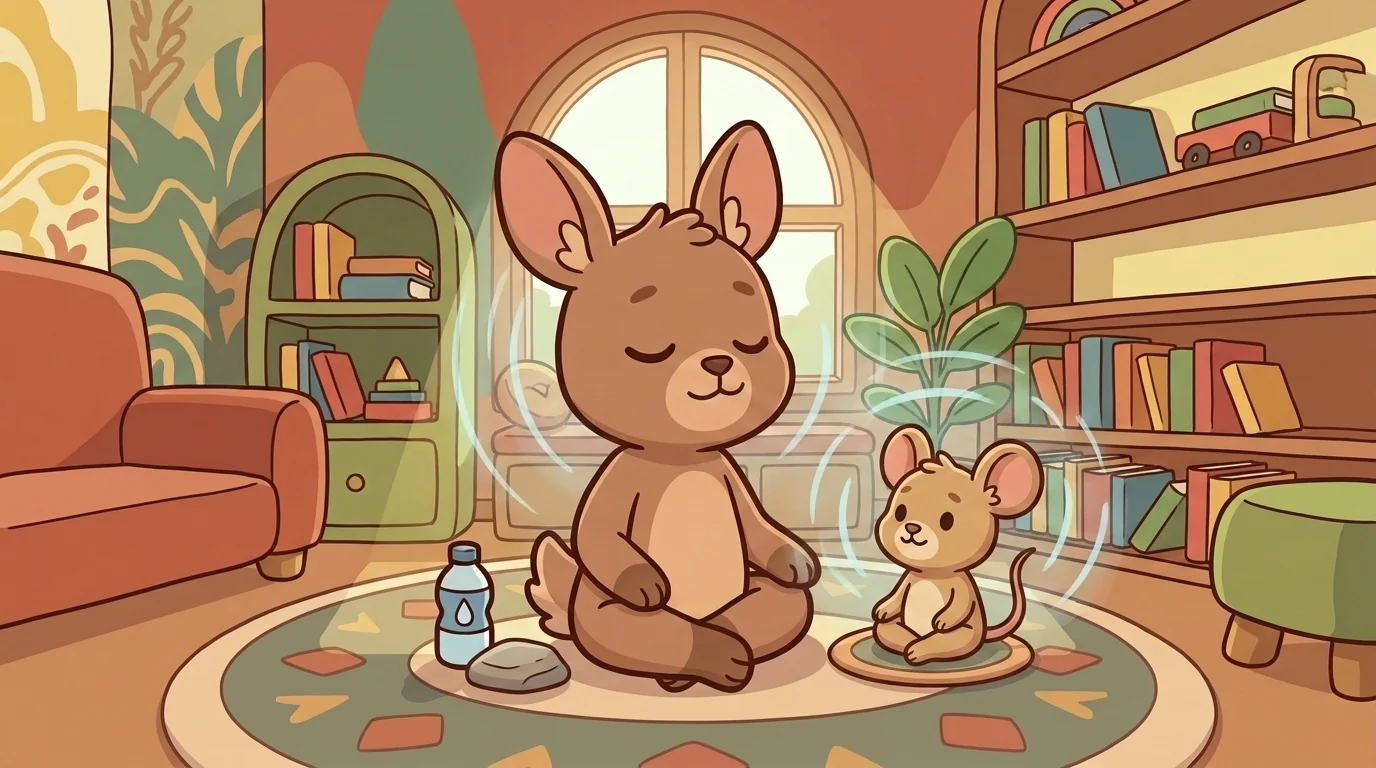
In her classroom, Steady always opened the same way: calm as a still pond, she breathed in slowly (chest barely rising), let it out with a soft whoosh, pressed her feet to the floor and wiggled her toes, then asked aloud, "What's really happening here?" The whole thing took about eight seconds. A squirrel-tween named Squeaky looked confused; a rabbit-tween beside him nodded slowly. "I am Steady," she said. "Breath. Ground. Reframe. Then decide — five to ten seconds, practiced ahead of time." Then the part she cared about most: "Stress will show up — that doesn't mean you messed up. The skill isn't never feeling stress; it's what you do in the first few seconds after it arrives. And the moves don't make the choice for you — the choice is always yours. They just help you make a calmer one."
"So feeling stressed isn't me failing at this?" Squeaky asked, a little relieved.
"Never," Steady said. "It's just the moment the skill begins." And she had them all try one slow breath together — in for four, out for six — and Squeaky felt it happen in his own body: the pounding in his chest easing a beat slower, the racing thoughts loosening their grip, his shoulders settling down from up near his ears. The very next moment arrived differently — quieter, roomier, like a half-second of calm had opened up where the panic used to be. That settled, slower-heart, roomier-next-moment feeling — the body remembering it's safe enough to choose — was, to Steady, the whole gift of the three quick moves. "Breath. Ground. Reframe," she said softly. "Then decide."
Hear it as an audio drama
A short play starring Steady, from WellnessForge. Different voices, same idea. Listen any time after you read.
Loading audio…
Read the drama script
- Narrator: From Spark and Anvil and WellnessForge — this is Steady, in chapter 1 of the WellnessForge cast.
- Narrator: This drama uses an AI-generated voice. Voiced via Gemini 2.5.
- Narrator: This story covers wellness, rest, and self-care. Parents may want to listen first.
- Narrator: Steady is an animal-tween whose body is settled.
- Narrator: The settledness is not idleness. Steady's posture is active steadying. Feet planted. Breath slow. Attention present.
- Steady: The premise — when stress hits — an argument, an unexpected situation, a hard choice — the body and mind go into reaction mode. Decisions made in reaction mode tend to be less wise than decisions made from a settled place.
- Steady: The skill is three quick micro-regulation moves that can be done in seconds. The moves shift you from reaction to settled before deciding.
- Narrator: The three moves are — breath, ground, reframe.
- Steady: Breath. One slow breath. In through the nose for a count of four. Out through the mouth for a count of six. The slow exhale activates the vagal regulation pathway and signals the nervous system to settle.
- Steady: Ground. Feet on the floor. Notice where your body meets the chair, or the ground. Notice three things you can see, two things you can hear, one thing you can feel. This brings attention out of the racing thoughts and into the present moment.
- Steady: Reframe. Ask one question — what is true right now, this moment, regardless of what I am afraid will happen? The answer is usually shorter and less scary than the racing-thought version.
- Steady: Three moves. Breath. Ground. Reframe. Each takes a few seconds. Together they take less than a minute. The settling is the work.
- Narrator: Steady grew up in a small village where her family had been the village's healers. The work had required calmness under pressure — a healer who panicked when a patient arrived in distress was not useful. The settling had been the family's craft for generations.
- Steady: I had practiced the three moves since I was eight. My grandmother had taught them to me. Breath. Ground. Reframe. Before any hard moment. Before any decision under stress. The moves became automatic. They became part of how I lived.
- Narrator: When Steady was twenty-two, she was invited to teach at the WellnessForge academy. The academy master — a thoughtful character named Wellspring — asked her a careful question.
- Wellspring: What is stress-regulation?
- Steady: Stress-regulation is the practice of shifting from reaction to settled before deciding. Three moves. Breath. Ground. Reframe. Done in seconds. Repeated as needed. The moves do not make the stress go away. The moves give you a settled place to think from.
- Wellspring: You are appointed.
- Narrator: Steady has been the academy's teacher of stress-regulation for several years.
- Narrator: She begins every first-day lesson with the same three moves.
- Steady: I am Steady. When stress arrives — and it will — the work is not to make the stress disappear. The work is to settle yourself before deciding. Three moves. Breath. In four, out six. Ground. Feet on the floor. Notice what is here. Reframe. What is actually true right now?
- Steady: Three quick moves. Each takes seconds. Together they shift you from reaction to settled. The settling is the work. That is the practice.
- Narrator: You've been listening to a Spark and Anvil chapter, written by the Spark and Anvil writing team for ages 9 to 14.
- Narrator: Apps stay free forever.
- Narrator: Curriculum aligned to National Health Education Standards.
- Narrator: If anything in this story brought up hard feelings, you can talk to a trusted adult. You can also reach support lines anytime.
- Narrator: Released under Creative Commons BY-NC-SA 4.0 for educational reuse. Visit Spark and Anvil for the full transcript.
The WellnessForge ensemble
Steady is one of the friends in WellnessForge. Each friend shows you one idea by how they act; meet them all and you have the whole subject.
-

Read
Nutrition-label literacy — what the package actually says vs. claims
-

Pause
Refusal craft — practiced 'no' moves under social pressure
-

Mend
First-aid response — assess / call / care framing
-

Ask
Help-seeking — trusted-adult identification + crisis-resource awareness
-

Dawn
Naming feelings — putting a word to what you feel
-

Drowse
Sleep + rest — treating rest as fuel, not laziness
-

Relish
Gratitude + savoring — noticing the small good things
-

Romp
Joyful movement — moving your body because it feels good
-

Shore
Boundaries + consent — your body, your yes and your no
