
Think it through first
Most popular
 Motif Studio Grow a three-note idea across the six story stages — watch it stretch, flip and settle.
  Variation Detective Which move did the composer use — flip, reverse, stretch, shrink, move, or fragment?
 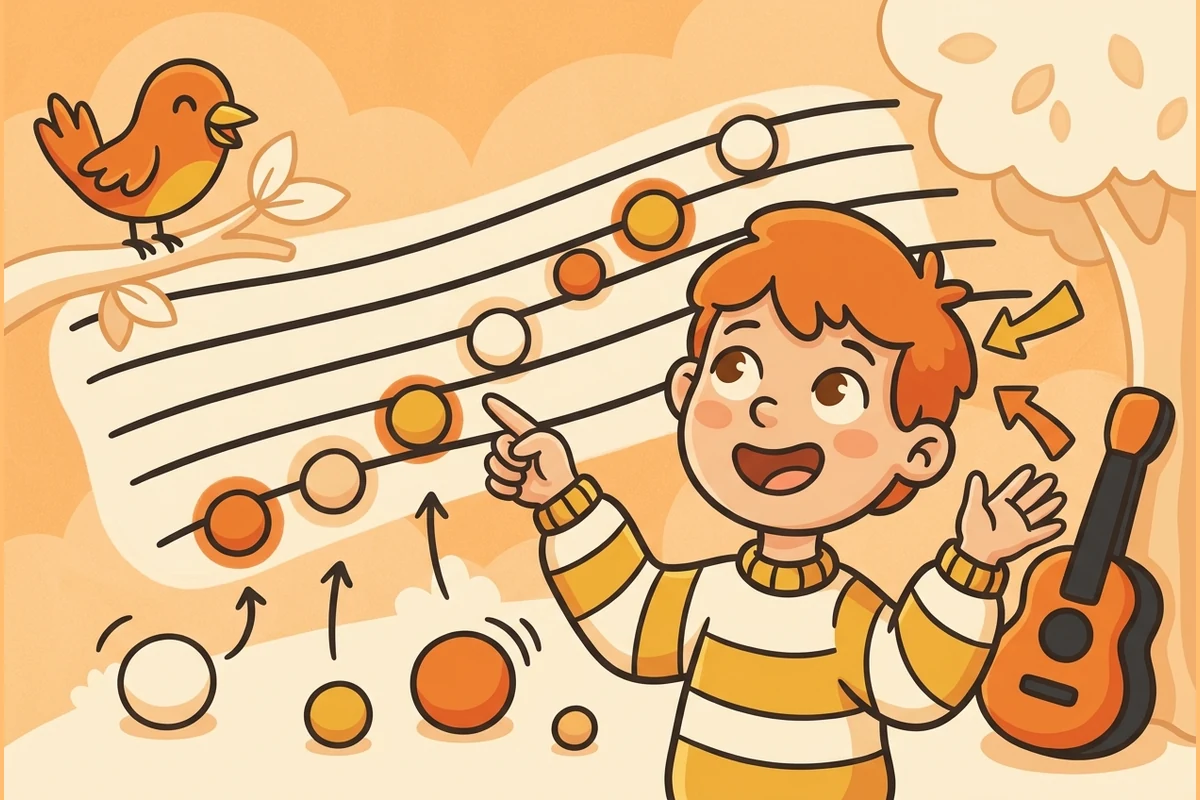 Notate the Motif Read a motif in real staff notation, then find the piano-roll that matches it.
  Build the Motif Read a motif on the staff and reconstruct it note by note — reading turned into making.
 All activities
Make music
Motif Studio Start from an idea, then grow it across six story stages — Opening, Meet the Motif, Development, Contrast, Homecoming and Resolution. Save finished pieces to this device. Variation Detective See an original idea and a variation, then work out which move a composer used. Read the shapes, or turn the sound on to hear the difference. Notate the Motif Read a motif in real staff notation — the up-and-down shape and note lengths — then find the piano-roll that matches it. Build the Motif Read a motif in staff notation and reconstruct it note by note — set each note’s pitch and length until your piano-roll matches.
Practice & play
Concept Kits — the tools, the story arc, the building blocks
😄 Brain break

Meet the cast — the characters who teach this
-
 Trill The motif itself — visual posture shifts as the motif develops, inverts, fragments
 -
 Meld Harmony — notes that bloom underneath to support the melody
 -
 Thrum Bass — the deep low foundation the whole song stands on
 -
 Clap Rhythm — the steady beat pattern the song walks on
 -
 Twine Counter-melody — a second tune that weaves against the main one
 -
 Surge Dynamics — how loud and soft; how a song breathes
 -
 Ply Texture — how many layers sound at once; thick or thin
 -
 Tint Timbre — the color or flavor of a sound
 -
 Nest Key — the home note the song keeps returning to
 -
 Wend Cadence — how a phrase comes to rest; the song's punctuation
Ensemble stories — the cast together