
Before you start
Most popular
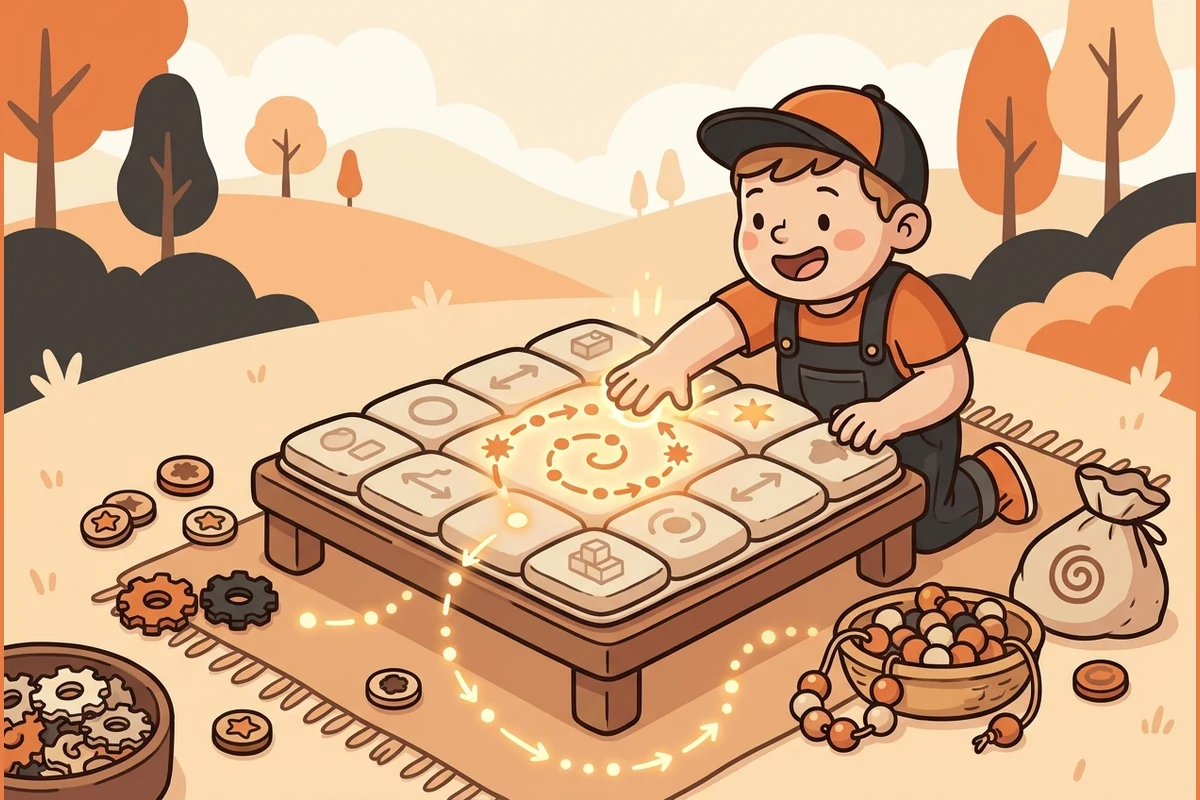 Pattern Grid Studio Arrange colors and shapes on a grid — press play and watch the pattern become music.
  Chord & Interval Lab Stack a root, third and fifth on a silent piano — hear which sounds settle and which move.
  Circle of Fifths Spin the wheel of keys — each step is up a Perfect 5th and adds a sharp.
 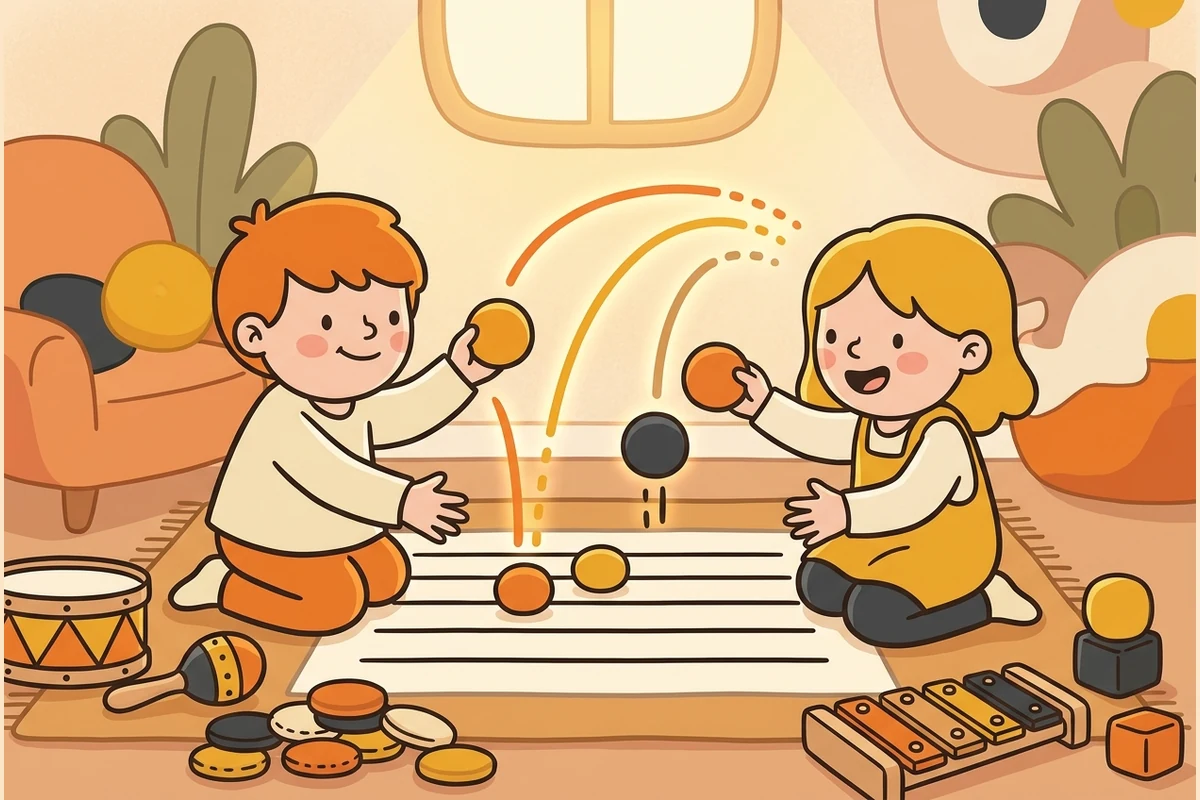 Staff Reader Name notes and intervals on the treble staff — the bridge from keys to page.
 All activities
Make & explore
Pattern Grid Studio Top-to-bottom is high-to-low, left-to-right is time. Press play and the pattern becomes music. Save patterns to this device. Chord & Interval Lab Build intervals and triads on a silent piano — or find the note a Perfect 5th up. A hint is always there after a first try. Staff Reader Read notes and intervals on the treble staff — name the note from where it sits, name the interval between two notes. Place on the Staff Now write it: click a spot on the treble staff to place a note that matches a letter, or an interval above a shown one. Circle of Fifths Find a key’s dominant, its relative minor, and the key for any number of sharps or flats.
Practice & play
Harmony Duel 2–4 players take turns on one device, or open a room to play a friend (no chat, just the game). Harmony Quest — the map A path through all the kits — clear each stop, then move on. Mixed Practice A short round across the kits you have played — brought back to make it stick. HarmonyForge Sprint Race your OWN best on what you already know. Timer optional, no penalty. Trick Questions Brain-teasers with a twist — spot why the obvious answer is a trap. Teach the Cast Teach a harmony idea to a cast member still learning it — teaching makes it stick. For grown-ups — progress report A private, on-device snapshot mapped to the skill areas practiced. Export a CSV or print — nothing leaves this device.
Concept Kits — 16 kits about music
Kit 1: Rhythm and Beat Basics Rhythm & Beat · grades · 25 questions Kit 2: Melody and Pitch Melody & Pitch · grades · 25 questions Kit 3: Musical Notation Reading Reading Notation · grades · 25 questions Kit 4: Chords and Harmony Theory & Harmony · grades · 25 questions Kit 5: Musical Instruments and Families Instruments · grades · 25 questions Kit 6: Song Structure and Form Song & Expression · grades · 25 questions Kit 7: Music History and Genres History & Genres · grades · 25 questions Kit 8: Composition and Arrangement Putting It Together · grades · 25 questions Kit 9: Chord Progressions & Song Structure Song & Expression · grades 6-8 · 25 questions Kit 10: World Music & Cultural Traditions World Music · grades 6-8 · 25 questions Kit 11: Music Technology & Production Music Tech · grades 6-8 · 25 questions Kit 12: Composition & Arranging Theory & Harmony · grades 6-8 · 25 questions Kit 13: Cross-Topic Connections Putting It Together · grades 5-6 · 25 questions Kit 14: Real-World Applications Putting It Together · grades 6-7 · 25 questions Kit 15: Misconceptions & Reasoning Putting It Together · grades 6-7 · 25 questions Kit 16: Advanced Synthesis Putting It Together · grades 7-8 · 25 questions
More ways to play
😄 Brain break

Meet the cast — the characters who teach this
-
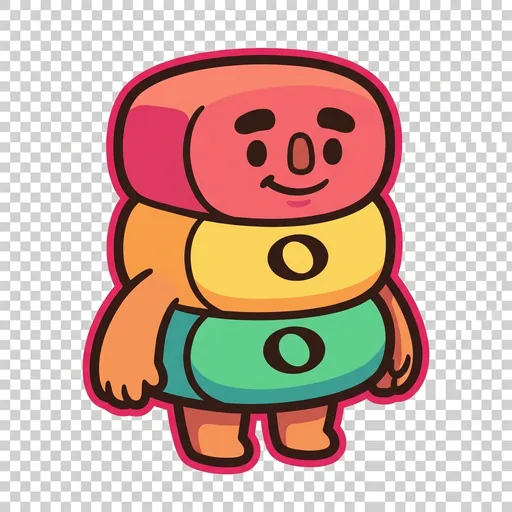 Triad Chord-stacking — three tones in vertical alignment (root + third + fifth = the foundation of harmony)
 -
 Lean Voice-leading — smooth stepwise motion between chord tones (the smallest possible movements between consecutive chords)
 -
 Pull Tension — dissonant intervals (the leading-tone, the suspended 4th, the diminished chord) that *want* to resolve
 -
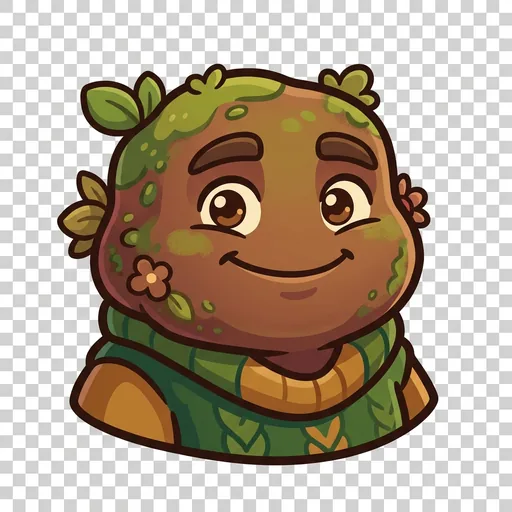 Land Resolution — the consonant arrival when tension releases (root return; cadence; the V→I gesture)
 -
 Shift Modulation — changing keys mid-piece (the moment a song *moves to a different room* harmonically)
 -
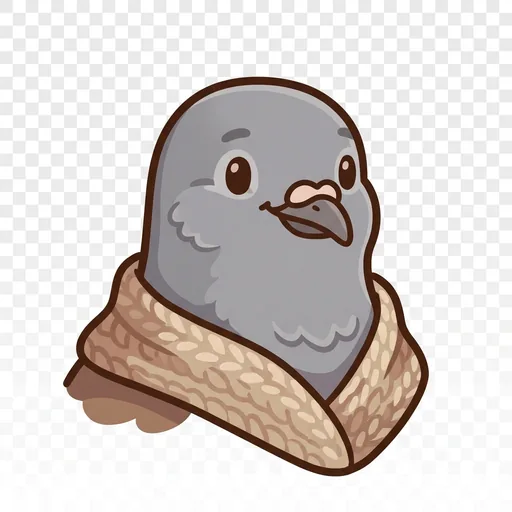 Ache Seventh chords — a dove whose coo adds a fourth voice on top; a sweet, unfinished ache that leans the chord forward
 -
 Octave Octave — a seal who sings the same note a whole floor up; eight steps from a note back to its own echo
 -
 Rill Arpeggio — an otter who un-stacks a chord into a walk; the same tower played one stone at a time, flowing
 -
 Tumble Chord inversion — a red panda who re-stacks the same three notes; a different one on the bottom changes the chord's face
 -
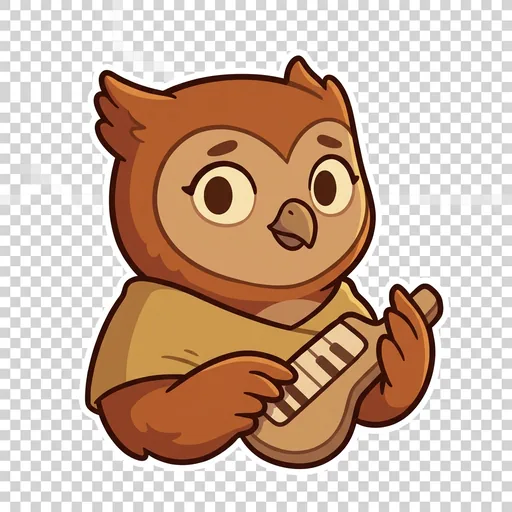 Umber Major/minor third — an owl who lowers the middle tone one step; that note decides if a chord sounds bright or dark
Ensemble stories — the cast together