Start here
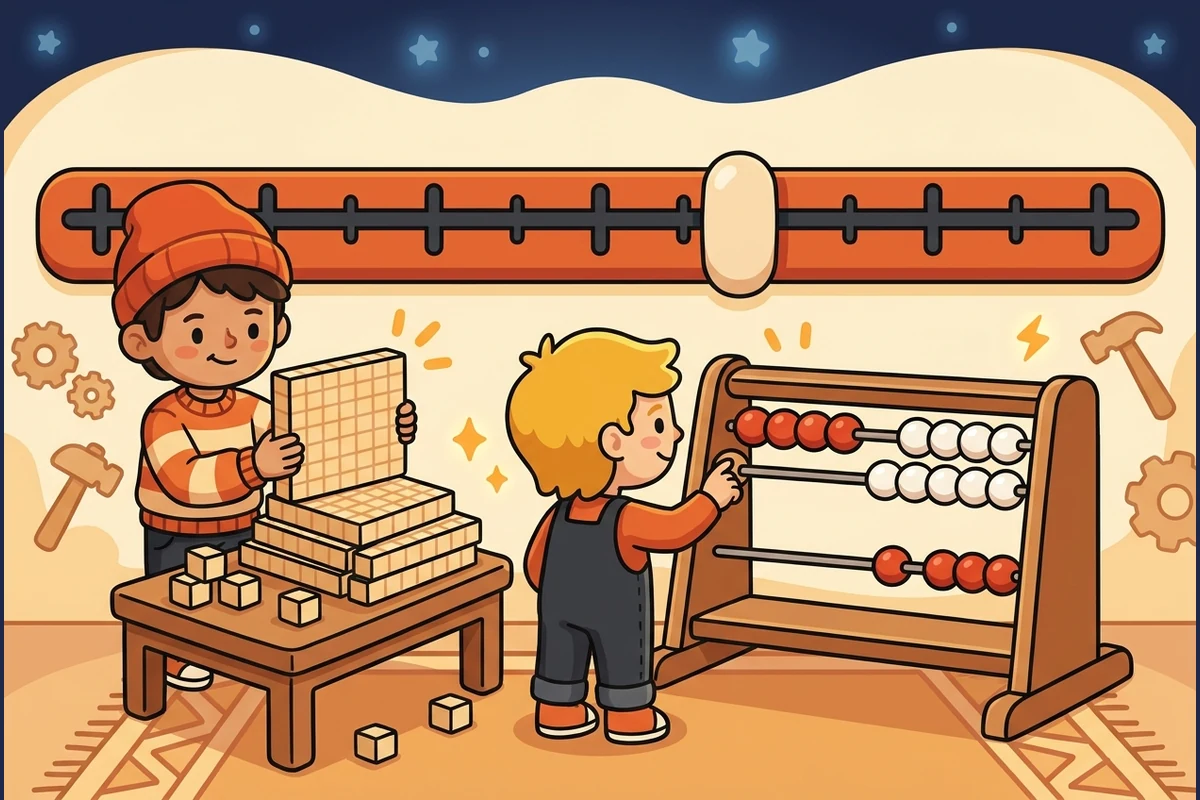
 Number Studio Build a number from thousands to ones — watch standard, expanded & word forms update, and regroup 10-for-1.
 Number Line Place a number, round, work with integers & absolute value — solve by choosing your own jumps.
 Integer Order Which is larger — -3 or -5? Predict, then watch both land on the line.
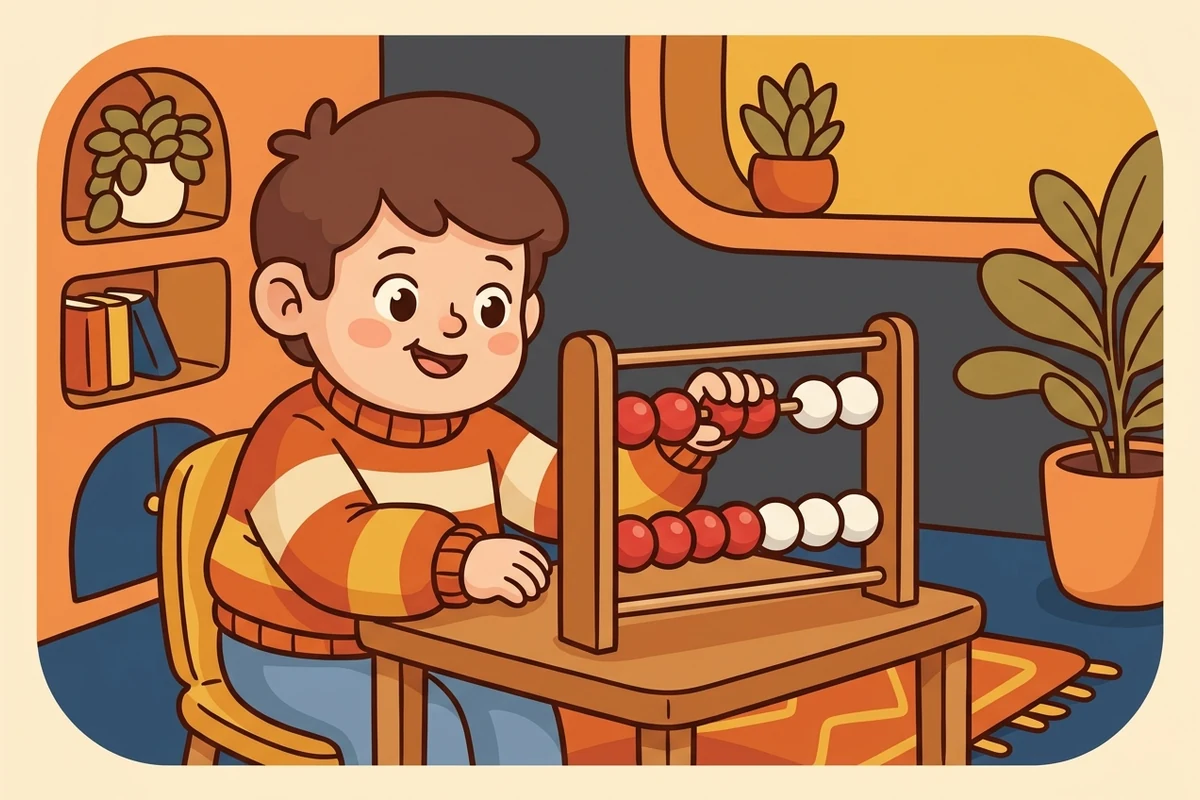 Rekenrek A quick-look bead rack — see a quantity in fives and tens, and build make-ten pairs.
How are you feeling?
All activities
Build & reason
Practice & play
Concept Kits — 12 kits of number sense
For grown-ups — progress report →
Think it through first
Cast, stories & more
More ways to play
Where this idea comes from
Fibonacci’s Liber Abaci
Leonardo of Pisa, later called Fibonacci, learned Hindu-Arabic numerals as a boy in North Africa. In 1202 he wrote Liber Abaci, the Book of Calculation, to teach them in Europe.
One thing to hold: A handwritten book that opens with the nine figures and the zero, and how a digit’s place changes its value.
Why it matters: With place value, the same ten symbols can write any number, and adding and multiplying become methods on paper. The book’s puzzle about breeding rabbits gave us the Fibonacci numbers.
What we don’t know: No copy from 1202 survives; we read the revised version he made in 1228.
The Ishango bone
A baboon leg bone with groups of notches, found in 1950 by the geologist Jean de Heinzelin at Ishango, by Lake Edward in what is now the Democratic Republic of the Congo. It is about 20,000 years old and is kept in Brussels.
One thing to hold: A dark brown bone about ten centimetres long, with a piece of quartz fixed at one end and three columns of cut marks.
Why it matters: It is one of the oldest objects that may show people keeping count with marks — the same idea as a tally.
What we don’t know: Nobody knows what the marks meant. Some have said they show prime numbers or a calendar; many researchers think that reads too much into a few notches.
Khipu
Knotted cords used in the Andes to record numbers and other information; the Inka state used them across its empire, and khipu are still kept by some Andean communities today.
One thing to hold: A main cord with hanging cords; knots placed in rows by tens, hundreds and thousands.
Why it matters: A place-value system made of knots: where a knot sits on the cord says what it is worth.
What we don’t know: Many khipu may record more than numbers, and how to read those is still being worked out.
😄 Brain break
Meet the cast — the characters who teach this
-
 Tenfold Place value
-
 Zeph The zero placeholder
-
 Mirror Negative numbers
-
 Skip Skip-counting and multiples
-
 Tug Inverse operations
-
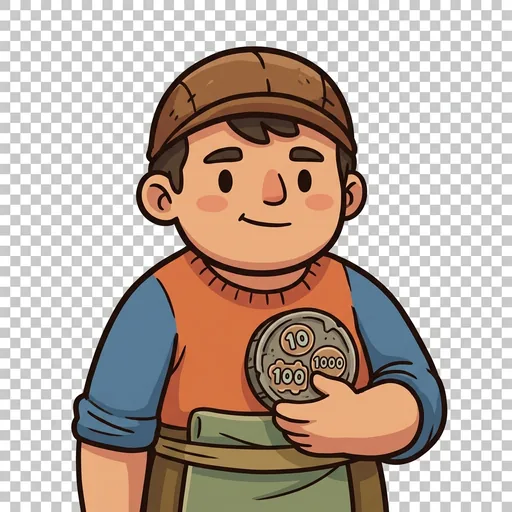 Nigh Rounding and estimation (judging a number by the nearest landmark)
-
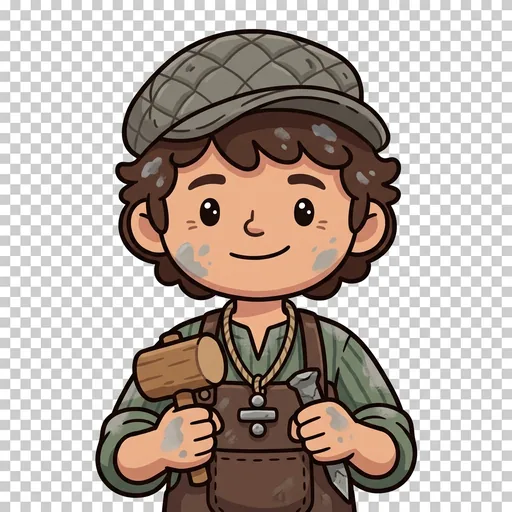 Rive Factors, divisors, and prime numbers (splitting a number into what divides it)
-
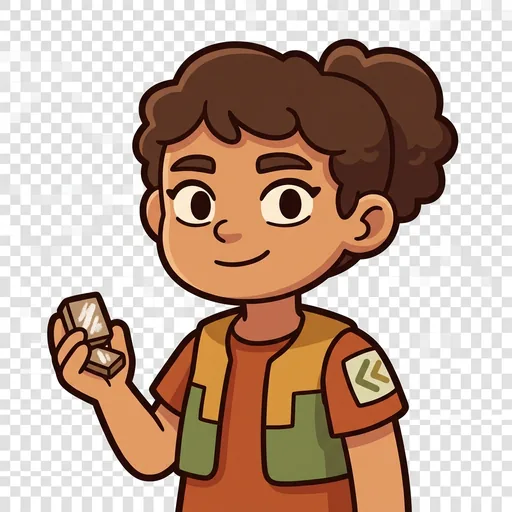 Vie Comparing and ordering (magnitude — greater-than and less-than)
-
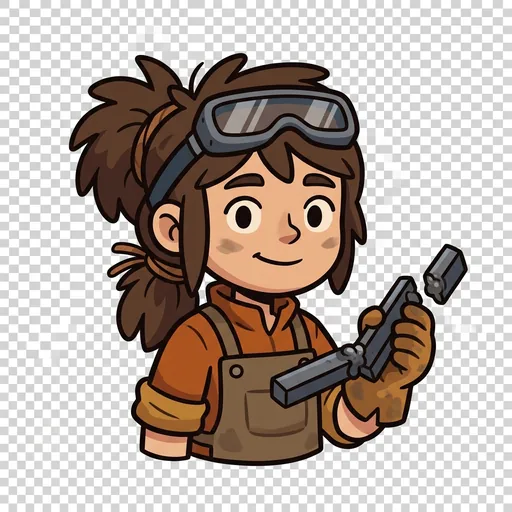 Weld Number bonds (part-part-whole decomposition; making ten)
-
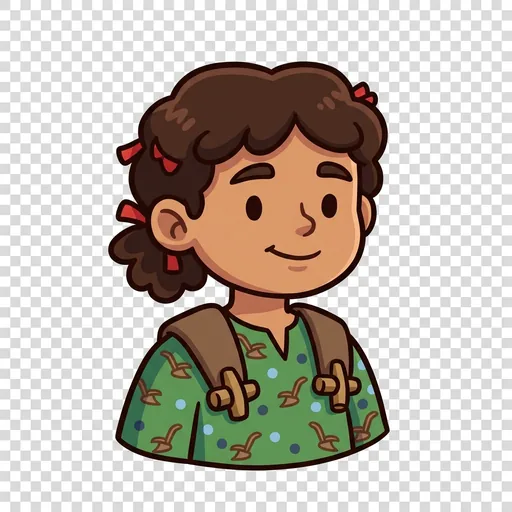 Yoke Parity (even and odd numbers)
Ensemble stories — the cast together
What next? Pick a door
- More like this CardForge How many ways can these cards combine? ChanceForge What happens after a thousand flips? ProofQuest Is this always true, or just sometimes?
- A bit harder MeasureQuest Can you read a broken ruler? FractionForge Which fraction is bigger? MintForge How does interest grow your money?
- Something different ScreenForge What screen will this code make? TycoonForge How fast will your machine snowball? StandForge Is your note in tune?