Before you start
Most popular
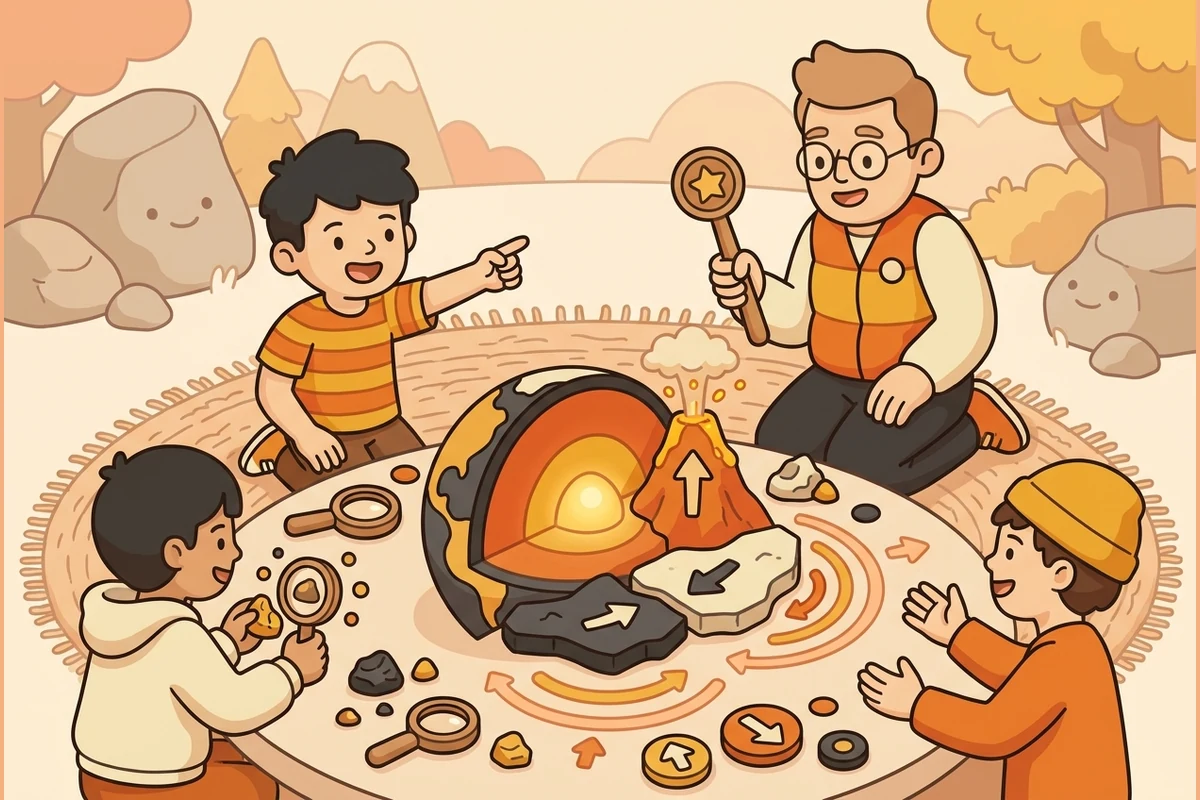
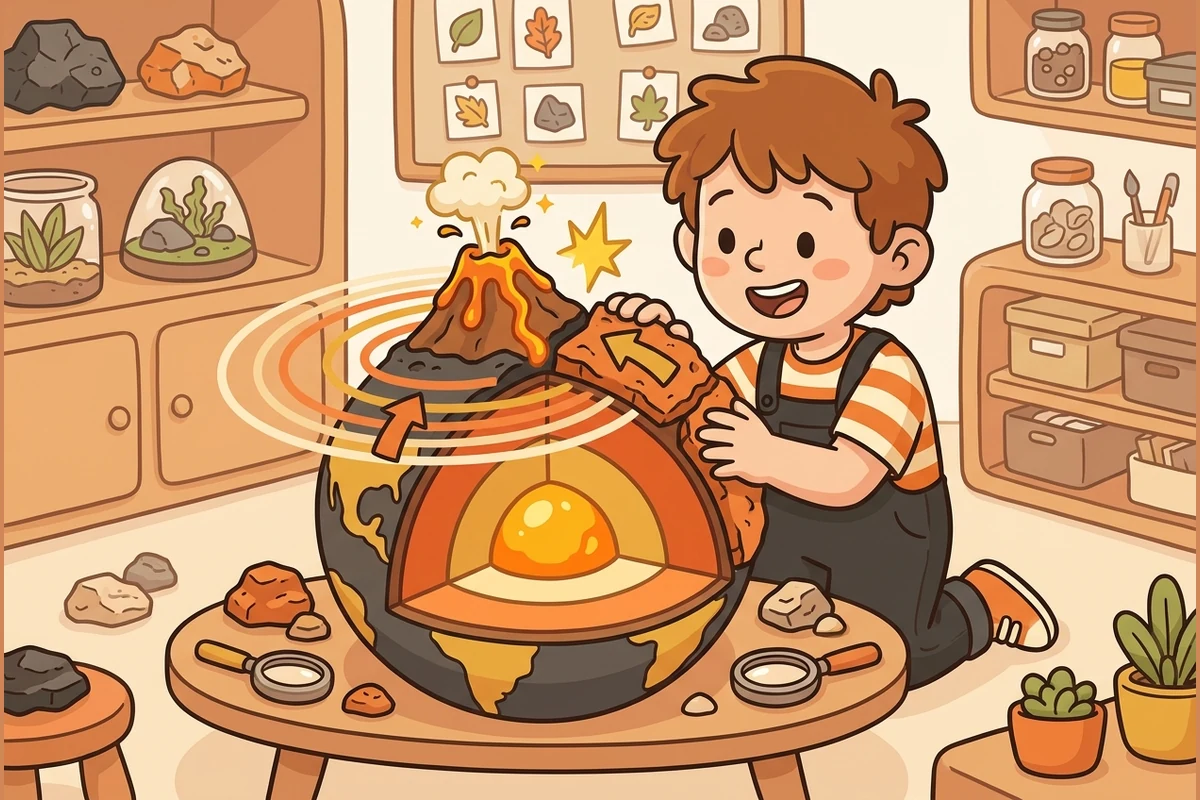 Tectonics Lab Earth Interior, plate boundaries, seismic station, volcano lab — every one is something you do.
 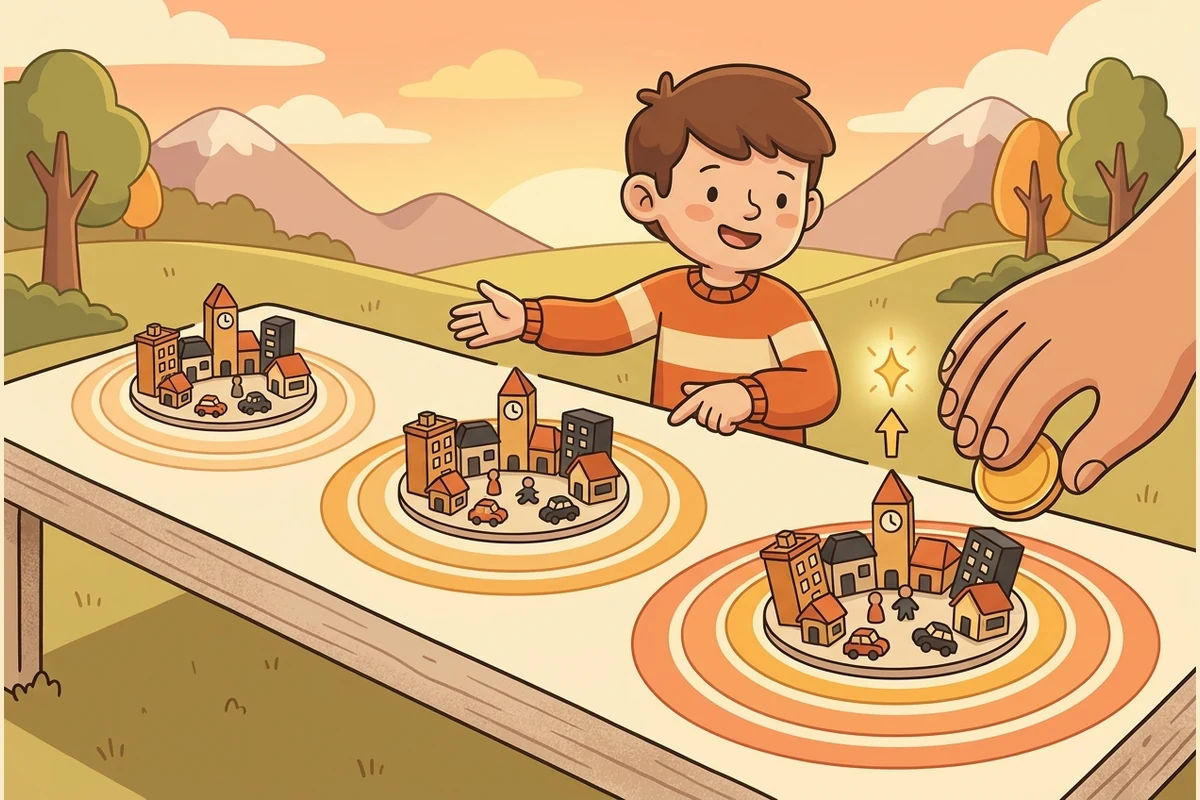 Magnitude Lab Predict how much MORE a bigger quake shakes — the Richter scale is base-10.
 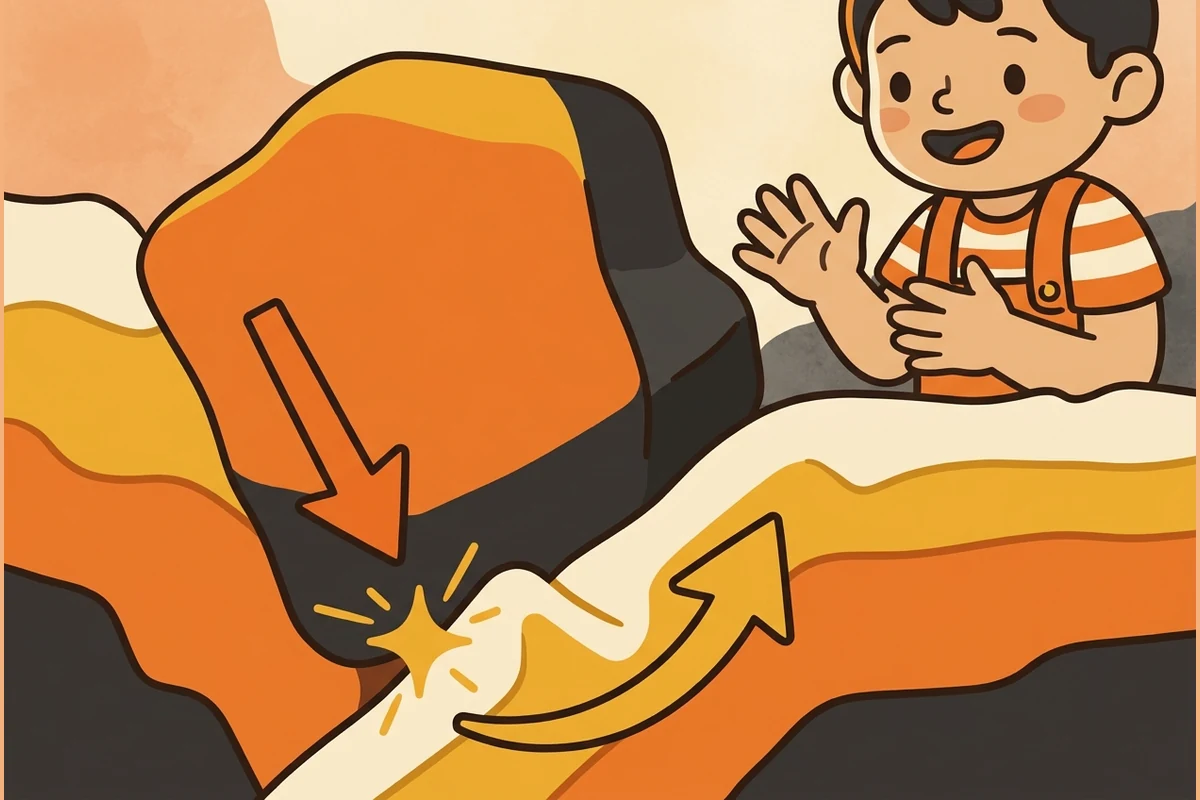 What Moves the Plates? Predict what really drives a plate — slab-pull, ridge-push, not the Earth's spin.
 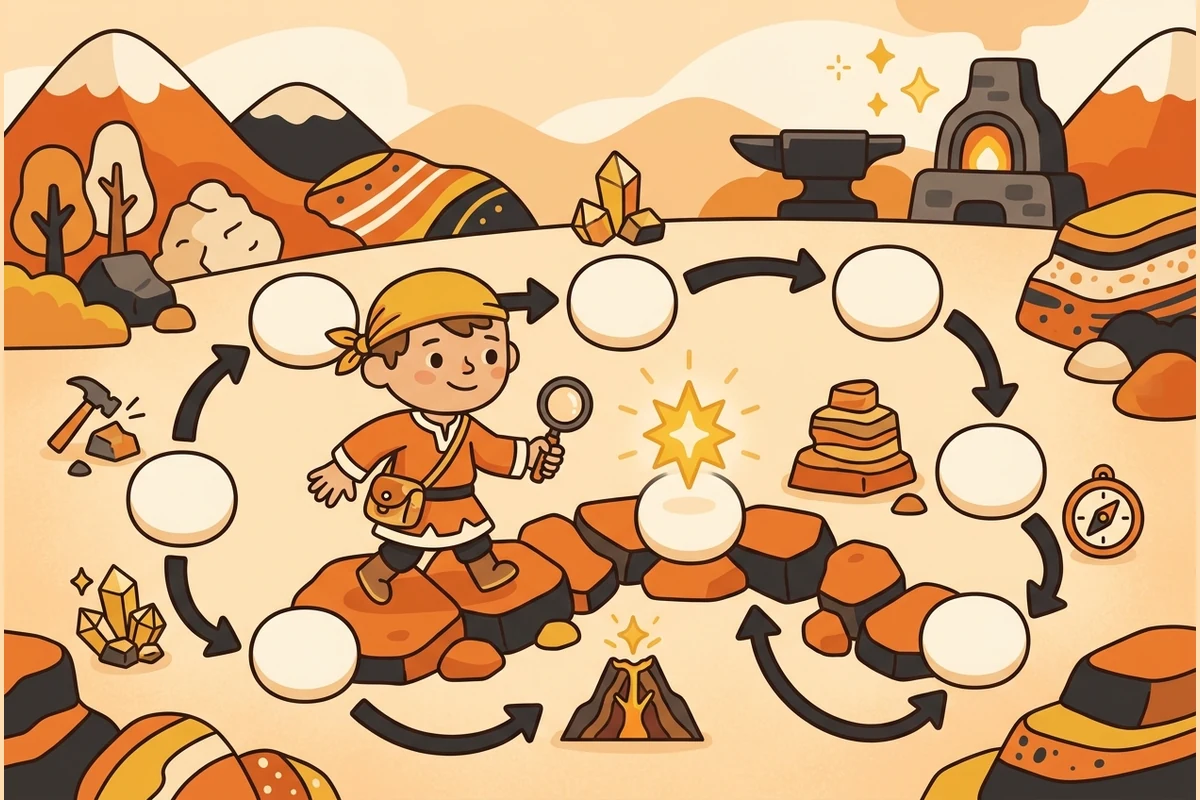 Tectonics Journey A path through every kit — clear each stop, then move on.
 All activities
Tectonics labs
Tectonics Lab Earth Interior · Plate Boundaries · Seismic Station · Volcano Lab · Hazard Engineer · Stress & Slip (load a fault until it snaps) — hands-on Earth-science stations. Magnitude Lab Predict how much MORE a bigger quake shakes the ground before a log-scaled chart reveals it — a 7.0 shakes 100× more than a 5.0, not 2×. Locate the Epicenter Read three stations’ S–P gaps, draw a range circle around each, and find where all three cross — the trilateration method seismologists really use. What Moves the Plates? Predict what actually drives a plate before a mantle cross-section reveals it — plates are pulled by a cold sinking slab or pushed off a high ridge. Rock Cycle Predict what a rock becomes as plate motion melts, cooks, weathers and cools it — then trace the arrow round the rock-cycle diagram. Plate or Continent? A plate is not a continent. Predict whether each feature is a continent, an all-ocean plate, or a plate carrying both — then the drill corrects the classic mix-up. Plate Pace Plates creep centimetres a year. Predict the distance or the time, then multiply by deep time and watch a creep open an ocean.
Practice & play
Mixed Practice A short round across the kits you have played — brought back to make it stick. TectonicForge Sprint Race your OWN best on what you already know. Timer optional, no penalty for a miss. Trick Questions Brain-teasers with a twist — spot why the obvious answer is a trap. Teach the Cast Teach an Earth-science idea to a cast member still learning it — teaching makes it stick. TectonicForge Duel 2–4 players take turns on one device — same questions, highest first-try score wins. Tectonics Journey A progression trail through every kit — clear each stop of real practice, then move on. Progress Your levels, streak, and how each skill area is coming along — saved on this device. Progress report For grown-ups — a private on-device snapshot mapped to the skill areas. Export a CSV or print.
Concept Kits — 16 kits from "what is a plate?" to advanced synthesis
Kit 1: Plate Tectonics Basics Plates & Boundaries · grades 4-5 · 25 questions Kit 2: Earthquakes and Seismic Waves Earthquakes & Seismic · grades 5-6 · 25 questions Kit 3: Volcanoes and Volcanic Activity Volcanoes · grades 5-6 · 25 questions Kit 4: The Rock Cycle Rocks, Resources & Time · grades 5-6 · 25 questions Kit 5: Mountain Building Erosion Plates & Boundaries · grades 6-7 · 25 questions Kit 6: Earths Interior Structure Earth's Interior · grades 6-7 · 25 questions Kit 7: Fossils Geologic Time Rocks, Resources & Time · grades 6-7 · 25 questions Kit 8: Natural Resources Geology Rocks, Resources & Time · grades 7-8 · 25 questions Kit 9: Volcanic Activity Volcanoes · grades 6-8 · 25 questions Kit 10: Seismology & Earthquakes Earthquakes & Seismic · grades 6-8 · 25 questions Kit 11: Mountain Building Plates & Boundaries · grades 6-8 · 25 questions Kit 12: Earth's Interior & Mantle Convection Earth's Interior · grades 6-8 · 25 questions Kit 13: Cross-Topic Connections Reasoning & Synthesis · grades 5-6 · 25 questions Kit 14: Real-World Applications Reasoning & Synthesis · grades 6-7 · 25 questions Kit 15: Misconceptions & Reasoning Reasoning & Synthesis · grades 6-7 · 25 questions Kit 16: Advanced Synthesis Reasoning & Synthesis · grades 7-8 · 25 questions
More ways to play
Meet the cast — the characters who teach this
-
 Sink Convergent/subduction boundary — the heavier plate finds its way down; it takes a long time; that's okay
 -
 Spread Divergent boundary + new crust — when something pulls apart, something new is forming in the middle
 -
 Slide Transform boundary + stored energy — two plates sliding past; they catch, they hold, then they let go
 -
 Vent Volcanism + magma chemistry — eruptions tell us what was happening below
 -
 Tremor Seismology + earthquake preparedness — earthquakes are the Earth telling its story; we can read the lines; we can be ready
 -
 Churn Mantle convection — the engine that drives the plates — 'Deep heat moves the whole map.'
 -
 Heave Mountain-building — folding + uplift at collisions — 'Push long enough and mountains rise.'
 -
 Remake The rock cycle — igneous, sedimentary, metamorphic — 'Nothing is ever really finished.'
 -
 Scour Weathering + erosion — wearing down the land — 'Water and time win.'
 -
 Silt Deposition + strata — reading rock layers as time — 'Every layer is a page.'
Ensemble stories — the cast together