
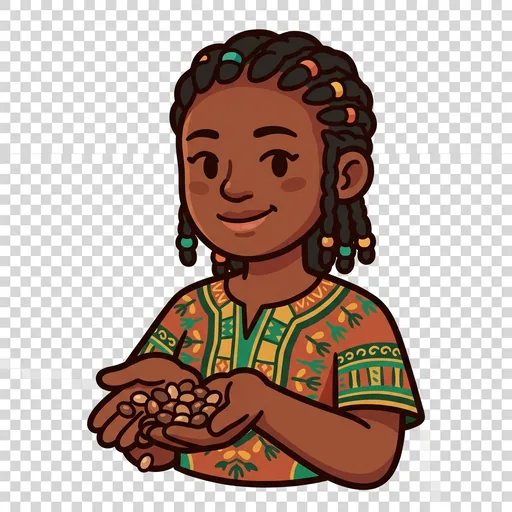
Harva
THE HARVEST (Oware) — when your last sown seed lands in an opponent's pit and brings its count to exactly two or three, you gather those seeds into your store; and if the pit just before it also holds two or three, you reap that one too, back along the row.
Harva and the Patient Harvest
Where Sowa sows, Harva reaps — and if you want to understand Harva, you have to understand that she almost never goes first.
She waits. She is the second half of the Oware board, the one who turns a careful sowing into a store full of seeds. Sowa scatters the handful; Harva watches where the last seed falls. And when it falls in exactly the right place, in exactly the right number, Harva gathers the harvest.
“Watch her closely,” Mapp says, tilting the two-rowed board so the light catches the little hollows. “Sowa can drop a beautiful handful, one seed per hole all the way around. But the sowing only becomes points if the LAST seed lands the way Harva needs it to. That’s the moment Harva lives for.”
Here is Harva’s move, the thing she does over and over, the reason she exists on this board. When a sown handful ends — when that final seed drops into a pit on the opponent’s side — Harva looks at what the pit now holds. Not how many it started with. How many it holds now, with that last seed added. And she is looking for one number, or maybe two: two, or three.
If the last seed makes the pit hold exactly two seeds, or exactly three — Harva reaps it. She scoops every seed out of that pit and drops them into her store, safe, counted, hers. Two or three. Not one. Not four. Not a fat pit stuffed with seven. Exactly two, or exactly three.
“Why two or three?” a kid always asks. And Mapp always answers the same way: “Because that’s the rule the game grew up with, sown and reaped across West Africa for centuries — a rule so good it survived every ocean it crossed. Two or three is the harvest number. Harva didn’t choose it. She inherited it, same as the seeds.”
The wonderful part comes next. Harva doesn’t always stop at one pit. If the pit just before the one she reaped — one step back along the row — ALSO holds exactly two or three, she reaps that one too. And the one before that, if it’s two or three as well. She walks backward down the row, gathering pit after pit into her store, as long as each holds the harvest number — a whole run of harvests, all from one well-aimed last seed.
The first time Harva played, she was greedy. She saw a pit with six seeds in it and thought, that’s the one I want — it’s the fullest, it must be the best harvest. But the last seed made it seven, and seven is not two, and not three, and she reaped nothing at all. “It was the biggest pit,” she said, confused.
“Biggest isn’t the harvest,” Mapp said, smoothing the board. “The harvest is a shape, not a size. Two or three — that exact small shape — is what you’re growing toward. A pit with six seeds isn’t nearly ready. A pit you can nudge to exactly two or three is a harvest waiting to happen. Watch the counts, not the piles.”
So Harva learned patience of a very particular kind: the patience to want the right number instead of the big number. She learned to look, turns ahead, for pits she could bring to exactly two or three — to plan the harvest before it was ripe, the way a real farmer knows in spring which field will be ready in autumn. And she learned the last, gentlest lesson of all: a wise Oware player never strips the whole board bare, because if you leave the other side with nothing to sow, the game simply ends — and sometimes it’s better to keep the garden growing than to grab every last seed today.
“Harva lands the last seed to make two or three,” she says, as the seeds pour into her store, “then gathers them all in.”
That is the harvest-wisdom Harva carries through the Atlas: that the sweetest rewards are the ones you set up patiently and gather at exactly the right moment — not the biggest heap, but the perfectly ripe count — and that the quiet sowing always has to come first. Thank the sower. Watch the counts. Reap when it’s ripe, and leave a little to grow.
The next time you’re tempted to grab the biggest pile of something instead of waiting for the right moment, remember Harva at her two-rowed garden, counting under her breath. Say it with her: “Land the last seed to make two or three — then gather them into the store.” The harvest was always about the number, never the size.
The AtlasTales ensemble
Harva is part of AtlasTales's distributed-narrative cast. Each character embodies a different curricular primitive; together they teach the full subject.
-
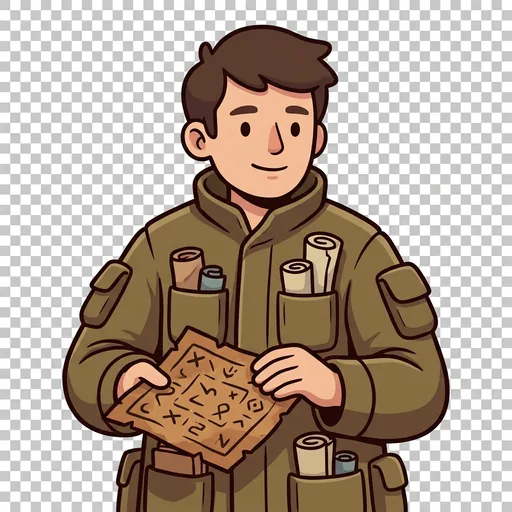
Mapp
(Mentor) the mapmaker — unrolls each world board and asks where it comes from and how you win
-
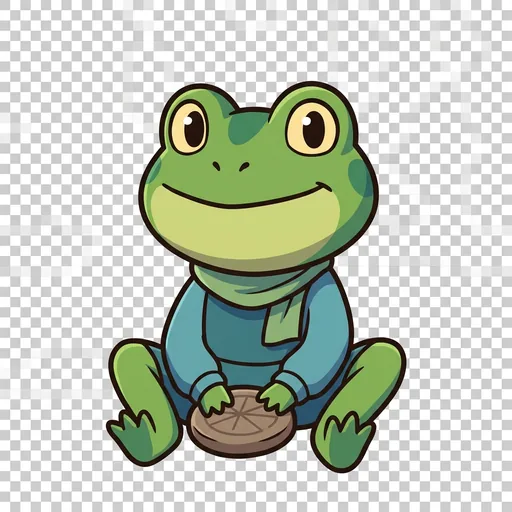
Hopper
The jump (Alquerque) — leap the neighbour who sits next to you and land on the empty point just beyond
-
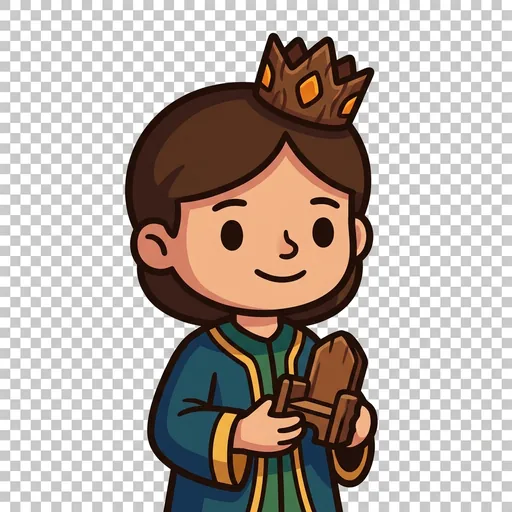
Runa
The King's run (Brandubh) — slip along the open lines to reach a free corner before the trap closes
-
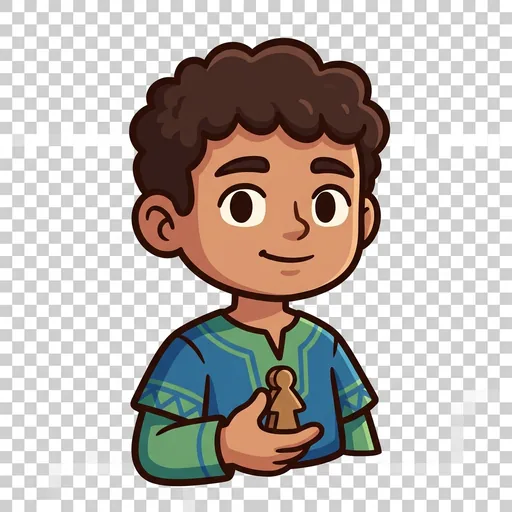
Siege
The surround (Brandubh) — box the King in on all four sides at once to win the siege
-
Sowa
The sower (Oware) — scoop a pit and scatter its seeds one at a time around the board