
Sowa
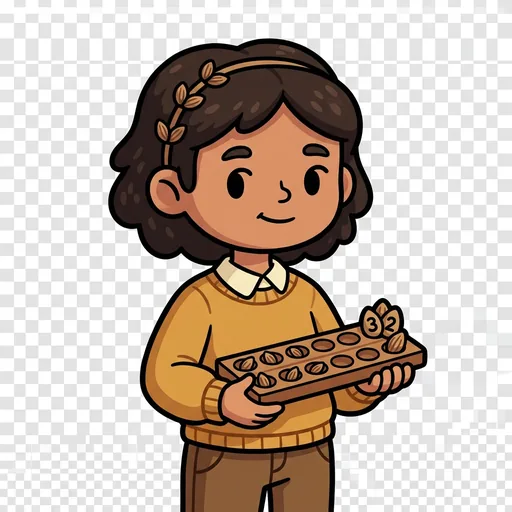
SOWING (Oware) — pick up ALL the seeds from one of your pits and drop them one at a time into each following pit around the board; you never move a single piece, you move a whole handful, and where the last seed lands is what matters.
Sowa and the Sowing of the Seeds
The board Mapp unrolls for Sowa doesn’t look like a battlefield at all. It looks like a little garden: two long rows of round hollows, six on each side, and a bigger store-hole at each end. Into every hollow, a small handful of seeds.
“This one is Oware,” Mapp says, and there’s real warmth in how he says it. “Sown and reaped across West Africa for longer than anyone can properly count — and carried by travellers to so many places that it has a hundred names. Some call it mancala. But here, on this board, it’s Oware.” He runs a finger along the two rows. “And it’s different from every other game in the Atlas. On this board, you don’t move a piece. You move a whole handful of seeds.”
This is Sowa’s home, and sowing is her whole art.
Here is what she does, again and again, the move that is really her name. She reaches into one of the pits on her side — her side only — and she lifts out every seed in it. All of them, in one scoop, cupped in her hand. Then she goes around the board, and into each next hollow she drops exactly one seed. One here. One in the next. One in the next after that — always moving the same direction, always one seed per hole, until her hand is empty.
She never keeps two for herself. She never skips a pit to give an extra to a favourite. One seed, one hollow, all the way around. That evenness is the game.
“It’s like planting a row,” Sowa says, and she means it literally. “You walk the row and you drop a seed in every hole you pass. What you’re really deciding isn’t how much to plant. It’s WHERE you’ll be standing when you plant the last one.”
Because that — the last seed — is everything. Where Sowa’s final seed comes to rest decides what happens next: whether the turn just ends quietly, or whether it lands somewhere that lets her sister Harva reap a harvest. So before Sowa ever picks up a pit, she does a strange and wonderful thing. She counts ahead. She looks at how many seeds are in each pit, and she imagines her hand travelling around the board, dropping them one by one, and she asks: where will the last one fall? She has to see the end of the sowing before she begins it.
The first time Sowa played, she didn’t think ahead at all. She just grabbed the fullest pit — the most seeds felt like the best move — and sowed them without counting, and her last seed dropped in some empty, useless hollow that helped nobody. “That did nothing,” she said, deflated.
“It wasn’t nothing,” Mapp said, gathering the seeds back. “It was a lesson in looking. The fullest pit isn’t the best pit — the best pit is the one whose LAST seed lands where you want it. Pick up the seeds in your mind first. Walk them round. See where you’ll finish. THEN scoop.” He smiled. “The sowing is easy. The thinking-ahead is the game.”
So Sowa learned to sow twice — once in her head, counting each hollow, watching in her imagination where the handful would run out; and only then, once she liked where the last seed landed, sowing for real. Scoop, and drop, one seed per hole, around and around, her hand a small careful weather passing over the garden.
“Sowa scoops a whole pit,” she says, as the seeds settle, “and drops one seed in each hole, all the way around.”
That is the quiet wisdom Sowa carries through the Atlas: that some things you cannot do by moving one piece at a time — some things only work when you share a little into every hollow, evenly, all the way around, and let the pattern do the work. And that the smartest part of any handful is knowing, before you scatter it, exactly where it’s going to run out.
The next time you have a whole handful of something to spread — chores, kindnesses, minutes, seeds — try being Sowa about it. Don’t just grab the biggest pile and dump it. Picture the whole round first. See where your last one lands. Then say it, and go one at a time: “Scoop the whole pit — one seed in each hole, all the way around.” Somewhere, in a garden of hollows a very long way away, someone once taught someone that exact patient trick, and it travelled, hand to hand, all the way to you.
The AtlasTales ensemble
Sowa is part of AtlasTales's distributed-narrative cast. Each character embodies a different curricular primitive; together they teach the full subject.
-
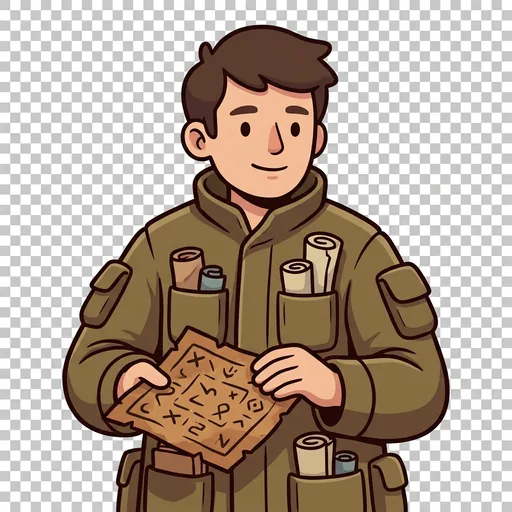
Mapp
(Mentor) the mapmaker — unrolls each world board and asks where it comes from and how you win
-
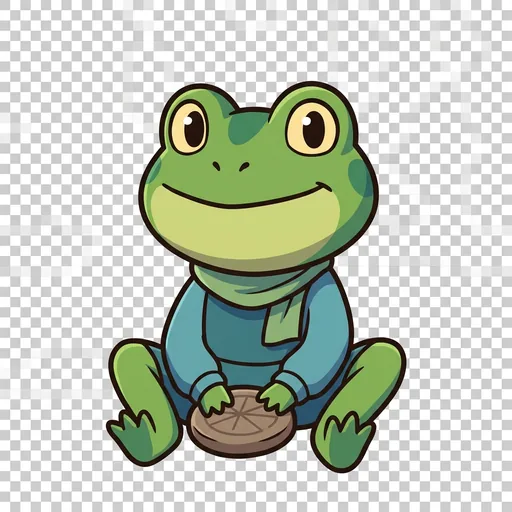
Hopper
The jump (Alquerque) — leap the neighbour who sits next to you and land on the empty point just beyond
-
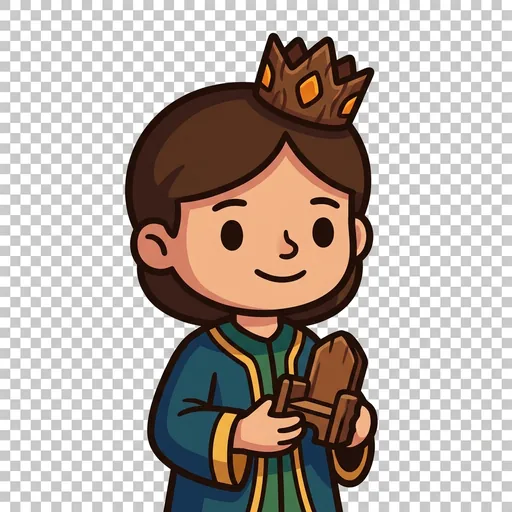
Runa
The King's run (Brandubh) — slip along the open lines to reach a free corner before the trap closes
-
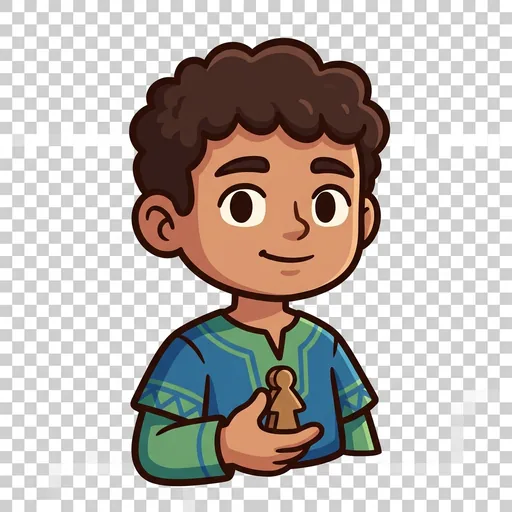
Siege
The surround (Brandubh) — box the King in on all four sides at once to win the siege
-
Harva
The harvest (Oware) — land your last seed to make two or three, then gather them into your store