
Mapp
ORIENT THE BOARD — before you play, find out where a game comes from and what winning actually means on it; every board is a small map of the people who made it.
Mapp Unrolls the World
Nobody is quite sure how old Mapp is, and Mapp likes it that way.
He arrives the way weather arrives — you look up, and there he is, a lean figure in a coat with far too many pockets, each one holding a board rolled up like a scroll. Some are painted on cloth. Some are scratched into flat stones. One, his oldest, is inked onto a square of leather so worn it feels like the skin of a drum. When Mapp wants to teach you a game, he doesn’t hand you rules. He unrolls a board, sets it flat, smooths it with the side of his hand, and asks the same two questions every single time.
“Where in the world is this from?”
And then: “How, on this board, do you actually win?”
That’s the whole of Mapp, really. He is a mapmaker who decided, a long time ago, that the most interesting maps aren’t of coastlines and mountains. They’re of games. Because a game, Mapp says, is a little map of the people who made it — of what they had time for, what they thought was clever, what they did on the long evenings when the work was done. Show him a board and he can almost hear the place it came from.
“This one,” he’ll say, unrolling a grid of crossing lines, “is Alquerque. Carried across deserts and markets between three continents, older than almost anything you own. On this board you win by leaping — you jump a neighbour to the empty point beyond and lift them off.” And a small clay token named Hopper will settle onto her point and begin to wait.
“This one,” he’ll say, spreading a cross-shaped board with a lonely throne at its centre, “is Brandubh, from the green edge of the old Irish world. It isn’t fair — one side has a King and a few guards, the other side has more soldiers all around. And that’s the point. On this board, one player wins by running the King to freedom in a corner, and the other wins by closing every escape.” And two friends, Runa and Siege, will take their places on opposite sides of the same small war.
“And this one,” he’ll say, lifting a board of round hollows in two long rows, “is Oware, sown and harvested across West Africa for longer than anyone can count. On this board you don’t move a piece — you move a whole handful of seeds, one into each pit, all the way around, and you win by gathering more than the other player.” And Sowa will scoop up a pitful of seeds, and Harva will wait for the moment they can be reaped.
Six friends. One mapmaker. Boards from everywhere.
Here is the thing children notice about Mapp, sooner or later: he never actually plays to win. He sets the board, he asks his two questions, he explains what a move feels like — and then he steps back and lets you find the winning idea. If you make a mistake, he doesn’t sigh. He just smooths the board flat again and says, “Have another look. The board will wait.” If you win, he doesn’t take the credit. He grins like the sun coming out and says, “There. Now you know where that one lives.”
Once, a sharp-eyed kid asked him why. “You know all these games better than anyone. Don’t you ever want to beat somebody?”
Mapp thought about it, the way he thinks about everything, slowly. “When I was young,” he said, “I wanted to be the best in the room. Then I noticed something. The games I loved most weren’t invented by one clever person who beat everybody. They were made by whole peoples, passed hand to hand, changed a little each time, until they arrived — here — with you. Nobody ‘won’ Oware. Everybody carried it.” He tapped the leather board. “I’d rather be the one who carries them. That’s a kind of winning that doesn’t run out.”
So that is Mapp’s move, the thing he does over and over, the move that is really the beginning of every other move in this atlas. He unrolls the board. He asks where it’s from. He asks how you win. And then he waits, patient as a coastline, while you figure the rest out for yourself.
The next time someone hands you a game you’ve never played — a board, a deck, a strange set of pieces — try being Mapp for a minute before you rush in. Say it out loud, the way he does: “Where in the world is this from — and how do you win?” You’ll be surprised how much of the game answers back.
Then unroll it, smooth it flat, and let the board wait while you look.
The AtlasTales ensemble
Mapp is part of AtlasTales's distributed-narrative cast. Each character embodies a different curricular primitive; together they teach the full subject.
-
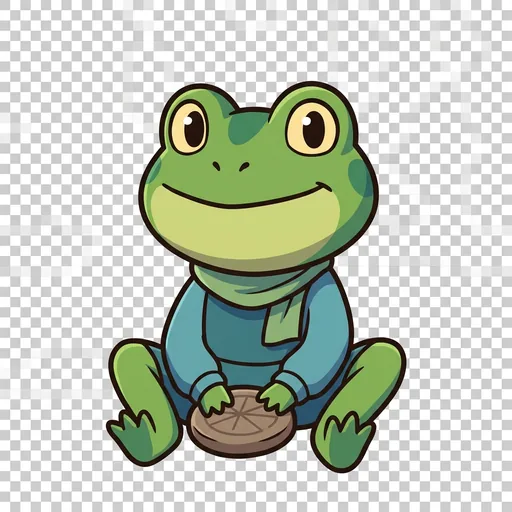
Hopper
The jump (Alquerque) — leap the neighbour who sits next to you and land on the empty point just beyond
-
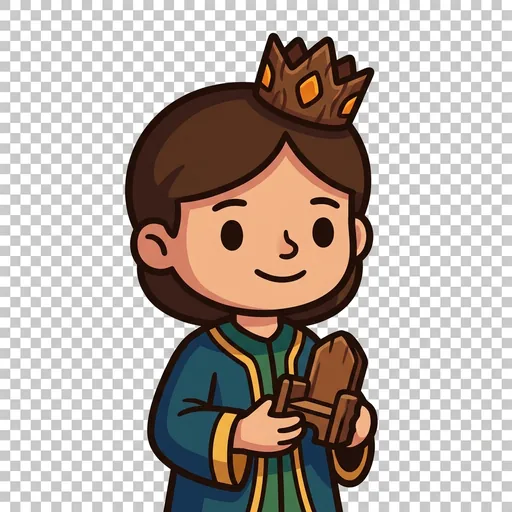
Runa
The King's run (Brandubh) — slip along the open lines to reach a free corner before the trap closes
-
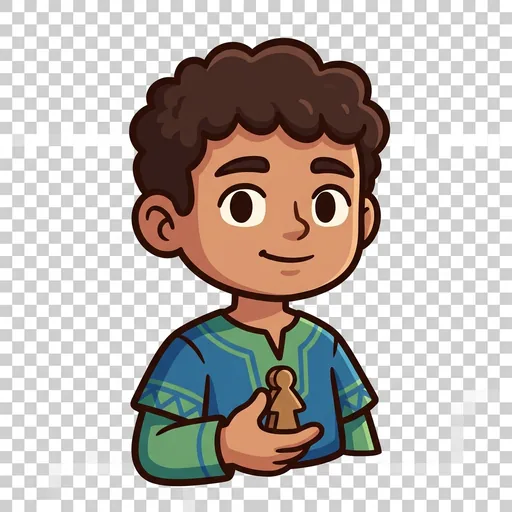
Siege
The surround (Brandubh) — box the King in on all four sides at once to win the siege
-
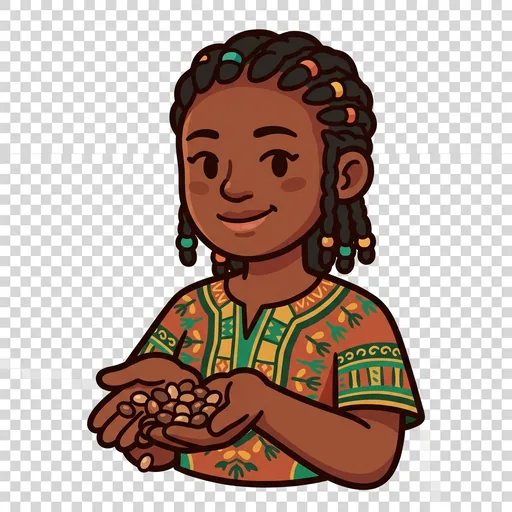
Sowa
The sower (Oware) — scoop a pit and scatter its seeds one at a time around the board
-
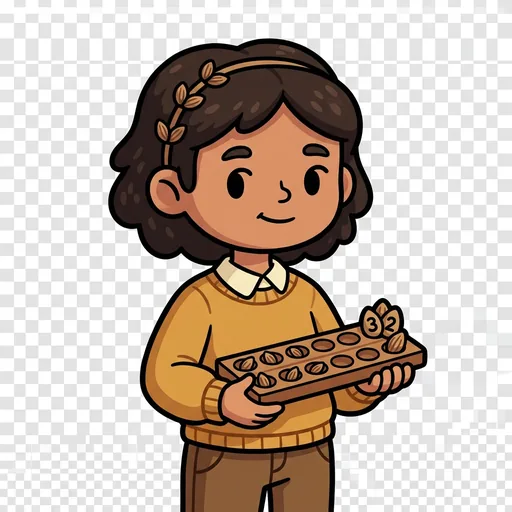
Harva
The harvest (Oware) — land your last seed to make two or three, then gather them into your store