
Hopper
THE JUMP (Alquerque) — leap the neighbour who sits right beside you, along a line drawn on the board, and land on the empty point immediately past them; the piece you jump is captured.
Hopper and the Oldest Jump in the World
When Mapp the mapmaker unrolls the board for Hopper, he does it slowly, the way you’d open a very old letter. It is a grid of lines and dots — points where the lines cross — and it looks less like a game and more like a tiny star-map drawn in the dust.
“This one is called Alquerque,” Mapp says, and he lets the strange word sit in the air. “Say it with me. Al-KER-kay. It was played in the deserts and the market towns a very long time ago, carried in the packs of people crossing between three continents. Some of the boards we’ve found are scratched into the roofs of ancient temples, where the workers must have played on their breaks, thousands of years before you were born.” He taps a point. “And this — this little jump you’re about to learn — is the great-great-grandparent of checkers. Every time someone crowns a king in draughts, they’re doing something Hopper’s family taught the whole world.”
Hopper likes that. She likes belonging to something old.
She sits on her point, a round token the colour of river clay, and she waits. Waiting, for Hopper, is not doing nothing. Waiting is the biggest part of the jump.
Here is how Hopper moves when it is quiet: one step, along a line, to the empty point right next door. That’s all. A calm little walk from dot to dot. But Hopper is not really a walker. Hopper is a jumper, and a jumper spends most of her life looking for one exact thing.
She is looking for a neighbour with nothing behind them.
“There,” she breathes. Across a single line sits an opponent’s piece — right beside her, close enough to touch. And past that piece, further along the same line, is a point with nobody on it. An empty landing. That is the whole picture Hopper has been waiting for: me, then a neighbour, then an empty point, all in one straight line.
When she sees it, everything in her goes still and certain. She gathers herself. And she leaps — up over the neighbour, down onto the empty point beyond. The piece she jumped is lifted off the board. Captured. Gone. Hopper lands one point further along than she started, breathing a little quicker, a small clay token who has just done the oldest trick in the oldest game.
“Hopper hops the neighbour,” she says, half to herself, “and lands on the empty point beyond.”
But — and this is the part that took her the longest to feel in her bones — she cannot jump if the far point is not empty. If there is a piece already sitting on the landing, there is nowhere to come down. She would crash. So she doesn’t. She checks the far side first, every single time, before she ever leaves the ground. A jump is not brave if there’s no room to land. A jump with no landing is just a fall.
The first time Hopper ever tried, she got it wrong. She saw a neighbour, felt the thrill rise up in her, and leaped — and only in the air did she notice that the point beyond was already taken. She scrambled, wobbled, and came right back down where she’d started, cheeks hot, sure that everyone had seen.
Mapp only smiled and rolled the board a little flatter. “Look before the leap, not during it,” he said. “That’s not a rule to make you feel small. That’s the rule that keeps you standing. Try again.”
So she tried again. And this time she did the quiet work first — eyes along the line, neighbour close, landing empty, yes — and then she jumped, and it was clean, and it was hers. The thrill was still there. But underneath the thrill now there was something steadier, something that felt a lot like patience wearing a party hat.
That is the secret Hopper carries around the Atlas. People think the jump is about being fast, or bold, or lucky. It isn’t. The jump is about waiting well — sitting on your point, watching the lines, refusing to leave the ground until the far side is truly clear. The leap is the loud part. The looking is the part that matters.
Sometimes, on a good board, one clean landing sets up the next. Hopper comes down on her empty point, goes still again, and there — another neighbour, another empty beyond, right along a new line. So she jumps again, from the very spot she just landed on, a second time, a third, hopping down the grid like a stone skipped across still water. Mapp calls that a chain, and he says the old players prized it above almost anything: not one jump, but jumps that made room for more jumps.
When the game is over, win or lose, Hopper always does the same thing. She looks back at the lines she crossed and thinks about how far this tiny move has travelled to reach her — from temple roofs and desert roads and busy old markets, hand to hand, board to board, all the way to a kid learning it today. A whole world of people, separated by oceans and centuries, all of them once sat still on a point and waited for the exact same picture she waits for.
“That’s the thing about a jump,” Mapp says, packing the board away. “It looks like leaving. But really, every time you make it, you’re joining a very long line of people who all learned to look before they leaped.”
Say it out loud with Hopper, the next time you’re about to make your move: “Hopper hops the neighbour — and lands on the empty point beyond!” Then check the far side is clear. Then, and only then, jump.
The AtlasTales ensemble
Hopper is part of AtlasTales's distributed-narrative cast. Each character embodies a different curricular primitive; together they teach the full subject.
-
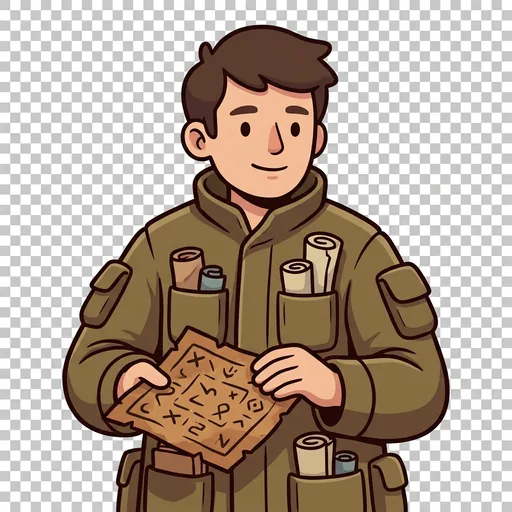
Mapp
(Mentor) the mapmaker — unrolls each world board and asks where it comes from and how you win
-
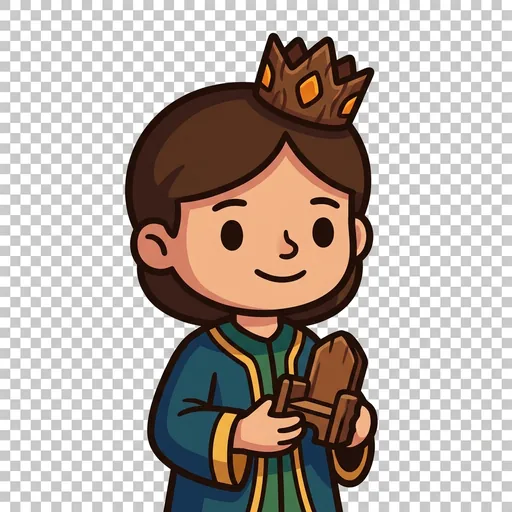
Runa
The King's run (Brandubh) — slip along the open lines to reach a free corner before the trap closes
-
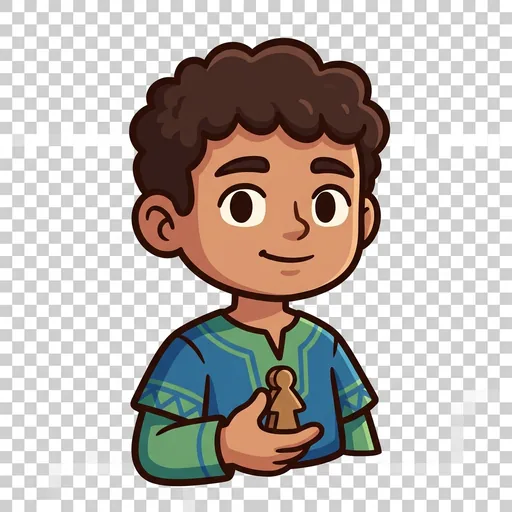
Siege
The surround (Brandubh) — box the King in on all four sides at once to win the siege
-
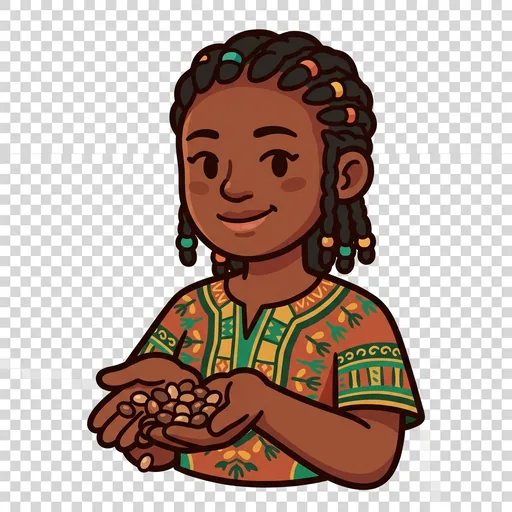
Sowa
The sower (Oware) — scoop a pit and scatter its seeds one at a time around the board
-
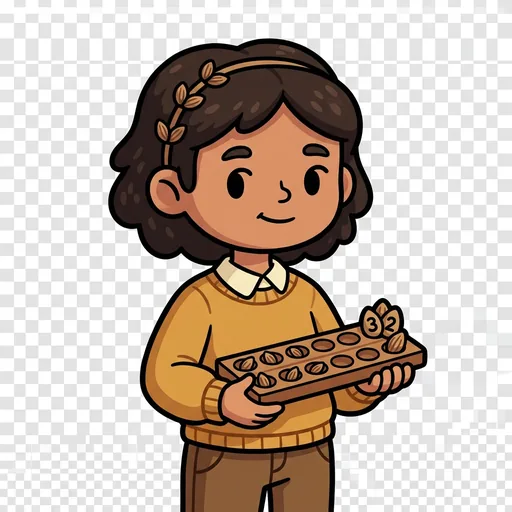
Harva
The harvest (Oware) — land your last seed to make two or three, then gather them into your store