
Siege
THE SURROUND (Brandubh) — the attacking side wins by cutting off every open line to a corner and boxing the King so there is no legal run left; it is patience and teamwork, not a chase.
Siege and the Art of Closing Doors
If Runa is the one who runs, Siege is the one who waits at the edges — and, patiently, closes every way out.
He plays the other side of Mapp’s Brandubh board: the many soldiers ringed around the outside, facing the lonely King at the centre. And here is the surprising thing about Siege, the thing that catches every new player off guard. He never chases.
“People think my side wins by hunting the King down,” Siege says, watching Runa read her lines. “Charging in, grabbing her, dragging her off the board. But that’s not how this game works at all. I can’t grab her by landing next to her. I win a different way — the slow way. I win by making sure there’s nowhere left for her to go.”
That is Siege’s whole move, repeated over and over: he closes doors.
Remember that a King escapes along open lines — straight down an empty row, straight across an empty column, all the way to a glowing corner. So Siege doesn’t run at Runa. He steps, calmly, into the lines. A soldier sits down in an open row: one door closed. Another soldier settles into an open column: another door closed. He is not trying to be next to the King. He is trying to make sure that every straight road to every corner has somebody standing in it.
“It’s like tucking in the sides of a blanket,” Mapp says, watching. “One edge at a time. No hurry.”
The first time Siege ever played, he did exactly what everyone does — he sent his soldiers rushing at the King, all at once, in a great excited charge. And Runa slipped clean through a gap they’d left open behind them and was home in a corner before the dust settled. Siege stood there, surrounded by his own scattered soldiers, feeling foolish.
“You chased,” Mapp told him, gently, smoothing the board. “When you chase, you leave doors open behind you. Try again — but this time, don’t think about catching her. Think about the corners. Close the roads to the corners, one road at a time, and let her run wherever she likes inside the shrinking space. Sooner or later there’s nowhere left to run.”
So Siege learned to be patient — really, properly patient, the patience that is its own kind of courage. He learned to ignore the thrill of the chase and do the quiet arithmetic of doors: which lines still reach a corner, and how to seal them without leaving new gaps behind. He learned that his soldiers only work together. One soldier surrounds nobody. But four soldiers, placed with care on all four sides of the King — above, below, left, right — leave her with no legal step in any direction. The board goes still. The surround is complete. Siege has won, and he never once ran.
“Siege closes the doors one by one,” he says, when the ring finally snaps shut, “and wins by surrounding, not by chasing.”
Here is the part people don’t expect: Siege and Runa are friends. They play against each other on the same small board, one running, one closing, and when the game ends they sit down together and go back over it — where a door was left open, where a run started too late. “She’s the best King I know,” Siege says. “Playing someone good makes me better. If she were easy to trap, closing the doors wouldn’t teach me anything.” And Runa says the same about him: a careless besieger would just let her win, and then she’d never learn to read the lines faster.
That is the gift Siege carries around the Atlas — the idea that some things are won not by force but by patience and teamwork; not by grabbing, but by closing off, calmly, one way at a time, until the shape you wanted is simply there. And that the person on the other side of a hard game is not your enemy. They’re the reason you’re getting good.
The next time a problem feels too big to charge at all at once, try being Siege for a minute. Don’t chase the whole thing. Close one door. Then the next. Then the next — steady, together, no hurry — and say it as you go: “Close the doors one by one — win by surrounding, not by chasing.” You’ll find that a great many things get solved that way.
The AtlasTales ensemble
Siege is part of AtlasTales's distributed-narrative cast. Each character embodies a different curricular primitive; together they teach the full subject.
-
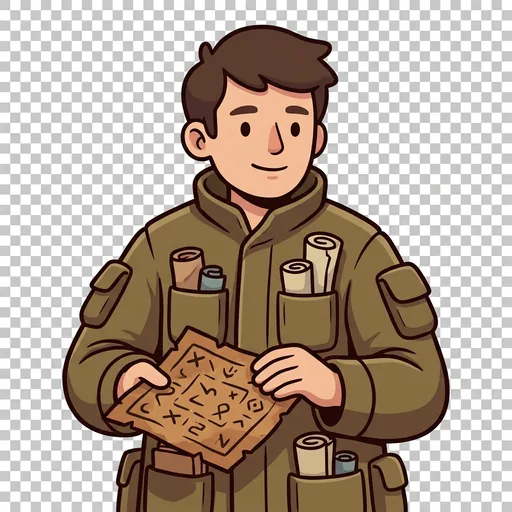
Mapp
(Mentor) the mapmaker — unrolls each world board and asks where it comes from and how you win
-
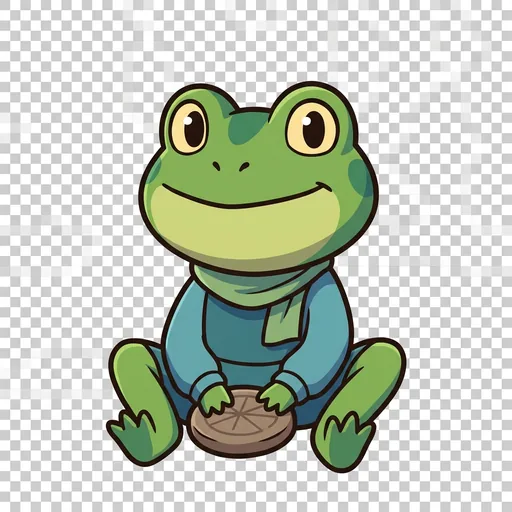
Hopper
The jump (Alquerque) — leap the neighbour who sits next to you and land on the empty point just beyond
-
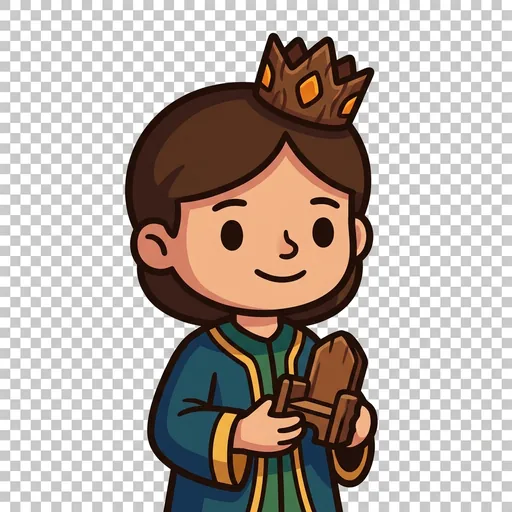
Runa
The King's run (Brandubh) — slip along the open lines to reach a free corner before the trap closes
-
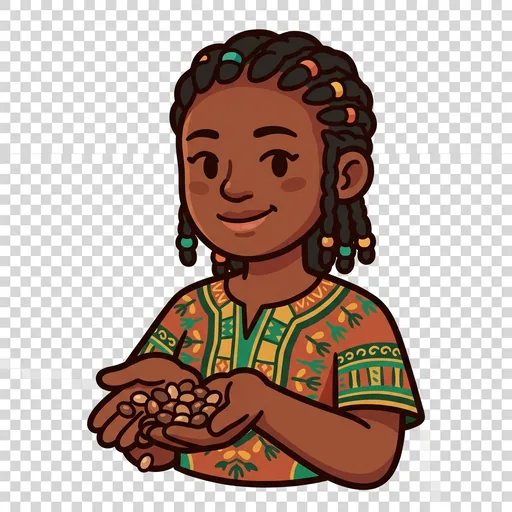
Sowa
The sower (Oware) — scoop a pit and scatter its seeds one at a time around the board
-
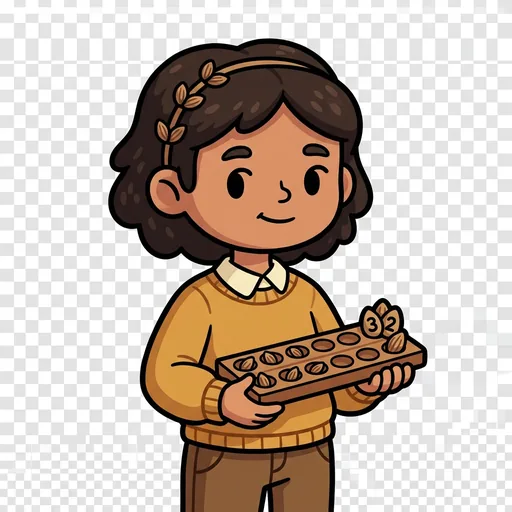
Harva
The harvest (Oware) — land your last seed to make two or three, then gather them into your store