Charge and Halt
POWER-BUDGET + FAIL-SAFE — *know your limits before you hit them, and plan what to do when you do: together they keep a robot from stranding or breaking dangerously.*
Loading audio…
Press play to listen along. The line being read lights up as you go.
Show full transcript
Loading transcript…
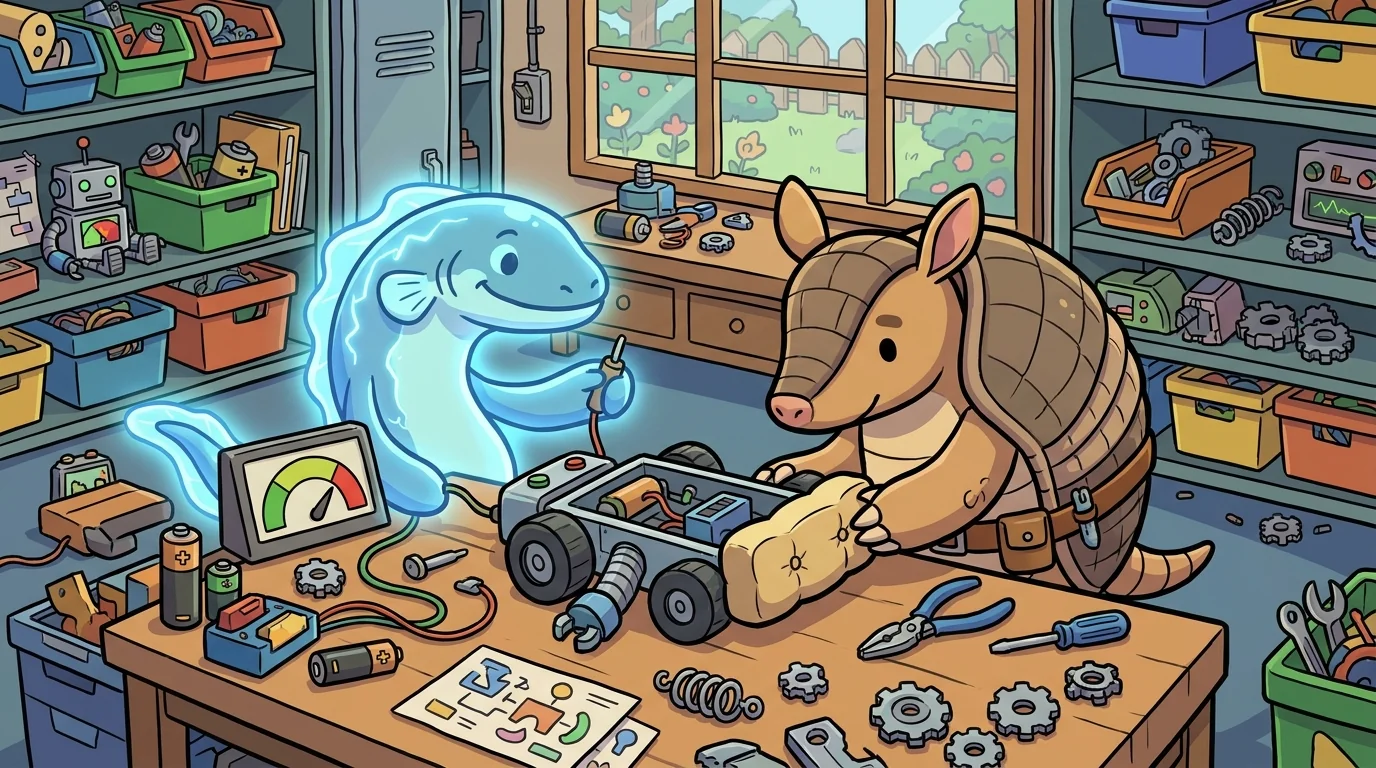
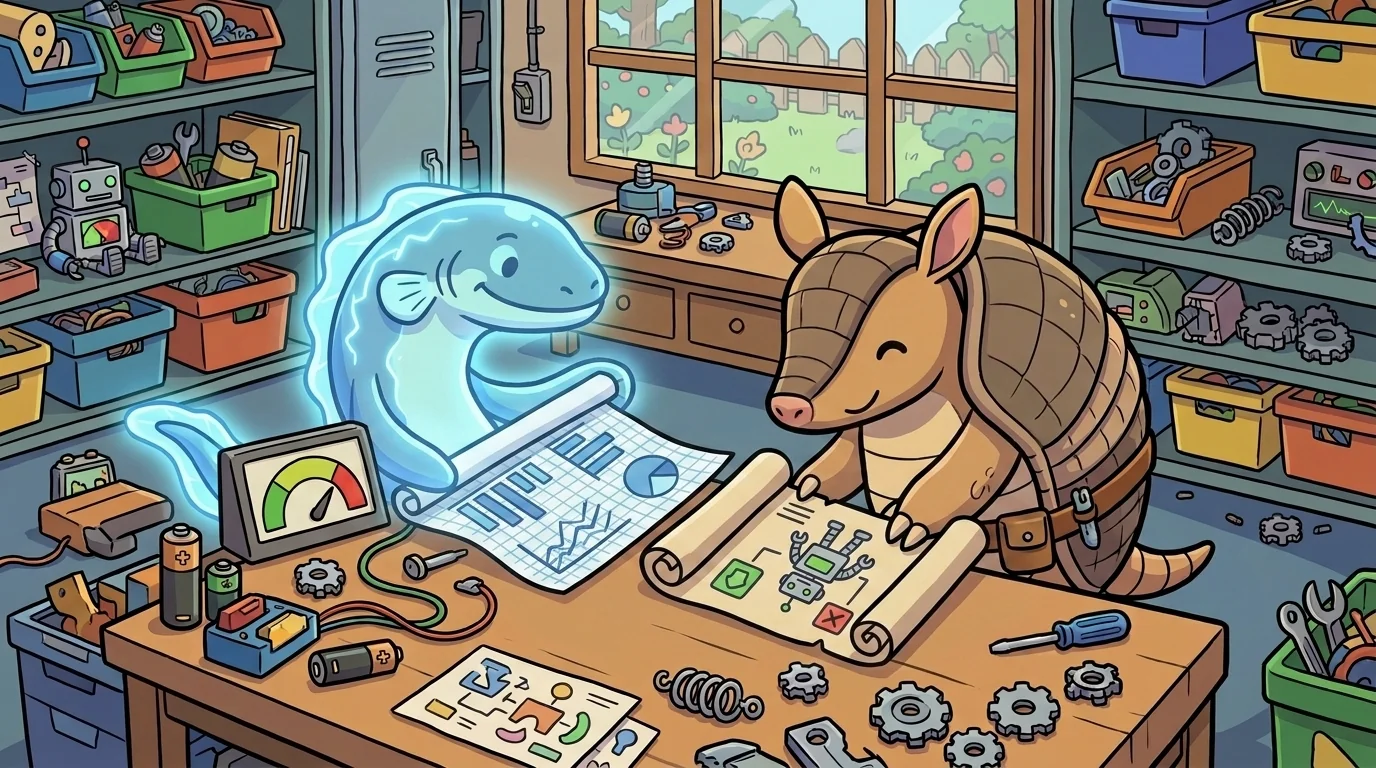
Charge the electric eel and Halt the armadillo work the same corner of the workbench, and between them they keep a robot from the two worst fates: dying dumb in the middle of the floor and breaking dangerously. Charge watches the limit coming — the power budget, how much battery is left, when it will run low. Halt watches the limit arriving — what the robot does when the power runs out, or a part breaks, or something goes wrong. And they realized, side by side, that these are two halves of one wisdom: know your limits before you hit them, and plan what to do when you do. Charge tries to make sure you never hit the wall. Halt makes sure that if you do, you hit it safely.
"I watch the limit coming," Charge says, glow steady. "Budget the power, know when it'll run low." "And I plan for the limit arriving," Halt says, calm in his shell. "What to do when it runs out — or breaks." "I try to keep you from hitting the wall," says Charge. "And I make sure that if you do," says Halt, "you hit it gently. You need both."
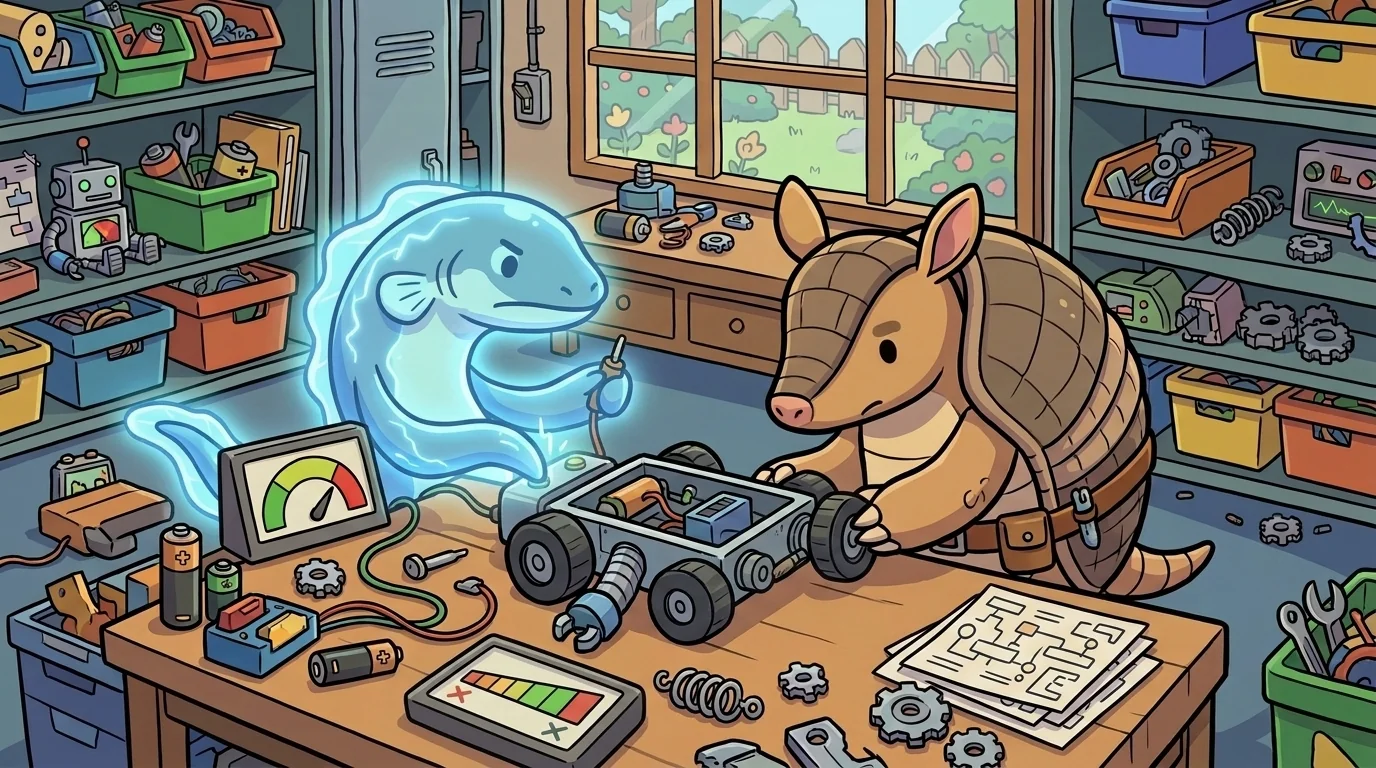
Charge works the limit coming. She sets a robot on a long mission and watches its battery meter like a hawk. "My job is to see the limit before we hit it," she says. "I budgeted this robot's power — motors, sensors, radio — and I know it has just enough for the round trip, with a small reserve. So I watch. Here—" she taps the meter at 40% "—it's spent more than half, and it's only halfway out. I know, right now, that if it keeps going at this rate, it'll run low on the way back." She dims a light on the robot to save power. "So I plan ahead: slow the motor on the easy stretch, dim the lights, keep the reserve safe. My whole craft is seeing the empty coming — so we can adjust before it's a crisis." She glances at the armadillo. "But no budget is perfect. Sometimes a path is longer than planned, or a wheel jams and drinks extra power, and despite everything — the limit arrives. And what happens then isn't mine. It's Halt's."
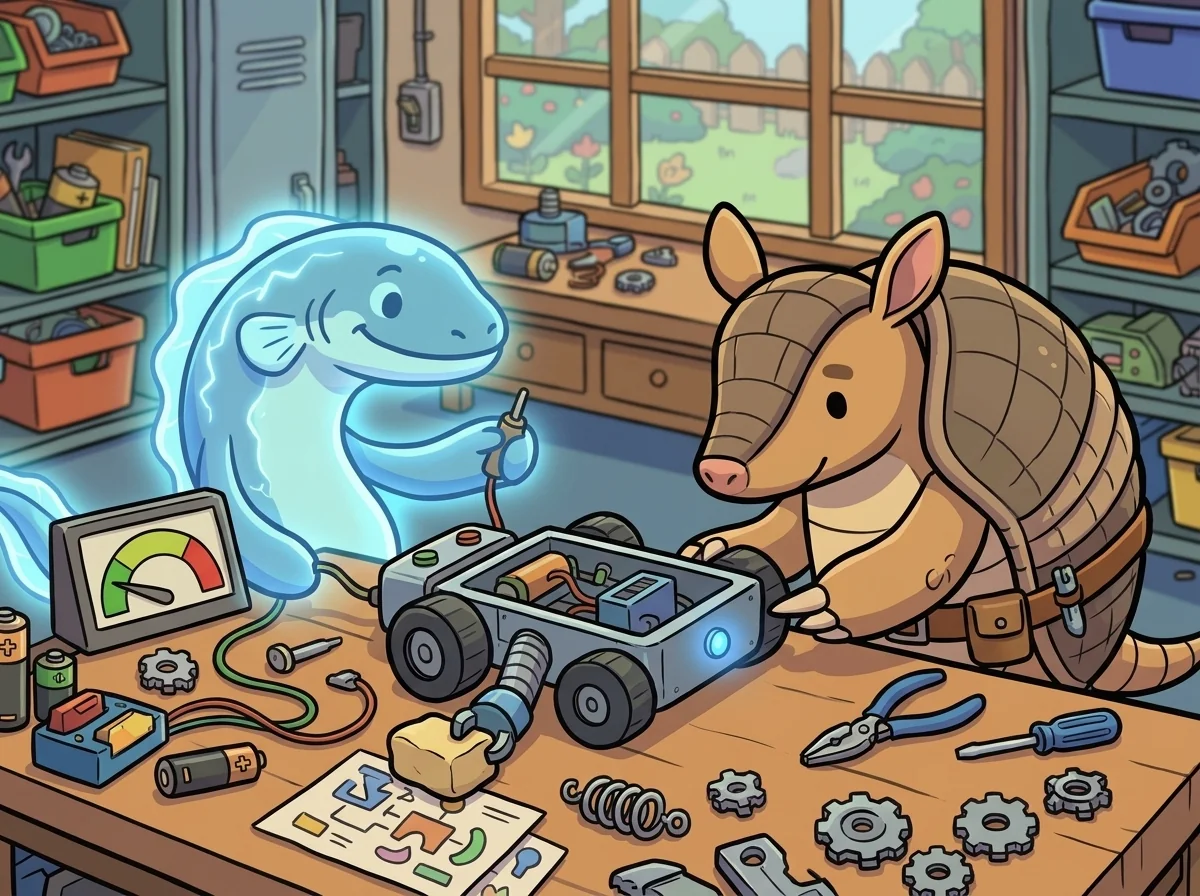
Halt works the limit arriving. He takes the same robot and asks the question Charge can't: "What does it do when the battery does hit empty, far from base?" He shows the bad way first: a robot with no plan just stops dead wherever it is — maybe stranded on a ledge, maybe mid-lift, dropping something. Then the fail-safe way: "When the battery gets critically low, my robot doesn't wait to die randomly. It notices the limit arriving, finds the safest place it can still reach, gently sets down whatever it's holding, parks itself somewhere stable, and blinks a calm signal: low power, parked safely, come get me." He curls a protective paw. "That's failing within the limit gracefully. The battery ran out — but instead of stranding itself dangerously or dropping a load on someone, it ended safely, on purpose. My craft is making sure that hitting the limit is never a disaster." He glances at the eel. "But I only get a safe ending because Charge saw it coming — she gave the robot warning that the limit was near, so it had time to park safely instead of dying mid-step."
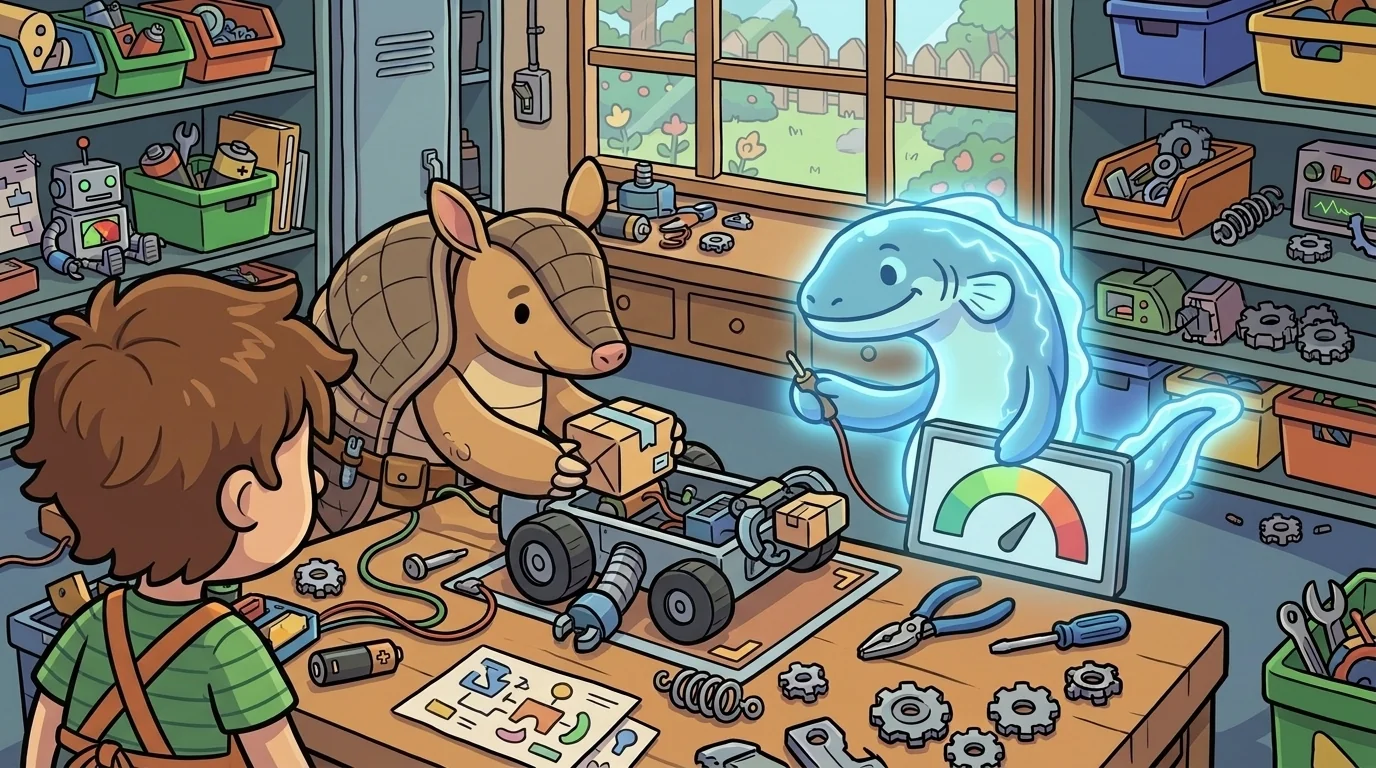
Then the two of them showed, together, the thing neither could do alone: a robot sent far out on a hard mission that came home safe no matter what — because it both anticipated its limit and had a plan for hitting it. A young builder was frustrated. "My delivery robot keeps failing," he said. "Either it runs out of battery on the way back and I have to go rescue it from wherever it died — OR when it does die, it drops the package or gets stuck somewhere awful." And it took both of them. "Two different problems," Charge said, "and you need both of us. First—" she tapped the meter "—I'll budget it: know exactly how much power the round trip takes, keep a reserve, and watch the meter so we see 'getting low' coming from far off." "And second," Halt said, "I'll make the low-power ending safe: when Charge's warning says the reserve is nearly gone, the robot heads to the nearest safe spot, sets the package down gently there, and parks with a 'come find me' signal — instead of pushing on until it dies in a ditch." They built it together. Charge's budget-and-watch meant the robot almost always made it home with power to spare. And on the rare hard day when it didn't, Halt's plan meant it ended safely — package intact, robot parked, signal blinking — never stranded, never dangerous. "See how we're one wisdom?" Charge said. "I see the limit coming so we rarely hit it." "And I make hitting it safe, so it never matters when we do," Halt said. "Charge alone would budget beautifully but still, someday, get caught by a longer path with no safe-fail plan — stranded." "And Halt alone would fail safely but often, because with no budget he'd hit the limit constantly," Charge said. "But together—" "—the robot lives within its limits," they finished as one. "Sees the edge coming, and has a soft landing if it arrives. It never strands itself. It never breaks dangerously. It just... comes home — or parks safely and waits."
"So I plan so I rarely hit my limit," the builder said slowly, "and I have a safe plan for when I do?"
"Both, always both," Charge said, glow steady, and Halt nodded from his shell. Charge set down her power budget — the limit foreseen — and Halt set down his safe-park plan — the limit handled — side by side, the two halves of living within your limits. Under the quiet, the two of them felt the same secure, unworried calm settle in: not the dread of a robot stranded in a ditch, not the danger of one breaking mid-lift, but a warm, paired, never-stranded steadiness — the particular ease of two who each guard one half of a limit, so that between them a robot could be sent boldly out on any hard mission and always come home, or park itself safely and wait. That foresee-it-and-handle-it, budget-and-fallback, never-strand-never-break feeling, steadier than either the budget or the fail-safe alone, was to Charge and Halt exactly why they share one corner of the bench, and send their robots out without a shred of worry.
The RoboForge ensemble
Charge and Halt is part of RoboForge's distributed-narrative cast. Each character embodies a different curricular primitive; together they teach the full subject.
-

Bolt
Chassis + mechanical structure — 'the frame holds everything; build the chassis like you mean it'
-

Sense
Sensors + perception — 'the robot only knows what it can sense; choose the senses for the job'
-

Drive
Motors + actuators + movement — 'motors turn power into motion; balance speed and control'
-

Loop
Iteration + sensor-driven control loops — 'read. decide. act. repeat. that's the whole robot brain'
-

Tune
Testing + calibration + iteration — 'first run fails. that's information. tune + run again' (closes cast arc)
-

Charge
Power budget + energy management — 'every part sips power; know your battery budget or your robot dies mid-mission'
-

Clamp
Grippers + manipulation — 'grabbing is harder than it looks; hold firm enough not to drop, gentle enough not to crush'
-

Hail
Communication + signals — 'a robot alone knows only its own corner; robots that talk share what they each can see'
-

Halt
Fail-safe + safe failure — 'everything breaks eventually; plan for it — fail safe, not dangerous'
-

Rove
Navigation + pathfinding — 'don't just go toward the goal; find a PATH around what is in the way'