
Charge and Halt
POWER-BUDGET + FAIL-SAFE — know your limits before you hit them, and plan what to do when you do; together they keep a robot from stranding or breaking dangerously.
Loading audio…
Press play to listen along. The line being read lights up as you go.
Show full transcript
Loading transcript…
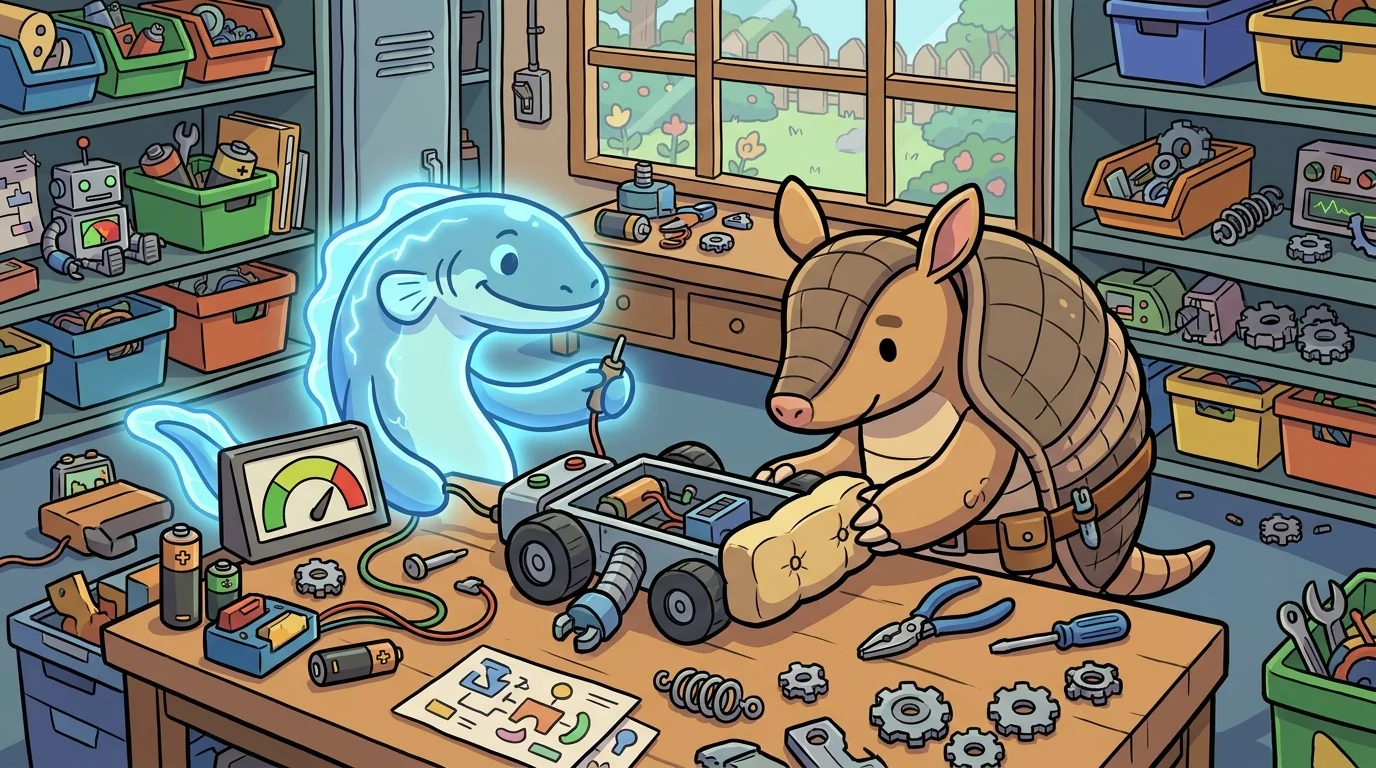
A young builder had sent a robot on a long mission with a full battery and a bold plan, when Charge coiled up from the battery bench and Halt ambled over with his clipboard — each certain the builder had thought about only half of the danger.
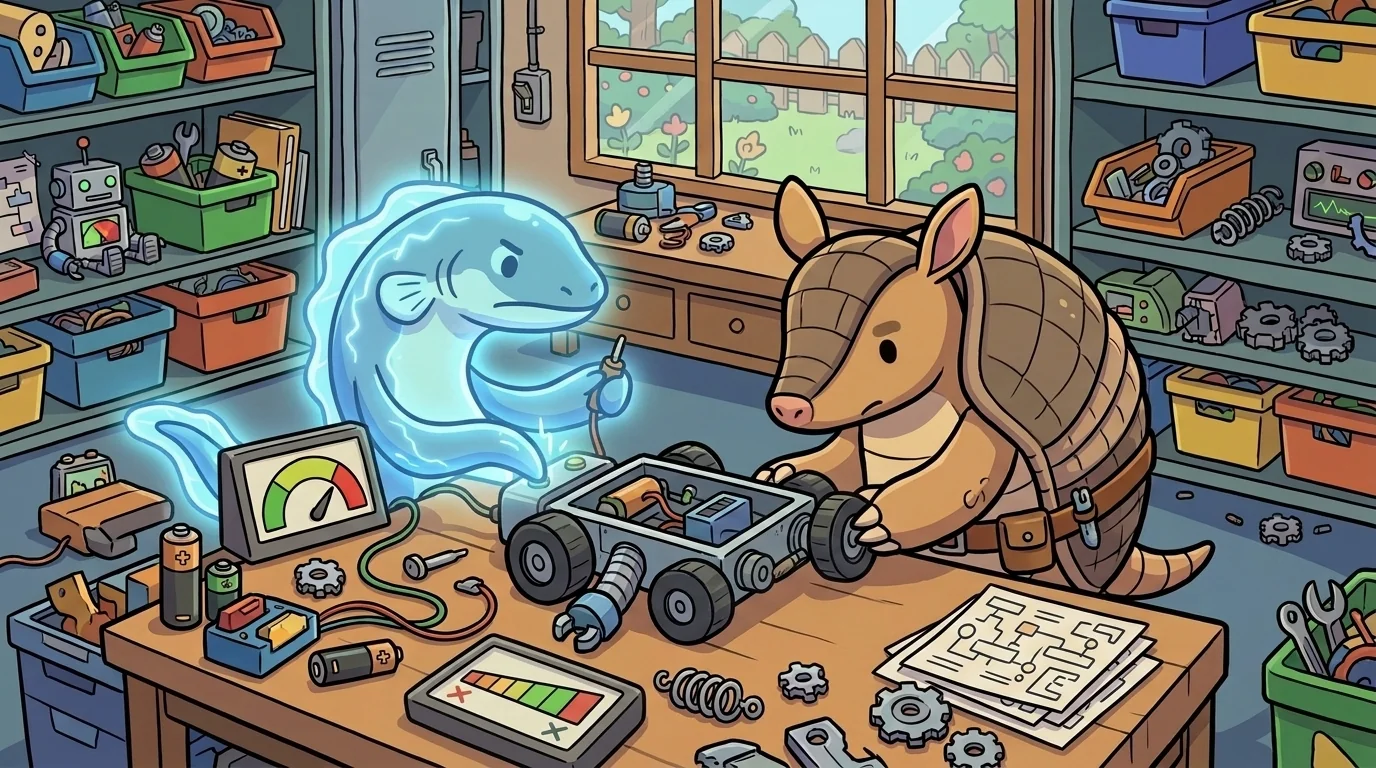
The robot was already far out, meter dropping, no plan for the moment it hit empty.
"There are two ways this ends badly," said Charge, "and you've planned for neither."
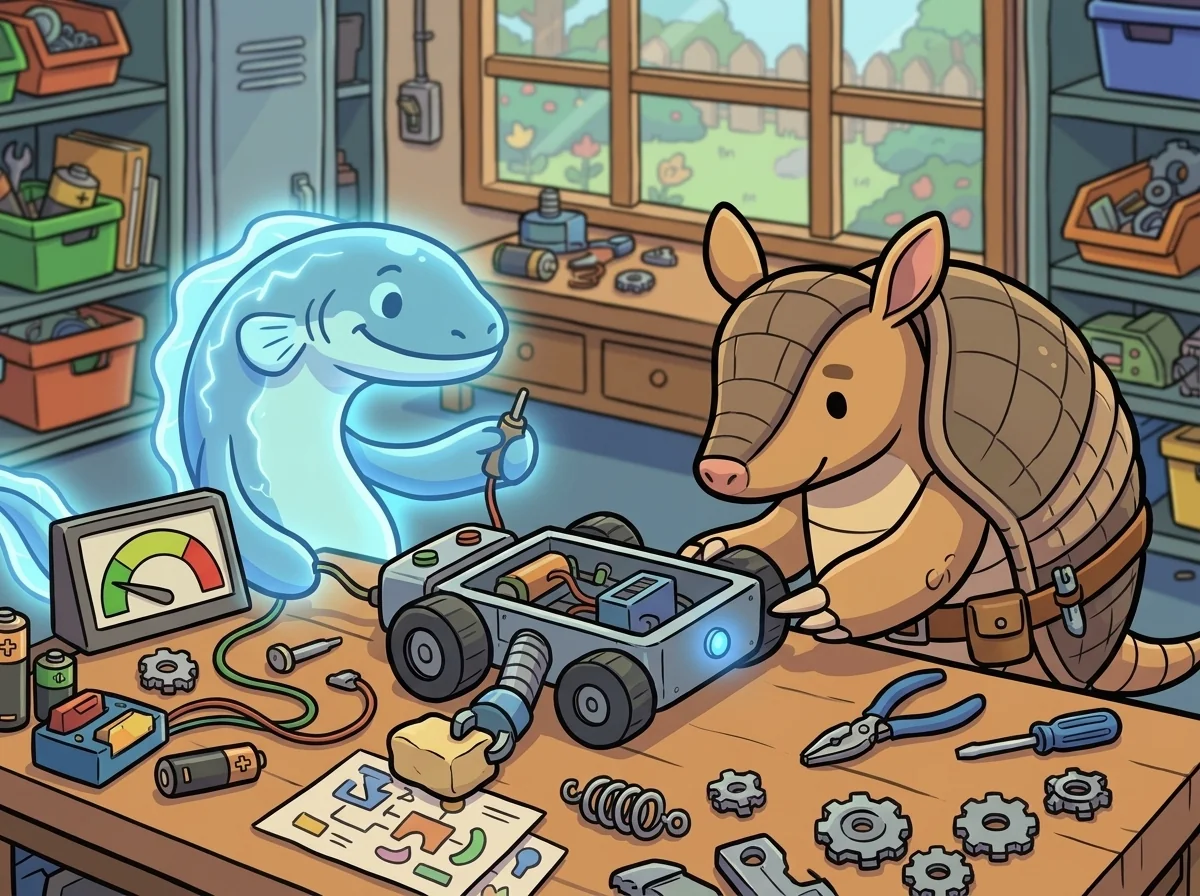
"One is running dry," she went on. "The mission spends more energy than the budget holds, and it strands mid-floor. That's my half — a power budget with a reserve margin, so you know your limit before you hit it. But knowing the limit isn't enough on its own."
"Because the way you reach the limit matters," said Halt, "and that's the second failure. A robot that just runs the battery flat doesn't stop politely. As the voltage sags, it browns out — the brain resets mid-command, the motors stutter, and it can drop what it's carrying or lurch somewhere unsafe. An unplanned empty is a dangerous empty."
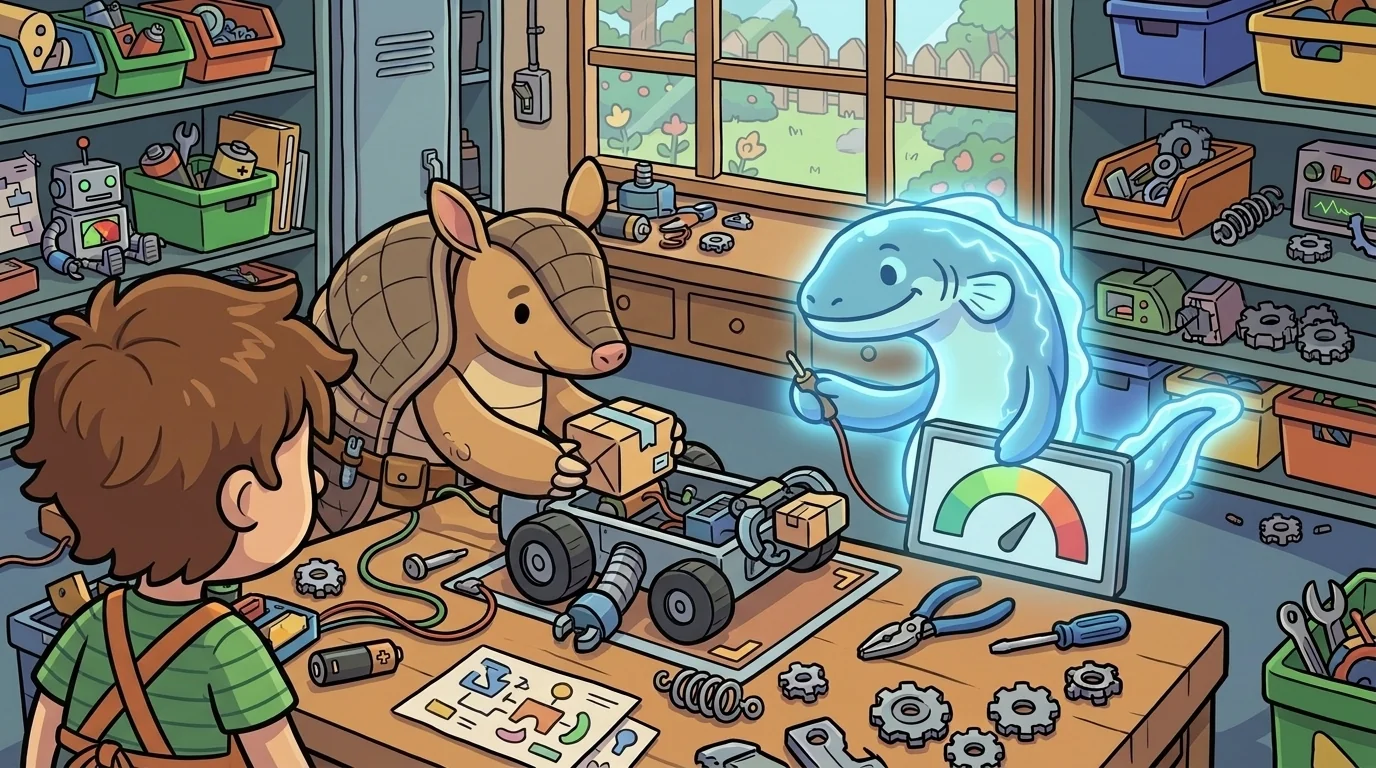
"So we plan the landing, together," said Charge. "My budget doesn't count down to zero — it counts down to a floor, a reserve I never spend. And when the charge falls to that floor, that's not 'keep going till it dies.' That's a signal."
"And that signal triggers my half," said Halt. "A low-battery fail-safe: the robot doesn't wait for brownout. At the reserve floor it does a controlled shutdown — finishes the current safe action, sets down anything it's holding, returns to base or parks, powers the motors down gently, and blinks 'low battery, stopped safely.' It fails toward safe before the power can fail it toward danger."
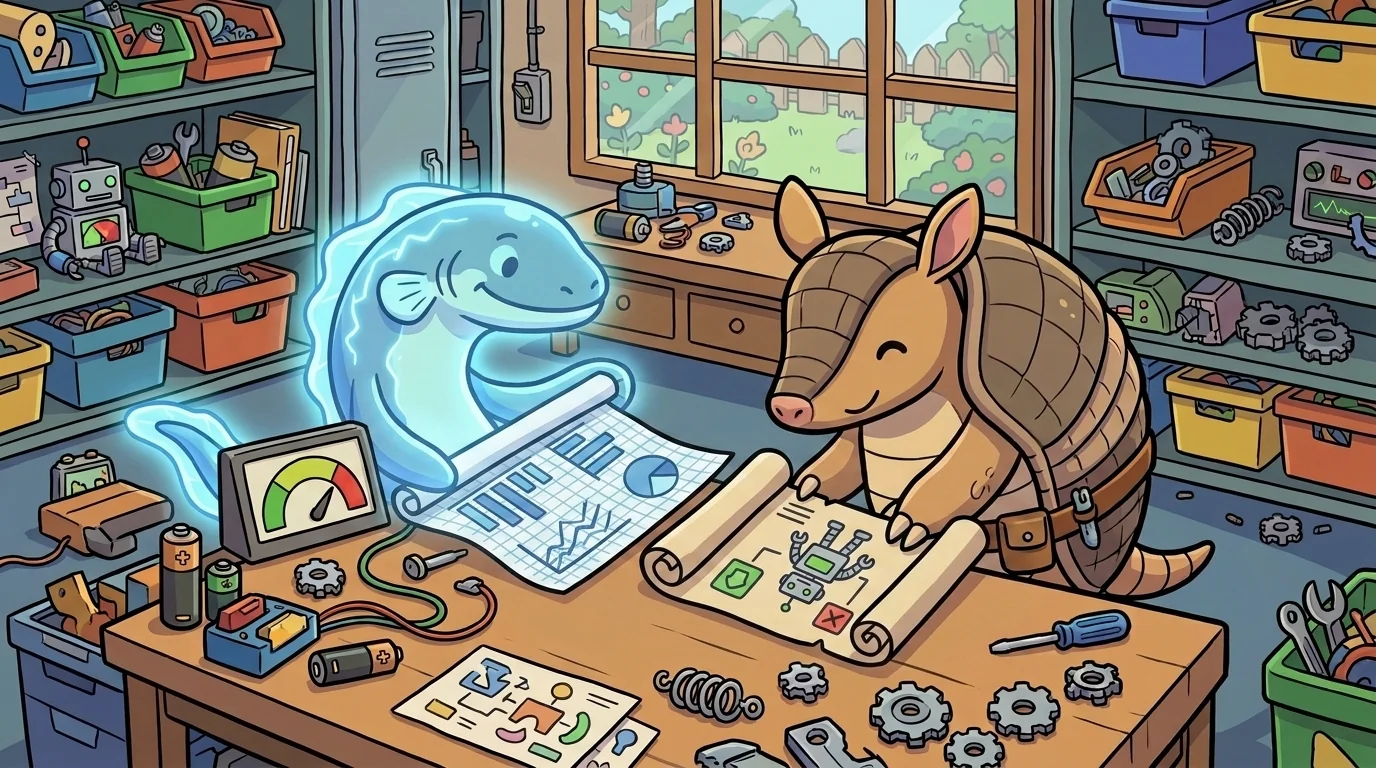
The builder looked from the meter to the two of them. "So one of you watches the limit, and the other decides what happens when I reach it."
Charge and Halt glanced at each other and smiled. "Two halves of living within limits," said Charge. "I know the limit before we hit it —" "— and I make sure that when we do, we land gently instead of crashing," said Halt. "Know your limits before you hit them," said Charge; "and plan what to do when you do," finished Halt. "Do only my half and you'll strand; do only his and you'll brown out at the worst moment. Together, a robot that meets its limit and stops safe, every time." And they set the robot out again — budgeted to a floor, fail-safe at the floor — and when it reached its reserve it turned calmly home, motors easing down, a steady light blinking. A warm, unworried readiness settled over the builder: not the fear of the limit, but the calm of having planned the landing.
The RoboForge ensemble
Charge and Halt is part of RoboForge's distributed-narrative cast. Each character embodies a different curricular primitive; together they teach the full subject.
-

Bolt
Chassis + mechanical structure — 'the frame holds everything; build the chassis like you mean it'
-

Sense
Sensors + perception — 'the robot only knows what it can sense; choose the senses for the job'
-

Drive
Motors + actuators + movement — 'motors turn power into motion; balance speed and control'
-

Loop
Iteration + sensor-driven control loops — 'read. decide. act. repeat. that's the whole robot brain'
-

Tune
Testing + calibration + iteration — 'first run fails. that's information. tune + run again' (closes cast arc)
-

Charge
Power budget + energy management — 'every part sips power; know your battery budget or your robot dies mid-mission'
-

Clamp
Grippers + manipulation — 'grabbing is harder than it looks; hold firm enough not to drop, gentle enough not to crush'
-

Hail
Communication + signals — 'a robot alone knows only its own corner; robots that talk share what they each can see'
-

Halt
Fail-safe + safe failure — 'everything breaks eventually; plan for it — fail safe, not dangerous'
-

Rove
Navigation + pathfinding — 'don't just go toward the goal; find a PATH around what is in the way'