Clamp
CLAMP — *grabbing is harder than it looks. hold firm enough not to drop, gentle enough not to crush.*
Loading audio…
Press play to listen along. The line being read lights up as you go.
Show full transcript
Loading transcript…
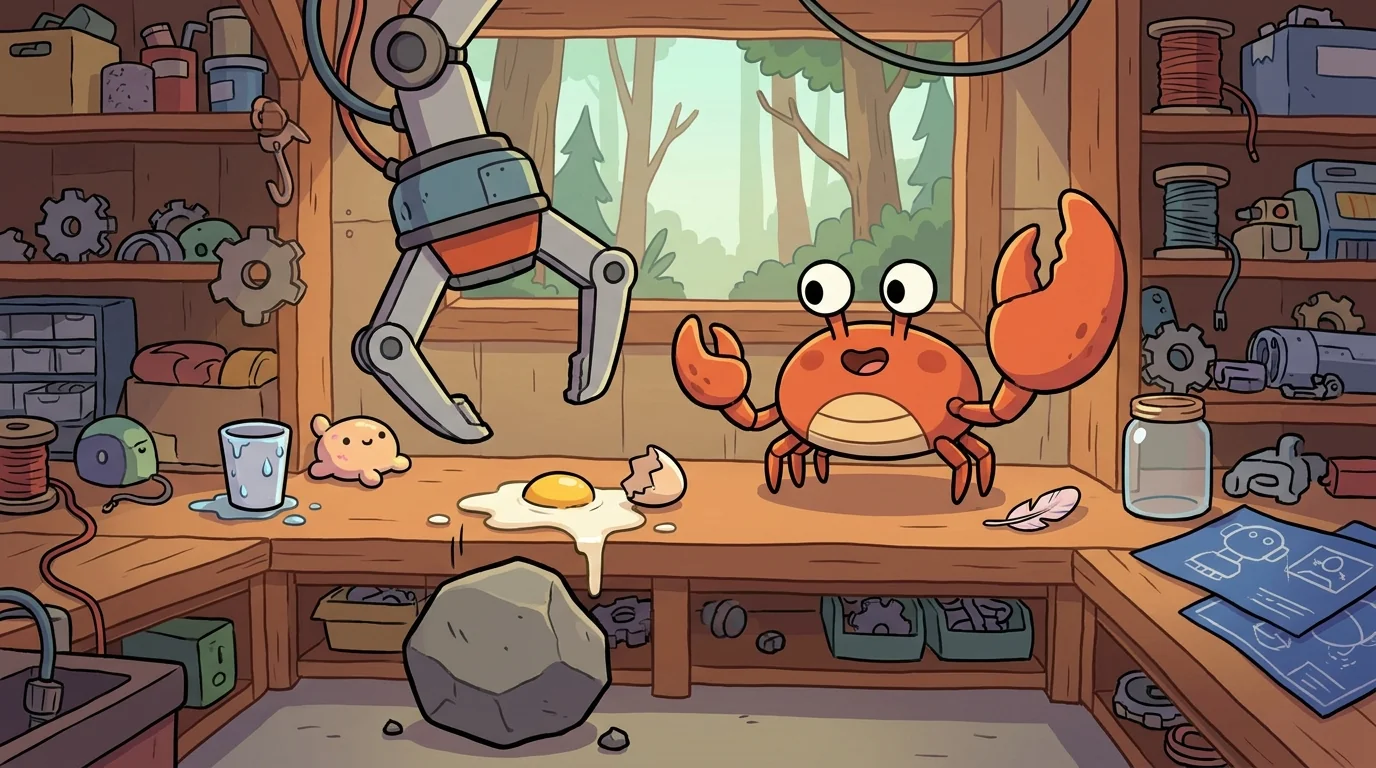
At Clamp's workbench, a robot claw hovered over a raw egg and a heavy rock, and Clamp — a wide-eyed crab with two mismatched pincers — was about to show why picking things up is the hardest thing a robot ever does.
Her whole craft is manipulation — how a robot grabs and holds things. "Everybody thinks the hard part of a robot is the brain," she said, clicking a pincer. "But watch a robot try to pick something up, and you'll see the truly hard problem. Grabbing looks easy — you do it a hundred times a day without thinking. But for a robot?" She lowered the claw onto the raw egg — and it crushed it, splat. "Too firm," she said. Then she tried the heavy rock with a gentle grip — and it slipped right out and thudded to the floor. "Too soft." She sighed, waving both pincers. "That's the whole problem. Hold too firm, you crush the egg. Hold too gentle, you drop the rock. And the right grip is different for every single thing — an egg needs a whisper, a rock needs a squeeze, a wet cup needs a careful cradle. A robot doesn't have feelings in its fingers like you do, so it has to know, or feel, how hard to hold — firm enough not to drop, gentle enough not to crush. That narrow just-right, for every different thing, is the art of the grip."
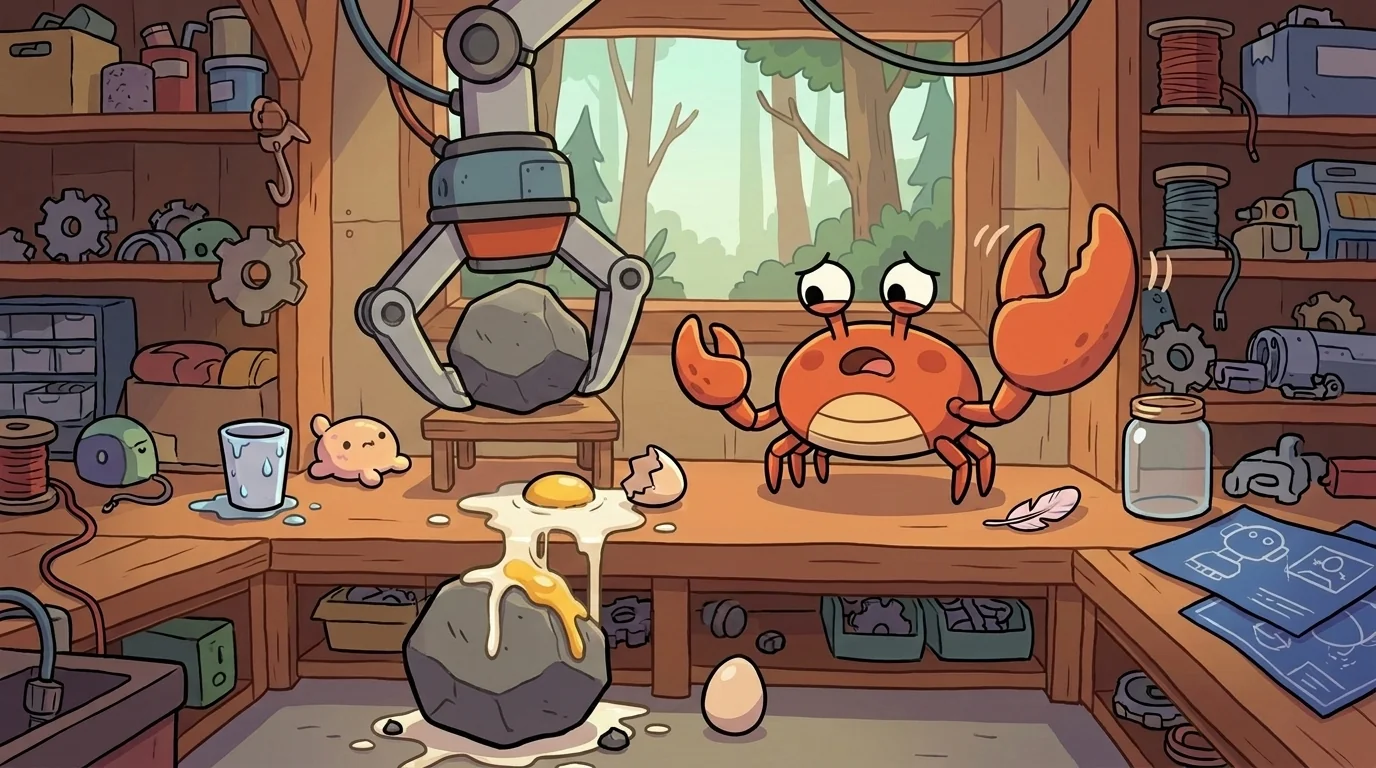
Clamp learned the difficulty of grabbing the day she proudly built a claw that ruined everything it touched.
She was young, and she'd built a strong claw — the strongest, she bragged, gripping like a vise. And it was! It never dropped a thing. It also crushed every soft thing it picked up: fruit, flowers, a friend's clay sculpture — pulverized, one after another.
Her grandfather, an old crab with worn, wise pincers, sat with her among the wreckage.
"But it's so STRONG," young Clamp protested. "It never drops anything!"
"Strength was never the goal, little one," her grandfather said gently, lifting a crushed berry. "A grip that only knows hard is only good for hard things. The real skill isn't gripping strong — it's gripping right, and right changes with every single thing you hold." He picked up a delicate shell without cracking it, then a heavy stone without dropping it — same claws, different pressure. "See? The egg taught your hand to whisper. The rock taught it to squeeze. A good grip listens to what it's holding and adjusts — feels for the weight, senses when something's slipping and firms up, senses when something's straining and eases off." He smiled. "The strongest claw in the world that only knows one grip is worse than a gentle one that knows many. Don't build a claw that's strong. Build a claw that's wise — one that fits its grip to the thing."
Young Clamp never bragged about grip strength again. She built claws that adjusted — and picked up eggs and rocks alike, each with exactly the grip it needed.
She scuttled to RoboForge at twelve, because a place that built robots ought to teach them to handle the world, gently.
Servo, her mentor, met her at the workbench. "What makes a good grip?"
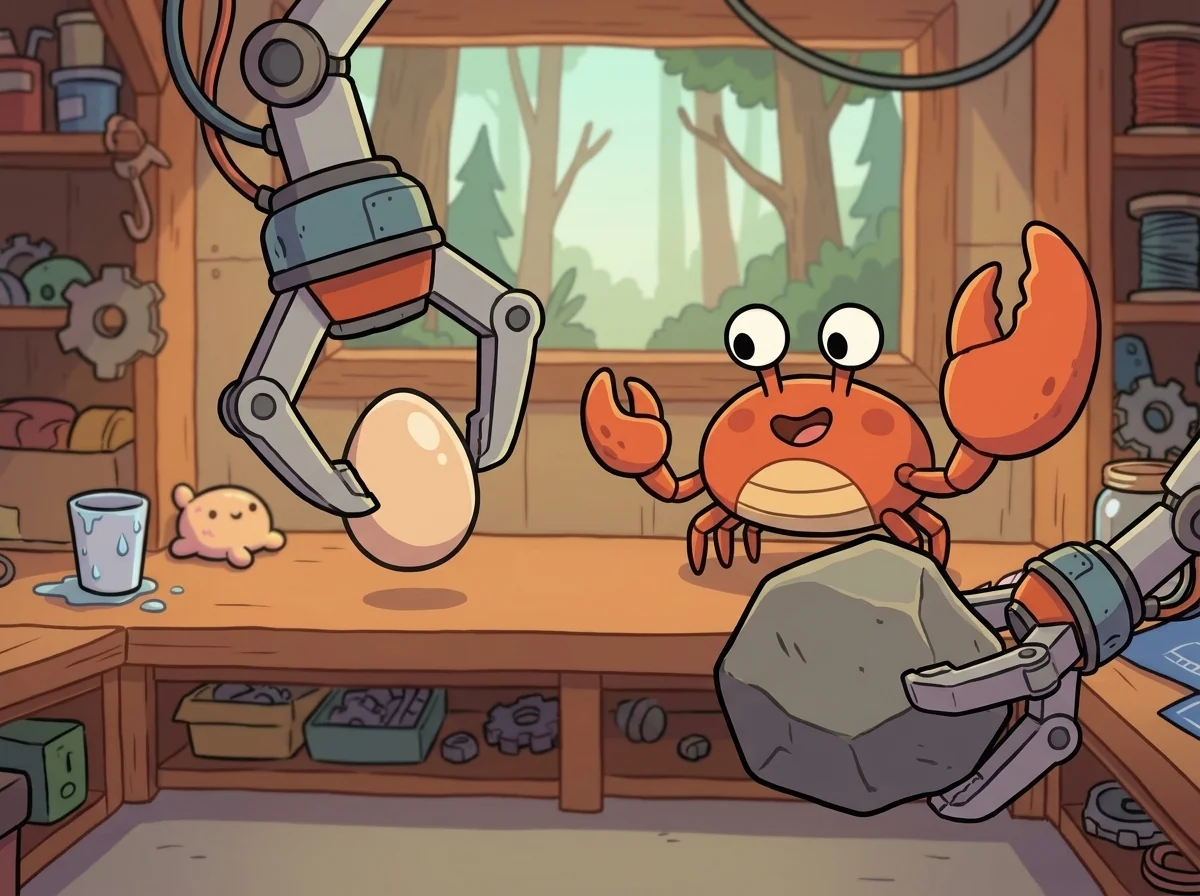
Clamp didn't answer with a speech. She set an egg and a rock on the bench and ran her adjustable claw. On the egg: it closed softly, sensing the shell, holding just firmly enough — the egg came up whole. On the rock: it closed hard, sensing the weight, gripping tight — the rock came up secure. "Same claw," she said. "It felt what it was holding and fit its grip to it — a whisper for the egg, a squeeze for the rock. A grip that fits the thing. That's the whole craft."
Servo watched the egg lift, unbroken, beside the rock. "You are appointed," she said.
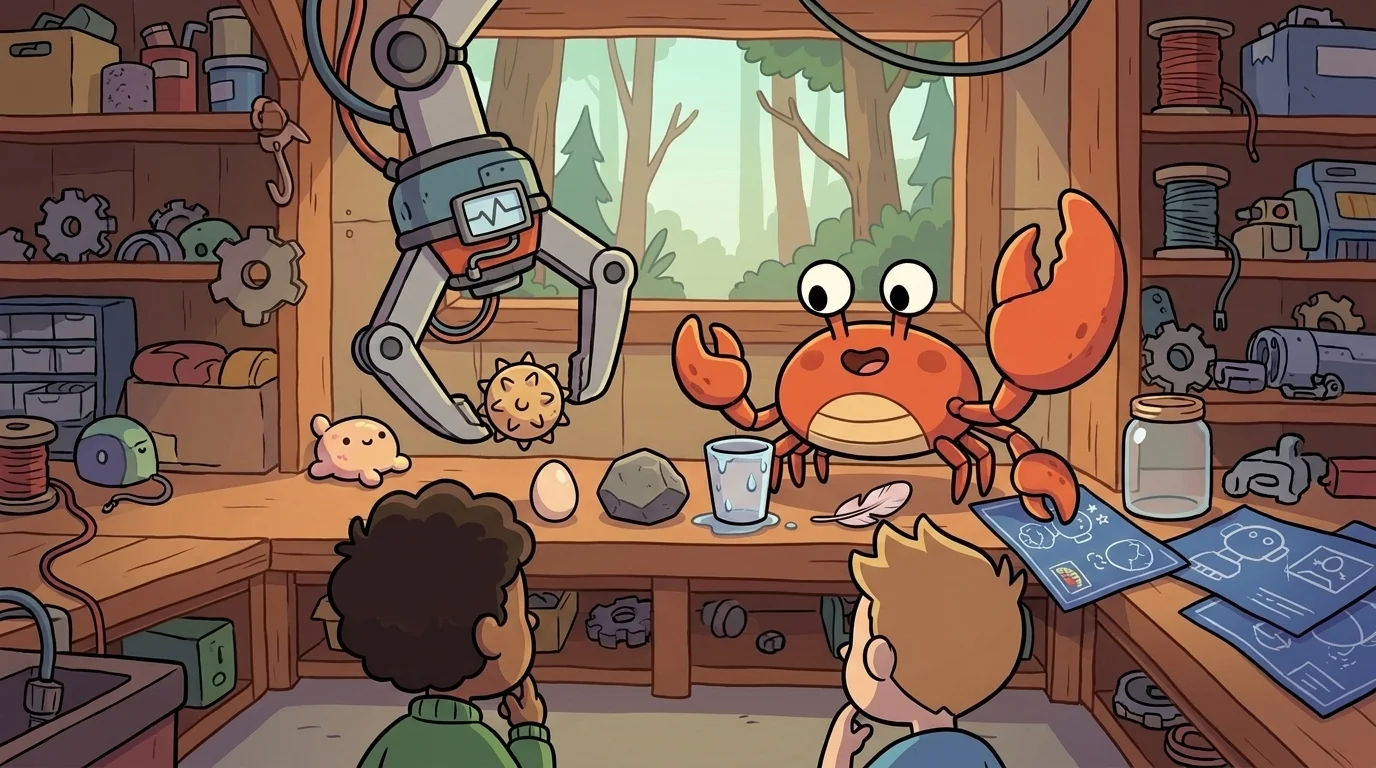
At Clamp's workbench, she taught grip with a bin of wildly different objects — an egg, a rock, a wet cup, a feather, a spiky ball — and one claw. For each, the kids had to think about the grip: "The egg? Barely close, spread the pressure. The wet cup? Cradle it from below, it's slippery. The feather? Almost no grip, or you'll bend it. The spiky ball? Firm, but mind the points." Then she added a sensor that let the claw feel the pressure and adjust itself. Then she gave the working rules: grabbing is one of the hardest things a robot does, because the right grip is narrow — firm enough not to drop, gentle enough not to crush; that just-right grip is different for every object (weight, fragility, slipperiness, shape all change it), so a good gripper adjusts rather than using one fixed squeeze; and the best grippers feel what they're holding — sensing a slip and firming up, sensing a strain and easing off — instead of guessing. "A student built 'the strongest gripper in the class' and was baffled it kept breaking things,'" Clamp clicked. "Because strong isn't the goal — fitting is. We gave the claw a way to feel pressure and adjust, and suddenly it could hold an egg and a rock. The wisest hand isn't the strongest. It's the one that fits its grip to whatever it's holding."
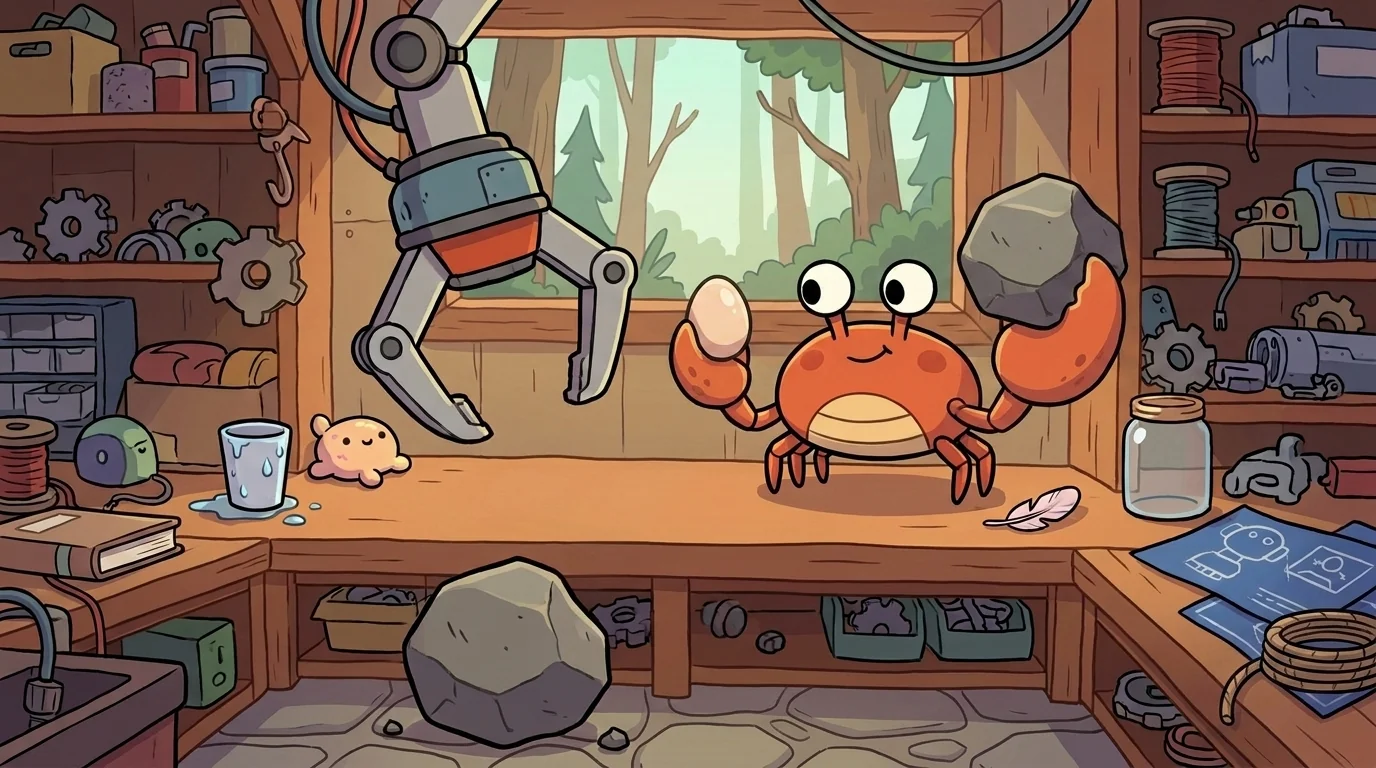
"So the right grip depends on the thing," a student said slowly, "not on how strong I can squeeze?"
"Fit the grip to the thing," Clamp agreed, and she settled at her bench and gently, easily cradled a raw egg in one careful pincer while holding a heavy stone secure in the other — each held exactly as it needed, neither crushed nor dropped — and felt a deep, capable contentment at the rightness of it. There was a warm, attuned happiness in it — the settled gladness of a crab who had stopped prizing raw strength and learned the subtler art of fitting, of listening to each thing with her hands and giving it precisely the hold it needed. It made her feel careful, and skillful, and kind. That fit-the-grip, whisper-for-the-egg-squeeze-for-the-rock, listen-with-your-hands warmth — the attuned gladness of a creature who handled the world just right — was, to Clamp, the quiet artistry hidden inside a good grip. "Firm enough not to drop," she said softly, egg and rock both held safe, "gentle enough not to crush — and different for everything you hold."
The RoboForge ensemble
Clamp is part of RoboForge's distributed-narrative cast. Each character embodies a different curricular primitive; together they teach the full subject.
-

Bolt
Chassis + mechanical structure — 'the frame holds everything; build the chassis like you mean it'
-
Sense
Sensors + perception — 'the robot only knows what it can sense; choose the senses for the job'
-
Drive
Motors + actuators + movement — 'motors turn power into motion; balance speed and control'
-
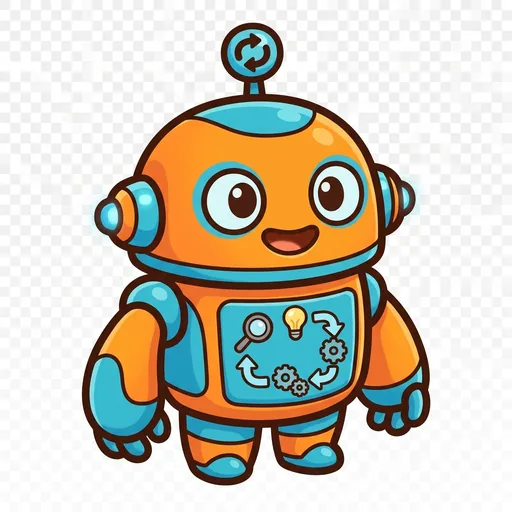
Loop
Iteration + sensor-driven control loops — 'read. decide. act. repeat. that's the whole robot brain'
-

Tune
Testing + calibration + iteration — 'first run fails. that's information. tune + run again' (closes cast arc)
-
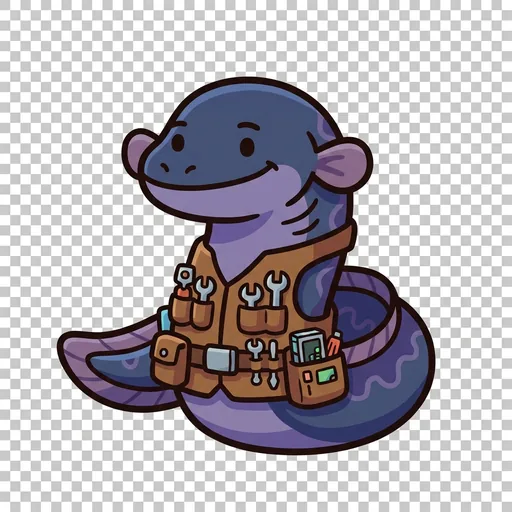
Charge
Power budget + energy management — 'every part sips power; know your battery budget or your robot dies mid-mission'
-
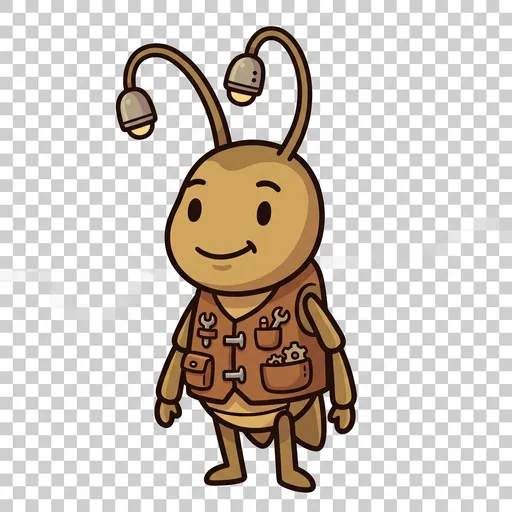
Hail
Communication + signals — 'a robot alone knows only its own corner; robots that talk share what they each can see'
-
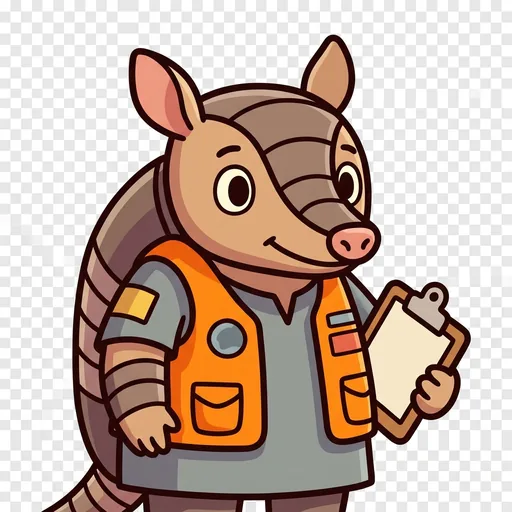
Halt
Fail-safe + safe failure — 'everything breaks eventually; plan for it — fail safe, not dangerous'
-
Rove
Navigation + pathfinding — 'don't just go toward the goal; find a PATH around what is in the way'