Clamp and Rove
MANIPULATION + NAVIGATION — *move yourself to the thing, and move the thing itself: together they let a robot fetch, carry, and change the world.*
Loading audio…
Press play to listen along. The line being read lights up as you go.
Show full transcript
Loading transcript…
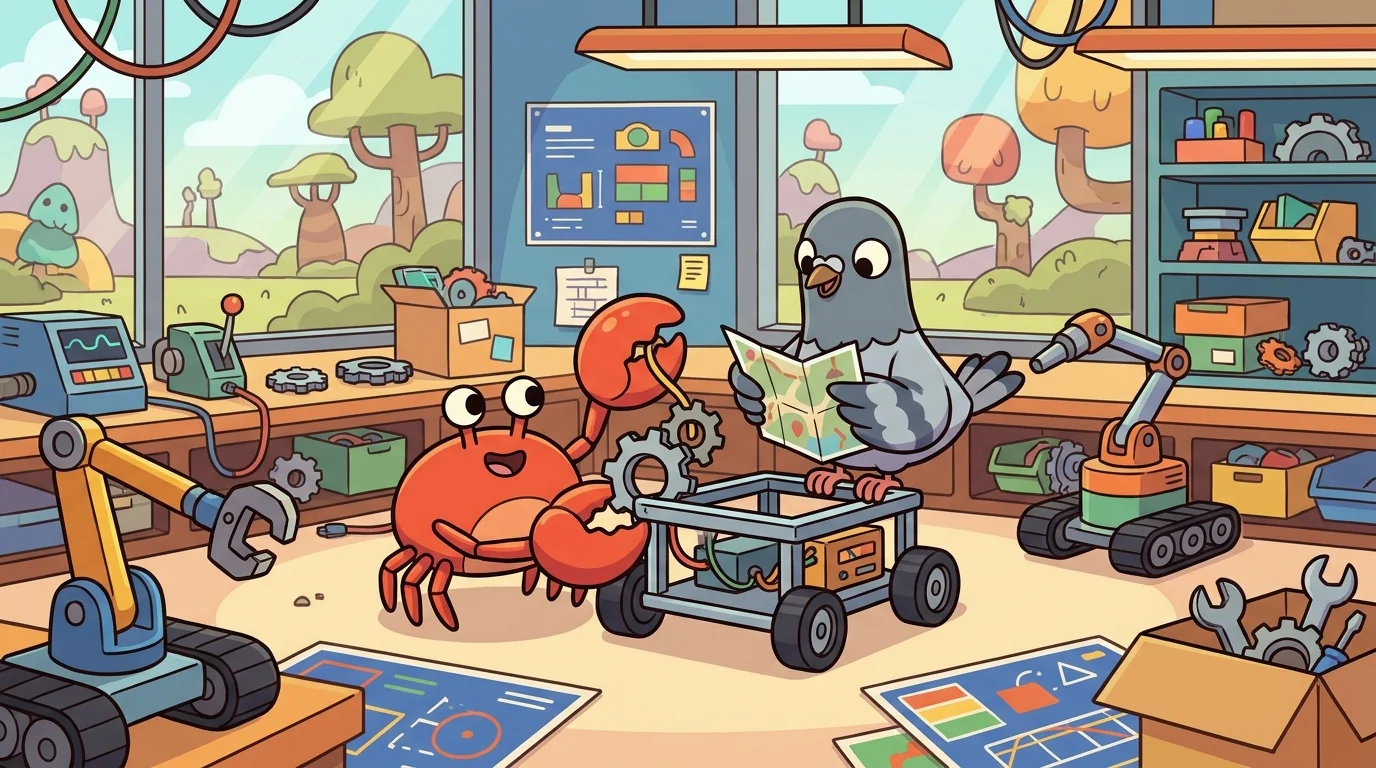
Clamp the crab and Rove the pigeon work the two ends of every real task a robot performs, and between them they cover all the ways a robot changes its relationship to the physical world. Rove moves the whole robot — through space, around obstacles, to a place. Clamp moves objects — grabbing, lifting, placing, relative to the robot. And they figured out, doing chores side by side, that almost every useful thing a robot does is really their two crafts in sequence: go there (Rove), grab that (Clamp), bring it back (Rove), set it down (Clamp). Move yourself to the thing; move the thing itself. Between the two of them, a robot can fetch.
"I move the whole robot through the world," Rove coos, map in wing. "And I move the objects in it," Clamp clicks, pincers wide. "I get you there," says Rove. "And I handle that," says Clamp. "Together, we can actually do something."
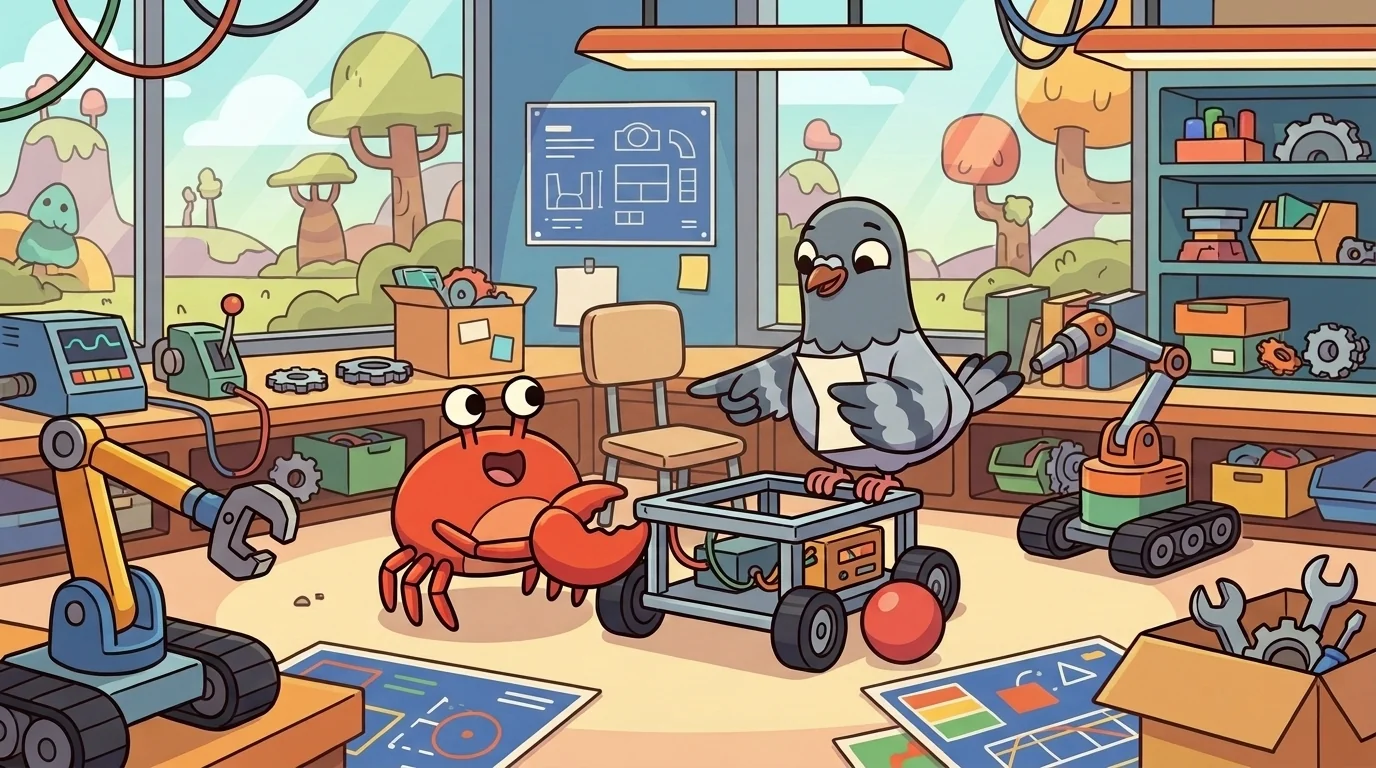
Rove works moving the robot. He sets a robot across the room from a ball, with a chair in the way. "My whole craft is getting the robot there," he says, "and 'there' almost never means straight ahead." The robot maps the chair, finds the clear path around it, and rolls smoothly to a stop right beside the ball. "See? It navigated — around the obstacle, to the goal. It's now right next to the ball." He nods, satisfied — then pauses. "But look what it can't do. It got to the ball beautifully. And now it just... sits there, beside it. Because getting to a thing and picking it up are completely different skills, and I only have the first one. I can put the robot anywhere in the world. I cannot make it grab a single thing." He glances at the crab. "For that — the actual grabbing — you need Clamp."
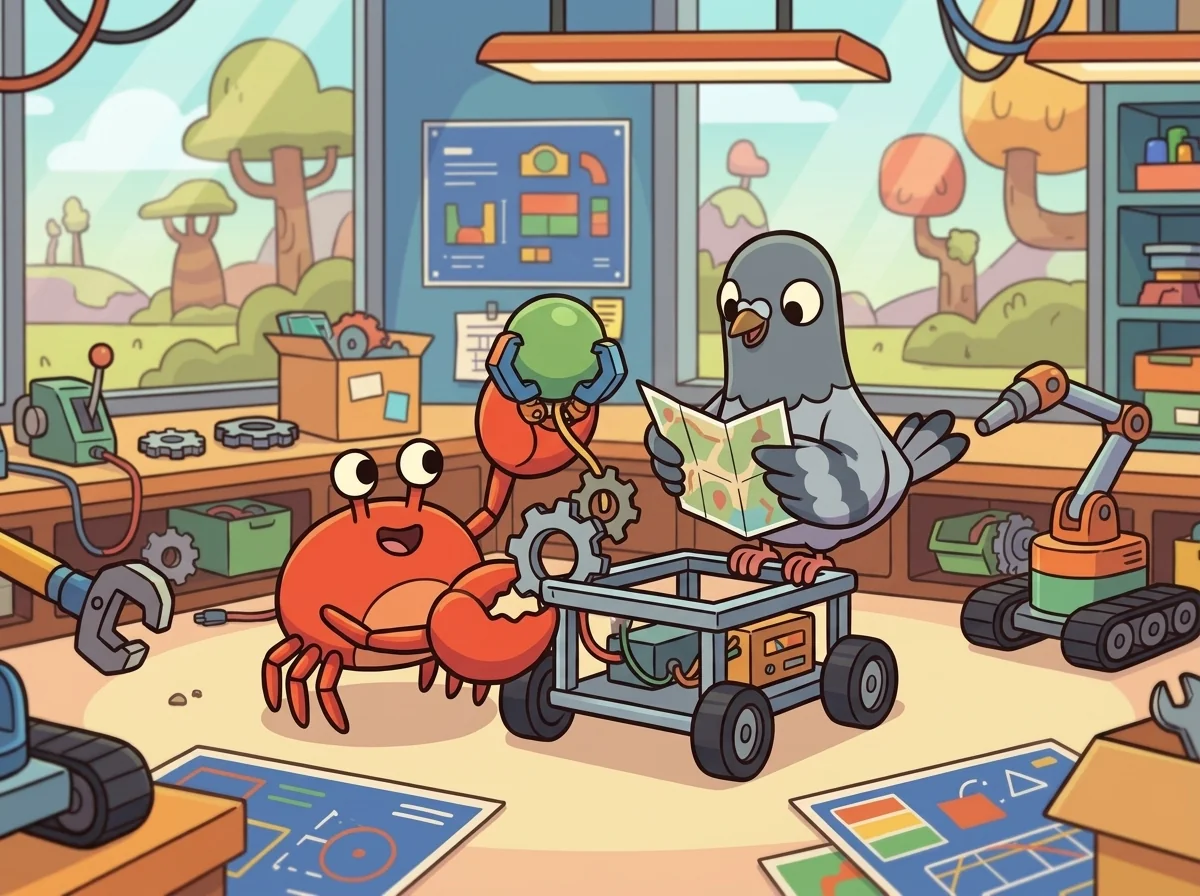
Clamp works moving the objects. She takes over exactly where Rove stops — the robot parked beside the ball. "Rove got it here," she says. "Now watch me do the part he can't." Her adjustable claw lowers, feels the ball's weight and softness, closes with just-right pressure — firm enough not to drop, gentle enough not to crush — and lifts it clean. "There. Grabbed. That's manipulation — changing where an object is, relative to the robot, with exactly the right grip." She holds the ball high, delighted — then pauses. "But look what I can't do. I picked it up perfectly. And now the robot's holding a ball... in the same spot Rove parked it. I can grab, lift, place, and cradle anything within reach. But I cannot move the robot one inch. If the ball needs to go across the room — I'm stuck. I can hold it forever, right here." She glances at the pigeon. "To actually take it somewhere — you need Rove again."
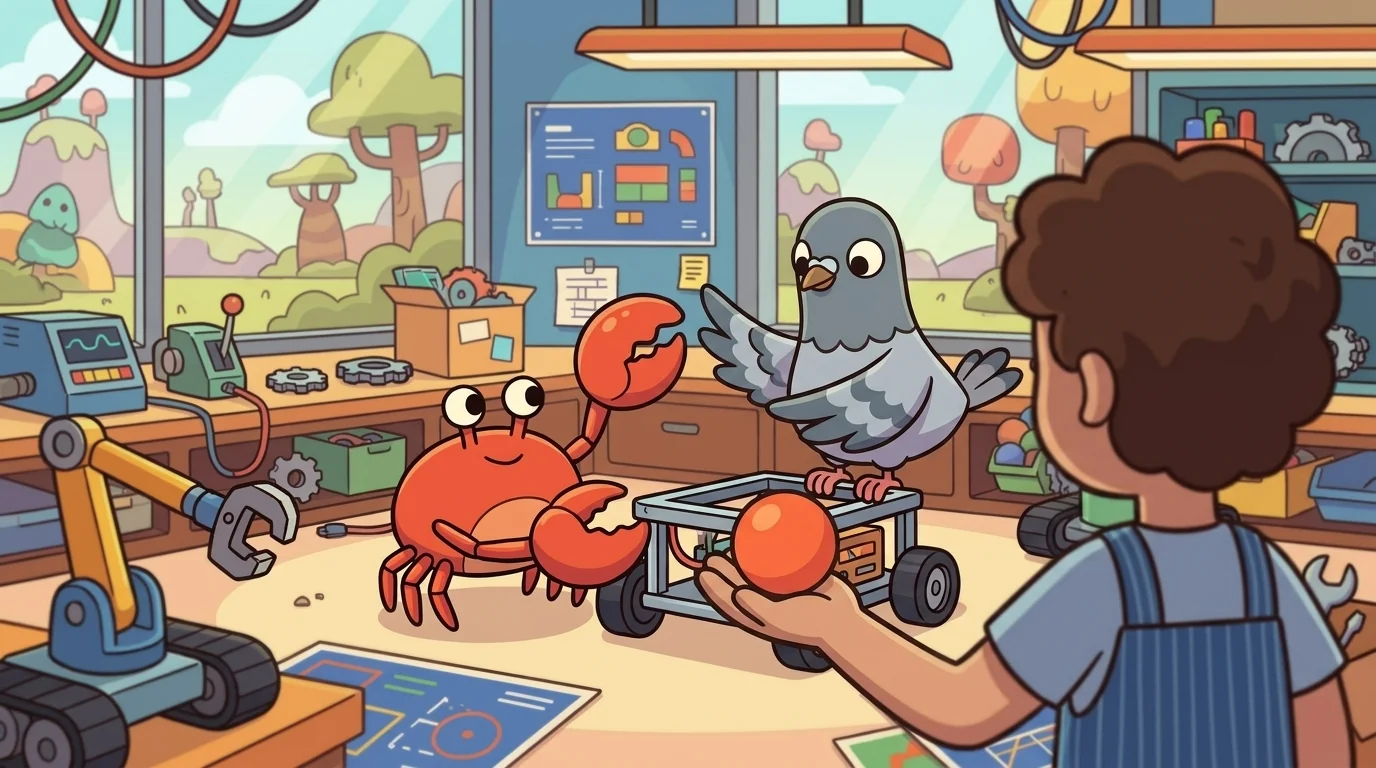
Then the two of them showed, together, the thing neither could do alone: a complete, useful task — fetch the ball from across the room and bring it back — that only worked because their two crafts took turns in the right order. A young builder was stuck. "I want my robot to fetch a ball for me," he said, "but it either drives to the ball and just sits there, OR it grabs at the air where it thinks the ball is and misses, because it never actually went to it." And it took both of them, in sequence. "That's because fetching is four steps, and they alternate between us," Rove said. "Step one is mine: navigate to the ball, around the chair. Step two is Clamp's: once you're there, grab it, gentle-firm. Step three is mine again: navigate back to you, around the chair, now carrying it. Step four is Clamp's again: gently set it down in your hand." They built it that way — Rove, Clamp, Rove, Clamp — and the robot fetched the ball flawlessly: rolled around the chair to the ball, cradled it just right, wound back around the chair, and placed it softly in the builder's palm. "See how it has to be both of us, taking turns?" Rove said. "My navigation gets the robot to the right place — but a robot that only navigates just bumps its nose against the ball forever." "And my grip handles the object—" Clamp said, "—but a robot that only grabs can only ever touch what's already within reach, and can't bring you anything." "Move-yourself and move-the-thing," they said together. "Go there, and handle that. Almost every real robot task — fetching, sorting, building, cleaning — is just our two crafts, in turns: navigate, manipulate, navigate, manipulate. One of us alone can go, or can grab. It takes both of us to actually do something in the world."
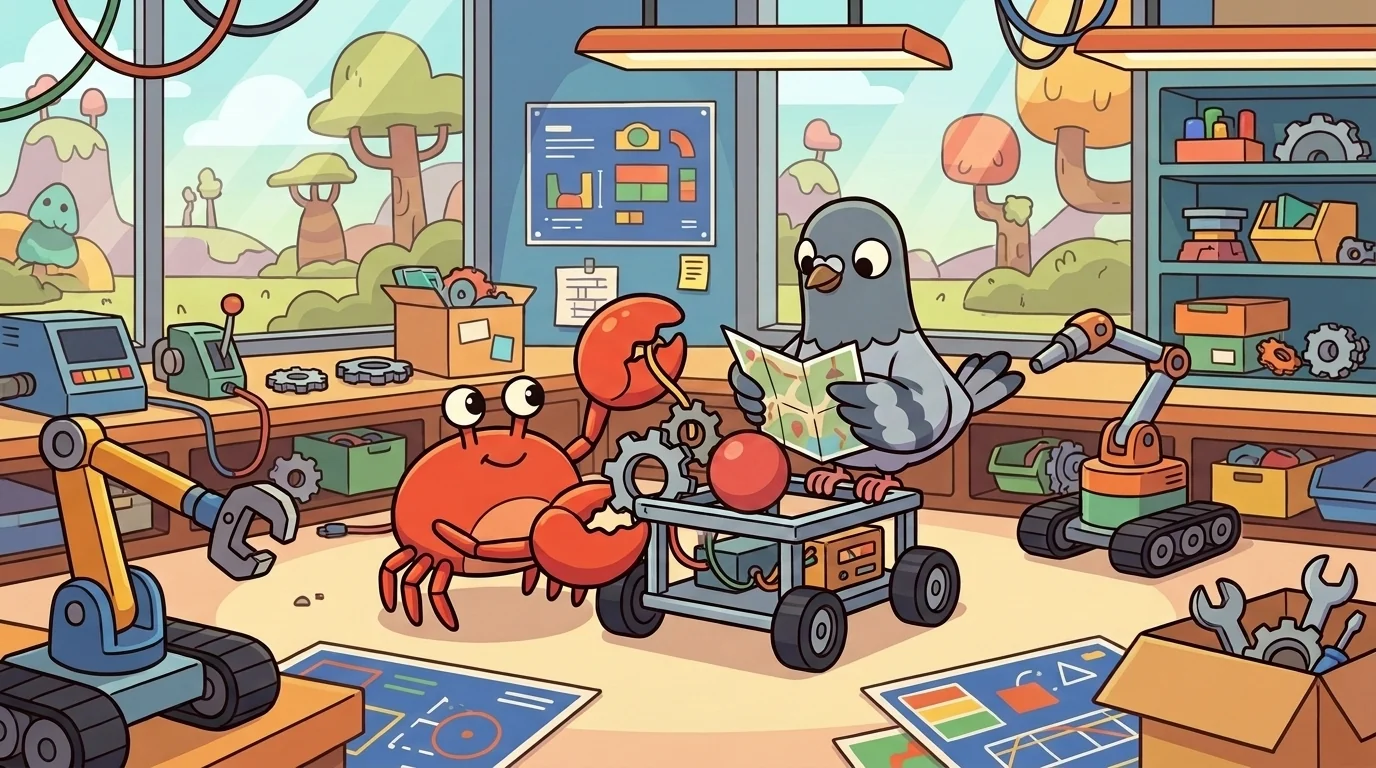
"So a real task is going and grabbing, in the right order," the builder said slowly, "each one doing the part the other can't?"
"Go and grab, in turns," Rove agreed, and Clamp clicked her pincers in delight. Rove set down his map — move the robot — and Clamp set down her just-right claw — move the object — side by side, the two ways a robot acts on the world. Under the quiet, the two of them felt the same capable, complete calm settle in: not the frustration of a robot that could reach a thing but not grab it, or grab a thing but not carry it, but a warm, paired, we-can-actually-do-it steadiness — the particular satisfaction of two who each command one way of touching the world, so that between them a robot could go anywhere and handle anything, and truly, usefully, fetch. That go-and-grab, move-yourself-and-move-the-thing, navigate-then-manipulate feeling, richer than either navigation or grip alone, was to Clamp and Rove exactly why they work the two ends of every task, taking turns, until the ball is finally, gently, placed in a waiting hand.
The RoboForge ensemble
Clamp and Rove is part of RoboForge's distributed-narrative cast. Each character embodies a different curricular primitive; together they teach the full subject.
-

Bolt
Chassis + mechanical structure — 'the frame holds everything; build the chassis like you mean it'
-

Sense
Sensors + perception — 'the robot only knows what it can sense; choose the senses for the job'
-
Drive
Motors + actuators + movement — 'motors turn power into motion; balance speed and control'
-
Loop
Iteration + sensor-driven control loops — 'read. decide. act. repeat. that's the whole robot brain'
-

Tune
Testing + calibration + iteration — 'first run fails. that's information. tune + run again' (closes cast arc)
-
Charge
Power budget + energy management — 'every part sips power; know your battery budget or your robot dies mid-mission'
-

Clamp
Grippers + manipulation — 'grabbing is harder than it looks; hold firm enough not to drop, gentle enough not to crush'
-

Hail
Communication + signals — 'a robot alone knows only its own corner; robots that talk share what they each can see'
-
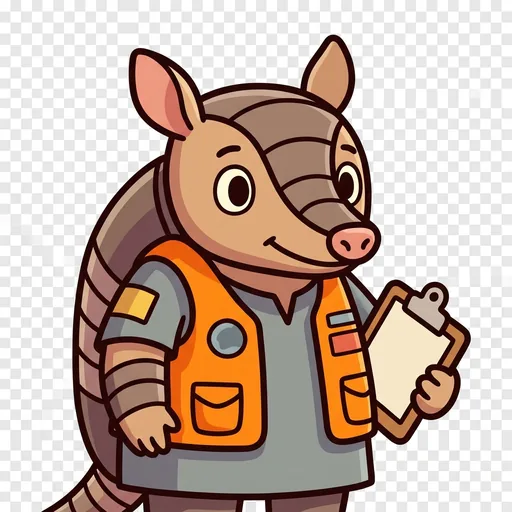
Halt
Fail-safe + safe failure — 'everything breaks eventually; plan for it — fail safe, not dangerous'
-
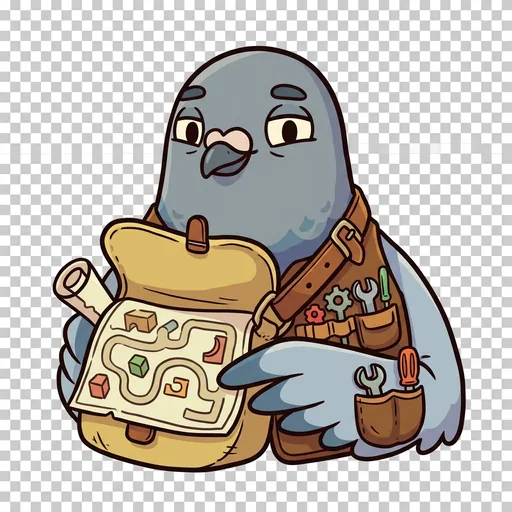
Rove
Navigation + pathfinding — 'don't just go toward the goal; find a PATH around what is in the way'